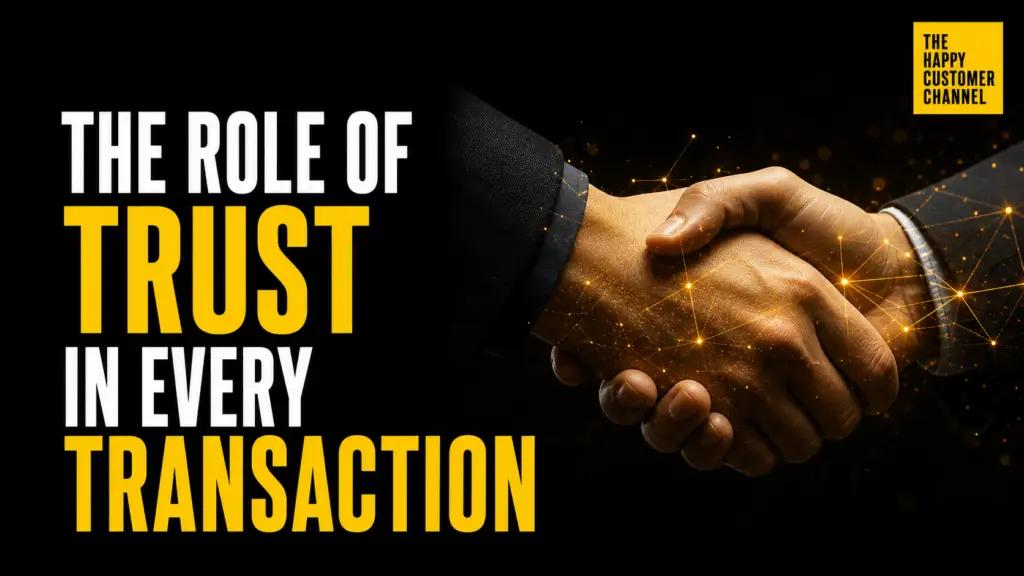
Every transaction has paperwork. Contracts. Terms. Signatures. Approval chains. But the real deal is decided before the ink dries. It comes down to one question: do I trust you when money, risk, and reputation are on the line?
That is where most businesses get it wrong. They treat trust like something that comes after the sale. It does not. Trust in business relationships is what makes the sale possible in the first place. Without it, every number feels too high. Every promise sounds fragile. Every delay feels suspicious. Every small problem becomes a signal that maybe this was a bad decision.
Here’s the reality. People do not just buy products, services, or contracts. They buy confidence. They buy the belief that you will do what you said, when you said, the way you said. And if they cannot believe that, the transaction gets heavy fast.
Trust Is the Real Currency
Money moves after confidence is established. That is the part too many teams forget. They obsess over pricing. They polish the deck. They tighten the proposal. They automate the follow-up. All of that matters. But none of it replaces the basic question sitting in the buyer’s mind: can I count on you?
What I’ve seen is simple. A buyer can like your offer and still not move forward. They can understand the value and still hesitate. They can have the budget and still delay. Why? Because something in the relationship does not feel solid enough to carry the decision.
Trust is not built by saying, “You can trust us.” That line means nothing. Trust is built when your behavior makes the other person feel safe moving forward. You respond when you said you would. You explain the trade-offs. You do not hide the risk. You do not oversell the outcome just to get the signature.
Business leaders need to understand this clearly: trust is not a personality trait. It is an operating standard. It shows up in how fast you communicate, how clearly you scope the work, how honestly you discuss limits, and how consistently you follow through when nobody is applauding.
The strongest deals I have seen were not always the cheapest. They were not always the flashiest. They were the ones where the buyer believed the seller would protect the outcome, not just chase the payment. That belief changes everything. It lowers resistance. It shortens the path. It makes the buyer feel like they are not stepping into uncertainty alone.
Low Trust Makes Everything Expensive
Low trust has a cost. It may not show up as a line item, but it is there. More meetings. More proof. More discounts. More legal review. More internal convincing. More “let me think about it.” The deal slows down because the relationship has not reduced the perceived risk.
Here’s what actually happens when trust is weak. The buyer starts protecting themselves. They ask for extra references. They push harder on price. They want more guarantees. They involve more people. They take longer to answer. They read every sentence in the contract like they are looking for a trap.
And honestly, can you blame them?
If your communication has been unclear, they will assume the delivery will be unclear. If you missed a follow-up before the sale, they will wonder what happens after they pay. If you avoided a hard question, they will assume there are other things you are not telling them. Small signals become big warnings.
This is why trust in business relationships protects margin. When people trust you, they do not need to squeeze every dollar out of the deal just to feel safe. They are not buying the lowest price. They are buying the least risky path to the result they want.
Too many businesses think they have a pricing problem when they really have a trust problem. They think the buyer is being difficult. Sometimes, yes. But often the buyer is just not convinced. Not convinced you understand the stakes. Not convinced you will own the outcome. Not convinced you will still answer the phone when the invoice is paid.
Low trust creates friction. Friction burns time. Time kills momentum. And once momentum is gone, even a good deal starts to feel like work.
Trust Is Built in the Small Moments
Trust does not usually break in one dramatic scene. It leaks out in small moments. A late reply. A vague answer. A missed deadline. A surprise fee. A promise that sounded good in the meeting but disappeared in execution.
The same is true in reverse. Trust is built in small moments. You send the update before they ask. You admit when something changed. You clarify expectations early. You say, “That is not realistic,” instead of pretending you can do everything. You make the next step obvious.
This is where real operators separate themselves from performers. Performers sound impressive in the room. Operators build confidence after the room. They document the decision. They recap the action items. They flag risks before those risks become fires. They do the boring things consistently because those boring things are what make people feel safe.
What I’ve seen over and over is that customers remember how you handled uncertainty. They remember whether you disappeared when the situation got complicated. They remember whether you blamed someone else or took ownership. They remember whether your tone changed after the contract was signed.
Pressure reveals the truth. Anyone can be charming when the deal is easy. Anyone can be responsive when the opportunity is hot. But the real test comes when there is a delay, a mistake, a change in scope, or a difficult conversation. That is when trust either becomes stronger or starts to crack.
If you want stronger transactions, build stronger signals before the pressure shows up. Be clear. Be direct. Be consistent. Do not make the customer chase you for basic answers. Do not leave people guessing. In business, silence rarely feels neutral. It usually feels like risk.
Final Thoughts
Every transaction is a test of trust. If people do not trust your word, your process, or your intent, the deal becomes harder than it needs to be. You can have the best pitch in the room and still lose because the relationship cannot carry the weight of the decision.
At the end of the day, trust is not decoration. It is infrastructure. Build it before you need it. Protect it when things get hard. Because when the moment of decision arrives, trust is often the difference between a signed deal and a polite goodbye.
Common Questions
How do you build trust with a client before they buy from you?
Listen, you build trust before the sale by proving you are serious before money changes hands. Show up prepared. Ask better questions. Follow up when you said you would. Be honest about what you can and cannot do. Do not try to win the deal by pretending there are no limits. What I’ve seen is that buyers respect clarity more than perfection. If you can be trusted in the small conversations, you have a better chance of being trusted with the larger commitment.
What breaks trust fastest in a business relationship?
Here’s the reality: trust breaks fastest when expectations and behavior do not match. If you promise speed and move slowly, that breaks trust. If you promise transparency and avoid hard conversations, that breaks trust. If you act attentive before the sale and disappear after the invoice, that really breaks trust. People can forgive a mistake when you own it quickly. They have a much harder time forgiving silence, excuses, and surprises.
Can a business recover after losing a client’s trust?
Yes, but not with speeches. Listen, once trust is damaged, your words carry less weight. That is fair. The only way back is through consistent action over time. Own what happened without hiding behind process or people. Then set clear expectations and meet them repeatedly. At the end of the day, you do not talk your way back into trust. You behave your way back into it.
Why do some deals fall apart even when the product or price is strong?
Because buyers are not only evaluating the offer. They are evaluating the risk of believing you. A strong product helps. A fair price helps. But if the buyer senses confusion, pressure, or inconsistency, they may walk away anyway. What I’ve seen is that many lost deals were not lost on features. They were lost because the buyer did not feel confident enough to move forward.