
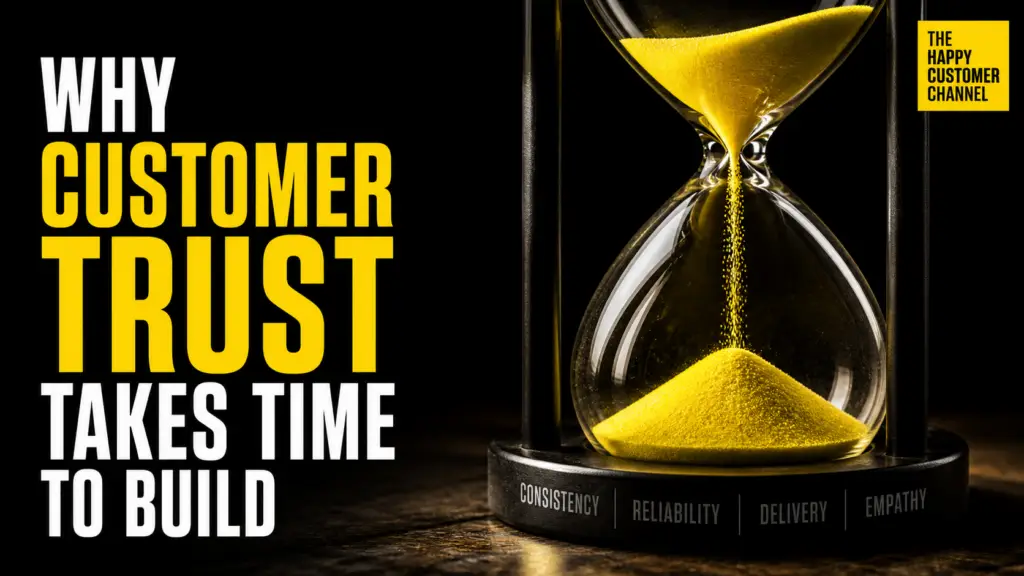
Trust is not won when the customer buys. That is only when they start watching.
That is the part too many companies miss. The invoice gets paid. The contract gets signed. The sales team celebrates. Then the customer quietly starts measuring everything you do against everything you said.
That is why building customer trust takes longer than most leaders expect. Trust is not created by the pitch. It is not created by the brand deck. It is not created by a clean website or a strong first call.
Trust is built when the customer sees a pattern. You said you would respond quickly, and you did. You said delivery would be smooth, and it was. You made a mistake, and you owned it. That is what customers remember.
The Sale Is Not the Trust Moment
A sale means the customer is willing to try you. That is all. It does not mean they believe you yet. It means they are giving you a chance to prove that the promise matches the experience.
Here’s what actually happens after someone buys. They pay closer attention. They watch onboarding. They watch response times. They watch whether your team is aligned. They watch whether the invoice is clear. They watch whether the handoff from sales to service feels clean or careless.
This is where many companies lose ground. They put all their energy into winning the customer and not enough into proving the customer made the right decision. That gap is dangerous. Because the customer may not complain right away. They may simply start doubting you.
What I’ve seen is simple. Customers do not instantly trust a business because the buying process felt good. They trust a business when the experience after the sale confirms they were right to say yes.
Trust Is Built in the Small Repetitions
Trust does not usually collapse in one dramatic moment. It usually erodes in small, repeated misses. A late reply. A vague answer. A missed follow-up. A support ticket that gets passed around. A billing surprise nobody explained.
These things look small from inside the company. They do not feel small to the customer. To the customer, every small moment becomes evidence. Evidence that you are organized. Or evidence that you are not. Evidence that you care. Or evidence that you only cared before the sale.
This is where building customer trust really lives. In the repetitions. The boring stuff. The operational stuff. The moments nobody puts in a campaign, but everyone feels in the relationship.
The reality is, customers believe patterns more than promises. If your team follows through once, that is good. If your team follows through five times in a row, that starts to mean something. Consistency creates confidence. Confidence creates loyalty.
Pressure Reveals the Truth
Every company looks trustworthy when everything is smooth. That is not the test. The test comes when the shipment is late. The system breaks. The timeline slips. The customer is frustrated. The team is under pressure.
That is when trust either grows or disappears. Not because a problem happened. Problems happen. Customers know that. What they are really asking is this: when something goes wrong, are you going to disappear, defend, delay, or take ownership?
Silence is one of the fastest ways to lose trust. Customers can handle bad news better than no news. They can handle an honest mistake better than a vague excuse. What they cannot handle is being forced to chase a company that already took their money.
Fast ownership matters. Clear communication matters. Fair resolution matters. Not because it sounds nice, but because it shows the customer how your business behaves when it is not convenient. That is the real brand.
Final Thoughts
Stop trying to shortcut trust. Customers are not being difficult. They are protecting themselves. They have been overpromised before, and they have learned to wait for proof.
If you want long-term customers, give them a reason to believe you over time. Show up. Follow through. Tell the truth. Fix what breaks. At the end of the day, trust is not what you claim. It is what your customer can safely expect from you.
Common Questions
How long does it actually take to build customer trust?
Listen, it depends on the risk the customer is taking. If the purchase is small, trust can build faster because the exposure is low. If the decision is expensive, complex, or tied to their reputation, it takes longer. Here’s the reality: customers need repeated proof. They need to see that you do what you say, even after the excitement of the sale is gone.
Can marketing help customers trust a business faster?
Yes, but only up to a point. Marketing can create interest. It can create initial confidence. But if you’re serious about building customer trust, the experience has to back up the message. What I’ve seen is that great marketing gets customers in the door, but delivery decides whether they stay. A strong promise without strong follow-through creates disappointment faster.
What breaks customer trust the fastest?
Silence. That is the big one. Customers can forgive mistakes when they feel informed and respected. What they do not forgive is being ignored, misled, or left guessing. Here’s what actually happens: when you do not communicate, the customer fills in the blanks. And usually, they do not fill them in in your favor.
How do you rebuild trust after a bad customer experience?
At the end of the day, you rebuild trust with proof, not speeches. Own what happened. Explain it clearly. Fix the issue without making the customer fight for it. Then show what will change so it does not happen again. An apology matters, but only if the customer sees action behind it.