Leadership Development: The Good-to-Great Gap
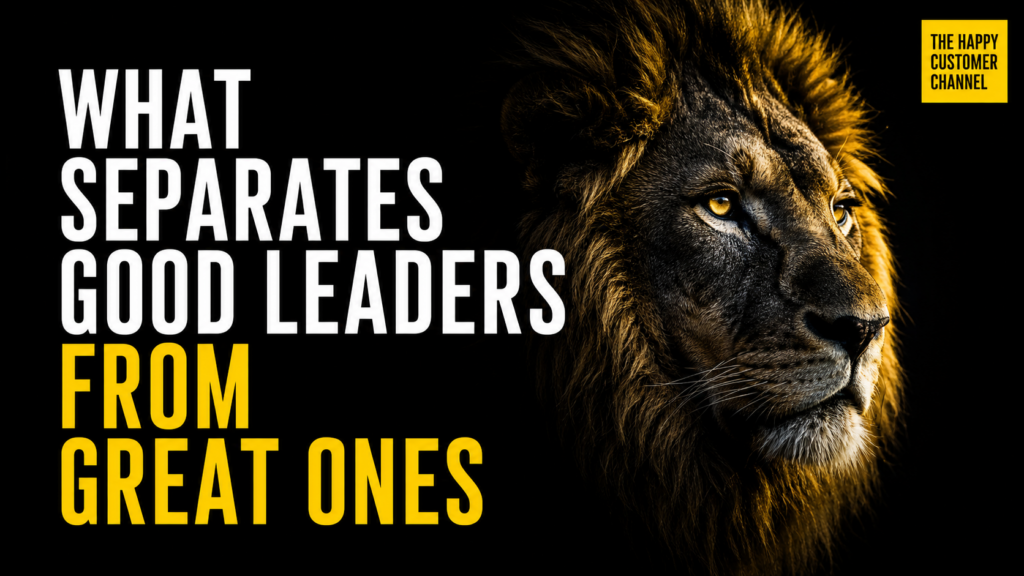
Good leaders keep the business moving. Great leaders build people who can move it without them.
That is the gap most companies miss. They think leadership development is about sending someone to a class, giving them a title, or teaching them how to sound more executive. It is not. The real difference between good and great leaders is not charisma. It is not confidence. It is not who speaks the loudest in the room. It is the ability to develop judgment, accountability, and ownership in other people.
That sounds simple. It is not. Because the moment pressure hits, most leaders default to control. They answer every question. They approve every decision. They clean up every mess. It feels responsible. It looks productive. But over time, it creates dependence.
And dependence does not scale.
Good Leaders Carry the Weight
Good leaders are valuable. Let’s be clear about that. They show up. They deliver. They take responsibility when things get messy. When the customer is upset, the numbers are off, or the project is sideways, they step in and get things moving.
Every business needs that kind of leader.
But here is what actually happens. A good leader becomes the person everyone runs to. The team waits for their answer. The manager becomes the approval center. The founder becomes the decision machine. The executive becomes the safety net for every hard call.
At first, it feels like leadership. It feels like strength. It feels like being needed.
But being needed too much is a warning sign.
If the team cannot make progress without you, you are not leading a strong team. You are leading a dependent one. That is not an insult. It is a reality many leaders have to face. What I’ve seen over and over is that strong performers get promoted because they were reliable individual contributors. Then they keep using the same muscle that got them promoted. They solve. They execute. They rescue.
But leadership is a different game.
The job is no longer to be the best problem-solver in the room. The job is to build more problem-solvers. That requires patience. It requires restraint. It requires letting people wrestle with decisions instead of handing them the answer too quickly.
Good leaders carry weight. Great leaders distribute strength.
That is a hard shift. Especially for leaders who built their reputation by being the one who could always figure it out. But if every road leads back to you, the organization has a ceiling. And that ceiling is your capacity.
Great Leaders Transfer Judgment
Great leaders do more than delegate tasks. Delegating tasks is easy. You can assign work all day long and still not develop anyone.
The real work is transferring judgment.
That means helping people understand how to think through a decision. What matters? What does not? What risks are acceptable? What tradeoffs are we making? What would happen if we waited? What would happen if we moved too fast?
This is where great leaders separate themselves.
They do not just say, “Go handle it.” They frame the decision. They expose the thinking. They ask better questions. They let people bring a recommendation instead of just a problem. They make the team practice ownership before the stakes are massive.
That is how judgment is built.
Not through theory. Through reps.
Here is a simple example. Someone comes to you with a customer issue. The easy move is to tell them exactly what to do. You have seen this before. You know the answer. You can save time.
But the better move is to ask, “What do you think we should do, and why?”
Now you learn something. You see how they read the situation. You see whether they understand the customer impact. You see whether they are thinking about the business, the relationship, and the long-term consequence. That is where coaching begins.
Great leaders use moments like that. They slow down just enough to build someone else’s ability to move faster next time.
There is a cost to this. It takes time upfront. It may feel inefficient. People may make decisions differently than you would. Some will miss the mark. That is part of it.
But if you never let people carry real responsibility, do not be surprised when they do not grow into real responsibility.
Great leaders create clarity without creating dependency. They set standards without crushing confidence. They give people room without disappearing. That balance is not soft. It is demanding. It is intentional. It is the difference between managing activity and multiplying capability.
Development Happens in the Real Work
Real leadership development shows up in the day-to-day pressure of the business. Not just in workshops. Not just in performance reviews. Not just when HR launches a program with nice slides and clean language.
Those things can help. But they are not the work.
The work happens when expectations are missed. When a project is late. When a customer is frustrated. When two departments are blaming each other. When a high performer has attitude problems. When someone wants authority but avoids accountability.
That is where leaders are built.
Because pressure reveals habits.
Some people hide. Some people blame. Some people wait to be told. Some people step forward. Some people take feedback and adjust. Some people defend themselves so hard they stop learning.
A great leader pays attention to that. Not just to the output, but to the pattern behind the output.
Here is the mistake companies make. They promote people based on performance, then hope maturity shows up later. Hope is not a system. If someone cannot handle feedback now, the title will not fix it. If someone avoids hard conversations now, the title will not fix it. If someone needs constant validation now, the title will not fix it.
The title usually exposes what was already there.
That is why development has to start before the promotion. Look at influence before authority. Who raises the standard when nobody asked them to? Who takes ownership without needing credit? Who can challenge a room without making it personal? Who can admit they were wrong and still keep moving?
Those are signals.
Not perfect signals. Human beings are not spreadsheets. But they matter.
And when you see potential, you have to put it under real conditions. Give the person a tough project. Let them lead a cross-functional conversation. Ask them to make a recommendation with incomplete information. Have them own a decision and its aftermath.
Then coach what happens.
That is the part many leaders skip. They assign responsibility, then disappear. Or they micromanage so tightly that nobody learns. Neither one works.
People need room to act and a leader who helps them interpret the result. What worked? What broke down? What did you miss? What would you do differently next time? That is how raw experience becomes growth.
The best leaders are not casual about this. They are disciplined. They know every missed expectation is also a teaching moment. They know every difficult conversation is a chance to strengthen trust. They know every decision is an opportunity to develop better decision-makers.
That is not theory. That is how strong teams are built.
Final Thoughts
The measure of a great leader is not how busy they are. It is not how many people need their approval. It is not how much they personally carry.
The measure is what gets stronger because they were there.
If the team has better judgment, stronger ownership, and more confidence because of your leadership, you are doing the work that matters. If everything still depends on you, there is work to do.
At the end of the day, good leaders create results. Great leaders create capacity. And capacity is what allows a business, a team, and a culture to grow beyond one person.
Common Questions
How do I know if someone is ready to be developed as a leader?
Listen, do not start with the title. Start with behavior. Watch how they handle responsibility before anyone gives them authority. Do they take ownership when things get difficult, or do they wait for someone else to fix it? What I’ve seen is that future leaders usually reveal themselves in the small moments first. They ask better questions. They think beyond their own task. They raise the standard without making everything about them.
What is the biggest mistake companies make when developing leaders?
Here’s the reality. Most companies wait too long. They promote someone, hand them a team, and then suddenly expect leadership maturity to appear. That is backwards. By the time the title arrives, the habits are already visible. If someone avoids accountability as an individual contributor, they will likely avoid it as a manager too. Develop the behavior before you reward the role.
Can a great individual performer become a great leader?
Yes, but only if they are willing to change the scoreboard. As an individual performer, success is often about personal output. As a leader, success is about team capability. That shift is bigger than people think. Listen, some high performers struggle because they still want to be the hero. Great leadership requires them to stop proving they are the smartest person in the room and start building a room full of sharper thinkers.
What separates a manager from a true leader?
At the end of the day, a manager controls work. A true leader expands capacity. That does not mean management is bad. Businesses need structure, deadlines, and accountability. But if all someone does is assign tasks and track completion, they are not building leaders. The real question is this: are people better, stronger, and more capable because they worked with you?