
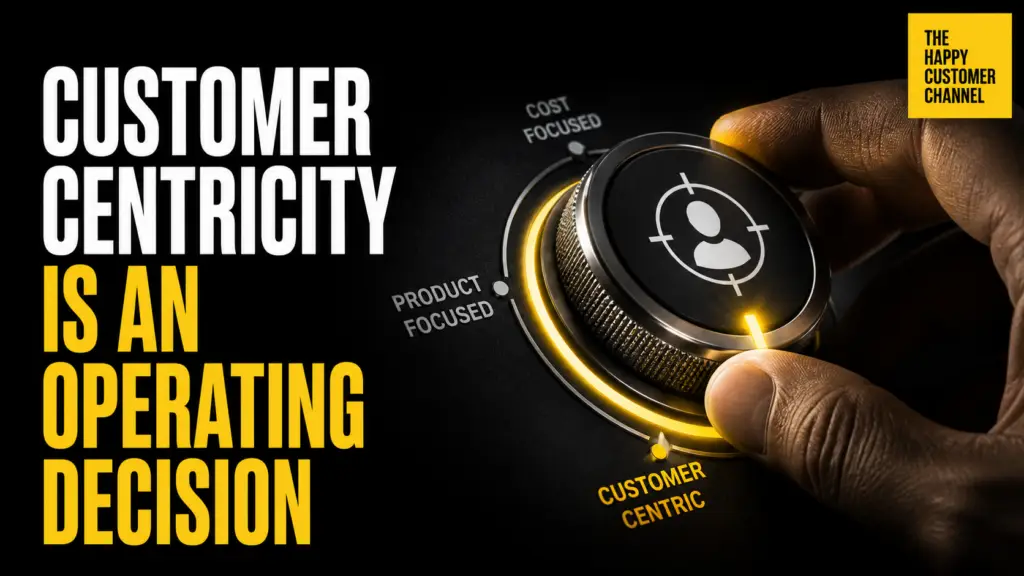
Is your “customer centricity” just a slogan on the wall, or is it genuinely baked into every operating decision you make? Let’s get real. Customer centricity isn’t about mission statements or clever slide decks. It’s about how your business runs, day in and day out. If you think it’s just philosophy, you’re already falling behind. The gap is wide and growing—between companies that operationalize for the customer, and those that just talk a good game. For the operator who wants real traction with customer experience and retention, start here. Welcome to The Happy Customer Channel: your source for operator-level CX leadership. Let’s talk about why customer centricity is an operating decision—not just a nice idea.
Customer Centricity is Not a Slogan—It’s Your Operating System
Most leaders claim they put customers at the center. But most companies don’t. Why? Because real customer centricity means tough, daily decisions—especially when it’s inconvenient. Forget the annual all-hands pep talk. Customer centricity is a relentless set of operating choices. You see it in what gets measured, what gets fixed, and where the money goes when times get tight.
Let’s break the pattern: Customer centricity has to live in your operating rhythm. I’ve watched teams win big because they didn’t just say “customer first”—they built their meetings, dashboards, and incentives around customer outcomes. When something breaks, it’s everybody’s crisis. When something works, it’s because every process aligned to the actual customer journey.
Here’s the punchline: Companies that hardwire customer centricity into their operating DNA leave the rest in the dust. It’s not magic. It’s operational discipline, over and over. If you want to see what fake customer centricity delivers, look at the long list of brands losing trust right now.
The Customer Centricity Operating Framework
You can’t just wish your way to customer centricity—you have to design for it. Here’s the framework I use when I’m in the trenches with operators and CX leaders:
- Map every process back to the customer outcome. Frontline or back office, ask: does this help or hinder the customer’s journey?
- Make customer-centric metrics visible and non-negotiable. Retention, satisfaction, net promoter. Are they at the top of the leadership dashboard—or buried in the appendix?
- Align incentives with customer success. Are bonuses, promotions, penalties tied directly to customer impact? Or do your people only care about internal scorecards?
- Institutionalize trust levers. Transparency, feedback loops, fast resolution. Are these non-negotiable—every single time?
- Response time to failure. When something goes wrong, who sees it first? Is leadership acting fast, or does the issue linger?
If you can’t answer these with brutal honesty, you don’t have customer centricity. You have wishful thinking.
The difference between operational excellence and customer betrayal is this: How fast do you know when you’re failing the customer? How fast do you fix it? If your operating system rewards speed, candor, and bias for action on behalf of the customer, you’re ahead. If not, you’re just spinning your wheels.
Need proof? Read more on why CX strategies fail without operating standards. If your strategy isn’t backed up by real operating mechanics, it’s dead on arrival.
Leadership Discipline—Operationalizing Customer Trust
Customer centricity doesn’t scale from the bottom up. It starts at the top—every single day. Leadership has to institutionalize the right behaviors and kill the wrong ones—no excuses. I’m talking about discipline, not cheerleading.
Here’s what matters: If there are no consequences for failing the customer, the operating decision was never made. You’ve got to make customer outcomes the basis for rewards and consequences. When leaders go beyond lip service—removing friction, providing resources, and making customer-centric behavior the norm—you get true loyalty. And yes, you build a moat around your business that competitors can’t touch.
This is where companies either win or lose the market. You want higher retention, stronger referrals, faster recovery from mistakes? Make customer trust a standing operating principle, not an afterthought.
If you want more operator-level playbooks and frameworks—made for leaders who care about outcomes, not headlines—sign up for the THCC newsletter.
Final Thoughts
Customer centricity is not a strategy deck. It’s battle-tested operating discipline. You prove it every morning by how you allocate time, money, and attention. You prove it every afternoon by what you say “no” to when shortcuts might save your numbers but cost you trust.
If you want durable growth, operationalize customer centricity. Make it your operating decision—and watch what happens.
Want more no-nonsense frameworks for customer centricity? Subscribe to our newsletter.
Common Questions
What does customer centricity actually look like in daily operations?
Listen—customer centricity means every process, every metric, every meeting is evaluated for its impact on the customer. It looks like putting customer outcomes before internal politics or short-term goals. You see transparency, quick problem escalation, and teams empowered to fix customer pain points on the spot. At the end of the day, it’s not theory—it’s visible choices. If you walk the halls (or review the dashboards) and can point to processes that put the customer first, you’re on the right track.
How can leadership ensure customer centricity is more than talk?
Here’s the reality—leadership has to make customer centricity hurt when it’s missing. Set clear, non-negotiable operating standards. Tie rewards and penalties directly to customer trust, retention, and satisfaction. Show up to review actual customer experience data weekly—not just in quarterly retreats. If your leaders don’t live and breathe these numbers, nobody else will. Customer centricity at the top is the only way it survives everywhere else.
What are the most common pitfalls companies face with customer centricity?
What I’ve seen is this: most organizations declare customer centricity, then keep systems, incentives, and accountability pointed inward. The result? Broken trust and declining retention. The reality is that a single gap between intent and action can trigger an exodus—customers don’t wait around for you to get it right. The most dangerous pitfall? Believing the customer can’t see through your marketing and culture claims. They can.
How do you measure if customer centricity is actually driving business results?
At the end of the day, it’s simple—watch what happens to retention, customer lifetime value, speed of resolution, and trust scores. Those numbers don’t lie. If those metrics are linked to operator behavior and moving in the right direction, customer centricity is real. If they’re flat or falling while the banners stay up, you’ve got a problem. Don’t wait for a crisis to start measuring what matters.