Customer Expectations Management Is Broken
Customers are not becoming unreasonable. They are becoming harder to fool.
That is the part many companies still do not want to face. Customers are not sitting around inventing new demands just to make your team miserable. They are reacting to what the market has already taught them. Faster updates. Cleaner communication. Easier buying. Better visibility. Less friction.
This is why customer expectations management is not a support script. It is not a polite email after something goes wrong. It is the discipline of making promises your business can actually keep.
Here’s what actually happens. Marketing creates the desire. Sales simplifies the story. Operations inherits the complexity. Support absorbs the frustration. Then leadership calls it a customer service issue. It is not. It is a promise problem.
Your Real Competitor Is the Last Great Experience
Your customer is not comparing you only to the company down the street. That idea is outdated. They are comparing you to the last great experience they had anywhere.
If they ordered food and tracked it in real time, they expect visibility. If they booked a trip in three clicks, they expect speed. If their bank sent proactive fraud alerts, they expect you to notify them before they have to chase you. Fair or not, that is the new baseline.
Customers do not care that your industry is complicated. They do not care that your internal process has seven steps, three approvals, and one person named Kevin who has to manually fix the account. They see the outcome. That is what they judge.
What I’ve seen is simple. The best companies do not argue with rising expectations. They study them. They ask, “Where did this expectation come from?” Then they decide whether to meet it, reset it, or clearly explain why it works differently in their world.
The weak companies do something else. They blame the customer. They say people are impatient. They say buyers do not understand the process. Maybe that is true. But if your customer does not understand the process, that is still your problem to solve.
The Expectation Gap Starts Before the Complaint
By the time a customer complains, the damage is already in motion. The gap did not start with the complaint. It started earlier. Usually in the promise.
It started when the website said “simple” but the setup took three weeks. It started when sales said “easy” but onboarding required five meetings. It started when pricing looked clear but the real cost showed up later. Customers remember that.
This is where companies misread the issue. They think customer frustration comes from failure alone. Not always. Customers can handle delays when they are told the truth early. They can handle limits when those limits are explained. What they do not handle well is surprise disappointment.
Real customer expectations management starts before the buyer says yes. It starts in the language you use. It starts in the claims you make. It starts in the timeline you show. It starts in whether your sales team is rewarded for closing clean business or just closing any business.
Marketing overpromises. Sales simplifies. Operations inherits the gap. Support takes the blame. That is the pattern. I have seen it again and again across industries. The customer-facing team gets treated like the problem because they are closest to the pain. But they did not create the mismatch. They are just standing at the impact zone.
If leadership wants fewer escalations, fewer refunds, fewer angry calls, and better retention, they have to go upstream. Look at the promise. Audit the handoff. Listen to the words being used before the customer ever signs. The expectation gap is usually built long before the first ticket is opened.
Manage the Promise, Not Just the Problem
Most companies are reactive. They wait for the customer to get frustrated. Then they apologize. Then they escalate. Then they offer a discount. That is expensive. It is also lazy.
The better move is to manage the promise from the beginning. Be clear about what happens next. Be honest about what takes time. Tell people what they need to do. Tell them what you will do. Tell them what could slow things down.
That does not weaken your offer. It strengthens trust. Customers do not need everything to be instant. They need to know what is happening. They need to know you are in control. They need to know the promise was real.
There is a big difference between setting expectations and lowering expectations. Lowering expectations sounds like fear. Setting expectations sounds like leadership. One says, “Please do not expect too much from us.” The other says, “Here is exactly how we deliver this well.”
That distinction matters. Strong companies do not hide their process. They explain it. They do not pretend tradeoffs do not exist. They name them. They do not let every department tell a different version of the truth. They align the message from first click to final delivery.
This is where founders and executives need to pay attention. If your teams are making promises in isolation, the customer will feel the cracks. Marketing cannot say one thing, sales another, onboarding another, and support another. The customer experiences all of it as one company.
So the question is not, “How do we make customers more patient?” That is the wrong question. The better question is, “Where are we creating expectations we are not built to fulfill?” That question will tell you more about your customer experience than a dashboard full of satisfaction scores.
Final Thoughts
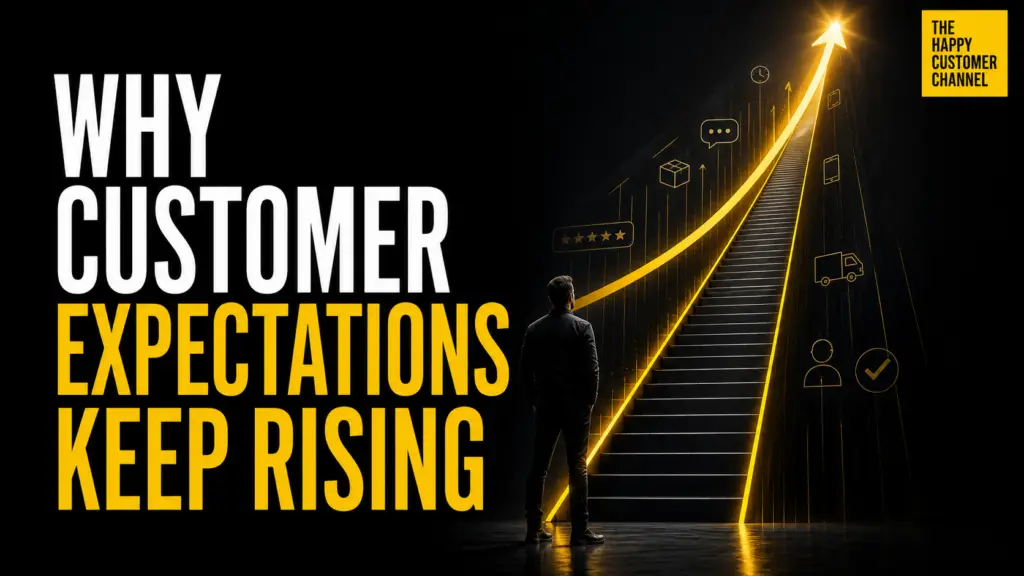
Customer expectations will keep rising. That is not the threat.
The threat is pretending your old operating model can still carry your new promises. If your market message has evolved but your delivery system has not, customers will expose the gap. Not because they are unreasonable. Because they are paying attention.
At the end of the day, trust is built when the promise and the experience match. Not perfectly. Consistently. That is where loyalty starts.
Common Questions
Why do customer expectations seem higher than they used to be?
Listen, customers have more reference points now. They see what good looks like every day, across every industry. Fast shipping, instant updates, clean apps, simple returns, proactive communication. Once people experience that, they do not forget it. The bar moves. Your business may not have moved with it, but the customer already has.
How do we manage customer expectations without lowering the value of our offer?
Here’s the reality: clarity does not make your offer weaker. It makes it more believable. You can still sell the value, but you have to explain the path. What happens first? What takes time? What does the customer need to provide? Confidence comes from truth, not hype.
Is this a marketing problem, a sales problem, or an operations problem?
What I’ve seen is that it is usually all three. Marketing shapes the first expectation. Sales turns that expectation into a commitment. Operations has to deliver the result. If those teams are not aligned, support gets stuck cleaning up the mess. The customer does not care which department caused the gap. They only know the company missed.
What causes the biggest gap between what customers expect and what companies deliver?
At the end of the day, the biggest gap comes from vague promises. Words like easy, fast, simple, premium, and seamless sound great until nobody defines them. The customer creates their own meaning. Your team has a different meaning. Then reality shows up. That is where disappointment begins.