
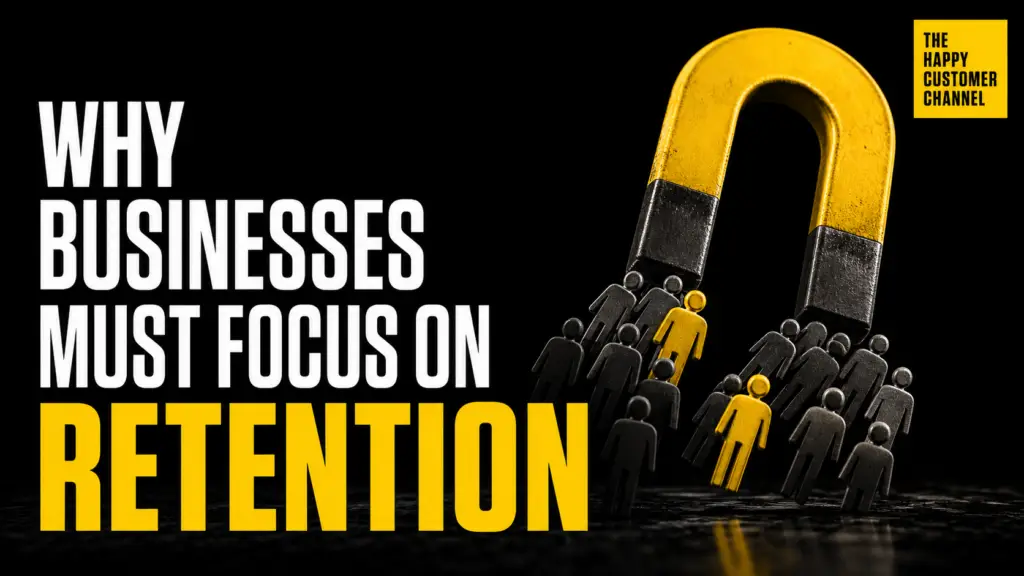
Most businesses don’t have a growth problem. They have a leaking bucket they keep refilling with paid traffic.
They spend more. They chase more leads. They celebrate more first-time buyers. Then those customers disappear. That is not growth. That is expensive motion. A real retention marketing strategy forces a harder question: are customers actually choosing to come back, or are you just buying new strangers every month to hide the problem?
New Customers Won’t Save a Leaky Business
Here’s what actually happens in a lot of companies. Acquisition gets the spotlight. Retention gets the leftovers. The ad budget gets protected. The customer experience gets debated. Everyone wants more traffic, more leads, more demos, more first purchases. Very few people want to look at the uncomfortable truth after the sale.
Do customers return? Do they renew? Do they buy again without being bribed? Do they refer anyone? Do they trust you more after the first transaction, or less? These are not soft questions. These are revenue questions. If customers do not come back, acquisition becomes a tax you pay forever. And the tax gets higher every year.
What I’ve seen is simple. Companies can hide weak retention when acquisition is cheap. They can cover churn with ad spend. They can make the dashboard look busy. But when customer acquisition cost rises, the weakness shows up fast. Suddenly the business needs more money to produce the same result. Margins tighten. Teams panic. Discounts increase. Pressure moves from marketing to sales to support. The whole machine gets heavier.
This is why repeat purchase rate, churn, customer lifetime value, renewal rate, and time to second purchase matter. Not as vanity metrics. As survival metrics. If you only measure the front door, you will miss the people quietly leaving through the back.
Retention Starts Before the Second Sale
Retention does not begin when you send the next email. It starts the moment expectations are set. It starts in the ad. It starts on the sales call. It starts on the product page. It starts when someone gives you money and silently asks, “Did I make the right decision?”
That moment matters. A customer is paying attention after the first purchase. They notice if the delivery is late. They notice if onboarding is confusing. They notice if support sounds like a script. They notice if your promise was bigger than your product. This is where trust is either confirmed or damaged. And once trust is damaged, your next campaign has to work twice as hard.
Your retention marketing strategy should be built around behavior, not wishful thinking. Who bought for the first time? Who used the product but stalled? Who opened three messages but did not take the next step? Who is ready for education, not another offer? Who needs reassurance? Who is showing signs of leaving? The answers are usually already in the business. Most teams just are not looking closely enough.
The first experience teaches the customer what kind of company you are. If the first experience feels clear, useful, and reliable, the second sale becomes easier. If the first experience feels messy, slow, or disappointing, the second sale becomes a negotiation. That is the part too many businesses miss. Retention is not magic. It is the result of hundreds of small signals that tell the customer, “You were right to choose us.”
Stop Confusing Discounts with Loyalty
Discounts can create repeat purchases. They do not always create loyalty. There is a difference. A customer who comes back only when the price drops is not loyal to the brand. They are loyal to the deal. That might help revenue this week, but it can quietly destroy margin and train customers to wait.
A strong retention marketing strategy gives people reasons to return without always cutting price. Better education. Smarter timing. More relevant recommendations. Clearer onboarding. Better post-purchase communication. Useful reminders. Honest follow-up. Real customer insight. These are not flashy moves. They are disciplined moves. They tell the customer you understand where they are in the relationship, instead of blasting everyone with the same offer.
Here’s the reality. Retention is not one campaign. It is a system. Ecommerce brands need to understand buying cycles, replenishment windows, product pairings, and post-purchase confidence. SaaS companies need to understand activation, usage depth, renewal risk, and value realization. Service businesses need to understand communication gaps, expectation drift, and moments where clients start questioning the relationship.
The mistake is treating everyone the same. First-time buyers are not loyal customers. Inactive customers are not lost causes. High-value customers are not guaranteed to stay. New users do not need the same message as experienced users. If your marketing ignores these differences, you are not building retention. You are just sending noise.
Retention improves when the business pays attention. Not just to what customers say, but to what they do. Did they come back sooner than expected? Did usage drop? Did support tickets increase? Did they stop opening your messages? Did they abandon the product after one attempt? Behavior tells the truth before revenue does.
Final Thoughts
The strongest businesses do not grow because they find more strangers. They grow because the customers they already have keep choosing them again.
That is the standard. Not clicks. Not impressions. Not one-time transactions that look good in a monthly report. Real growth is when the customer comes back because the experience made sense, the value was clear, and the trust held up after the sale. Acquisition can start the relationship. Retention proves whether the relationship was worth anything.
If your business cannot keep customers, more marketing will not fix the real problem. It will only make the problem more expensive.
Common Questions
Isn’t retention just a customer service issue?
Listen, customer service matters. But retention is bigger than support tickets. It includes marketing, sales, product, onboarding, pricing, communication, and the actual customer experience after money changes hands. If support is the only team responsible for retention, the business is already late. At the end of the day, every part of the company either gives customers a reason to stay or a reason to leave.
When should a business start focusing on retention?
Here’s the reality: as soon as you have paying customers. Not when churn gets painful. Not when acquisition costs spike. Not when revenue starts flattening. Waiting until the problem is obvious usually means customers have been quietly leaving for months. The earlier you study retention, the faster you learn what your business is really worth to the people buying from you.
How do I know if my retention efforts are actually working?
What I’ve seen is that too many teams look at campaign performance and miss customer behavior. Open rates are not enough. Clicks are not enough. You need to watch repeat purchase rate, churn, renewal rate, customer lifetime value, purchase frequency, and time to second purchase. If those numbers improve, you are building something stronger. If they do not, your activity may be busy, but it is not changing the relationship.
Can retention really lower acquisition costs?
Yes, but not always in the way people think. Retention does not magically make ads cheaper. It makes the business less dependent on constantly buying new attention. When customers return, buy more, renew, and refer others, every acquired customer becomes more valuable. That gives you more room to compete. At the end of the day, a retained customer is not just another sale. It is proof that your business earned another chance.