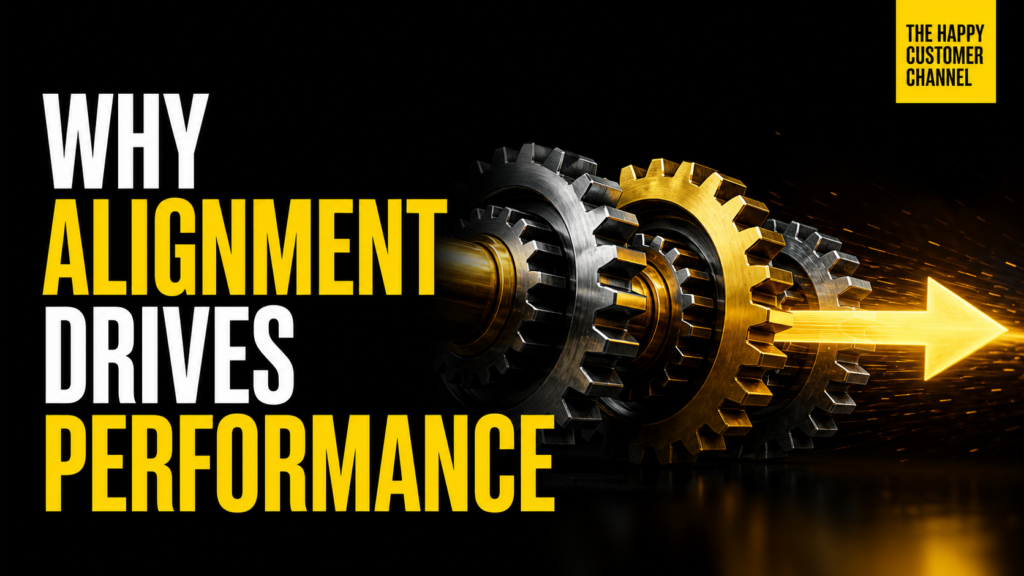
Most performance problems are not talent problems. They are alignment problems hiding in plain sight.
That is where organizational alignment becomes a performance issue, not a leadership slogan. When teams are not aligned, smart people still work hard. They still show up. They still care. But their effort starts moving in different directions.
That is the quiet damage. The business looks busy. Calendars are full. Meetings are constant. Dashboards are packed. But momentum is missing.
Here’s the reality. A company does not underperform only because people are not capable. Many times, it underperforms because capable people are making decisions from different maps.
Alignment Is Not Awareness
Knowing the strategy is not the same as operating by it.
I have seen leaders walk out of a strategy meeting feeling great. The deck was sharp. The message was clear. Everyone nodded. Everyone said the right things. Then Monday came.
Sales chased one priority. Operations protected another. Marketing built campaigns around a different story. Customer success tried to save accounts using promises the rest of the business could not support.
Was the strategy communicated? Yes.
Was the organization aligned? No.
That distinction matters. Awareness means people heard the message. Alignment means people know what to do with it. It means they understand what matters most, what trade-offs are expected, what decisions they can make, and what they should stop doing.
Most leaders underestimate the last part. What teams stop doing often tells you more about alignment than what they start doing.
If everything is still important, nothing is aligned. If every department keeps its old priorities while leadership announces new ones, the strategy is not real yet. It is just a statement sitting above the work.
Real alignment shows up in choices. Budget choices. Hiring choices. Customer choices. Product choices. Time choices. When pressure hits, aligned teams know what to protect and what to let go.
That is where performance changes. Not in the announcement. Not in the town hall. Not in the slide deck. Performance changes when strategy starts guiding daily decisions.
Misalignment Hides Inside Busy Teams
Busy can be deceptive.
A team can be overloaded and still not be moving the business forward. That is uncomfortable for leaders to admit, but it happens all the time.
Here’s what actually happens. Teams optimize for their own goals. Not because they are selfish. Not because they are careless. Because that is what the system tells them to do.
If sales is measured only on closing deals, they will close deals. Even bad-fit deals. If operations is measured only on efficiency, they will protect efficiency. Even when the customer experience suffers. If customer service is measured only on handle time, they will move fast. Even if the customer has to call back three times.
Everyone can hit their metric while the company misses the outcome.
That is misalignment.
And it creates hidden drag. Slow decisions. Rework. Escalations. Internal friction. Teams blaming each other. Leaders stepping into problems that should have been solved two levels down.
The dangerous part is that misalignment often looks like a people issue. It gets labeled as poor ownership. Bad communication. Lack of accountability. Department conflict.
Sometimes those things are real. But often, they are symptoms. The deeper issue is that people were never given a shared operating picture.
They do not know which priority wins when two priorities collide. They do not know who has the final call. They do not know how their work connects to the business outcome. So they make the best decision they can from where they sit.
That is not a character flaw. That is a leadership design problem.
What I’ve seen is this: good teams get frustrated when they are forced to guess. They want to win. They want to serve the customer well. They want to make the right call. But if the organization sends mixed signals, performance becomes inconsistent.
And customers feel it.
They feel it when sales promises one thing and delivery provides another. They feel it when support has empathy but no authority. They feel it when policies protect the company but punish the relationship. They may not use the word alignment, but they experience the consequences.
That is why this matters. Alignment is not only an internal leadership issue. It becomes a customer issue. And once the customer feels the friction, the business is already paying for it.
Performance Follows Clarity
High-performing organizations make the path obvious.
Not easy. Obvious.
There is a difference.
Business is never simple. Markets move. Customers change. Competitors react. Problems show up. But when teams are clear on priorities, roles, decision rights, and measures of success, they move faster through the complexity.
That is the power of organizational alignment. It removes unnecessary guessing.
People know what matters. They know who owns what. They know which decisions they can make without asking for permission. They know how success is measured. They know where their work fits in the bigger picture.
That kind of clarity changes behavior.
Meetings get shorter because decisions have context. Escalations drop because ownership is clearer. Teams collaborate better because they are not fighting over whose metric matters more. Leaders spend less time refereeing and more time leading.
This does not happen by accident.
Leaders have to do the hard work of translation. Strategy cannot stay at the executive level. It has to move through the organization in practical terms. What does this mean for sales? What does this mean for service? What does this mean for operations? What does this mean for the customer?
If people cannot answer those questions, they are not aligned. They are informed.
There is also a rhythm to alignment. It is not a one-time event. It has to be reinforced through operating meetings, performance reviews, planning conversations, customer feedback, and leadership behavior.
People watch what leaders reward. They watch what leaders tolerate. They watch what gets funded. They watch what gets ignored.
If leadership says customer experience matters but only rewards short-term revenue, teams will follow the reward. If leadership says collaboration matters but promotes internal heroes who work around the system, teams will copy the workaround. If leadership says focus matters but keeps adding priorities, teams will stop believing the message.
Alignment requires consistency.
Not perfection. Consistency.
The best organizations keep bringing people back to the same essential questions. What are we trying to achieve? What matters most right now? Who owns the decision? How will we know if we are winning? What are we willing to stop doing?
Those questions create movement. They cut through noise. They force trade-offs. And trade-offs are where strategy becomes real.
Final Thoughts
Alignment is not soft. It is not a poster. It is not a meeting where everyone agrees to agree.
It is an execution discipline.
The organizations that win are not always the ones with the smartest strategy. They are the ones where strategy becomes action across every layer of the business. They make priorities clear. They make ownership visible. They make decisions faster. They remove the drag that keeps good people from doing great work.
At the end of the day, performance follows alignment because people perform better when they are not forced to guess. Give teams clarity. Give them direction. Give them the authority to act. Then watch what happens.
Common Questions
How do I know if organizational alignment is actually the issue?
Listen, look at where the work slows down. Are decisions taking too long? Are teams arguing over priorities? Are the same issues getting escalated again and again? Those are signals. What I’ve seen is that misalignment often shows up as friction before it shows up as missed numbers. If good people are working hard but the business still feels stuck, alignment is one of the first places I would look.
Isn’t alignment just better communication?
Here’s the reality: communication helps, but it is not enough. You can communicate a strategy ten times and still have people making different decisions. Why? Because communication tells people what was said. Alignment tells people what to do when the real world gets messy. People need priorities, ownership, decision rights, and clear measures of success. Without that, the message becomes noise.
Can too much alignment slow teams down?
Listen, too much consensus can slow teams down. That is not alignment. Alignment does not mean everyone gets a vote on every decision. It means people understand the direction and know how decisions get made. Strong alignment should make teams faster, not slower. If alignment is creating more meetings and less movement, the organization has confused clarity with permission-seeking.
Who owns alignment inside the business?
At the end of the day, senior leadership owns the direction. But every leader owns the translation. That is where many companies break down. The executive team defines the strategy, but managers have to make it practical for the people doing the work. What does it mean today? What changes this week? What decision should we make differently? If leaders cannot translate strategy into action, teams will fill in the blanks themselves.