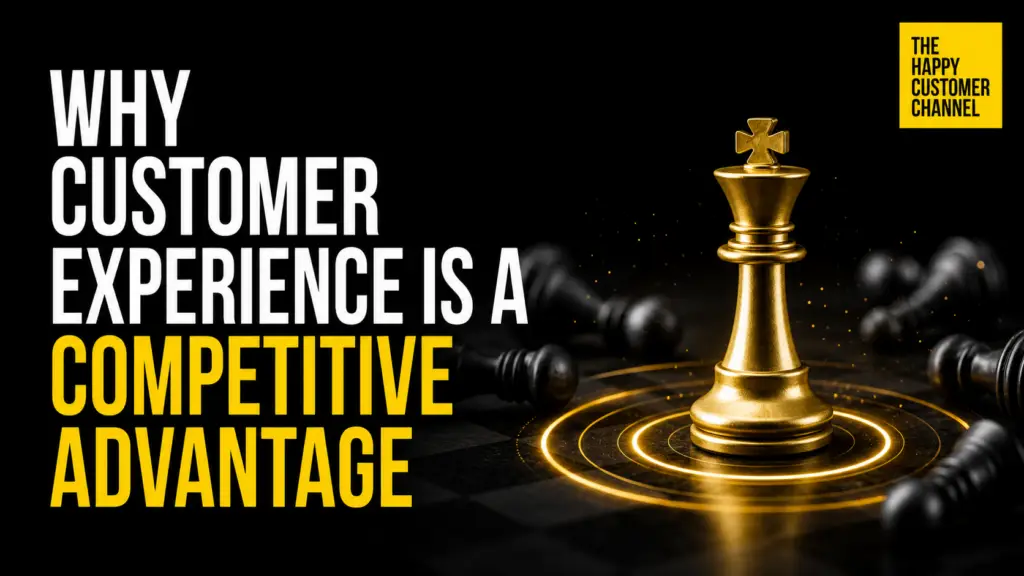
Your competitors can copy your features. They can match your price. They can study your messaging and build something that looks very close to what you sell.
But they cannot easily copy what it feels like to do business with you.
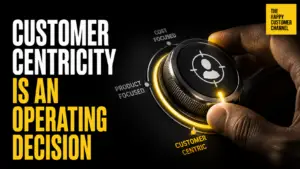
That is where the real CX competitive advantage lives. Not in a slogan. Not in a survey score. Not in a customer service script that tells people to “be empathetic.” It lives in the daily experience customers have when they buy from you, use your product, need help, renew, complain, expand, and decide whether you are worth staying with.
Most companies still treat customer experience like a department. That is the mistake. CX is not the team that handles problems after the business creates them. CX is the way the business operates in front of the customer.
Here’s the reality. Customers do not experience your org chart. They experience the result of your decisions. They feel the broken handoff. They feel the slow reply. They feel the confusing invoice. They feel the overpromise from sales and the underdelivery from operations. And when that friction stacks up, they leave.
Product Advantage Is Getting Shorter
There was a time when product features gave companies a long runway. If you built something better, you had space. You could lead the market for years. That window is getting smaller.
Now features get copied quickly. Pricing gets pressured fast. Technology closes gaps in months, not years. Customers can compare options in minutes. Your advantage does not last just because your product team is smart.
That does not mean product does not matter. It absolutely matters. But product alone is rarely enough anymore. In crowded markets, customers are not just asking, “Who has the best features?” They are asking, “Who makes this easier for me?”
That question changes everything.
Because ease is not only a product decision. It is a business decision. It is how simple your buying process is. How clear your pricing is. How honest your sales team is. How smooth onboarding feels. How fast support responds. How predictable the renewal process is. How much energy the customer has to spend just to get the value they already paid for.
What I’ve seen over and over is this: the companies that win are not always the flashiest. They are the ones customers trust to deliver without unnecessary drama.
That is not soft. That is power.
Customers Judge the System, Not the Department
A customer does not care which team caused the problem.
They do not care that sales said one thing, onboarding missed the context, support lacked access, billing used a different system, and product had a roadmap delay. To them, that is one company. One experience. One reason to question whether they made the right decision.
This is where many leaders miss the point. They look at customer experience as a support metric. They ask, “Are our agents friendly?” or “Are tickets being closed on time?” Those things matter, but they are not the whole picture.
You can have a polite support team and still have a bad customer experience.
Why? Because support may simply be apologizing for broken processes the rest of the business refuses to fix. That is not CX. That is damage control.
Real customer experience looks across the full journey. It asks harder questions. Where do customers get confused? Where do expectations break? Where do handoffs fail? Where are we making the customer repeat themselves? Where are we creating effort that should not exist?
The answers are usually uncomfortable. Good. That means you are getting close to the truth.
The best companies do not hide behind departmental excuses. They build ownership across the journey. They make it clear who owns the promise, who owns delivery, and who owns the customer’s confidence at every stage.
That is how trust is built. Not with words. With consistency.
Friction Reduction Is a Growth Strategy
Growth is not only about more leads, more campaigns, and more pipeline. Sometimes growth starts by removing the things that make customers regret saying yes.
That is the part most companies underinvest in.
They spend heavily to win the customer. Then they make the customer work too hard to get value. The onboarding is vague. The communication is reactive. The support process is slow. The billing experience creates questions. The renewal shows up like a surprise. Then leaders act confused when retention gets weak.
Here’s what actually happens. Customers rarely leave because of one small issue. They leave when effort compounds. One delay is manageable. One confusing email is forgivable. One bad handoff can be fixed. But when every step requires pushing, chasing, clarifying, and escalating, the customer starts looking for an easier option.
This is where the CX competitive advantage becomes very practical. It is not about being “customer obsessed” on a slide. It is about reducing friction in the moments that matter.
Give customers one clear owner. Tell them what happens next. Set expectations before they have to ask. Stop making them repeat the same information. Fix the top reasons people contact support. Make renewals simple. Make invoices understandable. Close the gap between what sales promises and what operations can deliver.
None of that is glamorous. All of it matters.
Because customers remember how hard or easy you made their life. They remember whether they had to fight for answers. They remember whether your team took ownership or passed them around. They remember whether doing business with you created confidence or exhaustion.
And when they trust the experience, they stay longer. They buy more. They refer more. They become less price sensitive because you are not just another vendor. You are the company that works.
Final Thoughts
CX is not soft. It is operational discipline made visible to the customer.
If your market is crowded, your product will not protect you forever. Your price will not protect you forever. Your messaging will not protect you forever.
The company that is easiest to trust becomes the hardest to replace.
That is the move. Build the business in a way customers can feel. Remove the friction. Own the handoffs. Keep the promises. Make it easier to buy, easier to use, and easier to stay.
That is how customer experience becomes an advantage your competitors cannot simply copy.
Common Questions
How does CX actually create a competitive advantage?
Listen, CX creates advantage by reducing doubt and effort. Customers stay with companies that make their lives easier. It is that simple. When people know what to expect, get answers quickly, and feel like someone owns the outcome, trust goes up. When trust goes up, churn goes down. At the end of the day, customers do not just compare products. They compare how it feels to work with you.
Isn’t CX just another word for customer service?
Here’s the reality. Customer service is part of CX, but it is not the whole thing. Service usually reacts after something has happened. CX includes everything before, during, and after that moment. It includes the sales promise, onboarding, product reliability, billing, communication, support, and renewal. If the business creates friction and support has to clean it up, that is not a service problem alone. That is a business problem.
How do we know if poor CX is hurting our business?
What I’ve seen is the evidence is usually already there. Look at churn reasons. Look at repeat support issues. Look at onboarding delays, renewal friction, complaint patterns, and customers saying things like, “It’s just hard to get things done.” That sentence should get your attention. Customers may not always call it poor CX, but they will describe the pain clearly. If people are spending too much effort to get value, your experience is costing you money.
Can we improve CX without a big budget?
Yes. And this is where leaders need to be honest. A bigger platform will not fix unclear ownership. A new tool will not fix broken promises. Start with the friction you already know exists. Fix the handoffs, simplify the communication, clarify who owns the customer at each stage, and remove the top recurring issues. At the end of the day, discipline beats decoration. Budget helps, but ownership changes the experience.