
Are you building momentum, or just building distance between your company and your customers? Let’s get real: when you’re focused on growing a business, it’s easy to outrun the people who matter most—the ones paying the bills. Lose your grip on the customer, and your growth becomes a liability. If you want to win the long game, you have to scale without breaking the trust and loyalty you started with. This is where most companies go off the rails, and where we do things differently at The Happy Customer Channel.
Don’t Let Velocity Outpace Relevance
Growth isn’t a finish line. It’s not something you sprint to and celebrate. It’s a multiplier. A force, not a result. But here’s the ugly truth: most organizations grow themselves right past the customer. Leadership teams jump from product launches to headcount milestones to shiny new markets. Everyone gets drunk on the upward graphs. Nobody asks if the people who matter—your actual customers—are still coming along for the ride.
I see it all the time. Founders ask me why growth is slowing. Why referrals are drying up. Why Net Promoter Score tanks the minute they double their sales team or bolt on a new division. They’re stunned that everything’s “working” on paper, but customer loyalty is plummeting. Here’s the reason: your velocity outpaced your relevance. You built systems, policies, integrations, partnerships—hell, maybe you bought a competitor. But you didn’t stop to check if your core customer still feels seen and served.
That disconnect is slow poison. And it doesn’t show up on a P&L until it’s too late. Growth that leaves the customer behind isn’t growth—it’s just noise.
A Practical Framework—Grow WITH Your Customer
So how do you keep growing a business without outrunning the people you should be serving? Here’s how disciplined operators stay grounded while scaling up. Forget theory. Forget “best practices.” This is what works on the front lines—the framework I drive with my own teams and clients. Call it the Four C’s:
- Customer Pulse: Every quarter, ask one question: Does this plan make life better for our core customer? No excuses, no fudging. If it doesn’t, stop the project and refocus.
- Core Discipline: Funnel every major initiative through a “customer gate.” If you can’t prove that this feature, process, or acquisition delivers measurable value to existing customers, don’t greenlight it. Growth is earned, not wished for.
- Communication Loop: Build systems that force customer and frontline feedback directly into the leadership team—weekly. Not reports filtered by managers. Not once a year. Raw, real customer truth. If you don’t want to hear it, you’ve already lost.
- Course Correction: Obsess over retention, not just acquisition. Set hard metrics for customer retention and NPS. If they dip, treat it like a code red. Immediate root cause, immediate fix. No hand-waving.
This isn’t a “nice-to-have.” You need these checkpoints ingrained into every motion you make—especially when you’re scaling fast or integrating a new acquisition. Otherwise, you’re just stacking risk while kidding yourself about success.
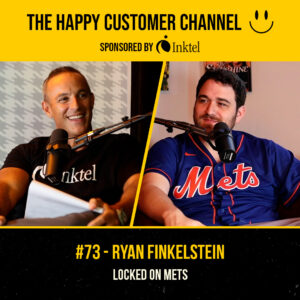
As we discussed in a recent episode, growth without customer proximity is just noise. This framework takes that thinking off the airwaves and puts it right where it matters—inside your operations.
Leadership Accountability Drives Real Outcomes
Here’s a hard truth most leaders don’t want to face: discipline at the top creates discipline everywhere else. And without it, your fancy strategies are empty. Growth that sticks only happens when leaders check their own ego—and put the customer’s reality back in the center of every decision.
I ask my teams one thing—constantly: Are we still earning the customer’s trust with this move? Every new product, every territory, every “stretch target”—run it through that lens. If you’re not, you’re just gambling with other people’s time and money. Because your customers always notice. They’re the first to spot when the pitch and the reality don’t match. Leadership that listens, that values real frontline insight, that treats customer trust as its only non-negotiable—that’s the leadership people remember. That’s when you get the flywheel: loyal customers, referrals, sticky revenue.
Anyone can grow fast for a quarter. What matters is who’s still growing ten years from now, with the same customers cheering them on. That’s the game.
Final Thoughts
Most growth playbooks fail because they’re chasing the new and shiny, not the tried and true. The companies that last? They double down on customer trust as a compounding asset. Every decision, every investment, every deal—run it through the customer lens. You’re not winning until your customer is winning. That’s the only scoreboard that counts.
Want more frameworks and unfiltered operator insights like these? Subscribe to The Happy Customer Channel Newsletter for real-time playbooks and strategies you won’t get anywhere else.
Common Questions
How do I know if I’m outgrowing my customers’ needs?
Listen, if your most loyal customers are slow to adopt your new offerings—or worse, they’re complaining about changes—you’re probably moving too fast. What I’ve seen is that customer churn creeps up quietly. Ask your front-line teams. Track product feedback and NPS closely. If you notice more friction, more questions, or less engagement, that’s a flashing red light. At the end of the day, the customer will tell you—if you’re willing to listen.
Can I pursue aggressive growth targets without risking customer loyalty?
Yes, but only if you make customer value an explicit gate in every decision. Run each initiative through a simple filter: Does it truly make life better or easier for your current customers? If not, don’t do it. Too many leaders get hooked on short-term wins or flashy metrics. You need ruthless prioritization—put retention and customer feedback ahead of vanity numbers. Aggressive growth is fine. Losing trust is not an option.
What’s the risk of ignoring customer alignment during acquisitions?
Here’s the reality: every acquisition is a trust reset. If you skip the customer migration plan, if you don’t invest in messaging, onboarding, continuity—you bleed out. I’ve watched nine-figure deals collapse because nobody thought through the customer transition. When customers feel abandoned or confused, they leave fast. Protect the relationship, build a transition roadmap, and overcommunicate. Anything less is reckless.
How do you balance short-term growth wins with long-term customer retention?
This is where discipline separates the pros from the amateurs. Say no to anything that undermines trust or value, even if it looks like easy money. Ruthless filtering, always. Measure your wins in retention, never just in booked revenue. What I’ve seen in the real world? Short-termists burn out fast—while long-game leaders build brands that compound for decades. Which do you want on your tombstone?