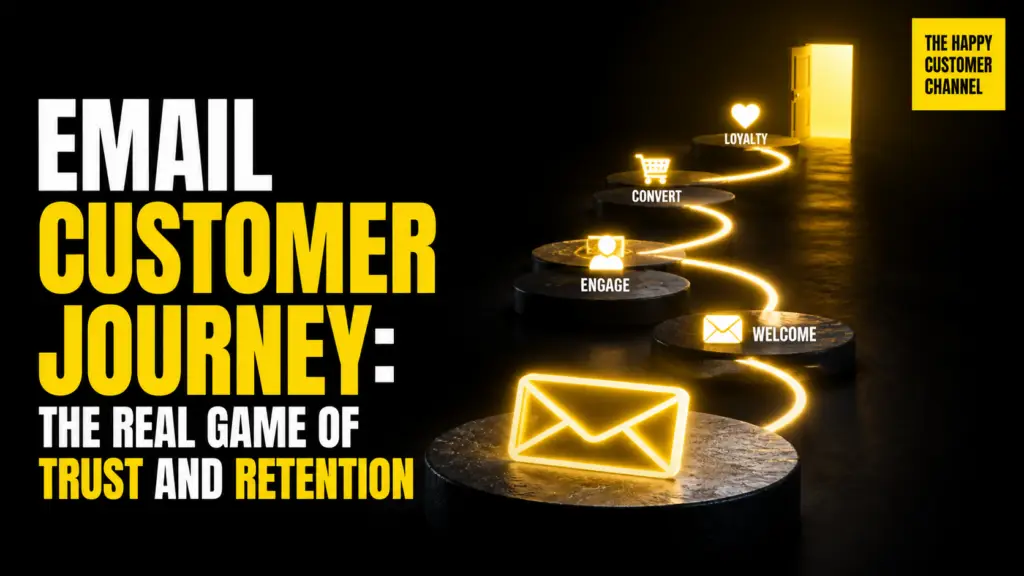
Are you burning bridges with every email? Or are you quietly stacking bricks of trust? The email customer journey is the most overlooked operating system in your business. If you’re not sweating the details here, you’re building churn with your own hands. Let’s get honest: most operators flood inboxes with noise and call it “engagement.” That’s not strategy. That’s surrender. The stakes? Real retention. The payoff? Big trust, built from a thousand small moments.
The Myth of “Just Another Email”—Why Small Moments Make or Break Trust
Email isn’t background noise. Each message is a test of your brand’s reliability. Every line, every subject, every timing choice—your customer is judging you for it. You can’t hide. You’re either seen as disciplined, or disorganized. You either value your customer’s time, or waste it. Most brands? They treat the email customer journey like a compliance task. “Send onboarding. Check the box.” But this is where trust cracks. Gaps between messages. Inconsistent voices. Jarring calls to action. These “little misses” add up fast. You think your campaign is a winner. Your customer thinks you’re forgettable—or worse, irrelevant.
This is the core truth: emails are not internal KPIs. They are external brand tests. The companies crushing retention are sweating every touchpoint. Every moment is scripted with intention. They know what most miss: trust isn’t earned in sweeping gestures. It’s built, lost, and rebuilt in the micro-moments. The small stuff is the big stuff. If you’re just “checking boxes,” you’re hemorrhaging credibility. Want more real-world operator thinking? THCC is the place.
Blueprint for an Effective Email Customer Journey—Operator’s Checklist
Let’s ditch theory for practice. Here’s a ground-level, operator-grade blueprint to build trust at every step of the email customer journey:
- Map the Journey Stages. Not complicated, just disciplined. Start with welcome, onboarding, activation, usage, renewal, re-engagement. Cover the full customer lifecycle. Anything missing? Fix it.
- Define the Purpose of Every Email. Don’t send for your agenda. Send for the customer’s. Ask: “What single action should this message inspire? What’s the intended outcome? Am I moving the customer forward, or sideways?”
- Apply Trust Tests. This is non-negotiable. For every communication, ask: “If this was the only email my customer ever gets, is it building trust or draining it?” Basic, but brutal. Most messages fail here.
- Impose Operating Standards. Don’t trust instincts or “best practice” lore. Build a living checklist. Consistency in tone. Useful data. Clear next steps. Review regularly. Hire for this discipline, not just creativity. If your customer experience strategy fails here, everything else unravels—see proof here.
- Audit and Iterate Relentlessly. Don’t set and forget. Journey stages change. Customer needs shift. Performance benchmarks evolve. Keep your playbook live, not laminated.
No email in your sequence is “just a touch.” Each is a trust lever or a trust breaker. If you mail it in—even once—you’re sending a message. Customers see it. They remember. Most importantly, so does your bottom line.
Leadership Discipline and Retention Outcomes—Why Trust is a KPI
Let’s cut to the chase. True customer experience isn’t a marketing function—it’s a leadership discipline. Anyone can launch a shiny campaign. Winners build retention at the operating system level. They don’t let the email customer journey happen by accident. They architect it. They measure it. Not just for opens or clicks, but for the only north star that matters: customer trust. Retention isn’t voodoo. It’s the sum of micro-moments. It’s how consistently you keep promises, time and time again. The best leaders treat trust as a metric—not a platitude.
I’ve seen this firsthand. The top operators insist on discipline around the “boring” stuff: copy review, cadence monitoring, friction elimination. They spot gaps before customers can. That’s how they keep retention high and complaints low. And at scale, that discipline prints money. The rest? They lose quiet, slow wars—and never know why. If you treat trust as a random byproduct, you’re already losing. Want this level of insight delivered weekly? Join the newsletter.
Final Thoughts
If you’re not obsessed with the small stuff in your email customer journey, your competition will be. There are no neutral interactions. You’re always stacking trust or burning it. Small moments scale. Get rigorous. Get intentional. Sweat every touchpoint, or get left behind.
Want more direct frameworks like this from real operators? Join the THCC newsletter.
Common Questions
How do you actually map an effective email customer journey from scratch?
Listen. You start where most don’t: the actual customer lifecycle. Not just “what emails do we send today”—but where your customers actually are. Break their path into milestones: welcome, activation, engagement, renewal, even win-backs. For each stage, define what the customer needs, not what you want to push. Every email has one job. Don’t let the sequence become an internal vanity project. Map it so the story feels seamless to your customer. If it doesn’t, you missed the point.
What’s the most common mistake operators make with email customer journeys?
Here’s the reality. Most teams treat emails like single-use weapons. One promo here. A re-engagement blast there. It’s not a story—it’s a scattershot. That’s how customers disconnect. The other killer? Inconsistency. Tone is all over the place. No continuity. No journey. Every touchpoint must feel connected, intentional, and customer-driven. Otherwise, you’re just another noisy brand in a crowded inbox.
How do you measure trust or retention impact from email touchpoints?
Great question. You can’t hide behind open or click rates. They’re vanity if they don’t move retention. Track how journey segments impact churn, customer lifetime value, or net promoter scores. Surveys can expose confidence gaps or confusion points. Look for negative signals: spike in unsubscribes, rising complaints, sluggish engagement after a certain email. That’s where the trust leaks are. High-performing brands can tie great email experiences to lower churn and higher repeat spend. That’s the metric that matters.
What’s the right cadence for emails to keep trust without annoying customers?
At the end of the day, there’s no magic number—just ask your customers. Relevancy always beats frequency. I’ve seen weekly emails celebrated, and monthly newsletters rage-ignored. Context wins. The right cadence is guided by value: does every message give the customer something they need, right now? Data and feedback are your best cadence compass. If people are tuning out, pull back and audit the value delivered. Every send should feel like a win, not a nudge.