Full Episode Here
Introduction
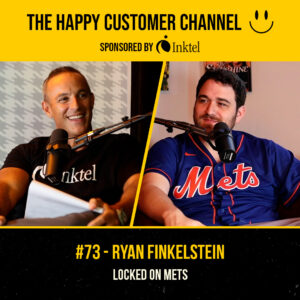
Ryan Finkelstein joins Dan Arriola for Episode 73 of The Happy Customer Channel to discuss Locked On Mets, the work behind a daily baseball podcast, and the relationship between a host and a loyal audience. This conversation was published in April 2025; its discussion of players, team decisions and the baseball season reflects that original interview.
What This Episode Covers
- Getting started with a sports podcast
- The work behind daily Locked On Mets coverage
- Balancing regular listeners with attention around major news
Key Insights
How did Ryan Finkelstein get started in podcasting?
Finkelstein describes studying journalism and practicing with an early sports podcast while in college. When he noticed an opening for a Mets show in the Locked On network, he contacted the company and sent sample episodes. His story shows the role that repeated practice and a concrete example of the work played in getting started.
What goes into a daily Mets podcast?
At the time of the interview, Finkelstein was producing shows seven days a week during the baseball season. He explains the cycle of watching games, researching, recording, editing and publishing. Locked On provides sponsorship and production resources, while he handles the work of making his show.
How does a sports podcast build a loyal audience?
Finkelstein distinguishes regular listeners, who fit the show into their daily routines, from people drawn in by a major signing or trade. He also discusses balancing a Mets fan’s perspective with critical analysis. The conversation explores how consistent coverage and an understanding of what fans care about help shape the show.
Framework or Operating Lesson
Build a repeatable way to serve a defined audience
The following is THCC's editorial application of the discussion.
- Define who the recurring listener is and what they return for.
- Plan the research, recording, editing and publishing work as a repeatable routine.
- Keep serving the regular audience between the news events that attract wider attention.
Key Takeaways
- Practice and sample episodes played a role in Finkelstein's start.
- Daily coverage involves more work than recording alone.
- Audience loyalty and one-off interest around major news are different patterns.
Who This Episode Is For
- Podcast hosts and sports-media creators
- Business owners serving a recurring audience
- Mets and baseball audiences
Watch the Full Episode
Watch Episode 73 above for the full conversation about Locked On Mets, sports media and baseball fandom. You can also watch the original interview on YouTube.
FAQ
How did Ryan Finkelstein get started in podcasting?
He describes studying journalism, practicing with an early college sports podcast and sending sample episodes when he contacted the Locked On network about a Mets show.
What does the episode say about daily production?
At the time of the April 2025 interview, he described producing shows seven days a week during the season, including watching games, research, recording, editing and publishing.
Where can I watch the original episode?
The original episode is embedded at the top of this page. You can also watch it on YouTube.
Keep the Conversation Going
A practical lesson for business owners
THCC’s editorial takeaway is to define the audience, build a repeatable way to serve it, and stay useful between the moments that attract wider attention. For more interviews about building and running a business, explore our entrepreneurship episodes.