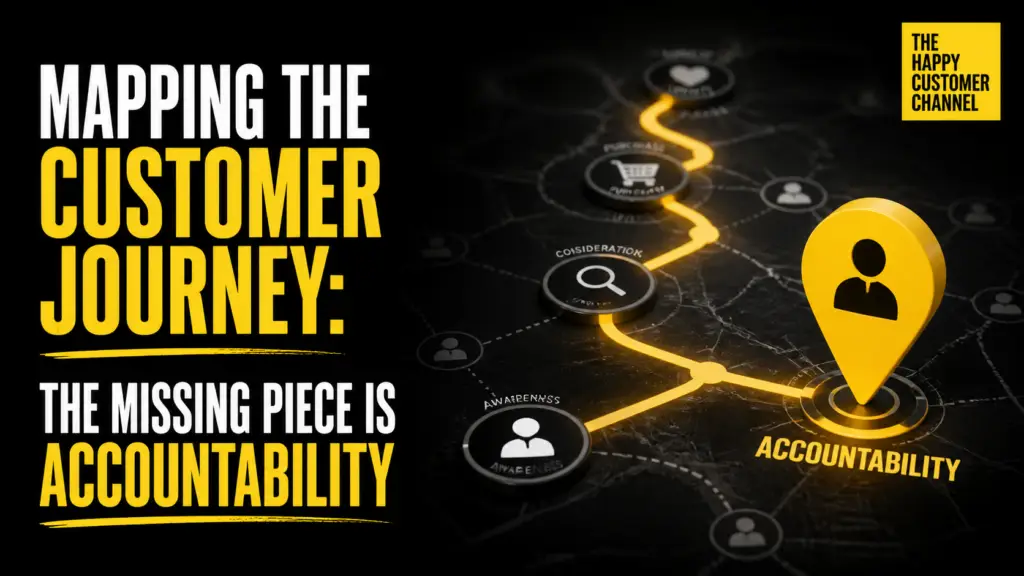
Why do so many customer journey maps end up as static diagrams—collected dust instead of driving results? Who’s holding the rope when the customer slips through the cracks? If you think you’re mapping the customer journey by filling in colorful boxes and calling it a day, you’re fooling yourself—and endangering customer trust. Here’s the reality: mapping the customer journey means nothing without real accountability. If leaders aren’t brave enough to assign names, track outcomes, and follow through when things go sideways, you’re not leading—you’re decorating.
Stop Mapping Without Muscle
I see it everywhere: teams set out to “map the journey.” Walls covered in sticky notes. Impressive diagrams. It all feels important, but let’s cut through the noise. Most of it’s a mirage. Where’s the muscle? Where’s the grit? Nobody wants to own the rough moments—the points where customers require answers, empathy, or even a little humility. That’s where trust is built, or destroyed. If nobody is responsible, those moments die on the vine. You wouldn’t design a mission-critical business process and leave it ownerless, so why do we accept that in customer experience? After decades driving operational change, I can tell you: if no one owns it, it never happens. Period.
I’ve run my share of post-mortems. It’s always the same—a journey map that everyone “helped build,” but nobody actually owned. The result? Friction mounts, customers churn, and the business loses credibility. If you want real impact, you have to embed real accountability into every single customer interaction. For more strategic insights into customer experience and retention, check out The Happy Customer Channel.
A Framework for Real Accountability in Journey Mapping
Ready to stop playing pretend? Here’s an operator-tested checklist that actually works when mapping the customer journey:
- Define every major customer moment and touchpoint. Get granular. Vague phases like “Onboarding” won’t cut it. Break it down until you see the friction points that matter.
- Assign a single owner for each touchpoint—by name, not department or committee. I can’t stress this enough. If “the team” owns it, nobody owns it.
- Set measurable outcomes for every critical moment. Not “do a good job”—but “respond to every customer support request within four hours.” Make it objective and visible.
- Make ownership public and trackable across teams. This isn’t about blame—it’s about clarity. When things go sideways, everyone should know whose court the ball is in.
- Create a regular cadence for reviewing breakdowns and outcomes. When something fails, don’t look for excuses. Look for ways to make the owner successful—then fix the process so it won’t break again.
Anything less than this is just wishful thinking. And if you want to put some backbone behind your CX strategy, see why so many approaches fall flat in this breakdown of customer experience strategy failure.
Here’s the punchline: journey mapping that works is journey mapping with teeth. It’s not some consultant’s artwork. It’s an operational plan—with actual names, measures, and muscle behind it. If you can’t walk the map, don’t bother drawing it. Customers don’t care about your sticky notes—they care about what you actually deliver.
Accountability Builds Trust and Revenue
Let me tell you what customers feel. They don’t see diagrams on your wall—they experience your operational discipline, or your lack of it. Great journey mapping isn’t about process. It’s about promise. Mess up a key touchpoint? Ignore a moment that matters? Customers don’t forgive easily, especially when their time and money are on the line. But when you show up with discipline, close the loop, and deliver on your map, trust compounds. Retention goes up. Revenue follows discipline, not sticker charts.
Holding individuals accountable isn’t about shame—it’s about trust. When everyone’s rowing in the same direction, performance improves. Silos shrink. Issues get solved at the root. If you want the kind of customer experience that beats the status quo—operationalize your journey map with the rigor of your P&L. Publish names. Review outcomes. Fix what’s broken. That’s how real operators win. For more about how operating standards drive successful CX—read why strategy fails without operating standards.
Final Thoughts
If you want customer trust, show customers you’re serious. Stop making wall art. Name the owners. Make metrics visible. Treat the journey map as your operating playbook, not a decoration. When you run mapping with true accountability, your customer experience becomes a competitive weapon. When you don’t, you become just another PowerPoint cautionary tale.
Ready to turn your journey maps into action? Subscribe to The Happy Customer Channel newsletter for operator-level strategies that actually drive results.
Common Questions
How do I get buy-in for customer journey mapping with real accountability from senior leadership?
Listen…talking about “customer experience” is table stakes now. What moves executives is risk and results. Show them where mapping the customer journey with actual ownership ties directly to hard business metrics—think revenue, churn, and brand reputation. Paint the picture of what happens when nobody is accountable (hint: lost loyalty, bad reviews, wasted spend). Then propose a solution: visible names, clear measures, win-or-learn reviews. That’s how you get buy-in for action, not just applause.
What’s the best way to choose owners for each customer journey touchpoint?
Here’s the reality—a team or department doesn’t own anything; people do. Assign ownership as close to execution as possible. Who delivers on that moment? Who can actually fix it if it breaks? That’s your owner. Avoid “shared” or “rotating” ownership at all costs. The minute it’s vague, it’s dead. If someone’s name is attached, accountability and pride follow.
How do I track and enforce journey accountability over time?
At the end of the day, accountability dies in the shadows. Build regular, visible review cadences. Set up dashboards, scorecards, or even simple check-ins—whatever makes owners answer for outcomes. When something slips, don’t just fix the symptom. Dig in: What broke? Who owned it? What’s the fix—and when is it due? And one more thing: celebrate the wins loudly and fix the misses quickly. That’s how real operators keep the journey map alive and relevant.
Can mapping the customer journey with accountability improve customer retention?
Absolutely. I’ve seen it firsthand. When owners are named and expectations are public, customers sense the difference. They encounter fewer surprises, get faster resolutions, and feel like somebody’s watching out for them. That’s what drives long-term retention—consistency and confidence, not nice diagrams. If you want to move the needle, put your journey map to work and measure the impact. Stop window-dressing, start outperforming.