Every founder wants exponential growth. But here’s the question that separates real operators from shortcut chasers: Can your business actually scale without breaking faith with your customers? In the world of small business growth strategies, that tension—between speed and trust—is make or break. Most businesses don’t just miss this; they bulldoze right through it, then wonder why repeat revenue dries up. If you’re after durable growth, and I mean the kind that compounds, this one’s for you.
Growth Without Trust is a Dead End
You can buy clicks. You can pound the phones. Maybe you’ll even juice next quarter’s numbers. But let me ask you this: At what cost? If customers sense desperation, if they see even one broken promise, they don’t just walk—they talk. Word spreads fast. The market is noisy but it isn’t dumb. Real growth in small business isn’t just about acquisition or snapping up new opportunities. It’s about values translated into execution, day after day, interaction after interaction.
Too many leaders treat “growth” and “trust” like separate lanes. They’re not. When your latest tactic chips away at clarity, reliability, or your reputation for straight talk, you’re pouring gas on a dumpster fire. That’s not a system. That’s a bet against your own company’s future. If you’re stacking “growth hacks” on a shaky foundation, you might win the week—but you will lose the decade.
The Trust Filter—How to Vet Every Growth Move
Here’s the real operator’s move: Build a Trust Filter right into your plan. Every time you’re pitched a new play or your team suggests a bold pivot, ask:
- Will this make our value clearer to the customer?
- Will it deliver faster, or more reliably, than before?
- Will it make us easier, not harder, to work with?
If the answer is no—stop. Don’t launch another channel if your response times on chat or email are lagging. Don’t dangle a discount if your onboarding is still bumpy and customers get lost after the sale. Every move has a trust consequence. Treat it like a balance sheet item, not a line in a values poster.
Here’s a pattern I see all the time: Companies focus on stacking new tactics, but ignore the operational cracks. Those cracks become canyons. And then you start hearing things like “churn is just part of our model.” Give me a break. Churn is the price of ignoring trust.
The Builder’s Growth Playbook—Checklist for Trust-First Scaling
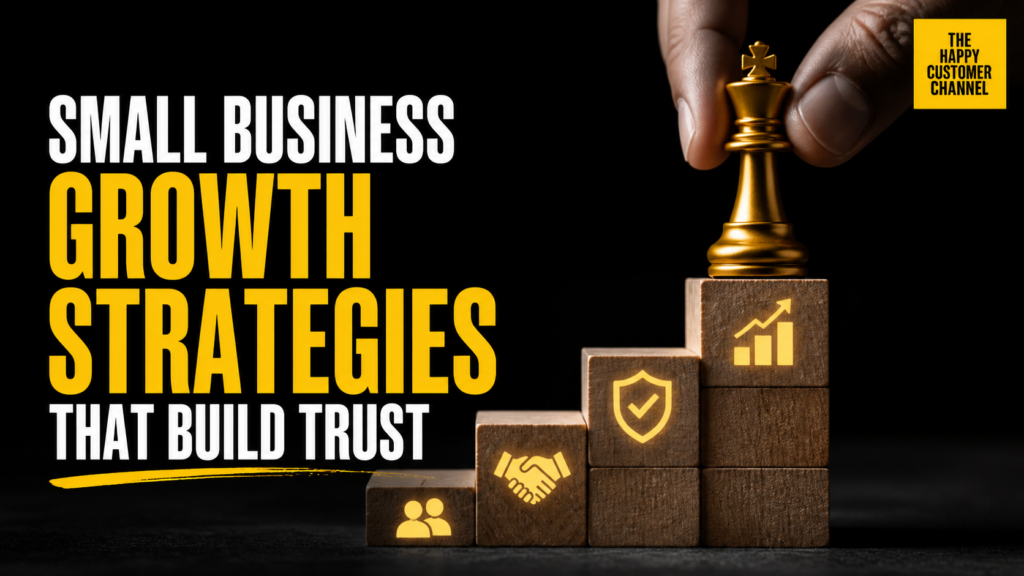
This is where real growth operators separate themselves. You want scalable small business growth strategies that actually build trust? Here’s a checklist you can run this quarter:
- Audit your customer touchpoints. Where is friction hiding? Where do customers feel uncertainty? Don’t guess—ask. Mystery shop your own business.
- Align incentives. Are your frontline teams rewarded more for solving issues for customers—or just for booking another sale? Get this wrong, and you’ll burn brand equity faster than you ever intended.
- Open the feedback loop. Stop treating customer feedback like a burden; it’s your best R&D. Regularly publicize what you improved because of what customers told you. Make it part of your rhythm. Trust grows when customers see you actually care.
- Stack small wins. Chase expansion moves that make your existing customers say “Wow, they get me.” Don’t get distracted by the next shiny object until your base has zero reason to leave.
That’s your operator-level framework. Do it quarterly. Hold your leadership team accountable. Growth compounds best when trust is at the heart of every tactic.
Don’t play small ball. But don’t play it dumb, either. If you want real-world examples, frameworks, and deeper dives on how small businesses are scaling while building trust, check out what’s happening at The Happy Customer Channel. That’s where pros level up together.
Final Thoughts
Growth is a double-edged sword. If you shortcut trust, the very thing you’re building can turn on you—fast. But get this right? Suddenly you’ve got competitors copying tactics they barely understand, while your customer lifetime value curve goes vertical. The market backs operators who know that “growth” and “trust” are two words for the same long game. Refine your playbook. Let trust be your competitive edge.
Ready to operationalize these strategies? Don’t miss out. Get actionable frameworks, advanced breakdowns, and real-world case studies straight to your inbox—join the community here.
Common Questions
What’s the first growth move a small business can make to build trust?
Listen—don’t overcomplicate this. Most teams miss the basics: fast, honest communication. If you respond quickly and shoot straight, customers will remember it. It’s not about flashy tech or fancy branding at the start. It’s about showing customers, right away, that you’re reliable and you actually give a damn when something goes wrong. Nail this, and you set a bar your competitors can’t touch.
How do I know if my growth strategies are actually building trust?
Here’s the reality—I see too many leaders lying to themselves with vanity metrics. Don’t look just at new signups or surface reviews. Track your repeat rates and the quality of the feedback customers give you without being prompted. When you see more customers coming back and sharing honest, positive specifics, you’re building trust. If complaints or “silent churn” tick up, your tactics are killing trust faster than any NPS score can show.
Can aggressive sales targets coexist with a trust-first approach?
Absolutely—but only if your sales targets are set up the right way. If your compensation system only rewards the deal, people will cut corners. If you instead reward outcomes where customers win (and actually stay), the aggressiveness drives the right behaviors. I’ve seen teams crushed by bad incentives. The best teams? They win because customers come back, and referrals follow. Want aggressive goals? Pair them with mechanisms that keep customers at the center.
What frameworks do you use to evaluate new growth channels?
I don’t launch a thing without running it through my Trust Filter. Will this channel make things clearer or easier for a customer? Will it actually create value, not complexity? Test it. Run pilot programs. Listen for friction or confusion. If you detect anything that undermines your reputation, kill it or fix it fast. At the end of the day, growth that erodes trust is just a slow-motion fail.