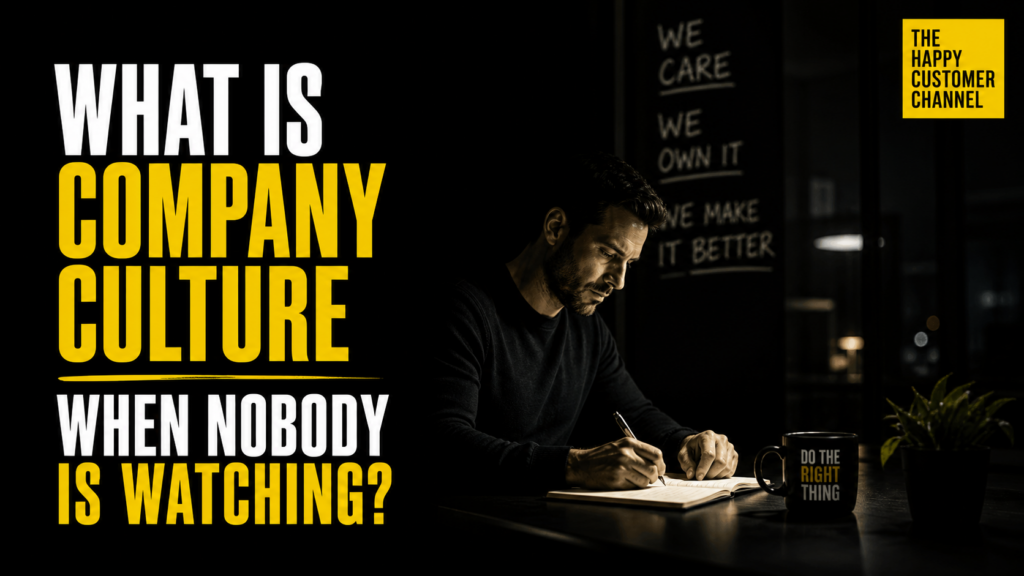
What happens in your company when management leaves the room? If you think culture is what’s written on the wall, you’re already losing. Here’s the brutal truth: what is company culture really about? It’s not your values poster. It’s not a marketing campaign. It’s the choices people make when nobody is watching. Ignore this, and your culture will drive itself—right into a ditch.
Culture Is What Happens Offstage
Let’s cut through the noise. Too many leaders fall for the trap of believing company culture is about the performance they see at all-hands meetings or during annual reviews. That’s theater. Real culture is unscripted. It’s the after-hours Slack message, the quick decision at 7:30 p.m., the way someone talks about a customer problem when there’s zero oversight.
If you aren’t paying attention to those moments, you don’t know your real culture. Your people do, though. They’re living it, every day, in the gray areas—when there’s just enough ambiguity to go one way or another. Do they cut corners when it’s easy? Do they care about the customer when fixing the issue isn’t mandatory? That’s your culture. The Happy Customer Channel has spent years in the trenches with leaders who learned this the hard way. The strongest teams aren’t the ones with the flashiest mission statements—they’re the ones whose offstage choices match their onstage promises.
So, what is company culture? It’s the common denominator of countless small, unsupervised decisions. Get that right, and everything else follows. Get it wrong, and good luck scaling trust or performance—the invisible rot will eat you alive.
The Unattended Culture Checklist
You want something practical? Good. Here’s how to get out of your own echo chamber and actually see the company culture you have—not the one you wish existed. Use this 5-point checklist to gut-check your business:
- Do employees cut corners when nobody is looking? Not what they say. What actually happens? Watch for inconsistencies or quiet ‘exceptions’ to the rules.
- Are customer issues resolved when escalation isn’t mandatory? If it’s not a fire drill, does anyone bother? True culture shows in the “small stuff” just as much as in crisis mode.
- Are small wins and lessons shared informally, or hoarded? Information hoarding drains organizations. Sharing—especially when nobody told them to—is a culture pulse-check.
- What gets joked about after hours—and does anyone address it? Offhand remarks reveal real beliefs. Do you let them slide, or do culture carriers step in?
- Who gets celebrated (or quietly ignored) when results show up? Who gets the spotlight? Are you rewarding behavior that matches your values, or just performance at any cost?
I’ve watched companies nail four out of five and fall apart because they missed one. Don’t kid yourself—every one of these is a window into your true north. Run this checklist quarterly. Better yet, delegate ownership of it outside your executive circle. If you want discipline that scales, measure your “invisible” culture as hard as you do your P&L. Leaders aren’t paid to admire values—they’re paid to enforce them when nobody else is looking.
Invisible Culture, Visible Results
Here’s the punchline: your customers already know what your real culture is. So do your competitors. If the invisible decisions your people make under pressure don’t line up with your promises, it leaks out—fast. “What is company culture?” It’s a leverage point. Your offstage reality becomes your brand, your customer experience, your ability to survive a bad quarter.
Think you can sweep this under the rug? Not a chance. If employees see you pausing discipline for a “rainmaker” who crosses the line, you just taught them to ignore the rules, too. If you quietly tolerate mediocrity, your best performers either lower their bar or walk. And if your team sees you rewarding the right thing—especially when it’s hard—they’ll rally behind your standard, every time. That’s the multiplying power of culture.
The businesses that scale trust don’t police every move. They build muscle memory. They reinforce—over and over—what “right” looks like, even in the shadows. They know operational discipline is contagious. Sure, some days it feels relentless. But there’s no other way. You want top-tier outcomes for your customers? You need invisible culture that runs itself—on good days and bad.
Final Thoughts
Company culture doesn’t need a branding campaign. It needs a mirror—and a leader willing to use it. If you’re serious about building for the long haul, forget about slogans. Watch what’s happening offstage, listen with intent, and—most importantly—measure what never shows up in a board deck. That’s the stuff that builds or destroys trust. That’s what your competitors are betting you’ll ignore. Don’t give them the win.
Want field-tested frameworks and real operator Q&A in your inbox every week? Sign up for the THCC newsletter and get leadership insights you won’t get anywhere else.
Common Questions
How can I tell if my company culture is actually healthy when I’m not present?
Listen—it’s never the PowerPoint that tells you the truth. It’s the conversation at lunch. The way people disagree in meetings. The jokes that surface when the boss is gone. What I’ve seen is, the healthiest cultures have frontline people who speak up even if it’s uncomfortable. If you want to know, audit anonymous feedback, monitor unsupervised interactions, and get brutally honest about what people are saying and doing when they think it doesn’t matter. That’s your health score.
What’s the risk if I ignore the “invisible” side of company culture?
Here’s the reality—you’re letting rot set in beneath the surface. Ignore it, and shortcuts, apathy, and silent politics start to fill the vacuum. Sooner or later, you’ll see it in lost customers, missed numbers, and top talent walking out the door. At the end of the day, whatever you let slide becomes the real rule. You either manage your invisible culture, or it manages you—and not in a good way.
Can culture really change if leadership starts enforcing new standards?
Absolutely. But only if it’s consistent and actually enforced—even when it stings. People notice when leaders hold themselves to the same bar they set for everyone else. Don’t expect trust overnight. Culture rewrites itself in the quiet moments: who gets called out, who gets recognized, what gets tolerated. It’s not about slogans, it’s about what you do when it would be easier to look away.
How does “invisible” company culture affect customer trust?
If your people treat customers well only when managers are watching, your brand is just theater. Customers pick up on it. Always. They notice when employees go the extra mile on their own—they know when a team’s heart isn’t in it. Invisible culture is everything in service. When the offstage matches the onstage promise, you build loyalty and trust that lasts. Anything less? It falls apart at the first sign of pressure.