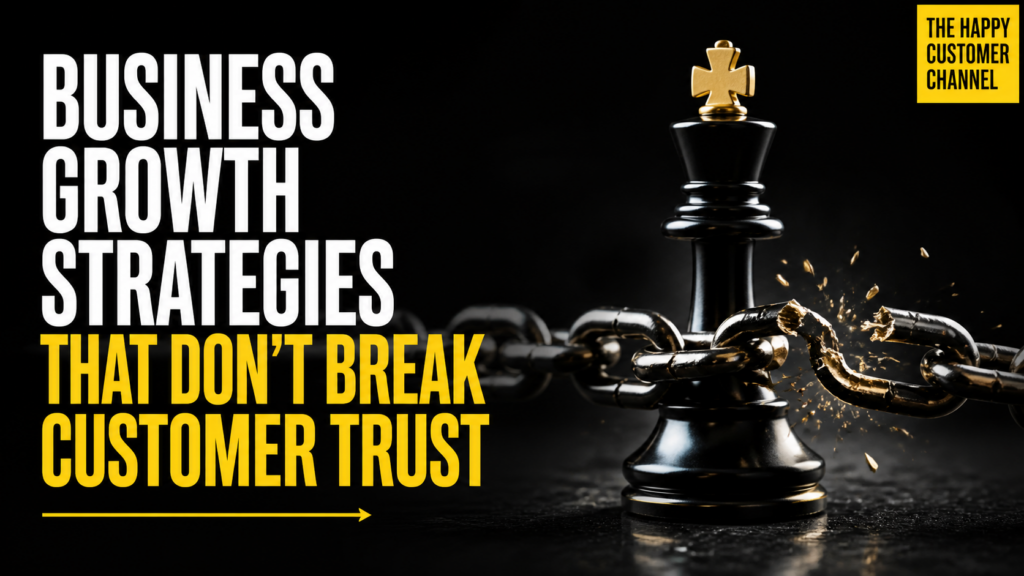
Is your playbook for business growth rewarding your bottom line at the expense of your customers? Or are you bold enough to drive real results without leaving wreckage behind? This isn’t just about scaling quickly. It’s about using business growth strategies that protect customer trust. The world is full of companies sprinting for profit—and just as many setting fire to loyalty on the way.
The Temptation to Compromise Customer Trust
Growth at any cost is a lie. Every operator, founder, and boardroom knows the temptation. Cut corners. Jack up prices. Roll out new features and fix the mess later. The headlines rarely mention the churn, refund requests, and NPS nosedives that always follow. Let’s get real—if your business growth strategies create chaos for your best customers, you’re not scaling, you’re self-sabotaging.
The landscape is littered with leaders who think short-term spikes equal long-term success. They’re wrong. When you hear “We’ll deal with churn later”—that’s the canary in your coal mine. And the bigger you grow, the harder it is to repair trust. Loyalty is hard-won. Easy to destroy.
The 4 Pillars of Customer-Proof Growth
No more theory. Here’s my operator’s checklist—these are the four pillars I’ve seen separate sustainable businesses from “mayfly” stories.
- Alignment: Connect growth KPIs directly to customer retention, not just logo count. If your password resets triple or you’re hiring more support reps than salespeople, something’s off. Align revenue with customer experience. No exceptions.
- Transparency: Overcommunicate. When you change products or pricing, make it absurdly clear. Are your customer-facing teams trained to handle tough conversations—or do they just read scripts? Spin destroys trust. Radical clarity builds it.
- Responsiveness: Build the right feedback signals and fix issues in the moment. If Glassdoor, Twitter, or Reddit break the news before your team does, you’re exposed. Tighten that loop. Make it your daily discipline.
- Consistency: Don’t let your delivery quality trail your sales motion. Growth should never outpace what you can truly serve. Scale your processes with the same intensity you scale your pipeline. This is operational discipline, not sexy—but it’s what lasts.
Here’s the test: Will your customers say “they’ve kept their promises” after a year with you? If not, you’re not growing. You’re just getting louder.
Growth That Lasts vs. Growth That Breaks
I’ve led and watched growth for more than two decades. The pattern is always the same. The brands that win long-term treat customer impact metrics as law, not suggestion. Call volumes spike, refund demands rise, or negative reviews show up? That’s not noise—that’s a signal your growth is getting ahead of your execution.
The weak excuse away operational mistakes as “growing pains” or “hypergrowth problems.” The winners stop, re-align, and invest in fixing the bottlenecks that are tripping up their customers. They slow down, recalibrate, and get religious about feedback. They’re disciplined, not desperate.
If your customer data—churn rates, net promoter scores, repeat business—ever lags your revenue, pause. Fix the cracks. Or get ready for a public reckoning. At the end of the day, your strongest market position is keeping the promises you made when you were small. That’s real growth. Everything else will blow up in your face eventually.
Final Thoughts
Tie your business growth strategies to your ability to keep promises. Protecting customer trust is not a footnote to scaling—it’s the main event. Short bursts of growth look impressive until customers bail. Sustainable, disciplined expansion earns loyalty, reputation, and real enterprise value. Ignore this and you’re just building a bigger target on your back.
Ready to rethink growth? Join the newsletter for weekly tactical insights you won’t find anywhere else.
Common Questions
What are the early warning signs that my growth strategy is hurting customers?
Listen…high churn rates, support tickets going through the roof, and a spike in refund demands—these are red alerts. Don’t pretend they’re just “growing pains.” Watch your NPS and CSAT scores like a hawk. See a drop? That’s the market telling you something’s broken. If you’re hearing more negative buzz than usual, it’s time to stop and fix the leaks, fast.
How do I balance aggressive growth goals with keeping customers happy?
Here’s the reality—stop letting sales metrics be your only scoreboard. Attach compensation to both revenue and customer retention. Implement quarterly customer friction audits. If your new initiatives are causing friction or confusion, that’s on you, not them. Aggressive growth doesn’t mean turning your customers into beta testers for broken ideas.
Can I really scale fast without breaking something for my customers?
Absolutely—but only if you invest upfront in robust onboarding, killer support, and tight feedback loops. Don’t cut corners just to hit a new logo target. Make sure your systems can flex and scale before you hit the gas. Multiply what works, not what’s already creaking under pressure. Fast doesn’t have to mean reckless.
What frameworks actually help run customer-first growth strategies?
What I’ve seen work: NPS correlation tracking, detailed customer journey mapping, and friction dashboards that your team actually uses. Don’t launch anything without stress-testing it for customer impact. Reverse engineer every major change—ask, “How does this break if we double tomorrow?” If you don’t like the answer, fix it now, not later.