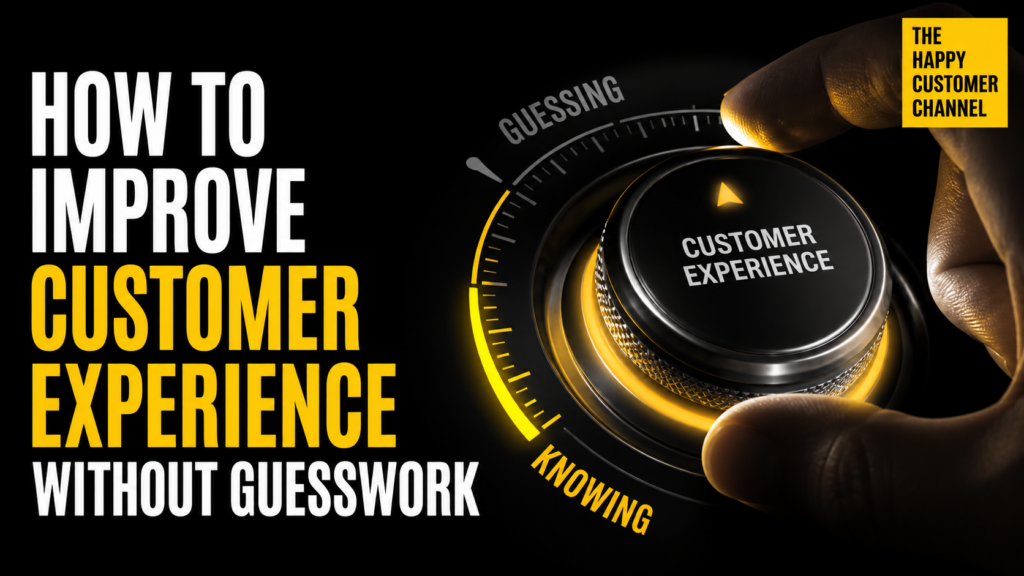
Are you really improving customer experience—or are you just guessing? Too many organizations talk about “CX” like it’s a slogan or a mood. Most have no idea what happens at the moment of truth: when a customer actually engages with their business. If you want to know how to improve customer experience for real, it’s time to stop hoping and start operating with discipline.
Stop Guessing: Drive Customer Experience With Discipline
Let’s cut through the noise. Customer experience is not a vision statement or an “attitude.” It’s the sum of every operational choice you make. When you guess, you lose. When your team’s just winging it, you create chaos and disappointment. Are you setting clear standards? Are you even measuring what matters?
Here’s the hard truth: Hoping your people “know how to provide great service” is not a plan. You need rigor. Discipline. Systems that guarantee the customer actually gets what you promise every single time. That’s the only way to move from good intentions to real business outcomes. Anything less is a gamble with your reputation and retention.
In my experience, companies that consistently win on customer experience do the same things: They replace guesswork with data, make operating standards clear, and adjust quickly based on evidence—not opinions or wishful thinking. They don’t throw ideas at the wall. They build customer trust with operational clarity and leadership discipline, every day.
The No-Guess Framework: From Assumption to Action
Still guessing what your customers want? Stop. Here’s a direct, repeatable framework to build a world-class customer experience:
- 1. Capture What Customers Actually Experience
Don’t trust your gut—or anyone else’s. Watch, listen, and learn. Use post-interaction surveys with smart, open-ended questions. Go to the frontline. Shadow your team. Monitor real calls. Comb through chat logs. Ask for frontline feedback weekly. The goal? Uncover hard evidence. Identify where friction happens, not where you think it happens. - 2. Translate Insights Into Operating Standards
Data without action is worthless. Once you know what matters to your customers, turn those learnings into clear, enforceable standards. Don’t settle for abstractions like “be helpful.” You want specifics: “Respond to every support email within 15 minutes.” “Every customer leaves with a written summary—every time.” Standards make it actionable. For a deeper dive on why this matters, check out Why Your Customer Experience Strategy Fails Without Clear Operating Standards. - 3. Repeat—Relentlessly
Think your job’s done after rollout? Wrong. Great CX is a feedback loop. Keep testing. Measure the right KPIs: retention, repeat business, complaint rates. Review real results every week, not every quarter. Tune your standards based on what customers actually say and do—not what’s trendy in a business book. Close the loop fast. When you replace assumptions with data, customer loyalty and spend go up—every time.
This is how you make customer experience a growth engine, not an afterthought. No fluff. No missionary zeal. Just relentless, operator-level execution.
The Operator’s Checklist for Customer Experience (Use This)
Here’s a practical checklist. Pin it to your wall. Run your CX discipline through this lens—every month:
- Are you collecting real customer feedback, weekly—not annually?
- Can any team member explain your CX operating standards, word for word?
- Do you track response and resolution times—objectively, system-wide?
- Are you closing the loop with customers who give negative feedback?
- Is someone accountable for each experience “standard” you set?
- Are you re-training based on what didn’t work, not just on what’s “supposed” to work?
- Are leaders reviewing actual customer outcomes, not just anecdotal wins?
Score yourself, honestly. Where there’s ambiguity, there’s guesswork. Where there’s clarity, there’s traction.
How Leadership and Trust Fit In
This process takes guts. Leaders set the tone. If you push responsibility down but duck the data, your teams will cut corners. If you flinch from hard feedback, your customers will walk. The companies I see thriving—the ones building unbreakable customer trust—are not the ones with the best slogans. They’re the ones who handle the truth and fix friction, no matter how uncomfortable.
Leadership discipline means putting actual standards and measurable results above wishful thinking. It means holding every operator, manager, and exec to a level of accountability that sometimes stings. But that’s how you win. Consistently. Customers trust what you operationalize, not what you preach.
If you’re hungry for more practical ways to make this real, check out The Happy Customer Channel—there’s no shortage of gut-checks and real lessons for leaders who mean business.
Final Thoughts
Guessing is easy. Discipline is rare. If you want real loyalty, start with truth: build standards, measure relentlessly, act with nerve. Hope is cheap. Results are earned. The companies with the backbone to stop guessing and start operating are the ones that rise above the noise—every single time.
Ready to transform your team’s approach to how to improve customer experience? Join the THCC newsletter for operator-level strategies, frameworks, and real-world playbooks delivered straight to your inbox.
Common Questions
How do I stop guessing what customers want and get real feedback?
Listen—guessing is a shortcut. The antidote? Get out of your office. Talk to customers directly. Use tailored surveys. Start calling customers who had a bad experience—don’t outsource it. Ask your frontline team where friction actually happens (they know). At the end of the day, the only feedback that matters is what’s real, recent, and raw. You can’t steer the ship if you don’t know where the leaks are.
What are examples of operating standards in customer experience?
I see the same mistake all the time—companies set goals like “exceed expectations.” That’s vague. Here’s the reality: standards must be specific, concrete, and measurable. “Answer every customer call within 20 seconds.” “Resolve complaints within 24 hours, no exceptions.” “Offer a follow-up call after each tech support ticket.” If you can’t measure it, you can’t improve it. Clarity wins out over nice-sounding promises every time.
How do I know if my CX changes are actually working?
What I’ve seen is, most leaders assume something’s working because complaints are quiet, or their gut tells them so. That’s dangerous. Track the metrics that count: retention rates, customer NPS, repeat business, and complaint frequency. Run a before-and-after. If those numbers aren’t moving, your changes aren’t working—full stop. Don’t let hope cloud your vision. Demand proof, not platitudes.
How can small businesses apply this framework with limited resources?
You don’t need millions to drive killer customer experience. Start simple. Even if it’s just you, capture feedback: ask every customer what went well and what didn’t. Set a basic response time. Track complaints and compliments in a spreadsheet. Use what you have—but be relentless. Discipline matters more than budget. The truth? Small teams can pivot faster and execute tighter when they commit to clarity and action over excuses.