
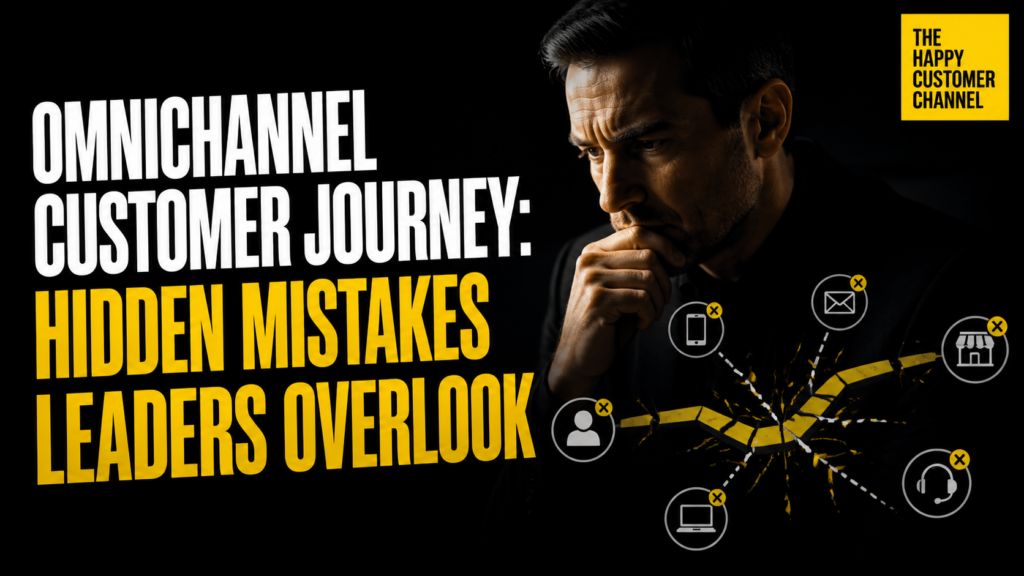
Everyone talks omnichannel. But let’s get real—how many leaders have the guts to dig into their own omnichannel customer journey and name the places where customer trust gets shredded? You can buy all the tech in the world. Doesn’t matter if your customer has to repeat their story three times, gets bounced between teams, or hits a wall of “that’s not my job.” People love to say they’re customer-centric. The reality? Most are flying blind where it counts. If you think your omnichannel journey is bulletproof, this is for you.
Omnichannel Isn’t Just a Channel Problem. It’s a Leadership Problem.
Here’s the mistake I see over and over. Companies treat the omnichannel customer journey like it’s a software deployment or a marketing campaign. Leadership steps back. They hand it off to a project team and declare victory once all the channels are “connected.” But real customers don’t experience journeys in PowerPoint or dashboards. They experience every messy handoff, every dropped call, every “let me look into that for you” dead end.
Omnichannel is meaningless if it’s only a tech investment. Integration is worthless if each department still guards its turf. Are you running a business, or are you running a collection of departments that occasionally exchange emails? When ownership of the full journey is unclear, friction multiplies. Siloed KPIs smother accountability. When the customer falls through the cracks, nobody owns the outcome. That’s broken leadership, plain and simple.
At The Happy Customer Channel, we see this every week. Companies want customer love. They forget the discipline required to deliver it. The starting point? Genuine cross-functional ownership. If leadership doesn’t ruthlessly align—from C-suite to frontline—omnichannel will fail you. Every. Single. Time.
The Three Omnichannel Blind Spots That Kill Trust
I don’t care if you have the best CRM or a hotline to your VP of IT. There are three mistakes I see in the wild that quietly destroy the omnichannel customer journey. Let’s pull back the curtain:
- Unmonitored Handoffs. Who owns the baton when a customer moves from chat to phone, or retail to digital? Too often, nobody. That customer? They tumble through process gaps, forced to repeat themselves or face an info gap. If you’re not tracking the transition, you’re guaranteeing pain.
- Invisible Friction. The little things compound. Delay here, missing notes there. Customers are left hanging while teams scramble to line up the story. You may not see it in the metrics, but your retention numbers will tell the truth. Have you mapped friction points? Or are you guessing?
- Lack of Operating Standards. “Seamless” means nothing without explicit rules. How quickly does each channel respond? What context must be carried forward? Who owns the next step? Talking about “good communication” is wishful thinking until you have standards. For a deeper look, see this breakdown of why operating standards make or break your journey strategy.
Most leaders focus on tools and miss the inches that matter. Omnichannel doesn’t fail by miles; it fails one dropped handoff, one slow follow-up, one annoyed customer at a time. These are the inches you’re losing.
Your Ruthless Omnichannel Checklist: Are You Brave Enough?
Don’t trust your gut. Trust your process. Leadership isn’t about intuition—it’s about discipline. Here’s the checklist I challenge every team to run, no excuses:
- Map Every Transition. Every customer handoff must have a clear owner. Who is responsible for the outcome at each step? If the answer is fuzzy, you have a problem.
- Audit Your Friction. Dig into the reality—not the survey scores. Shadow the journey. Where are customers forced to repeat themselves? Where does the ball get dropped?
- Set—and Share—Operating Standards. Do your frontline teams know the response time, data handover rules, and accountability for every channel change? If not, you’re hoping, not managing.
- Kill the Echo. Make it a non-negotiable: No customer repeats their story twice. Simplicity, not apologies, builds trust.
Print this. Post it. Beat it into the routine. Leadership isn’t just setting direction—it’s enforcing the rules that eliminate friction and ambiguity. That’s how you build retention. That’s how you keep real trust.
Final Thoughts
The omnichannel customer journey isn’t a tech project. It’s not a pretty diagram on a wall. It’s the test of whether your leadership is strong enough to see, name, and fix what everyone else ignores. Fixing journey mistakes takes discipline and guts. Most leaders chase tools. Very few chase truth. Where do you want to be?
For ruthless, actionable perspectives like this sent straight to your inbox, join THCC’s newsletter. If you’re serious about real customer experience and retention, you belong here.
Common Questions
How do I know where my omnichannel customer journey is falling apart?
Listen. If you’re only reading dashboards or survey scores, you’re already behind. Watch the journey up close. See where customers get asked for the same info twice. Where do agents seem lost? Where is there a lag time no one can explain? If you can’t answer who owns every handoff, your journey is leaking trust. Real insight comes from following the thread, not sitting in meetings hoping the data tells the story for you.
What is the most common mistake companies make with omnichannel customer journeys?
Here’s the reality: Most companies dump ownership on tech or the CX team and clock out. But customer experience isn’t a project—it’s a habit. When leadership doesn’t drive cross-functional discipline, channels become silos and customers become frustrated. Don’t blame the tools. Blame the lack of clear, accountable ownership. That’s where most journeys collapse.
How can operating standards improve the omnichannel customer journey?
At the end of the day, operating standards are your insurance policy. They spell out response times, info handover, and real point-of-contact at each step. Without them, you’re gambling on good intentions and hoping for the best. With standards, you surface the ugly realities—and actually have a shot at fixing them. Standards force action where ambiguity lets mistakes fester. Want seamless? Start with standards, or forget about it.
What quick wins can a CX leader deliver to fix omnichannel journey issues?
Don’t overcomplicate it. Find your repeat complaints and start mapping the points where customers switch channels. Assign clear ownership for every transition. Fix the obvious handoff gaps first—don’t wait until it’s perfect. Quick wins happen when you get surgical in finding where the ball is dropped and ruthless in making sure it never drops again. Leadership is doing what’s needed, not just what feels comfortable.