Empathy in Customer Experience Drives Growth
Most companies say they care about customers. Then they make those same customers repeat themselves, chase updates, and fight broken systems.
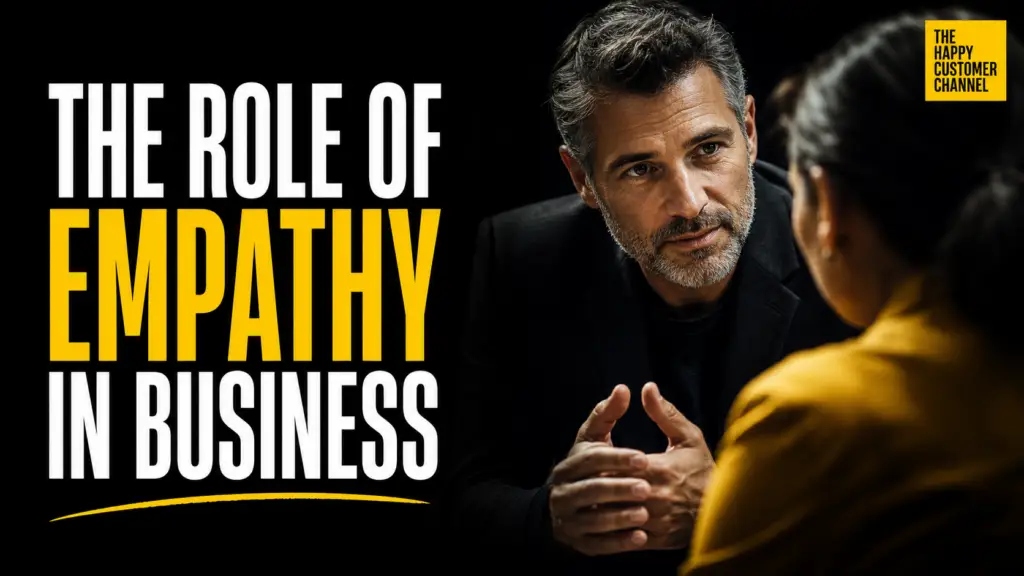
That is where empathy in customer experience gets exposed. Not in the brand promise. Not in the customer service script. In the moment when something goes wrong and the customer is wondering, “Does this company actually understand what I’m dealing with?”
Empathy is not a soft skill. It is not a warm tone. It is not saying “I apologize for the inconvenience” while doing nothing useful.
Empathy is an operating discipline. It shows up in how fast you resolve issues, how clearly you communicate, how well your teams hand off information, and how much effort you remove from the customer’s day.
Empathy Is Not Being Nice
Being nice is the floor. It is not the strategy.
A customer does not feel understood because your team used polite language. They feel understood when they do not have to explain the same issue to three different people. They feel understood when the next step is clear. They feel understood when the company takes ownership instead of hiding behind policy.
Here’s what actually happens in many businesses. A customer has a problem. They contact support. The agent is friendly. The script is polished. The email says all the right things.
But the process is broken.
The customer gets transferred. The notes do not carry over. The refund needs approval from someone who is unavailable. The customer is told to wait, but nobody explains what they are waiting for.
That is not empathy. That is politeness wrapped around friction.
What I’ve seen is simple. Customers judge empathy by outcomes. Did you make the hard moment easier? Did you reduce uncertainty? Did you remove the burden? Did you protect their time?
If the answer is no, the customer does not care how nice the message sounded.
Your Metrics May Be Killing Trust
A lot of companies say they want better customer relationships. Then they measure teams in ways that punish real problem-solving.
Handle time. Ticket closure. Call volume. Deflection rate.
Those numbers matter. But they can become dangerous when they become the only numbers that matter.
Here’s the reality. If you reward people for ending conversations quickly, they will end conversations quickly. If you reward them for closing tickets, they will close tickets. If you reward them for deflecting customers away from humans, they will build walls between the customer and the answer.
The business may look efficient on paper. The customer feels abandoned in real life.
This is where real empathy in customer experience requires leadership discipline. You have to ask better questions. Are customers contacting us more than once for the same issue? Are they escalating because they are frustrated or because our process failed? Are we solving the root problem, or are we just moving the customer through a queue?
Speed matters. Nobody wants slow support. But speed without resolution is just a fast way to lose trust.
Customer effort tells the truth. Repeat contact tells the truth. Complaint patterns tell the truth. Retention tells the truth.
Your customers can feel your incentives. If your systems are built to protect internal convenience, they will know. If your teams are built to protect customer confidence, they will know that too.
Operational Empathy Creates Loyalty
Empathy becomes powerful when it leaves the training room and enters the operating system of the business.
That means policies. Handoffs. Escalation paths. Product decisions. Communication standards. Employee authority.
It means your frontline team is not forced to say, “I understand,” while having no power to fix anything. That is one of the fastest ways to frustrate both customers and employees.
Give your people the ability to solve reasonable problems. Give them clear boundaries. Give them context. Give them permission to use judgment.
Operational empathy looks practical. It looks like sending proactive updates before the customer has to ask. It looks like writing policies in human language. It looks like designing forms that do not ask for information you already have. It looks like making sure the next person already knows the story.
Small things become big signals.
A clean handoff tells the customer, “We were paying attention.” A clear timeline tells the customer, “You are not being ignored.” A fair policy tells the customer, “We value the relationship, not just the transaction.”
This is not charity. This is growth.
Customers come back to companies that lower stress. They recommend companies that make problems easier. They trust companies that act with ownership when things get messy.
Loyalty is not built when everything goes perfectly. Loyalty is often built when something breaks and the company handles it better than expected.
Final Thoughts
Customers do not remember empathy as words. They remember whether you made the hard moment easier.
That is the standard.
If your customer has to fight your process, your message does not matter. If your team cares but your system blocks them, the customer still loses. If your metrics reward speed over resolution, trust will erode quietly.
Empathy is not what you say after friction happens. It is how you design the business so less friction happens in the first place.
Common Questions
How do we show empathy without slowing down support?
Listen, empathy does not mean every conversation has to be long. That is the wrong way to look at it. Empathy means removing unnecessary effort so the customer gets to the right outcome faster. If your team has the right information, clear authority, and better tools, support can be both faster and more human. The goal is not longer conversations. The goal is better resolution with less customer frustration.
How do you measure whether customers actually feel understood?
Here’s the reality: you have to look beyond satisfaction scores. Watch repeat contacts, escalation rates, complaint themes, customer effort, and retention. If customers keep coming back for the same issue, they do not feel understood. If they are repeating themselves across channels, your system is failing them. The data is usually already there. Most companies just do not want to look at what it is saying.
Isn’t empathy just customer service training?
What I’ve seen is that training helps, but it does not fix a broken operating model. You can train people to sound caring, but if the policy is rigid and the system is messy, the customer still feels the pain. Your people need more than scripts. They need authority, context, and processes that support the customer. Otherwise, you are asking employees to deliver empathy with their hands tied.
What if the customer is unreasonable?
At the end of the day, empathy does not mean saying yes to everything. That is not business. It means being clear, fair, respectful, and accountable even when the answer is no. Some customers will push too far, and your team needs boundaries. But you can hold a boundary without being dismissive. The best companies know how to protect their people and still communicate with professionalism.