
FULL EPISODE HERE
Customer Service Leadership in Hospitality: How Training, Support, and Service Recovery Drive Results
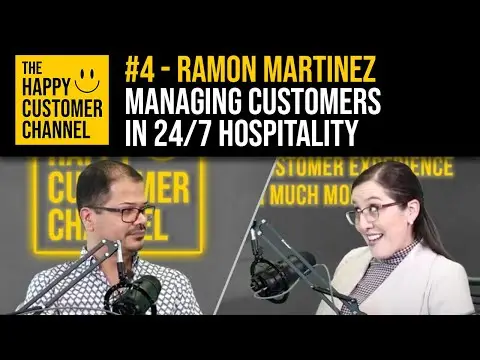
In a true 24/7 service business, customer experience is never left to chance. In this episode, Ramon Martinez, Director of Rooms Operations at Marriott Villas at Doral, explains what it takes to lead high-performing teams across demanding hospitality environments, from luxury and convention properties to cruise-focused and timeshare operations. His core message is simple but important: exceptional service is built internally before it is ever felt by the customer. When leaders invest in training, readiness, employee support, and disciplined follow-through, they create the conditions for stronger service, better retention, and more consistent business performance.
What This Episode Covers
This conversation focuses on the leadership systems behind great customer service. Rather than treating service as an individual trait or frontline instinct, Martinez frames it as an operational outcome driven by preparation, coaching, employee care, and management discipline.
- Why customer service depends on employee enablement, not just effort
- How training creates consistency in high-expectation environments
- Why work-life balance improves execution and retention
- What a real open-door leadership policy looks like
- How to handle difficult customer situations through options and follow-up
- Why anticipating customer intent matters in service delivery
- How teams can prepare for peak seasons through review and action planning
Key Insights
1. Great Service Starts with Employee Enablement
One of the clearest lessons from the episode is that customer experience improves when teams are fully equipped to do their jobs. Martinez emphasizes that service quality is not just about employee attitude or effort. It depends on whether people have the right tools, the right materials, and the operational support needed to execute consistently. If employees are underprepared, undersupplied, or unclear on expectations, customer experience becomes uneven. For business leaders, this is a direct reminder that service failures often begin as internal leadership failures.
2. Training Is the Foundation of Consistency
Martinez makes the case that training is the key lever for turning average hires into strong performers. In high-standard environments, consistency does not happen naturally. It comes from clear onboarding, repetition, coaching, and defined service expectations. This is especially relevant in hospitality, where customer expectations are immediate and visible, but the lesson applies broadly across customer-facing industries. Organizations that treat training as an ongoing business function, rather than a one-time event, are far more likely to sustain quality at scale.
3. Work-Life Balance Is a Performance Strategy
A notable point in the discussion is that work-life balance should not be viewed as a soft benefit or employee perk. Martinez frames it as a practical business strategy. People perform better when they have meaningful time to recharge, reconnect with family and friends, and step away from the pressure of nonstop service environments. In operational roles, burnout directly affects energy, judgment, responsiveness, and retention. Leaders who protect recovery time are not lowering standards; they are protecting long-term performance.
4. An Open-Door Policy Must Be Real to Build Trust
Many leaders claim to have an open-door policy, but Martinez argues that accessibility only matters when it is genuine. Employees need to know they can raise not only work-related issues, but also personal concerns that may affect their performance. This creates psychological safety, strengthens trust, and gives managers better visibility into what their teams are carrying. When leaders engage with employees as whole people, they are better able to coach, support, and retain them. In practice, this creates stronger execution because people feel seen, heard, and supported.
5. Service Recovery Works Best When You Offer Options
One of the most practical customer service lessons in the episode is Martinez’s approach to difficult guest situations. Instead of defaulting to a hard no, managers should listen carefully to understand what the customer is really asking for, then present multiple options wherever possible. This shifts the interaction from confrontation to collaboration. Customers often respond better when they feel they have choice and control, even if the original request cannot be granted exactly as stated. For leaders managing escalations, this is a more effective model for de-escalation and resolution.
6. Follow-Up and Follow-Through Create Trust
Resolving a customer issue is only part of the job. Martinez stresses that follow-up and follow-through are what turn a one-time fix into a trust-building moment. A customer may accept a proposed solution in the moment, but the relationship is strengthened when the business checks back, confirms satisfaction, and ensures the issue is fully closed. This mindset also improves internal accountability. Teams become more disciplined when service recovery includes ownership beyond the first response.
7. Anticipating Customer Intent Improves Service Quality
Another strong insight from the episode is the importance of understanding customer context in real time. Not every guest wants the same thing, and not every request means what it first appears to mean. Serving a family, a convention traveler, a luxury guest, or a timeshare owner requires reading intent, not just responding to surface-level requests. Anticipation allows teams to personalize service more effectively and avoid unnecessary friction. In any customer-facing business, the ability to identify intent quickly is a competitive advantage.
8. Peak Performance Requires Preparation, Reflection, and Action Plans
Martinez also highlights the operational discipline required for busy seasons. Strong teams do not simply hope prior problems will not happen again. They review what failed, identify patterns, document operational gaps, and build action plans before pressure returns. This kind of post-mortem learning creates institutional memory and helps prevent repeat breakdowns. For leaders, the takeaway is clear: readiness is not reactive. It is built through structured reflection and early alignment across associates, supervisors, and managers.
Framework
Five-Part Leadership Philosophy
- Right tools: Ensure employees have the systems and equipment required to do the job well.
- Right materials: Provide daily execution essentials such as uniforms, keys, pens, and other readiness items.
- Right support and training: Coach employees from onboarding through confident independent performance.
- Work-life balance: Protect personal time so employees can recharge and sustain strong performance.
- Open-door policy: Make leadership genuinely accessible for both work and personal concerns.
Service Recovery Through Options
- Listen to understand the customer’s true request
- Avoid defaulting to a hard no
- Present multiple options to create choice and control
- Follow up to confirm the solution worked
- Continue follow-through until satisfaction is restored
Peak Season Improvement Loop
- Review what failed in the prior season
- Take notes and identify operational gaps
- Build action plans to fix repeat issues
- Align associates, supervisors, and managers before the season begins
- Prepare early to prevent recurring service breakdowns
Key Takeaways
- Customer satisfaction is built through leadership systems, not frontline improvisation alone.
- Training is essential for consistency, especially in high-expectation service environments.
- Employees perform better when they are equipped, supported, and given time to recharge.
- An open-door policy only matters when leaders are authentically accessible and empathetic.
- Service recovery improves when managers offer options instead of simple refusals.
- Follow-up and follow-through are critical to building lasting customer trust.
- Anticipating customer intent helps teams serve different personas more effectively.
- Peak-season success depends on review, action planning, and early operational preparation.
Who This Is For
This episode is especially relevant for hospitality leaders, operations managers, customer experience professionals, frontline service teams, and business owners responsible for service quality at scale. It is also valuable for leaders in retail, travel, healthcare, and any customer-facing industry where team readiness directly shapes customer outcomes. If you are looking to improve service consistency, employee performance, and customer recovery processes, this conversation offers a practical leadership model.
Watch the Full Episode
Watch the full episode to hear Ramon Martinez break down his leadership philosophy, his approach to service recovery, and the operational habits that help teams deliver strong customer experiences in a nonstop hospitality environment.
FAQ
What is the main leadership lesson from this episode?
The main lesson is that exceptional customer service is built internally first. Leaders must provide the tools, training, support, and environment employees need in order to deliver consistently strong customer experiences.
Why does Martinez place so much emphasis on work-life balance?
He sees work-life balance as a business performance strategy, not just an employee benefit. When people have time to recharge, they return more focused, resilient, and effective, which improves both execution and retention.
How should leaders handle difficult customer situations according to this episode?
Leaders should listen closely to understand the real issue, avoid defaulting to a hard no, offer multiple options, and follow up afterward to make sure the resolution actually worked. This approach creates more trust and better outcomes than rigid or defensive responses.