
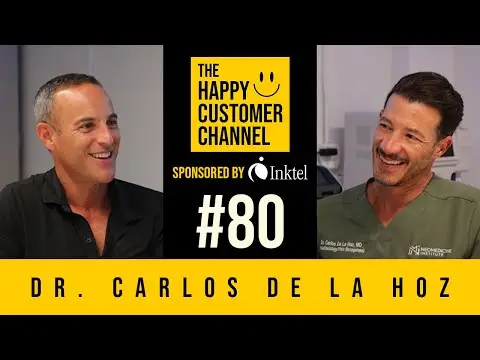
FULL EPISODE HERE
Stem Cell Banking, Regenerative Medicine, and Longevity: The Scalable Healthcare Business Opportunity
Healthcare is entering a new phase, and the companies that recognize the shift early will be better positioned to capture long-term value. In this episode, Dr. Deos breaks down why stem cell banking, regenerative medicine, and longevity are moving from fringe interest to serious business category. The conversation goes beyond clinical potential and examines the commercial model behind these services: recurring revenue, clinic partnerships, prevention-focused care, and data-driven advantages. The central idea is clear: regenerative medicine is not just an emerging treatment area, but a scalable platform opportunity built around future optionality, patient trust, and operational leverage.
What This Episode Covers
This episode explores how stem cell banking and regenerative medicine are reshaping both healthcare delivery and the business models built around it. It connects the clinical promise of biologics and personalized care with the economics of storage, partnerships, recurring revenue, and long-term data ownership.
- Why stem cell banking is being positioned as a future-facing insurance product
- How regenerative medicine fits into the broader move toward prevention and personalization
- What makes the underlying business model scalable and capital-efficient
- Why data and AI will become critical assets in treatment quality and commercial growth
- How regulation can either slow down or accelerate category leadership
- Why education and trust remain the biggest barriers to mainstream adoption
Key Insights
The Best Healthcare Products Preserve Future Optionality
One of the strongest ideas in this episode is that the most valuable health products do not simply address an immediate problem. They create future options. Dr. Deos frames stem cell banking as a way to preserve younger, higher-quality cells today so they can be used in future therapies as treatment capabilities improve. That shifts the value proposition from one-time intervention to long-term strategic asset ownership. In business terms, this is powerful because optionality expands customer lifetime value while making the offering easier to position as both practical and preventive.
Stem Cell Banking Sells Both Immediate Utility and Long-Term Insurance
Emerging healthcare categories scale faster when they offer value in the present and protection for the future. Stem cell banking does both. It gives patients a sense of proactive control over their health now while also functioning as a form of biological insurance for therapies they may need later. This dual-value model is especially compelling in categories where adoption requires education. People may not fully understand every future application, but they can understand the logic of securing access before quality declines with age.
Prevention-Based Healthcare Has Better Long-Term Economics Than Reactive Care
The episode repeatedly contrasts traditional “sick care” with a prevention-driven model. Reactive healthcare tends to be more expensive, less personalized, and focused on symptom management rather than long-term outcomes. Preventive and regenerative approaches shift intervention earlier, often with the goal of reducing dependence on chronic medication and repeated downstream treatment. From a business perspective, this creates stronger economics over time: lower system burden, better patient retention, and more room for subscription-like service structures tied to monitoring, optimization, and ongoing care.
Scalable Health Businesses Reduce Friction and Build Recurring Revenue
This is not just a science story. It is an operating model story. The business described in the episode works because it removes friction from future treatment access while creating predictable revenue through annual storage fees. B2B clinic partnerships extend reach without requiring a massive owned-footprint model, and future treatment delivery becomes a natural upsell within the same customer relationship. This combination of low-space operational requirements, recurring fees, and embedded retention mechanics makes regenerative medicine more scalable than many traditional care delivery businesses.
Data Will Be One of the Most Defensible Assets in Modern Medicine
Dr. Deos makes a simple but important point: data is power. In regenerative medicine, data is not a side benefit. It is central to treatment optimization, AI model development, outcome validation, and commercial defensibility. Over time, the businesses that collect, structure, and learn from patient outcomes, diagnostics, wearables, and stored biological samples will build a major competitive advantage. Proprietary datasets can improve care quality while also opening opportunities in research, partnerships, and product innovation.
Regulation Shapes Where Market Leaders Will Be Built
In most emerging health markets, regulation is treated only as a constraint. This episode offers a more strategic view. Regulation also determines where innovation clusters, where companies can test new models, and where category leaders emerge first. The discussion points to legal changes in places like Florida as signals that domestic momentum may accelerate. For founders and investors, this means geography and policy are not secondary considerations. They are part of the go-to-market strategy.
Education Is the Real Growth Lever
Consumer awareness remains one of the biggest barriers to expansion in regenerative medicine. The category is still misunderstood by many patients, and skepticism naturally slows adoption. That creates a clear business lesson: education is not just marketing support, it is market creation. As trust increases and the public better understands how stem cell banking and biologics work, demand can expand significantly. Companies that communicate clearly, build evidence, and reduce confusion will likely outperform those that rely only on product claims.
The Biggest Winners Will Combine Trust, Evidence, and Simplicity
The episode ultimately shows that strong businesses in healthcare are not built on clinical promise alone. They are built by making adoption simple, outcomes measurable, and trust durable. Regenerative medicine can be highly attractive commercially, but only if the consumer experience is straightforward and the evidence base continues to strengthen. The best operators will combine mission and margin by making these therapies more accessible while maintaining scientific credibility and operational discipline.
Framework
Stem Cell Banking as “Storing Time”
- Preserve stem cells when they are younger and higher quality
- Create access to future therapies that may not yet be widely available today
- Reduce future treatment friction by banking biological material in advance
- Position the service as a form of personal health insurance
This framework is one of the clearest positioning ideas in the episode. Rather than presenting stem cell banking as a technical procedure, it reframes the service as preserving time and treatment optionality. That is a much stronger business narrative because it is intuitive, future-oriented, and emotionally resonant without losing its practical logic.
Regenerative Medicine Growth Model
- Direct-to-consumer acquisition through health-conscious and longevity-focused patients
- B2B clinic partnerships to expand geographic access efficiently
- Recurring annual storage fees to generate predictable revenue
- Future treatment delivery as an upsell and retention mechanism
- Data collection and research partnerships as additional monetization layers
This model highlights why the category is attractive beyond the therapy itself. It creates multiple revenue streams, lowers dependency on one-time procedures, and supports long-term customer relationships. That is what turns regenerative medicine from a niche service into a platform business.
Prevention-to-Personalization Healthcare Shift
- Move away from symptom masking and chronic medication dependence
- Use biologics, lifestyle interventions, and optimization therapies earlier in the patient journey
- Track outcomes through wearables, diagnostics, and stored biological samples
- Build individualized treatment pathways designed to improve long-term healthspan
This framework explains the broader market context. The opportunity is not confined to stem cells alone. It sits within a larger transition toward individualized care, measurable outcomes, and earlier intervention. That makes the category strategically important for both healthcare operators and investors looking at long-cycle industry change.
Key Takeaways
- Stem cell banking is being positioned as a long-term health asset, not just a medical procedure
- Regenerative medicine aligns with the larger market shift toward prevention and personalization
- Recurring revenue, clinic partnerships, and future treatment access create a scalable operating model
- Proprietary data will be a major source of competitive advantage in modern healthcare
- Regulatory environments will influence where category leaders emerge first
- Consumer education is the main bottleneck to mainstream adoption
- The strongest companies will combine trust, evidence, and operational simplicity
Who This Is For
This episode is especially relevant for:
- Healthcare founders building in longevity, biologics, or preventive care
- Investors evaluating emerging healthcare infrastructure and platform businesses
- Clinic operators looking for new service lines with recurring revenue potential
- Executives interested in data-driven healthcare models and AI-enabled treatment ecosystems
- Business leaders tracking where healthcare is moving beyond traditional pharmaceutical dependence
Watch the Full Episode
If you want a clearer view of how stem cell banking, regenerative medicine, and longevity can evolve into mainstream healthcare categories, this episode is worth watching in full. Dr. Deos offers a practical perspective on both the patient value and the business mechanics behind the model, including education, regulation, monetization, and long-term category growth.
FAQ
Why is stem cell banking being compared to insurance?
Because its value is based on preserving future treatment options. By storing younger, higher-quality cells today, patients create access to therapies they may need later, reducing future friction and potentially improving treatment quality.
What makes regenerative medicine a scalable business model?
The scalability comes from combining recurring annual storage revenue, clinic partnerships, future treatment upsells, and data monetization opportunities. It is not dependent on a single one-time procedure, which makes the economics more durable.
What is the biggest barrier to mainstream adoption?
Education and trust. The market opportunity is significant, but growth depends on helping consumers understand how these therapies work, what outcomes they can expect, and why preventive care can be more valuable than reactive treatment.