
FULL EPISODE HERE
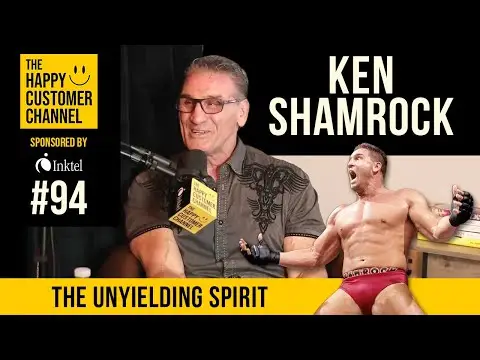
Ken Shamrock on Leadership, Resilience, and Building High-Performance Culture
Most business leaders talk about resilience as a mindset. Ken Shamrock talks about it as a system.
In this episode, the UFC pioneer, WWE star, and founder of the Lion’s Den shares how he went from extreme childhood adversity to elite performance in some of the world’s toughest competitive environments. But this is not just a story about personal toughness. It is a practical lesson in how structure, mentorship, accountability, and adaptability turn raw intensity into repeatable results.
The central idea is clear: talent and aggression alone are not enough. Sustainable performance happens when leaders create rules, trust, discipline, and culture strong enough to channel pressure into output.
What This Episode Covers
This conversation explores how Ken Shamrock built a career and a culture by converting chaos into structure. From personal transformation to team standards and brand-building, the episode offers a business-relevant blueprint for leaders operating in high-pressure environments.
- How adversity can become an advantage when paired with discipline
- Why leadership requires both accountability and belief
- How self-policing cultures outperform slogan-driven cultures
- Why adaptation after failure is essential for long-term success
- What UFC and WWE teach about scaling a brand beyond individual stars
- Why trust is foundational in high-performance teams
- How Shamrock built the Lion’s Den into a championship pipeline
Key Insights
1. Raw Intensity Only Matters When Structure Directs It
One of the strongest lessons from the episode is that energy without structure is destructive. Shamrock’s early life was full of anger, survival instinct, and volatility. What changed his trajectory was not the removal of those traits, but the introduction of rules and discipline that gave them direction.
This is highly relevant in business. Many organizations hire for hunger, ambition, competitiveness, and drive. But those qualities create value only when they operate inside a clear system. Without process, standards, and role clarity, intensity creates friction. With structure, it creates execution.
Shamrock’s point is simple and powerful: once people understand the rules, they can push hard within them. Leaders should not aim to suppress competitive energy. They should build systems that convert it into measurable performance.
2. Great Leadership Combines Accountability With Belief
Shamrock’s story repeatedly returns to one theme: strong leadership changes lives. The leaders who influenced him did not just impose discipline. They created trust, set expectations, and made it clear that he was capable of more.
That combination matters. Accountability without belief feels punitive. Belief without accountability feels empty. The leaders who change trajectories do both at the same time.
For business leaders, this means high standards are not enough. Teams perform best when people know exactly what is expected and also believe their leaders are invested in their growth. In practical terms, this looks like direct feedback, consistent consequences, active coaching, and visible commitment to development.
Organizations often underestimate how much performance improves when people feel both challenged and backed. That is where loyalty, effort, and trust start to compound.
3. Strong Cultures Are Enforced by the Team, Not Just the Leader
Shamrock’s discussion of culture is especially useful for executives and team builders. He makes it clear that the strongest environments are self-policing. Standards are not maintained because a manager repeats them. They are maintained because the group reinforces them.
This distinction matters. A culture that depends entirely on top-down enforcement is fragile. It weakens when leadership attention shifts. A self-policing culture is different. The team protects the standard because shared expectations are embedded in daily behavior.
That is how elite organizations scale. They move from leader-enforced accountability to peer-enforced accountability. Meetings start on time because the group expects it. Performance gaps are addressed quickly because mediocrity becomes socially unacceptable. The culture becomes operational, not aspirational.
For leaders, the takeaway is clear: stop treating culture as messaging. Treat it as a system of standards, consequences, and mutual enforcement.
4. Adaptation After Failure Separates Winners From Stagnation
Another major theme is Shamrock’s willingness to study losses without ego. He describes the need to step back, remove emotion, and assess what actually happened. That mindset is what turns failure into strategy.
In business, many teams do the opposite. They either personalize setbacks or rush past them. Both responses waste the value of failure. High-performance organizations treat losses as diagnostic tools. They ask what broke, why it broke, and what must change to prevent recurrence.
Shamrock’s approach is especially relevant in volatile markets. Conditions change, competitors adapt, and assumptions become outdated. The organizations that stay dominant are not the ones that avoid failure altogether. They are the ones that respond faster and more intelligently than everyone else.
Resilience, in this sense, is not denial. It is strategic recalibration.
5. Toughness Must Be Systematized to Scale
Shamrock’s success was not just personal. He built the Lion’s Den into a talent pipeline that produced elite competitors. That required more than intensity. It required a repeatable development model.
This is a critical business insight. Founders and high performers often build organizations around their own toughness, instincts, or standards. But individual toughness does not scale by itself. To grow, leaders need systems for selecting talent, training people, reinforcing behaviors, and repeating outcomes.
That is the difference between isolated excellence and institutional performance. If a company can only win when a specific person is in the room, it does not yet have a scalable culture. If it can consistently develop talent into high performers, it does.
Shamrock’s example shows that toughness becomes a strategic asset only when it is translated into process.
6. Trust Is the Hidden Currency of High-Performance Teams
It may seem counterintuitive, but in highly competitive and high-risk environments, trust becomes even more important. Shamrock makes this clear across his experiences in training, fighting, and team environments. People perform better under pressure when they trust the system and the people around them.
In business, trust is often discussed in abstract terms. But operationally, trust has concrete value. It speeds decision-making, reduces defensive behavior, improves collaboration, and allows teams to recover from mistakes faster. Without trust, high-pressure cultures become political. With trust, they become productive.
Trust does not mean low standards. It means confidence that standards are fair, consequences are consistent, and everyone is committed to the same goal. That is what allows teams to move aggressively without falling apart.
7. The Best Brands Become Bigger Than Any One Personality
Shamrock’s observations about UFC and WWE point to an important branding lesson: organizations endure when the platform is stronger than the stars on it. Individual talent can accelerate growth, but it should not become the entire business model.
This is one of the most important insights for founders, operators, and sales leaders. Star performers are valuable, but they create concentration risk when the business depends too heavily on them. If one person owns all the client trust, all the visibility, or all the revenue leverage, the company remains vulnerable.
Strong brands work differently. They create institutional credibility. Talent contributes to the platform, but the platform retains power when talent changes. That is how businesses create continuity, protect valuation, and scale sustainably.
The broader principle is simple: use talent to amplify the brand, not replace it.
8. Resilience Means Finding a New Path, Not Forcing a Broken One
One of Shamrock’s most practical ideas is that resilience is not about refusing to lose. It is about refusing to stop. When the original plan fails, the answer is not blind persistence. It is finding another path.
That distinction matters in leadership. Many companies confuse resilience with stubbornness. They continue investing in flawed strategies because they do not want to admit a mistake. But resilient leaders are reality-based. They respond to changing conditions, preserve the mission, and change the method.
This mindset is especially valuable in sales, operations, and growth strategy. Markets shift. Buyers change. Channels saturate. The teams that keep moving are the ones willing to alter tactics without losing conviction.
Shamrock’s lesson is direct: do not attach your identity to one route. Attach it to the outcome and stay flexible on how you get there.
Framework
Channel Aggression Into Performance
- Identify raw energy, frustration, or ambition
- Place it inside a rules-based system
- Attach it to disciplined training and repetition
- Convert destructive impulses into measurable output
This framework applies directly to ambitious teams. Instead of trying to neutralize intensity, leaders can channel it through goals, process, and performance metrics.
Self-Policing Culture
- Establish clear internal standards
- Let the group reinforce acceptable behavior
- Make accountability visible and immediate
- Build mutual respect through shared consequences
This is how culture becomes durable. The standard must live inside the team, not just in management communication.
Failure-to-Strategy Loop
- Remove ego from the loss
- Diagnose exactly why you failed
- Adjust tactics based on reality, not emotion
- Re-enter with a system designed to neutralize previous weaknesses
This framework is especially useful for teams operating in competitive or changing markets. It turns setbacks into strategic inputs.
Brand Over Talent Model
- Do not let the business depend entirely on star performers
- Build a central platform that carries credibility
- Use talent to amplify the brand, not replace it
- Ensure the organization retains power when stars leave
This is a critical model for scaling companies beyond founder-led or personality-led growth.
Key Takeaways
- Adversity becomes an advantage only when paired with structure and discipline
- Leadership is most effective when it combines accountability with belief
- Strong cultures are enforced by peers, not just management
- Failure creates value only when teams diagnose and adapt quickly
- Toughness does not scale without systems for talent development and repetition
- Trust is essential in high-pressure teams and fast-moving organizations
- Durable brands are built when the platform becomes bigger than any one star
- Resilience is about finding another path when the original plan breaks
Who This Is For
This episode is especially relevant for:
- Founders building culture in fast-growth environments
- Executives leading teams through pressure, change, or volatility
- Sales leaders looking to channel competitiveness into disciplined execution
- Operators who want to build systems that outlast individual talent
- Coaches and managers responsible for developing high-performance teams
- Brand leaders thinking about institutional value versus personality-driven growth
Watch the Full Episode
If you want a deeper look at how Ken Shamrock thinks about resilience, discipline, culture, and brand-building, watch the full episode. His perspective is direct, experience-tested, and highly relevant for leaders who need performance under pressure, not theory.
FAQ
What is the main business lesson from Ken Shamrock’s story?
The main lesson is that raw talent, intensity, and toughness create value only when they are placed inside a disciplined system. Structure, accountability, trust, and adaptation are what turn potential into repeatable performance.
How does this episode apply to leadership and team culture?
It shows that effective leaders do more than motivate. They create clear rules, enforce standards, build trust, and develop environments where the team itself protects the culture. That is how high-performance organizations sustain results.
Why is brand-building a key theme in this conversation?
Because Shamrock’s experience in UFC and WWE highlights a core business principle: organizations scale best when the platform becomes bigger than any one individual. Strong brands retain credibility, continuity, and market power even as talent changes.