
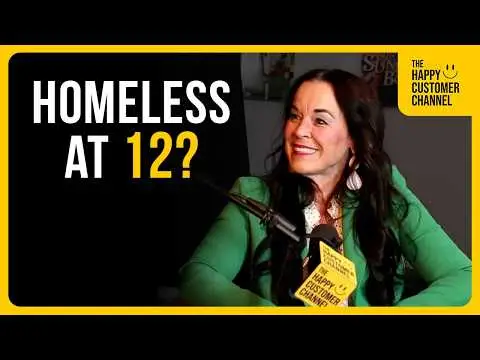
Homelessness Systems Lessons for Business Leaders

FULL EPISODE HERE

Homelessness, Housing Systems, and Leadership Execution: Business Lessons from Katie Gore

Homelessness is often discussed as a moral issue, a policy issue, or an economic issue. In this episode, Katie Gore makes the case that it is also a systems issue. That shift matters.

Drawing from both lived experience and her work in the housing sector at Quadel, Gore explains why homelessness is rarely the result of individual failure. Instead, it is often the outcome of rising housing costs, limited supply, fragmented services, and slow-moving systems that fail people at critical moments.

The central idea of the conversation is simple but powerful: stable housing is not the final answer to hardship, but it is the foundation that makes every other solution possible. For business leaders, this episode offers a practical lesson in systems design, execution, stakeholder alignment, and the importance of solving root constraints instead of judging visible symptoms.

What This Episode Covers

This episode examines homelessness through the lens of leadership, operations, and system performance. Katie Gore connects personal adversity, public-sector execution, and housing policy to reveal what actually drives better outcomes.

  • Why homelessness is primarily a systems and affordability problem
  • How Katie Gore’s childhood experience with housing insecurity shaped her leadership
  • Why housing-first strategies work when paired with support services
  • How cities like Dallas and Columbus are improving outcomes through coordination
  • The role of operational bottlenecks in slowing access to housing resources
  • Why leadership quality directly affects public-sector performance
  • How psychological attachment to a home improves long-term housing stability
  • What business leaders can learn from housing system failures and successes

Key Insights

Stable housing is the platform, not the full solution

One of the most important insights from the episode is that housing should not be treated as the end goal. It is the base layer that allows people to address everything else: employment, health, education, family stability, and recovery.

As Gore explains, “Getting a person into a house will help so many different things.” Without a stable place to live, every other intervention becomes harder to sustain. A person cannot reliably show up for work, manage medical care, or rebuild routines if they do not know where they will sleep.

For business leaders, this is a reminder to identify the foundational constraint in any system. Often, performance problems are not caused by a lack of effort. They stem from the absence of basic stability.

Homelessness is driven more by system fragility than personal failure

The episode strongly challenges the idea that homelessness is mainly a character issue. Gore makes clear that many people are operating with almost no margin for error. As she puts it, “So many times people are one paycheck away from homelessness.”

When rents rise faster than income, housing supply remains limited, and support systems are disconnected, even responsible and hardworking people can lose stability quickly. This reframing matters because it changes the response. If the problem is moral failure, the solution becomes judgment. If the problem is structural failure, the solution becomes redesign.

This is a useful lens beyond housing. In business, customers and employees often struggle not because they lack motivation, but because the system around them is too fragile, too complex, or too expensive to navigate.

Action beats endless analysis in complex environments

Gore offers a sharp operational lesson: “If you want to analyze that, you get stuck analyzing that.” In other words, complex social problems do not improve through debate alone. They improve when leaders coordinate resources around practical interventions.

Homelessness involves multiple agencies, rules, funding streams, landlords, service providers, and eligibility requirements. Waiting for perfect alignment or a complete diagnosis slows progress. The cities making headway are the ones simplifying access, improving coordination, and moving people into stable housing faster.

This is highly relevant for executives. In fragmented systems, speed and coordination often create more value than additional strategy documents. Execution is what changes outcomes.

Public-sector outcomes improve when leaders adopt private-sector discipline

A recurring theme in the episode is that leadership quality and operational rigor matter as much as policy intent. Public systems perform better when they embrace technology, efficiency, service design, and accountability.

That does not mean applying private-sector logic without nuance. It means using proven strengths such as process improvement, better data visibility, faster decision-making, and a stronger focus on the user experience.

Gore points to examples where progress comes from aligning public and private capabilities rather than treating them as opposing forces. The lesson is clear: mission matters, but execution determines whether the mission succeeds.

Operational bottlenecks block impact even when resources exist

One of the most practical insights in the episode is that funding is not the only problem. In many cases, the resource exists, but the delivery system is too slow or too fragmented to put it to work.

Housing vouchers are a clear example. A voucher can be approved, but if unit availability is low, landlord participation is weak, paperwork is slow, or agencies are not aligned, the person still does not get housed. The gap is not theoretical funding. It is operational delivery.

This is a familiar issue in business. Companies often assume results are lagging because of budget constraints, when the real problem is friction in onboarding, approvals, coordination, or handoffs. Resources only matter if systems can move them efficiently to the point of need.

Durable outcomes require psychological settlement, not just physical placement

Another standout idea from Gore is that a person’s relationship to a home matters. Housing is not simply a transaction. A placement becomes more durable when people can settle in and build psychological attachment to the space.

That is why long-term success often depends on basics like beds, cookware, furniture, and household essentials. As Gore notes, “It’s not just as easy as, ‘Can you pay the rent?’” A livable home creates dignity, routine, and a sense of permanence. Without that, placements are more fragile and retention weakens.

The broader business lesson is that adoption matters as much as access. Delivering the product is not enough. The user has to integrate it into daily life in a way that feels useful, stable, and sustainable.

Regulation fails when it protects process over outcomes

The episode also addresses a harder truth: regulation can become counterproductive when it serves process more than supply, speed, or access. In housing, that often means rules that make new development slower, more expensive, and less responsive to urgent demand.

When supply cannot grow fast enough, affordability deteriorates and more households become vulnerable. The result is that even essential workers can be priced out. Gore underscores the severity of this challenge with a striking example: “Your EMTs qualify for Section 8 housing.”

For leaders, this reinforces a critical principle: governance should enable outcomes, not merely preserve procedural comfort. When process becomes the priority, systems lose their ability to respond to real demand.

Resilience can become a strategic advantage

Gore’s personal story adds a leadership dimension to the conversation. Her early experience with housing insecurity did not just create empathy. It built grit, urgency, and a strong bias toward action.

Her framing is memorable: “Resiliency is more like protein powder.” Resilience is not an abstract trait. It is built incrementally through repeated exposure to difficulty. Over time, those experiences strengthen judgment, stamina, and problem-solving under pressure.

For leadership teams, this is an important reminder that adversity can sharpen strategic capability. Lived experience is not a soft credential. In many cases, it produces stronger operators with greater clarity on what systems need to do for real people.

Framework

Housing First

  • Prioritize getting people into housing quickly
  • Address support needs after placement rather than making housing conditional on readiness
  • Advance housing access and service coordination in parallel

This framework works because it treats housing as the starting point for stabilization. Instead of requiring people to solve every problem before qualifying for a home, it creates the conditions needed to solve those problems more effectively.

Hand Up, Not Handout

  • Provide support that restores stability and self-sufficiency
  • Reduce barriers without removing personal agency
  • Use assistance as a bridge rather than a permanent assumption of dependency

This approach reflects a business-minded model of enablement. The goal is not indefinite dependence. It is practical support that helps people regain traction and move forward.

Coordinated Community Response

  • Bring all stakeholders to the table
  • Map available units, services, qualifications, and vacancies
  • Build a shared strategy instead of isolated programs
  • Align dollars, providers, and processes around housing outcomes

This is the systems design framework at the core of the episode. Better results come when organizations stop operating in silos and start managing the full journey collectively.

Settlement Support Model

  • Move beyond placement into long-term stabilization
  • Provide essentials such as beds, furniture, cookware, and household basics
  • Help residents build psychological attachment to the home
  • Improve lease retention by making housing livable, not just available

This model highlights an often-overlooked fact: people need more than access. They need the tools and environment to truly settle in.

Resilience as “Protein Powder”

  • Resilience is built incrementally over time
  • Daily exposure to challenge strengthens future response capacity
  • Hard experiences can become long-term performance assets

For leaders, this framework is a reminder that adversity can produce durable advantages when it is channeled into discipline, perspective, and execution.

Key Takeaways

  • Homelessness is more accurately understood as a structural and affordability challenge than a personal failing
  • Stable housing creates the foundation for progress in employment, health, and long-term stability
  • Wraparound support services are essential for making housing-first strategies durable
  • Execution speed and stakeholder coordination matter more than abstract debate
  • Operational bottlenecks can block impact even when funding and programs already exist
  • Public-sector outcomes improve when leaders adopt stronger technology, efficiency, and service design practices
  • Psychological attachment to a home increases retention and strengthens outcomes
  • Regulation should support urgently needed housing supply rather than slow it down
  • Empathy and lived experience can improve strategic judgment and leadership performance
  • Durable results come from combining compassion with disciplined execution

Who This Is For

This episode is especially relevant for:

  • Business leaders interested in systems thinking and operational execution
  • Public-sector and nonprofit leaders working on service delivery
  • Real estate, housing, and community development professionals
  • Founders and operators solving complex, multi-stakeholder problems
  • Sales and customer experience leaders focused on reducing friction across the user journey
  • Anyone interested in how empathy and accountability can work together in leadership

Watch the Full Episode

To hear Katie Gore’s full story and her practical perspective on housing, leadership, and systems change, watch the full episode. Her insights offer a rare combination of lived experience, operational clarity, and real-world examples of what better execution looks like in practice.

FAQ

Why is homelessness relevant to business leaders?

Because the underlying issues mirror many business challenges: fragmented stakeholders, broken handoffs, poor user experience, weak operational design, and slow execution. The episode offers lessons in systems thinking, leadership, and coordination that apply far beyond housing.

What is the main lesson from Katie Gore’s perspective?

The main lesson is that stable housing is a foundational platform, but real progress depends on coordinated systems, practical support, and disciplined execution. Resources alone are not enough if the delivery model is fragmented or too slow.

What can organizations learn from the housing-first approach?

They can learn to remove unnecessary barriers, solve the most urgent constraint first, and build support around the user after access is created. In business terms, it is a reminder that adoption and retention improve when leaders reduce friction and design around the full customer journey.
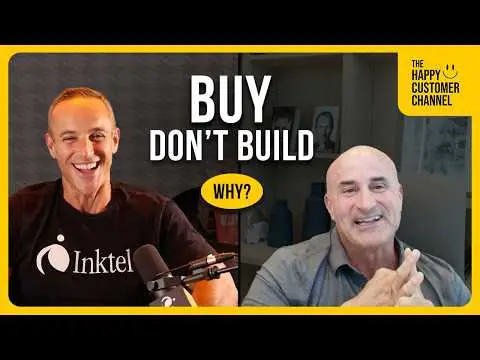
Entrepreneurship Through Acquisition Explained

FULL EPISODE HERE

Entrepreneurship Through Acquisition: Why Buying a Business Can Be Smarter Than Starting One

For many entrepreneurs, the default path is to build from scratch. But as Nick Molina explains, that is often the hardest and riskiest route available. If “getting from zero to one is the hardest part of business,” then buying an established company with existing customers, systems, and cash flow can be a far more efficient way to step into ownership.

In this episode, Molina breaks down the real mechanics behind entrepreneurship through acquisition, or ETA. Drawing from his own experience acquiring a 95-year-old property management company, he explains how he competed against private equity, why he intentionally avoided major changes in the first year, and what buyers and sellers consistently misunderstand about enterprise value.

The central idea is clear: successful acquisitions are not just about finding profitable businesses. They are about finding businesses whose earnings can be transferred, trusted, and improved over time. That distinction changes how buyers evaluate deals, how sellers prepare for exit, and how operators lead after the transaction closes.

What This Episode Covers

This conversation offers a practical look at ETA as both an acquisition strategy and a leadership discipline. It moves beyond theory to explain how buyers can win deals, reduce risk, preserve continuity, and unlock growth after acquisition.

  • Why acquisition can be a lower-risk path than starting from scratch
  • How Nick Molina acquired a legacy property management business
  • Why cultural fit can matter more than the highest bid
  • The importance of preserving trust after a transaction
  • How transferability drives enterprise value
  • What makes a business truly exit-ready
  • How seller notes and deal structure reduce acquisition risk
  • Where AI and automation can create immediate operational gains

Key Insights

Buying a Business Lets Entrepreneurs Skip the Riskiest Stage

Molina makes a compelling case that acquisition is often the smarter form of entrepreneurship. Starting a business from zero requires proving demand, refining pricing, building a brand, and developing systems with no certainty that the model will work. Acquiring an existing company bypasses much of that uncertainty.

Instead of spending years trying to validate whether a market exists, a buyer steps into a business with revenue, customers, employees, and operating history already in place. As Molina puts it, “You’re jumping into the marathon when you got 5 miles left.” That does not eliminate risk, but it changes the type of risk being taken. The focus shifts from invention to evaluation, transfer, and scale.

For operators, investors, and aspiring owners, this is a major strategic reframe. Entrepreneurship does not always mean creating something from nothing. In many cases, it means acquiring something proven and leading it better.

Post-Acquisition Success Starts With Trust, Not Transformation

One of the strongest lessons from the episode is Molina’s restraint after closing the deal. Rather than arriving with a long list of operational changes, he chose to preserve stability. No layoffs, no pay cuts, and no immediate disruption. That decision protected internal morale and customer confidence at a critical moment.

This runs against the instinct many buyers have to prove their value quickly. But in founder-led or long-established businesses, abrupt change often creates more risk than improvement. Employees worry about their roles. Customers wonder whether service will deteriorate. Managers become defensive. Trust erodes before progress begins.

Molina’s approach highlights a practical reality of integration: in the early stage, emotional stability is operational strategy. Before a buyer can improve performance, the organization has to believe it is safe. Only then can change be introduced without triggering resistance.

Transferability Determines Real Business Value

A standout idea from the conversation is Molina’s definition of value: “A business is worth what it earns that you can verify and then transfer to a buyer.” This is a sharper and more useful lens than simply looking at EBITDA or top-line growth.

A company may appear profitable on paper, but if that profit depends heavily on the founder, one major customer, weak reporting, undocumented processes, or unresolved legal issues, the earnings are fragile. Buyers discount that fragility because future cash flow becomes less certain once ownership changes.

This is where many sellers misunderstand their own business value. They believe revenue and profit are enough. Buyers, however, are assessing whether those earnings can continue under new ownership. The wider the gap between perceived value and transferable value, the lower the actual price and the lower the probability of closing.

For founders, this means enterprise value is built long before a sale process begins. Cleaner financials, reduced owner dependency, diversified customers, and documented operations directly increase transferability and therefore marketability.

Cultural Fit Can Beat a Higher Bid

Molina did not win his acquisition simply because he outbid private equity. He won because he was the better fit for what the seller cared about. In founder-led businesses, especially those with long histories, sellers are often motivated by more than price. They care about employees, client continuity, legacy, and reputation.

That creates an opening for buyers who understand seller psychology. A buyer who presents as a responsible steward rather than a financial extractor can gain a meaningful advantage. This is especially true when a seller is emotionally tied to the business and wants confidence that what they built will endure.

For acquirers, the takeaway is important: a competitive process is not won by numbers alone. Positioning matters. Credibility matters. Alignment matters. In many deals, the right buyer is not simply the highest bidder.

AI Delivers Best Results When Applied to Repetitive Administrative Work

When Molina eventually introduced operational improvements, AI and automation became key levers. His example of reducing a task from eight hours to fifteen minutes shows what practical AI adoption looks like in a business setting. It is not about adopting technology for its own sake. It is about removing friction from workflows that consume time and limit capacity.

This matters because many businesses still approach AI either too broadly or too vaguely. The better approach is targeted deployment. Look for repetitive, rules-based, administrative tasks that create bottlenecks. Then measure time saved, labor redeployed, and turnaround speed improved.

For operators, AI becomes financially meaningful when it drives margin improvement, faster response times, or higher throughput without a major systems overhaul. The value is immediate when the use case is narrow, clear, and measurable.

Teams Embrace Growth When It Feels Like Opportunity, Not Disruption

Molina expected pushback when he introduced more aggressive growth initiatives, but the opposite happened. The team responded positively once the direction was clear. That response reveals an important leadership principle: most employees are not resistant to growth. They are resistant to chaos.

Once people trust that leadership understands the business, respects the existing team, and is not going to break what works, they are far more open to expansion. Stability creates the conditions for ambition. Without that foundation, even good growth strategies can feel threatening.

For leaders managing a newly acquired business, timing matters. Establishing safety first makes later change easier to absorb and more likely to succeed.

Deal Structure Is How Buyers Convert Uncertainty Into Manageable Risk

Molina emphasizes that sophisticated buyers do not just negotiate on price. They negotiate on structure. Seller notes, earnouts, leverage, and performance-based payments are tools to allocate risk where it belongs.

This is especially important when there are questions around customer retention, concentration risk, or the true durability of earnings. If a seller insists a risk is minimal, they should be willing to support that claim financially. As Molina notes, if a seller cannot “put his money where his mouth is,” a buyer should be cautious.

Strong acquisition structuring turns vague optimism into concrete alignment. It ensures that if future performance falls short, the buyer is not carrying all the downside. For both parties, structure is often more important than headline valuation because it determines how confidence is tested after closing.

Most Businesses Do Not Fail to Sell Because There Are No Buyers

One of the clearest market observations Molina makes is that there are not too few buyers. There are too few quality, exit-ready businesses. He points to the fact that roughly 80% of listed businesses do not sell, not because demand is absent, but because too many companies are unprepared for transfer.

Messy books, customer concentration, legal uncertainty, operational informality, and unrealistic pricing all block deals. Many founders assume that having revenue guarantees buyer interest. In reality, revenue only opens the conversation. Transferability, documentation, risk profile, and credibility determine whether a transaction actually closes.

This should be a wake-up call for owners. Exit readiness is not a final-stage checklist. It is an operating discipline that should begin years before a sale. Businesses that are built to run independently are easier to grow, easier to finance, and far easier to sell.

Framework

The Transferability Gap

The transferability gap is the difference between what a seller believes a business is worth and what a buyer can confidently underwrite.

  • Earnings matter only if they can be verified
  • Verified earnings matter only if they can survive a change in ownership
  • Owner dependency reduces confidence
  • Client concentration creates fragility
  • Messy financials weaken credibility
  • Operational and legal gaps lower valuation

The wider this gap, the lower both enterprise value and deal certainty.

The Stabilize-Then-Scale Post-Acquisition Model

  1. Change nothing significant at first and observe closely
  2. Build trust with employees and customers through consistency
  3. Clean up reporting and modernize low-risk areas
  4. Introduce strategic growth initiatives
  5. Deploy AI and automation into targeted workflows

This sequence matters. Growth is more sustainable when the organization first experiences continuity and confidence.

Risk-Based Deal Structuring

  • Use equity, debt, and seller notes to balance leverage
  • Apply earnouts or seller financing where transfer risk exists
  • Align payment timing with actual business performance
  • Keep risk with the party best positioned to evaluate and influence it

This framework helps buyers avoid overpaying for uncertain earnings while giving sellers a path to realize value if performance holds.

Key Takeaways

  • Entrepreneurship through acquisition can be a lower-risk path than launching a business from scratch
  • The first year after acquisition often requires patience more than aggressive change
  • Trust preservation is a core operational priority after closing
  • Business value depends on transferable, verifiable earnings, not just reported profit
  • Cultural alignment can help buyers win deals over larger or better-capitalized bidders
  • AI creates the most value when deployed against repetitive, high-friction workflows
  • Deal structure is essential for translating uncertainty into manageable risk
  • Most unsold businesses fail because they are not exit-ready, not because buyers are absent

Who This Is For

This episode is especially relevant for:

  • Entrepreneurs evaluating whether to buy a business instead of starting one
  • Searchers and acquisition entrepreneurs looking to improve deal judgment
  • Founders who want to make their businesses more transferable and sellable
  • Operators preparing for post-acquisition integration and team leadership
  • Investors and advisors focused on lower middle market transactions
  • Business owners exploring how AI can improve margins after operational stabilization

Watch the Full Episode

To hear Nick Molina explain his acquisition strategy, post-close decision-making, and views on transferability, deal structure, and AI-driven efficiency, watch the full episode.

This conversation is particularly useful for anyone serious about ETA, exit readiness, or buying businesses with long-term operational upside.

FAQ

What is entrepreneurship through acquisition?

Entrepreneurship through acquisition is the strategy of becoming an entrepreneur by buying an existing business rather than starting one from scratch. The advantage is that the company already has customers, revenue, systems, and operating history in place.

Why is transferability so important in business acquisitions?

Transferability determines whether a company’s earnings can continue under new ownership. If a business is too dependent on the owner, has concentrated customers, or lacks reliable financials, buyers view the earnings as less secure and lower the valuation accordingly.

What should a new owner focus on immediately after buying a business?

The immediate priority should be stability. Preserving employee trust, maintaining customer continuity, and understanding the business before making major changes often creates better long-term outcomes than rushing into restructuring.

DON'T MISS AN EPISODE
Lessons From Leaders Who Build and Scale

SIGN UP

For our newsletters to neger miss an episode about business, leadership, customer experiences, and business growth.