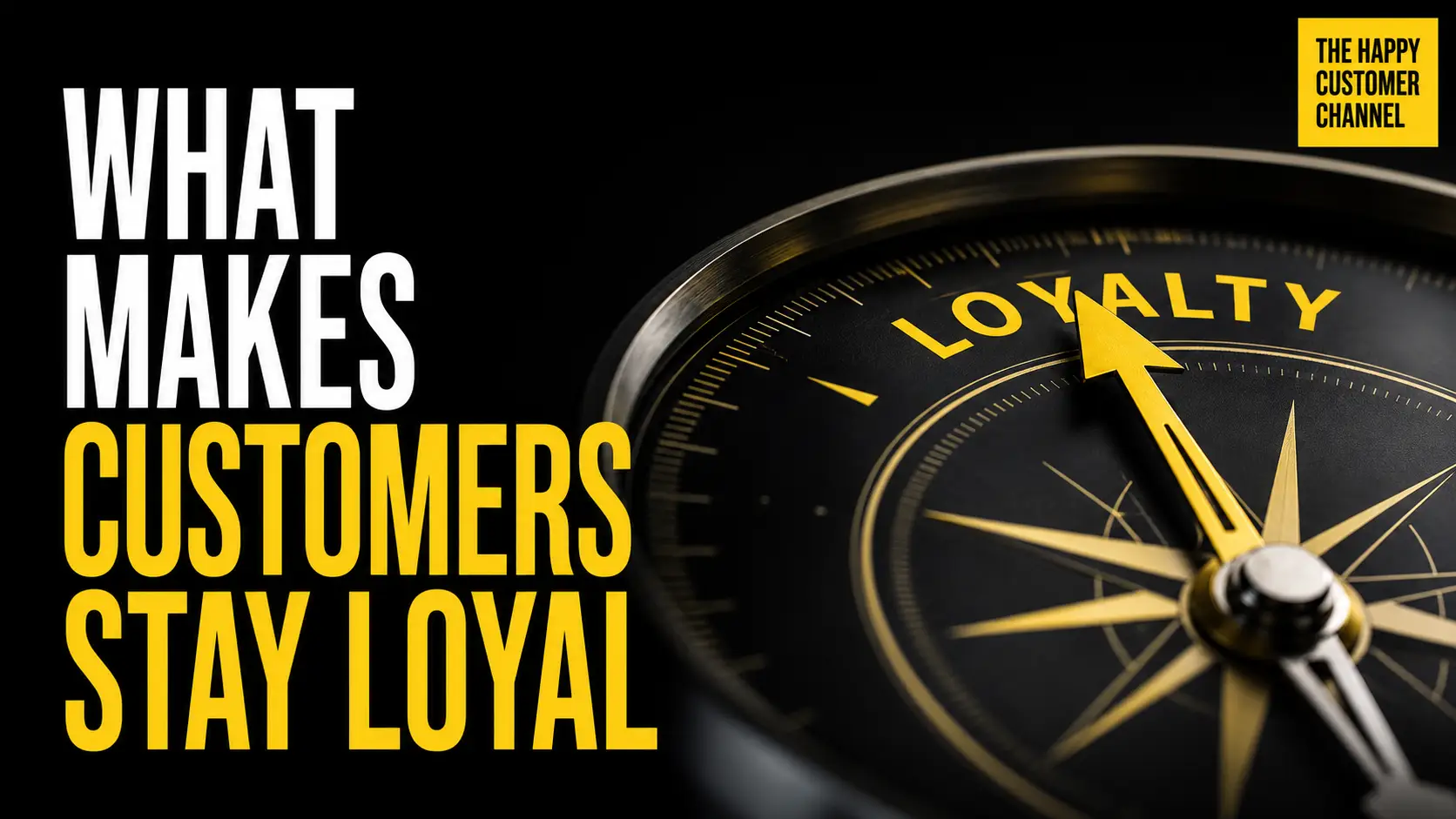
Customers don’t stay because you gave them points. They stay because leaving feels like a downgrade.
That is the truth most brands miss when they launch customer loyalty programs. They think rewards create commitment. They think discounts create love. They think a tier system can replace trust. It cannot.
Here’s what actually happens. A customer buys again, and the company calls it loyalty. But the customer may only be staying because the coupon was good, switching feels annoying, or the competitor has not shown up yet. That is not loyalty. That is borrowed time.
Real loyalty is built before the reward ever shows up. It is built in the first purchase. The first support ticket. The first delay. The first time something goes wrong and the customer watches how you respond.
Loyalty Is Not a Points System
A points system can reward behavior. It cannot create belief.
That distinction matters. Too many companies treat loyalty like a math problem. Spend this much. Earn this many points. Unlock this level. Get this perk. Fine. That may increase activity. It may even increase repeat purchases for a while. But if the experience underneath is weak, the program becomes a bribe.
Customer loyalty programs are tools. They are not the foundation. If your product disappoints, if your service feels careless, if your onboarding is confusing, if your communication is inconsistent, the program will not save you. It will only make the gap more obvious.
Think about it from the customer’s side. They do not wake up saying, “I can’t wait to earn 47 more points today.” They want the order to arrive when promised. They want the app to work. They want support to answer like a human being. They want the company to remember who they are without making them repeat the same story five times.
This is where many brands get it backwards. They invest in the reward layer before fixing the experience layer. They add points before removing friction. They create tiers before cleaning up bad handoffs. They launch perks before training their teams to communicate clearly.
That is why the customer leaves as soon as someone else offers a better deal. There was no relationship. There was only a transaction with decorations.
Loyalty is earned before the program starts. If customers do not trust you, your rewards will feel like noise. If they do trust you, the program becomes a useful way to deepen the relationship.
Customers Stay When the Experience Reduces Risk
People return to companies that make life easier.
Simple as that.
They stay with the business that lowers uncertainty. They stay with the brand that delivers what it promised. They stay with the team that makes problems smaller, not bigger. In real life, loyalty is often less emotional than marketers want to admit. A customer stays because you are dependable.
Dependability is underrated. It is not flashy. It does not always make a great campaign headline. But it is what customers remember when they are deciding whether to renew, reorder, upgrade, or walk away.
What I’ve seen is this: customers measure you hardest when there is pressure. Not when everything goes well. Anyone can look good when the order is smooth and the customer has no questions. The real test comes when shipping is delayed, billing is wrong, a feature fails, or a service promise is missed.
That moment tells the customer what kind of company you are.
Do you hide behind policy? Do you make them chase updates? Do you pass them from one department to another? Do you act like their problem is an interruption? Or do you take ownership, communicate clearly, and make the next step easy?
This is where retention is won. Not in the clever campaign. Not in the glossy email. Not in the birthday coupon. Retention comes from trust under pressure.
For ecommerce brands, that may mean proactive order updates and fast resolution when something goes wrong. For subscription companies, it may mean clear billing, honest renewal reminders, and no games when someone wants to change plans. For service businesses, it may mean setting expectations early and following through without the customer having to manage you.
Consistency beats clever incentives. Every time.
Customers stay when the experience feels safe. They know what to expect. They know how you operate. They know you will not make them regret choosing you. That kind of trust is hard to win and easy to lose.
Recognition Is Stronger Than Rewards
Rewards are useful. Recognition is stronger.
There is a difference. A reward says, “You spent money.” Recognition says, “We know you.” One is transactional. The other is relational.
The best loyalty efforts do not just track purchases. They pay attention to behavior. They notice patterns. They understand timing. They use customer data to make the relationship feel smarter, not creepier. That means better recommendations, faster support, more relevant offers, and fewer pointless messages.
Here’s the reality. Customers do not want to be managed. They want to be understood.
If someone has bought from you for three years, do not treat them like a stranger. If they always reorder the same item, make that easier. If they had a bad support experience last month, do not send them a cheerful upsell like nothing happened. If they are close to renewal, do not surprise them. Guide them.
This is where many companies miss the mark. They collect data but do not use it to improve the experience. They know the customer’s purchase history, support history, preferences, and engagement patterns, but the customer still gets generic messages. That creates frustration. It tells the customer, “We have your information, but we are not paying attention.”
Recognition does not have to be complicated. It can be as simple as remembering past issues, offering the right option at the right time, giving loyal customers early access, or making support faster for people who have already invested in your brand.
The point is not to impress customers with technology. The point is to remove effort.
When customers feel seen, they give you more trust. When they feel like a number, they start shopping. That is the pattern. I have seen it again and again.
A strong loyalty strategy does not ask, “How do we get customers to spend more?” It asks, “How do we make staying feel obvious?” That question changes everything. It forces the business to look at value, communication, service, product quality, and timing. It makes the program support the relationship instead of pretending to be the relationship.
Final Thoughts
A loyalty program should not be the reason customers stay. It should be proof that you understand why they already do. If customers only stay because of points, they will leave for better points. If they stay because you make their life easier, safer, and more predictable, now you have something real.
That is the work. Build trust first. Deliver consistently. Recognize the customer like the relationship matters. Then the program has power.
Common Questions
Do customer loyalty programs actually work?
Listen, they work when the business underneath them works. If the product is strong, the service is consistent, and the customer already sees value, a program can increase engagement. It can give people another reason to come back. But it cannot repair a broken experience. If customers are frustrated, points will not calm them down for long. At the end of the day, rewards amplify what is already there.
What makes customers stay loyal beyond discounts?
Here’s the reality. Customers stay when they trust you. They stay when the result is consistent, the communication is clear, and the experience does not create extra work. Discounts may bring someone back once. Trust brings them back repeatedly. What I’ve seen is that customers are willing to pay more when they believe the company will not waste their time. That is where real loyalty lives.
Why do some loyalty programs fail?
They fail because the company confuses activity with loyalty. A customer using a coupon is not the same as a customer believing in your brand. If the program is only about points, tiers, and promotions, you train people to respond to incentives instead of value. Then a competitor shows up with a better offer, and the customer leaves. Why? Because there was no deeper reason to stay. The business bought attention but never earned commitment.
How should a business improve customer loyalty first?
Start by finding the friction. Where do customers get confused? Where do they wait too long? Where do they repeat themselves? Where do promises break? Listen, before you build another campaign, fix those moments. The fastest way to improve loyalty is to make the experience easier to trust.