Build-to-Sell Vertical SaaS Playbook

Watch The Full Episode

Watch the full episode on YouTube

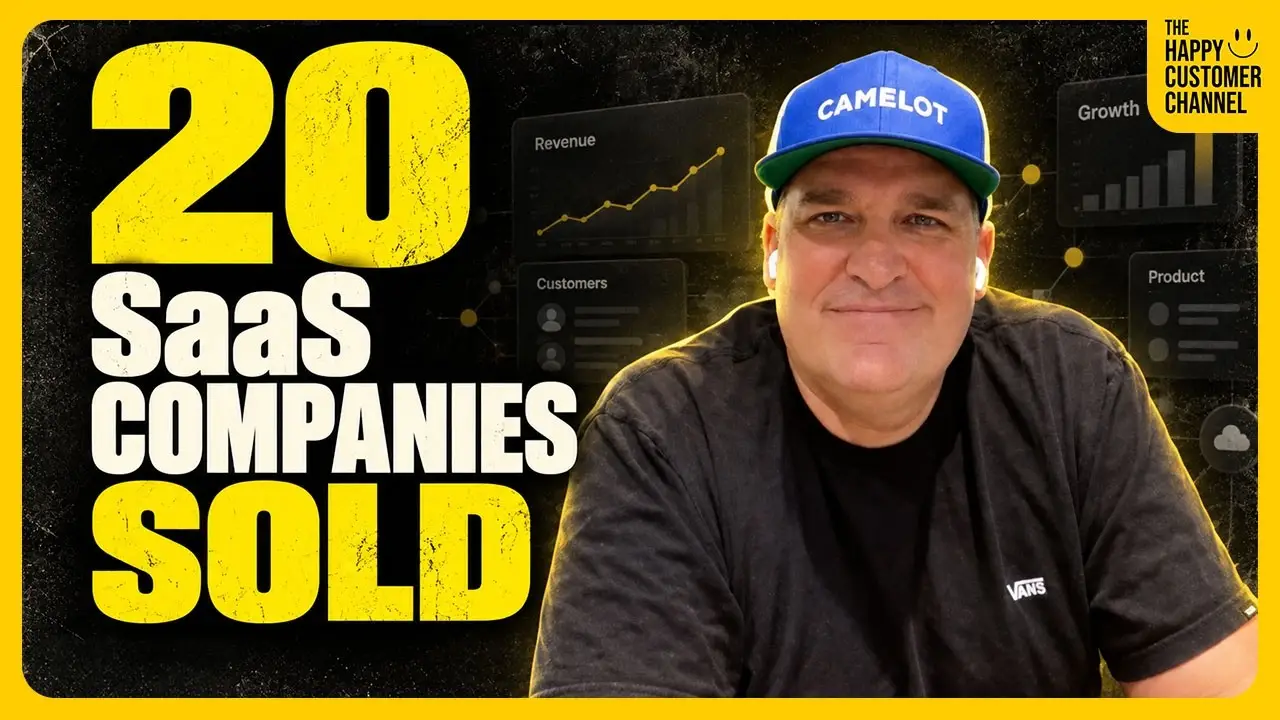
From Corporate Burnout to 20 SaaS Exits: Stuart Faught’s Build-to-Sell Playbook for Vertical SaaS

Introduction

For many operators, executives, and founders, software entrepreneurship still feels like an all-or-nothing game: raise capital, build a big product, chase scale, and hope the market responds. In EP. 117 – From Corporate Burnout to 20 SaaS Exits | Stuart Faught, that assumption gets challenged in a practical way.

This conversation explores a very different model: building simple, niche SaaS businesses designed to become transferable assets for first-time owners. Stuart Faught shares how he has repeatedly focused on overlooked verticals, lean operations, and straightforward systems to create software companies that can be sold to buyers who want ownership without starting from scratch.

For leaders, customer-experience teams, founders, and business builders, this matters because it reframes how value is created. The advantage is no longer just in building software. Increasingly, it is in understanding a market, reaching customers, and operating with discipline. That shift has major implications for anyone thinking about business acquisition, vertical SaaS, AI-enabled entrepreneurship, or customer-led growth.

Watch The Full Episode

If you want the full context behind Stuart Faught’s approach to building and selling small SaaS businesses, watch the complete long-form conversation on YouTube. The episode covers his journey out of corporate burnout, the logic behind his repeatable model, and why distribution may matter more than software development going forward: https://youtu.be/6PdTzolr1CE

What This Episode Covers

This episode breaks down a modern, more accessible path into software ownership. Instead of treating SaaS as a purely technical game, the conversation focuses on niche selection, transferability, practical deal structures, and the growing value of go-to-market execution.

  • How Stuart Faught moved from corporate burnout into entrepreneurship
  • A build-to-sell strategy for small vertical SaaS companies
  • Why niche software can be more defensible than broad platforms
  • How first-time founders can buy rather than build from zero
  • Why simplicity makes a SaaS business easier to operate and sell
  • How milestone-based deals can reduce acquisition friction
  • Why AI may increase software opportunity rather than destroy it
  • Why distribution and customer access are becoming the real moat

Key Business And Customer Experience Insights

Transferability Can Be More Valuable Than Pure Growth

One of the most useful ideas in this episode is that a small software company does not need to become massive to become valuable. It needs to be understandable, usable, and transferable.

That changes how a founder should think about product design, operations, and customer management. If a business is built with too much complexity, too many moving parts, or too much founder dependency, it becomes harder for a buyer to step in with confidence. But when the product is focused, the customer problem is clear, and the operating systems are documented, the asset becomes more attractive.

From a customer-experience perspective, this also matters. A transferable business is usually one with clearer processes, simpler product delivery, and more predictable support. Those are not just acquisition advantages. They are customer trust advantages.

Vertical SaaS Creates Stronger Positioning Than Broad Tools

A major theme in the conversation is the value of verticalization. Stuart’s view is straightforward: narrow software built for a defined market can create a better moat than broad horizontal products competing in crowded categories.

That matters because niche businesses often understand customer workflows better. They can speak the language of the market, solve specific pain points, and create a stronger sense of fit. In customer-experience terms, relevance is one of the fastest ways to build confidence. Customers do not just want software that works. They want software that feels built for their reality.

For operators, this is a practical lesson in positioning. It is often easier to win in a smaller market with sharper relevance than in a larger market with generic messaging.

In the AI Era, Distribution Is Becoming the Real Differentiator

One of the strongest insights in the episode is that software development is becoming easier, not harder. As AI reduces the burden of building, the competitive advantage moves elsewhere.

That “elsewhere” is distribution.

Who can access the market? Who understands the customer? Who knows how to generate demand, close sales, onboard effectively, and retain accounts? Those capabilities are becoming more important as technical barriers decline.

This is highly relevant for business leaders and customer teams. When more competitors can build products faster, the quality of the customer journey becomes a larger part of the moat. Better outreach, better onboarding, stronger service, and clearer value communication all become growth levers.

In other words, customer experience is no longer downstream from the product. It is part of the business model.

Many Buyers Want a Ready-to-Scale Asset, Not a Blank Page

The episode highlights an underserved buyer profile: capable professionals who do not want to invent a business from zero. They want a validated starting point.

That is an important shift. Not every ambitious operator wants to become a traditional startup founder. Many want ownership, control, and upside, but with less market risk. A small SaaS company with a clear niche, a workable product, and some initial traction can meet that need.

For businesses being built to sell, this means the goal is not only product creation. It is buyer enablement. The more clearly the business can be handed off, the easier it is for a new owner to continue serving customers and growing revenue.

Simplicity Is a Strategic Advantage

Simplicity shows up throughout this conversation as a competitive strength rather than a limitation.

Simple products are easier to explain. Simple workflows are easier to train. Simple operations are easier to transfer. Simple customer experiences are easier to maintain consistently.

This is especially important when the buyer is a first-time founder or a corporate executive moving into ownership. A complicated product may sound impressive, but it can increase support burden, operational risk, and execution difficulty.

The broader lesson is useful well beyond SaaS. In many businesses, leaders overestimate the value of complexity and underestimate the value of clarity. Simplicity helps teams execute, helps customers adopt, and helps buyers commit.

Corporate Executives Are a Powerful Buyer Persona

Stuart identifies a specific type of buyer: the disenchanted corporate executive looking for a practical path into entrepreneurship. That is a meaningful observation because it points to a buyer group with domain knowledge, financial capacity, and operational experience.

These buyers may not be looking for venture-scale outcomes. They may be looking for a manageable, profitable asset they can run, improve, and eventually exit. That creates a compelling market for small SaaS acquisitions.

For operators and advisors, this also suggests a broader opportunity: more people may be ready for ownership than the startup ecosystem usually assumes. They simply want a structure that lowers unnecessary risk.

Flexible Deal Structures Can Expand the Market

Another practical insight from the episode is that deal structure matters. Not every buyer wants, or is able, to fund a traditional acquisition all at once. Milestone-based arrangements and flexible structures can lower barriers and create alignment between buyer and seller.

This has two business implications. First, companies designed for acquisition should think about transition support early, not at the last minute. Second, growth value is not just in revenue. It is also in how clearly the business can be handed over and scaled by the next operator.

A smooth transition is also a customer-experience issue. The better the training, systems, and continuity planning, the less disruption customers face after an ownership change.

Buying Early-Stage SaaS Can Remove Years of Startup Risk

Building from zero is expensive in time, energy, and learning. One of the key themes in this episode is that acquiring an early-stage SaaS business can eliminate some of the hardest parts of startup formation, especially market validation.

If the niche is clear, the problem is proven, and the product has a functional base, a buyer can focus on execution rather than invention. That can be an attractive path for people with commercial or operational strengths.

For leaders exploring entrepreneurship through acquisition, this episode offers an important reframing: buying small is not settling. It can be a disciplined way to start with traction and build from there.

Framework Or Operating Lesson

This episode offers a highly usable framework: the Build-to-Sell Vertical SaaS Model.

The Build-to-Sell Vertical SaaS Model

  • Identify a niche with a clear pain point: Start with a market that has operational friction, recurring needs, and room for a specialized solution.
  • Build a simple tool for that vertical: Keep the product focused. Solve one meaningful problem well instead of trying to become a broad platform too early.
  • Design for lean operation: The business should be manageable without a large team or complicated infrastructure.
  • Create early traction or a ready-to-scale foundation: Depending on the strategy, the asset may include customers and recurring revenue or a validated business structure prepared for launch.
  • Align the business with a likely buyer: Build with the future owner in mind, especially someone with domain familiarity who can understand the market quickly.
  • Support the handoff: Training, systems, documentation, and optional milestone-based transition support make the asset easier to buy and operate.

Operating Lesson for Founders and Operators

The bigger operating lesson is simple: build businesses around execution, not complexity.

In the current environment, technical creation is becoming more accessible. That means long-term value increasingly comes from:

  • clear market selection
  • strong positioning
  • repeatable sales motion
  • smooth customer onboarding
  • retention-friendly product simplicity
  • operator-ready systems

For customer-focused leaders, this reinforces an important truth: the easier your business is to understand and run, the easier it is to deliver a consistent customer experience at scale.

Key Takeaways

  • Small SaaS businesses can be intentionally built as transferable assets, not just long-term operating companies.
  • Vertical SaaS often offers stronger differentiation than broad horizontal software.
  • AI is lowering the barrier to building software, which makes distribution and customer acquisition more important.
  • Many aspiring owners do not want to build from zero; they want a validated, ready-to-scale business.
  • Simplicity improves transferability, operational clarity, and customer experience.
  • Corporate executives represent a meaningful buyer market for small software acquisitions.
  • Flexible acquisition structures can reduce friction and expand the pool of buyers.
  • Acquiring early-stage SaaS can shortcut validation and reduce startup risk.

Who This Episode Is For

This episode is especially useful for:

  • Corporate executives considering entrepreneurship: If you want ownership but do not want to start from a blank page, this conversation offers a realistic alternative.
  • Founders interested in SaaS acquisition strategy: It shows how software can be built with transferability and buyer fit in mind.
  • Operators and growth leaders: The episode makes a strong case that go-to-market capability is becoming more valuable than pure technical advantage.
  • Customer-experience and service leaders: The discussion highlights how simplicity, niche focus, and operational clarity strengthen the customer journey.
  • Business builders exploring AI-era opportunities: If you are asking where value shifts when software becomes easier to create, this episode gives a strong answer.

Keep The Conversation Going

If this episode sparked ideas about vertical SaaS, business acquisition, customer experience, or operating strategy, there are several ways to stay connected with The Happy Customer Channel.

Start by visiting the homepage to explore more conversations at the intersection of growth, leadership, and customer experience.

You can also browse more episodes for additional founder, operator, and executive insights.

If you want these conversations delivered directly to your inbox, sign up for the newsletter.

And if there is a leader, founder, or operator you think should be featured, you can suggest a guest.

FAQ

What is vertical SaaS, and why does it matter in this episode?

Vertical SaaS is software built for a specific industry or niche rather than a broad set of users across many industries. In this episode, it matters because Stuart Faught argues that niche products often create stronger positioning, clearer customer fit, and better transferability for first-time buyers.

Why is distribution more important than software development now?

As AI and modern tools make software creation easier, building the product becomes less of a differentiator. That shifts advantage toward companies and operators who can reach the right customers, communicate value clearly, create demand, and deliver a strong customer experience.

Who should consider buying a small SaaS business instead of building one?

Operators, corporate executives, and first-time founders with industry knowledge but limited interest in starting from zero may benefit most. Buying an early-stage SaaS business can reduce market-validation risk and provide a clearer path into ownership, especially when the asset is simple, niche-focused, and ready to scale.
Customer Journey Mastery: Operator-Level Lessons for Experience & Retention

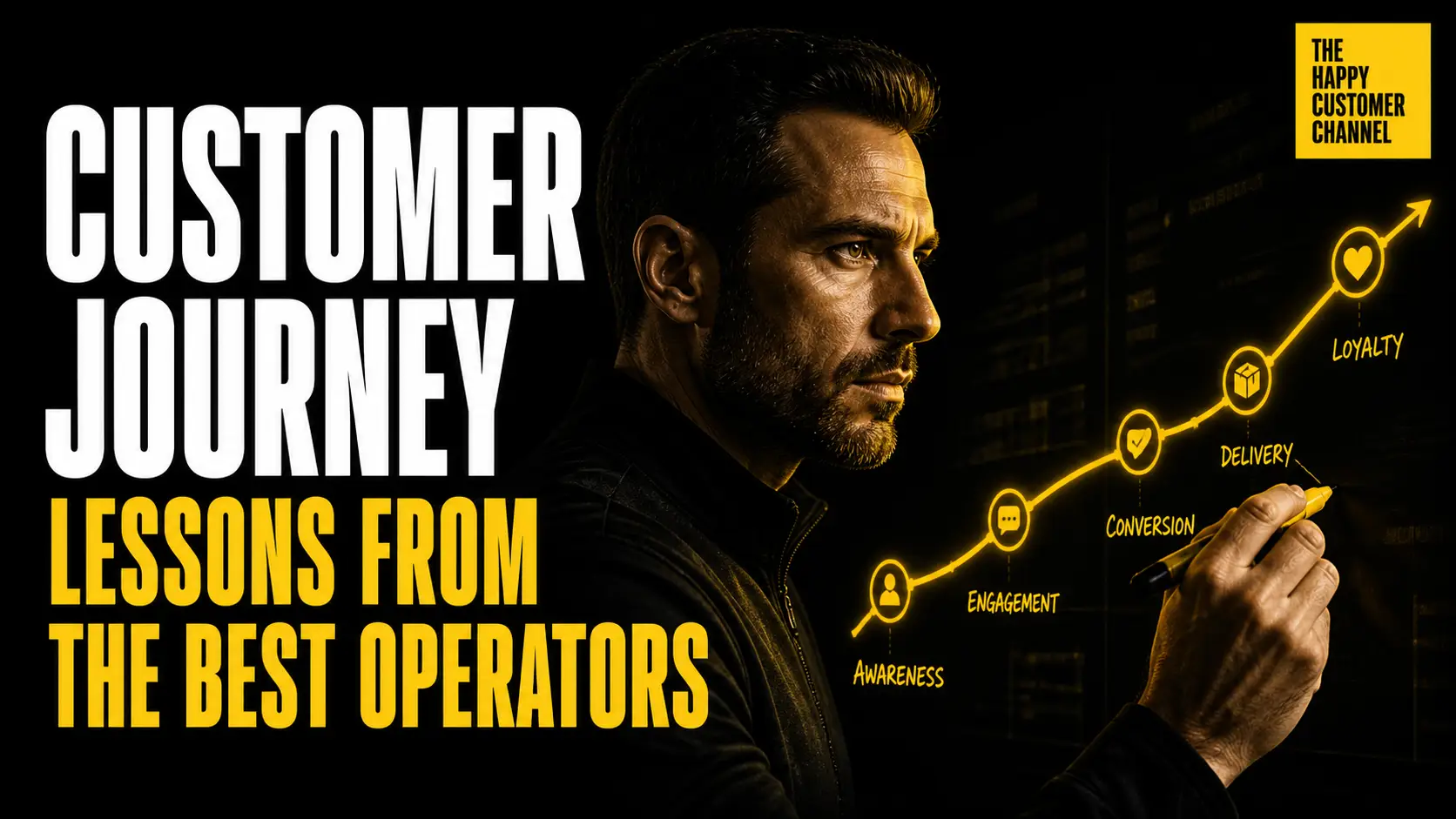
Are you truly in control of your customer journey, or are you just hoping the pieces fall into place? Hope is not a strategy. Operators who win know that customer experience is not a suggestion—it’s a mandate, and it’s enforced every single day. The best in the business have turned the customer journey into their secret weapon for retention. Everyone else is just playing catch-up.

Stop Pretending—Operationalize the Customer Journey

Let’s get something clear: map-making is not management. The customer journey isn’t a brainstormed diagram or a colorful flowchart on your wall. Those are starting points. The real work begins after the “customer journey workshop” ends. Most leaders build that journey once and move on. Then they wonder why NPS slides or why churn doesn’t budge. It’s simple. They never put the journey into action as an operating system—daily, measurable, enforced.

Here’s the truth most won’t admit: if you can’t measure it, you’re not really doing it. Operators who lead in retention already know this. They track transition points, test for real friction, and beat their competition because their maps lead somewhere. Their customer journey is the way things get done, not the way things look in a boardroom. At The Happy Customer Channel, we don’t settle for best-case scenarios. We deal in facts, data, and operational excellence.

Why does this matter? Because the market does not care about your intentions. Customers know when you’re winging it. They know when you improvise. And they remember every drop-off, every unfulfilled promise, every touchpoint that misses the mark. Hope is not a strategy—and your customers will always know the difference.

The Customer Trust Checklist—How Real Operators Win Retention

Retention isn’t built on first impressions. It’s earned at every single interaction. The best operators have a disciplined checklist to make sure the customer journey isn’t just theater. Grab this, put it on your wall, make it a living part of how you work:

  • Proactively fix friction: Are you finding pain points before your customers complain, or are you just apologizing after the fact?
  • Standards for every touchpoint: Is each handoff, email, invoice, and support reply clearly defined—or do you wing it?
  • Built-in accountability: Are mistakes buried, or is there operational discipline to fix breakdowns, not just outcomes?
  • Metrics that matter: Are you looking at what the customer sees and feels, or hiding behind vanity stats that make you look good and solve nothing?
  • Closing the loop: When something goes wrong—or right—does the customer feel heard and valued, or just processed?

Use this checklist. Run it monthly, if not weekly. If the answer is “no” to any of these, that’s your signal. Don’t delegate this. Lead it. Operators who win at retention do so because they earn trust in small, relentless, visible ways. Every single day. That’s not an accident. That’s leadership discipline—translated directly into customer loyalty and higher retention.

One thing I’ve seen: businesses that treat customer journey as a living process win the long game. Everyone else races for one-off wins and hopes for the best. There’s zero magic here—just process, focus, and standards.

Discipline or Drift—Why Strategy Dies Without Operating Standards

I see it everywhere—companies with “CX strategies” that are all sizzle, no steak. Failing journeys aren’t rare; they’re the default. Why? Because strategy in a vacuum dies fast. You can build a stunning journey map, hire great designers, pump up your mission statement—none of that matters if you don’t embed operational standards. If the customer journey isn’t enforced at every level, you’ve built a house on sand.

This is the hard reality: businesses that actually win at customer experience make standards the backbone of every review, role, and decision. They don’t just talk about customer obsession. They operationalize it. Every single touchpoint is accountable to a standard, not just an aspiration. If you don’t drill that into your culture, your competitors will beat you to it. Simple as that. This is why customer experience strategy fails without operating standards.

Let’s make it practical. Accountability doesn’t mean micromanagement. It means visible, actionable, measurable processes—ones that get reviewed, fixed, and upgraded on a regular cycle. Your journey should be a living thing. Change fast, adapt faster, and the customer feels it. Wait until the data is ugly, and you’ve already lost trust. I want every leader reading this to ask themselves: when was the last time you walked your customer journey—end to end—as a real customer? If you don’t know, your standards are just suggestions. And suggestions lose every single time.

Final Thoughts

You can’t fake a great customer journey. Customers are relentless. So are your competitors. Operators who treat the customer journey as a system—measured, disciplined, alive—earn trust and retention as a natural outcome. Doing this isn’t a “nice to have.” It’s table stakes. The difference is leadership discipline. Stop improvising. Build the journey you want your brand to be remembered for.

Want real-world, operator-level CX strategies in your inbox? Join our newsletter and get ahead—before your competitors do.

Common Questions

How do I spot the real friction points in my customer journey—not just what shows up on surveys?

Listen…surveys only tell you what customers are willing to say. What matters is where they actually act. Track their behavior. Where do they hesitate, drop out, or complain? Dig into the data—time between steps, repeated questions, abandoned carts. The best operators do root-cause analysis, not just apologies. At the end of the day, the breaking points are always in the transitions. Watch how the journey really unfolds, not just how you wish it did.

What metrics actually matter for measuring customer journey success?

Here’s the reality: vanity metrics don’t move the needle. You want leading indicators—time to value, repeat engagement, moments when customers go off-script and ask for help. Unplanned contacts are gold; they tell you where the journey isn’t working. Lagging metrics like NPS or CSAT are nice, but they’re after the fact. If you can spot trouble early, you save the relationship—and the revenue—before it’s too late.

How do you get frontline teams to actually follow customer journey standards?

Let’s be blunt: standards without accountability are just dreams. You need to train, coach, and measure—every day. Make the expected behaviors visible. Reward consistency. Call out gaps immediately. Great operators don’t “hope” people follow the journey—they build it into onboarding, reviews, and daily huddles. If your team sees it’s non-negotiable, they’ll deliver. If not, your standards will collect dust. Don’t wish for compliance; demand it.

Isn’t the customer journey always changing? How do we keep up?

Absolutely, the customer journey isn’t static. But the smartest operators don’t panic—they build feedback loops right into the process. Review journeys quarterly. Workshop them after big changes. Ask your customers directly, then validate with data. Adapt on purpose—don’t get dragged into haphazard change. Make your process living, not locked. If you treat change as routine, your journey will always be one step ahead.

Business Relationship Building Is Not Networking

Business relationship building is not networking.

Most people don’t build relationships. They build a contact list.

Then they wonder why nobody moves when they need help. The problem is not visibility. The problem is trust. Real relationships are built before the ask, before the deal, and before there is anything obvious to gain.

That is where most people get it wrong. They reach out when they need leverage. They call shallow follow-ups “nurture.” They confuse friendliness with credibility. The market sees through it.

The Ask Reveals the Relationship

If your first meaningful move is asking for an introduction, a referral, or a favor, you are already late.

That may sound harsh. It is also true. The ask does not create the relationship. The ask exposes the relationship. It shows whether there is real trust behind the connection or just a name sitting in your CRM.

Here’s what actually happens. Someone asks for an introduction. The person receiving the request is not just thinking, “Do I know someone?” They are thinking, “Can I put my name next to this person?” That is the real test.

Because introductions carry risk. Referrals carry risk. Partnerships carry risk. When someone opens a door for you, they are spending reputation. Not time. Reputation.

Access is not a relationship. A LinkedIn connection is not a relationship. A good conversation at an event is not a relationship. Those are entry points. Nothing more.

The relationship begins when people understand how you operate. Do you follow through? Do you protect context? Do you make people look smart for trusting you? Do you make their life easier or create cleanup work?

What I’ve seen across founders, sales leaders, consultants, and operators is simple. The strongest relationships are usually built in low-stakes moments. A quick insight. A clean introduction. A thoughtful reply. A promise kept when nobody was watching.

Trust Is a Track Record, Not a Vibe

Being likable helps. It does not carry the weight.

People do not trust you because you are friendly. They trust you because your behavior has become predictable in the right way. You do what you say. You do not overpromise. You handle pressure without making it everyone else’s problem.

This is where business relationship building gets real. It is not about charm. It is not about being everywhere. It is about becoming easy to trust and easy to vouch for.

There is a big difference.

Plenty of people are pleasant in a first meeting. Fewer people are dependable after the excitement fades. Fewer still can be trusted with sensitive context, client relationships, internal politics, or a high-value opportunity.

Trust is built in the follow-through. Did you send what you said you would send? Did you remember the detail that mattered? Did you respect the boundary? Did you tell the truth when the truth was inconvenient?

That is the track record.

In long-cycle deals, the decision is often shaped long before the proposal lands. Buyers listen before they buy. Partners watch before they commit. Referrers observe before they recommend. The market is collecting evidence.

And here is the part many people miss. Trust is not only built by success. It is built by how you handle friction. When something goes sideways, do you disappear? Do you blame? Do you get vague? Or do you communicate clearly and own the next move?

That is what people remember.

Relevance Beats Frequency

“Just checking in” is not a strategy.

It is usually a signal that you have nothing useful to say. And if you keep doing it, people start training themselves to ignore you.

Relationship building is not about touching base on a calendar. It is about being relevant when you show up. There is a difference between staying present and creating noise.

Relevance can be simple. A sharp observation about their market. A useful introduction with permission on both sides. A resource tied to a problem they actually mentioned. A note that says, “I saw this and thought of what you were working on.”

That lands differently.

Why? Because it proves you were paying attention. It proves the relationship is not just a funnel stage. It proves you see the person, not just the potential transaction.

The mistake is treating people like sequences. Automated persistence can get replies. It rarely builds respect. And respect is what drives referrals, partnerships, repeat business, and real advocacy.

You do not need to be in someone’s inbox every week. You need to be useful when you are there. Earn the follow-up. Make the message worth opening.

The best relationships have space in them. They do not require constant maintenance because the foundation is solid. When the value is real, the relationship does not disappear just because you went quiet for a while.

Final Thoughts

Your real network is not who knows you. It is who is willing to put their name next to yours.

That is the standard.

You do not build strong business relationships by being known. You build them by being dependable when there is no spotlight and valuable when there is no invoice. That is what separates contact collectors from trusted operators.

At the end of the day, people remember who made their life easier before they needed something back.

Common Questions

How do I build business relationships without sounding transactional?

Listen… if it sounds transactional, it usually is. People can feel when you are warming them up for an ask. The cleaner move is to lead with context and usefulness. Share why you are reaching out, make it easy to ignore, and do not disguise your agenda as friendship. If there is an ask, own it. If there is no ask, do not manufacture one.

How often should I follow up before it becomes annoying?

Here’s the reality… frequency is not the issue. Value is. You can follow up twice in a week if there is a real reason, and you can annoy someone once a quarter if all you say is “checking in.” Watch the pattern. Are you helping them think, decide, connect, or move? If not, pause. Silence is better than empty noise.

What’s the difference between networking and real business relationship building?

What I’ve seen is this: networking creates exposure, but real relationships create confidence. Networking gets you in the room. A relationship makes someone comfortable saying your name when you are not in the room. That is the difference. One is activity. The other is evidence. You need both at times, but do not confuse the handshake with the trust.

How do I keep business relationships warm when I don’t have an immediate reason to reach out?

At the end of the day, keeping a relationship warm is not about inventing a reason to talk. It is about paying attention. If you see a shift in their market, a person they should know, a problem they mentioned months ago, or a win worth acknowledging, reach out. Make it specific. Make it useful. Make it low pressure. That is how you stay present without becoming noise.