
Career Pivot Strategies for Life and Business

FULL EPISODE HERE

The Pivot: Changing Direction in Life and Business

Most career advice treats a pivot like a clean break: leave one path, enter another, and start fresh. In reality, meaningful change rarely works that way. The most successful pivots are usually messy, strategic, and shaped by both pressure and opportunity.

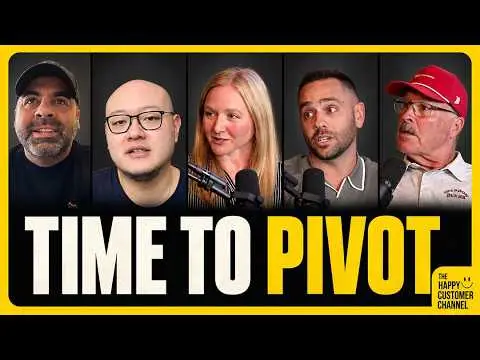
In EP. 118 – The Pivot: Changing Direction in Life and Business, a range of guests share what it really takes to move across industries, roles, and identities. Their experiences show that the biggest advantage in times of change is not starting over. It is recognizing which skills, habits, and ways of thinking still create value in a new environment.

The core message of this episode is highly relevant for business leaders, founders, and professionals: long-term success through change depends on adaptability, self-management, trust-building, and the ability to translate existing strengths into new contexts.

What This Episode Covers

This episode explores how people successfully navigate major life and business transitions. Rather than focusing on theory, it draws from real stories of reinvention across fields including tech, real estate, coaching, sales, athletics, media, and restaurant ownership.

  • Why pivots are often both reactive and proactive
  • How transferable skills outperform narrow job titles
  • Why industry pace and execution cadence matter
  • How self-management becomes critical when external structure disappears
  • Why trust is central to sales and leadership effectiveness
  • How confidence is built through repeated high-stakes communication
  • Why goal attainment can matter more than qualifications
  • How creative deal-making can create ownership with less upfront capital
  • Why health and family priorities shape sustainable success

Key Insights

Transferable skills matter more than rigid professional identity

One of the clearest lessons from the episode is that core capabilities travel better than titles do. Coaching, selling, leading, presenting, planning, and building trust remain valuable across industries. People who pivot successfully do not abandon their strengths. They reinterpret them.

For businesses, this has direct hiring and talent implications. Teams built around adaptable competencies are more resilient than teams built solely around narrow experience. When markets shift, products evolve, or industries slow down, employees who can apply their strengths in new ways become a strategic asset.

This also challenges a common leadership mistake: overidentifying with one role or sector. The more attached someone is to a label, the harder it can be to see where else they can win. The strongest operators understand that value creation is broader than job titles.

Every industry has its own tempo, and leaders must adapt to it

The transition from fast-moving sectors into slower, asset-heavy businesses highlights an important truth: execution speed is not universal. What works in tech does not automatically work in real estate, investing, or ownership-driven models where outcomes take longer to materialize.

The quote, “It’s a slow man’s game,” captures this well. In some industries, rapid testing and immediate deployment are advantages. In others, patience, timing, and disciplined follow-through create the edge.

Business leaders who fail to adjust to market cadence often make poor decisions around capital, hiring, forecasting, and expectations. Pacing strategy to fit the actual rhythm of the business is not hesitation. It is operational maturity.

High performers need structure when external systems disappear

Several guests reveal that the hardest part of a pivot is not capability. It is the loss of built-in structure. In traditional environments, people often inherit schedules, systems, and accountability. In new entrepreneurial or self-directed roles, that support disappears.

That is where self-leadership becomes decisive. One standout line from the episode, “I am now the head coach,” reframes the challenge clearly. When no one else is setting the agenda, top performers must manage themselves with the same discipline they once expected from others.

The quote, “I wake up every day with a to-do list,” reinforces the operational side of this reality. Performance in autonomous environments depends on routine, planning, prioritization, and repeatable execution. Talent without structure often underdelivers. Talent with structure compounds.

Trust is the foundation of effective sales and leadership

The episode makes a strong case that sales works best when treated as a coaching process rather than a pressure exercise. One guest explains it directly: “In sales, it’s my job to coach you through the sales process.” That is a useful business principle well beyond sales teams.

Consultative selling starts with understanding the other person’s situation, goals, and obstacles. It requires diagnosis before prescription. More importantly, it depends on trust. As another quote in the episode makes clear, “You’re only going to let me do that if we have trust.”

This applies equally to management, leadership, and client relationships. People do not follow advice, buy solutions, or commit to change unless they believe the person guiding them understands their interests and can help them move forward with confidence.

For organizations, the takeaway is straightforward: invest in relationship-building, personalization, and education-driven communication. Trust accelerates decision-making and improves long-term retention.

Communication confidence is built through repetition, not theory

Another important insight is that visible leadership often grows from repeated exposure to high-pressure communication environments. The ability to command attention, present clearly, and manage a room is not just a natural trait. It is a trained business skill.

This matters because many professionals stay in support or specialist roles longer than necessary simply because they lack confidence in public-facing situations. Yet once developed, communication confidence expands career options significantly. It opens doors to sales, leadership, negotiation, partnerships, and brand-building.

For companies, this is a talent development opportunity. Teaching presentation, speaking, and room-command skills can turn capable operators into stronger leaders and revenue contributors.

Execution and goal attainment often outweigh credentials

One of the strongest hiring lessons in the episode comes from the transition from athletics into business. Technical qualifications matter, but they are not always the clearest predictor of success in a new field. Drive, discipline, and demonstrated ability to hit goals can be even more powerful.

The quotes, “Learn how to work,” and “I’ve learned to set goals. And more importantly, I’ve learned to attain goals,” capture the difference. Organizations often overvalue polished resumes and undervalue evidence of accountability, resilience, and follow-through.

Professionals entering a new field should take note as well. You do not need to pretend to know everything. You do need to prove that you can learn fast, execute consistently, and deliver outcomes. In many cases, that is what earns opportunity.

Creative deal structures can create ownership without heavy upfront capital

The restaurant ownership example offers a practical lesson in entrepreneurial leverage. Instead of relying only on cash, the guest found a way to contribute marketing value, personal brand, and effort as part of the investment equation.

The line, “Put it into my ownership stake,” reflects a broader strategic mindset. Ownership is not always purchased only with capital. It can also be earned through influence, labor, distribution, visibility, and sweat equity if the structure is negotiated correctly.

This is especially relevant for founders, operators, and business development leaders who bring non-cash value to the table. When structured well, creative deals reduce risk while preserving upside. They also align incentives more effectively than simple fee-based arrangements.

Sustainable success is shaped by health and personal priorities

The closing theme of the episode expands the definition of business performance. Career growth without health, energy, or alignment at home eventually becomes fragile. Many high achievers delay personal well-being until the consequences are already visible in performance, decision-making, or relationships.

This episode reframes that pattern. Health and family priorities are not distractions from success. They are part of the operating system that makes sustained success possible.

For executives and entrepreneurs, this is a strategic issue. Better energy, better pacing, and stronger alignment outside work improve clarity, resilience, and long-term output. Sustainable performance is built, not squeezed out.

Framework

Transferable Skills Pivot Framework

  1. Identify the core skills that made you successful in your previous role.
  2. Reframe those skills in the context of a new industry or function.
  3. Adjust your behaviors and process to fit the new environment.
  4. Build trust and credibility through consistent execution.
  5. Let identity evolve after results begin to compound.

Self-Structured Performance Framework

  1. Define priorities clearly.
  2. Build your own calendar and operating rhythm.
  3. Allocate time intentionally to high-value behaviors.
  4. Create repeatable processes for execution.
  5. Review and refine your structure regularly.

Trust-Based Sales Framework

  1. Build rapport and respect first.
  2. Understand the prospect’s goals, problems, and context.
  3. Customize the approach to their situation.
  4. Educate rather than pressure.
  5. Guide the buyer toward confident action.

Low-Risk Ownership Entry Framework

  1. Assess the value of your brand, labor, network, or influence.
  2. Negotiate contribution beyond cash.
  3. Convert non-cash value into an ownership stake.
  4. Use sweat equity to vest over time.
  5. Align incentives before scaling involvement.

Key Takeaways

  • The most successful pivots build on existing strengths instead of starting from zero.
  • Transferable skills like trust-building, communication, discipline, and planning often matter more than industry labels.
  • Every industry has its own pace, and leaders must adapt their expectations and execution accordingly.
  • Autonomy only works when paired with strong self-management and structure.
  • Sales and leadership are more effective when built on trust and coaching, not pressure.
  • Repeated exposure to high-stakes communication builds confidence and expands opportunity.
  • Goal attainment and work ethic can outperform credentials in new environments.
  • Creative deal-making can turn effort, reputation, and reach into ownership.
  • Health and family alignment are essential to sustainable long-term performance.

Who This Is For

This episode is especially useful for:

  • Business leaders managing change or entering new markets
  • Founders and entrepreneurs navigating reinvention
  • Sales leaders building trust-based teams
  • Professionals considering a career pivot
  • Operators moving from structured environments into self-directed roles
  • Executives thinking more strategically about sustainable performance

Watch the Full Episode

If you are navigating a career transition, leading through change, or rethinking how value is created across different stages of business, EP. 118 – The Pivot: Changing Direction in Life and Business offers practical lessons you can apply immediately. Watch the full episode to hear how these guests approached reinvention, managed uncertainty, and turned disruption into opportunity.

FAQ

What is the main business lesson from this episode?

The main lesson is that successful pivots depend less on starting over and more on translating transferable skills into a new context. Adaptability, structure, trust, and long-term thinking matter more than attachment to a single professional identity.

Why are transferable skills so important during a pivot?

Transferable skills such as communication, leadership, sales, discipline, and trust-building create value across industries. They help professionals move faster, adapt more effectively, and prove relevance even when they lack direct experience in a new field.

How can someone reduce risk when changing direction in business?

Risk can be reduced by identifying existing strengths, adapting to the pace of the new industry, building clear systems for self-management, and exploring creative deal structures that use non-cash contributions such as labor, network, influence, or brand value.

Customer Experience Management Without the Corporate Fog

How much revenue is your company losing to customer experience programs that sound impressive but don’t change a thing? Are your operating teams hiding behind PowerPoints instead of making customers happier? Customer experience management isn’t supposed to be a maze of buzzwords and blind spots. It’s supposed to deliver results. Let’s get real about what actually works—and what’s just noise.

The Corporate Fog That Smothers Customer Experience Management

Everyone loves to say they care about the customer. Executives parade their commitment in glossy strategy decks. Consultants pitch customer centricity like it’s the new oxygen. But once the meetings end, what’s actually changing for the people paying your bills?

Here’s the problem. Most customer experience management gets lost in the fog—layers of process, careful language, corporate rituals that make execs feel in control, but ultimately change nothing. I’ve watched dozens of businesses celebrate a new CX vision, only to walk the floor a month later and see the same issues, the same frustrations. If you can’t point to a concrete action that changed on the front line this week, your “CX strategy” is a story you tell yourself, not a business tool.

The basics get overlooked. Who owns each step? What’s non-negotiable? Where do things break? Strip away the fog. Get surgical. Customer experience management is about operating reality, not organizational theater.

If you want more examples—and operator-level advice you won’t find anywhere else—check out The Happy Customer Channel. We don’t do fluff. We show you what works and why.

Operating Standards: The No-BS Guide to Real CX Management

Forget vision statements and mission posters taped to the wall. That stuff is easy. Real customer experience management depends on visible, brutal, in-the-trenches operating standards. Not a spreadsheet exercise. Something you can see and hold accountable.

Let’s make this practical. Here’s a non-negotiable checklist every operator and CX leader should demand:

  • Clear Behavioral Expectations: Spell out what good looks like. Fast. Specific. Not “be nice”; define what a positive interaction means in practice.
  • Response Time Rules: Set clear triggers and deadlines. If a customer contacts support, when must they get a real answer?
  • Real Scenario Training: Don’t train on concepts. Train on brutal realities—difficult moments, tough calls, angry customers. Make it part of your operating rhythm, not an afterthought.
  • Zero-Tolerance Breakpoints: Where can a process never fail? Call them out. Design for them. Then check, every week, that nothing slipped.
  • Front-line Feedback Loops: Give power (and a path) for the front line to flag broken processes without career risk. If you don’t hear bad news, you’re not listening.

If you can’t answer why each item above exists in your business, you’re already in trouble.

For a deeper dive, read Why Your Customer Experience Strategy Fails Without Operating Standards. These are lessons bought with real-world pain. Not theory; hard-earned wins.

Connect Action to Outcomes: Build Trust, Not Theater

Let’s talk outcomes. Most customer experience programs measure the wrong things. Activity over outcomes. Optics over progress. So you get a quarterly report, but your customer retention still drops. Sound familiar?

Here’s the reality—if a metric doesn’t link directly to customer trust or behavior, kill it. NPS is great when it drives action, toxic when it’s a scoreboard with no game plan. The goal of customer experience management is simple: more loyalty, higher spend, more advocacy. Anything else is window dressing.

I’ve watched leaders who get it—they own the pain points personally. They call frontline teams directly. They set brutal accountability, not just for results but for the clarity of expectations. When they act, you see retention improve. You see complaints drop. You see customers come back, and bring friends. Discipline isn’t glamorous, but it wins the long game.

Metrics shouldn’t look good on a dashboard—they should drive the right decisions at the right time. If your KPIs don’t have a “so what?” attached, throw them out. Focus your team on fixing real problems, not achieving abstract scores.

Final Thoughts

Customer experience management isn’t hard because customers are mysterious. It’s hard because we let complexity and ego take over. If your approach feels complicated, you’re lost in the fog. Strip your programs down to bare essentials. Demand visible action. Measure trust, not theater. The companies that thrive are the ones who execute with discipline—day after day, customer after customer.

Want battle-tested frameworks, checklists, and insights that cut through the fog? Join the THCC newsletter for weekly, no-BS advice that works where it matters—on the front line.

Common Questions

How do I know if my customer experience management is stuck in “corporate fog”?

Listen—if you struggle to name a specific change your CX program made to front-line reality in the past month, you’re probably lost in the fog. Don’t kid yourself. If every update is about new language or reporting, not about changed behaviors, that’s your signal. Ask your team: “What did we do different for customers this week because of our CX efforts?” If the room goes silent or you get a lot of talk but no proof, you have your answer.

What are the non-negotiable standards every CX leader should enforce?

Here’s the reality: you must define clear behaviors at every customer touchpoint. Think documented expectations, strict response times, and agreed-upon language—no improvising when stakes are high. Enforce training on real scenarios, not just what looks good on paper. Hold teams relentlessly accountable for sticking to these standards. If you let details slide, you lose the customer—period.

Why do so many customer experience strategies fail at driving retention?

At the end of the day, too many companies measure activity instead of outcomes. They fall in love with process—not impact. If you just track surveys or “engagement,” you create a dashboard, not loyalty. Real retention comes from fixing the things that break trust and showing up for the customer every single time. Actions, not intentions, pay the bills.

How can I keep my team focused on the customer, not the process?

What I’ve seen is simple: build every conversation, reward, and review around customer outcomes. Don’t tie promotions to managing emails—tie them to resolved problems. Ask at every meeting, “How did the customer win this week?” If you don’t push relentlessly for that focus, the process will creep in and the purpose will fade. Set the tone. Make the customer real—every day, not just at the annual offsite.