
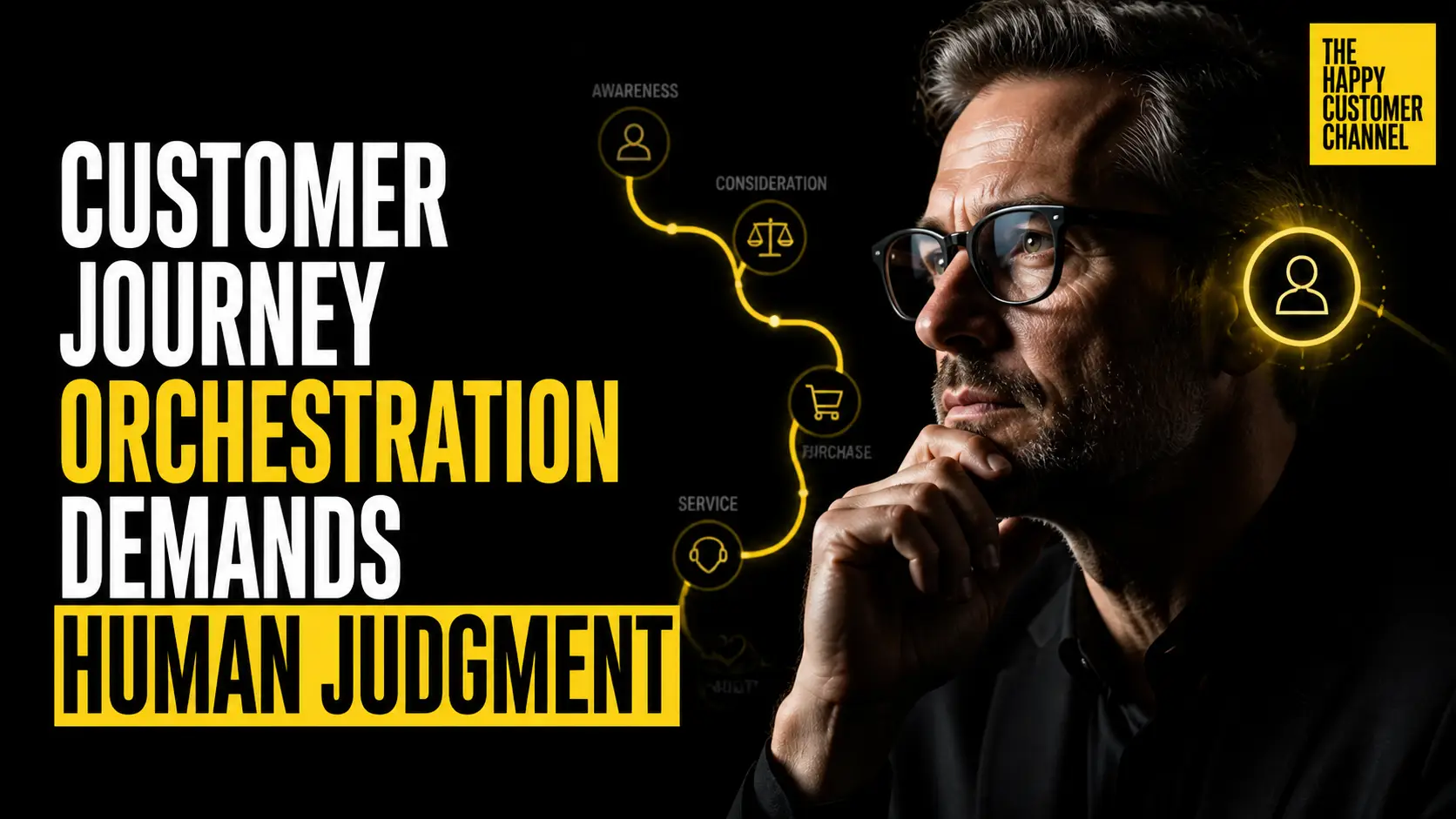
Does your customer journey run on autopilot—or does every touchpoint truly matter? The answer reveals everything about your approach to customer journey orchestration. Automation is fast. It’s efficient. But let’s get real. It misses nuance. It blinds you to what’s actually happening on the ground. That blind spot destroys trust and tanks retention. I’ve seen it play out in big brands and scrappy startups. If you want customer experience that drives results, you need a disciplined dose of human judgment in your orchestration. No exceptions. Not if you care about outcomes.
Customer Journey Orchestration—Don’t Leave It to the Algorithms
Every SaaS vendor, every CX consultant—they’ll tell you their tools can orchestrate journeys from end to end. Plug it in, set a workflow, and your customers are handled. The reality? Those cookie-cutter journeys impress nobody. They hit the high notes, but miss the music.
Customer journey orchestration is about delivering the right experience at every turn. It’s about reading the signals that matter. Sure, automation sets the frame. But it can’t see the friction in real time. It won’t notice when your latest campaign leaves real customers cold. And it never—never—questions itself when things go sideways.
That’s where actual operators step in. The best CX leaders don’t just monitor dashboards. They dig in. They listen for what’s not being said. They know when to make the call and when to let the system run. It’s not about micromanaging. It’s about acting where it counts. This combination—automation plus live operator judgment—is what separates brands customers trust from brands customers forget.
If you want more direct thinking like this, check out The Happy Customer Channel. Everything we do is grounded in these real business patterns.
Where Human Judgment Adds Value—A Practical Framework
If you’re still reading, you’re not the type to settle for generic journeys. You want results, not just metrics. Here’s the lens every operator should apply—every month, every quarter, every journey:
- Signal review: Where do customers pause? Where do drop-offs spike? Don’t trust the aggregate. Get inside the journey and feel the moments that aren’t working.
- Decision gates: Define exactly when a human needs to step in—billing issues, complex inquiries, spotted churn risk. If you leave it to automation, you get robotic responses that lose hearts and minds.
- Empathy audit: Are machine-driven scripts missing the emotional moment? If a customer is frustrated, is your journey doubling down on process or giving humans room to de-escalate?
- Intent validation: Every automated nudge, every batch email—does it actually align with your customer’s real intent, or just your quarterly targets?
- Outcome monitoring: Don’t just score CSAT. Are you tracking tone, language, and net customer trust? Tech tools can’t measure regret. Your team can.
This isn’t a “nice to have.” It’s your insurance policy against mediocrity. You want to see how orchestration falls apart with no operating standards? Read our dive on CX strategy fails without operating standards. Every orchestration system needs scheduled, disciplined operator checkpoints. That’s how you avoid delusion—metrics without meaning—and how you build journeys that win trust for the long haul.
Leadership Discipline—Orchestration Is a Human Leadership Mandate
Too many leaders get seduced by dashboards. Alert, automate, analyze—next quarter, repeat. That’s not orchestration. That’s abdication. Real customer journey orchestration means demanding more from your team and your systems.
Ask yourself: Are we reviewing high-friction touchpoints every quarter? Does the team know where humans step in and where tech can run? Are we flagging and investigating edge cases—not just averages? Leadership means making operator discipline non-negotiable. No passing the baton and walking away. Regular reviews, honest post-mortems, and a willingness to override automation when trust or context demands it—these are the marks of a CX leader who gets results.
This isn’t theory. I’ve seen companies add a single operator review to an onboarding journey and watch churn drop in weeks. It’s usually the high-tension moments—escalations, delays, mistaken triggers—where great brands separate themselves from good ones. The best don’t run from these. They run toward them. And they make it everyone’s job to call out what the algorithm misses.
On The Happy Customer Channel, we surface these patterns—in plain language, from real operators. But don’t just take it from us. Make disciplined, human decision points part of your CX operating standard. Your business outcomes depend on it.
Final Thoughts
At the end of the day, there’s no shortcut around human judgment. Software scales. It does heavy lifting. But only people deliver the nuance that earns real customer trust. Only people know when to bend, adjust, or break the script. If you want orchestration that drives loyalty and delivers results, stop treating automation as a replacement for leadership discipline. Treat it as a tool. The rest—the winning outcomes—belong to your team’s willingness to make the call.
Want frameworks and operator-level CX insights you can use right now? Subscribe to The Happy Customer Channel newsletter for the straight talk you won’t get anywhere else.
Common Questions
Where do most companies go wrong with customer journey orchestration?
Listen… most companies think automation is magic. It isn’t. They believe you can “set it and forget it” and customers will be happy. What I’ve seen? Those journeys go stale. The little annoyances pile up. Suddenly, retention tanks and nobody knows why. The truth is, algorithms can’t spot subtle friction or shifting customer needs. That requires real human review. Want loyalty? Get your team involved, not just your tech stack.
How often should human operators review journey touchpoints?
Here’s the reality: Quarterly reviews are the bare minimum. But I’ve watched the best teams react in real time—whenever they spot spikes in complaints, sudden drop-offs, or outlier feedback. Make it regular. Make it disciplined. Don’t wait for a crisis. Scheduled checkpoints keep you sharp, but be ready to dig in as soon as the data—or your gut—tells you something’s not right.
What’s the first step to embedding human judgment in our orchestration process?
Map where your tech hands off to people today. Be brutally honest. Find the moments where automation just isn’t enough—complex billing, nuanced support, escalations. Build formal decision gates. Don’t shy away. These are the points where operator intervention adds massive value. Treat them as non-negotiable. If you don’t define them, you’ll keep playing catch-up after bad outcomes.
Can human oversight slow down the customer journey?
At the end of the day, smart intervention speeds things up—if you do it right. Some leaders worry about friction, but listen: the cost of letting a problem fester is much worse than a few added seconds of real support. The key is not to meddle everywhere. It’s to pinpoint where tech breaks down and step in with real judgment. The best teams solve issues before they become retention killers. That’s not slow. That’s strategic.