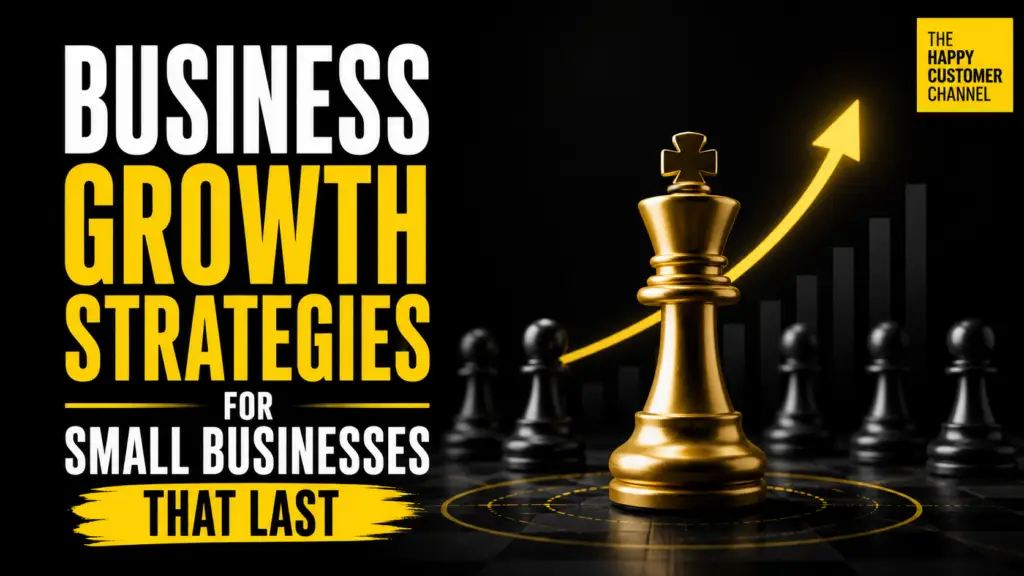
Why do most small businesses stall out after initial success? Because most owners confuse quick wins with real, lasting growth. That’s the problem with business growth strategies for small businesses—you think more revenue, more locations, or shiny new tech will fix it. It won’t. Sustained growth is hard, and frankly, most business owners ignore the real levers. Let’s get brutally honest about what it actually takes to play the long game—and why trusting generic advice is a recipe for mediocrity.
Ignore the Hacks—Obsess Over Real Customer Outcomes
Let’s cut through the noise. Most business growth strategies for small businesses online are nothing but recycled hacks and hollow playbooks. SEO tweaks. Social ad blitzes. Some automation sprinkled on top. Everybody’s got a “growth hack.” Here’s the truth—none of that matters if customers don’t care what you do, and don’t trust you enough to stick around.
If your customers aren’t raving, recommending, and coming back for more, you’ve missed the mark. Growth is a lagging indicator of real customer loyalty. Obsess over your customer’s experience. Track Net Promoter Score. Measure repeat business. Count referrals. Get your team locked in on two or three non-negotiable customer promises. Deliver those, relentlessly. Anything else is noise. Outcomes win. Everything else is just an activity you’ll be tired of repeating next quarter.
Start here: Ask your loyal customers what keeps them coming back. Document everything. Make their feedback your north star. Growth anchored in customer trust can’t be faked, and it never goes out of style. That’s foundational—don’t move forward until your customers are telling the world why you matter.
Leadership Discipline Is Your Growth Multiplier
Let’s talk about leadership. Business growth strategies for small businesses live and die by the standards, habits, and discipline at the top. That’s you. Discipline isn’t glamorous, but it’s the multiplier behind every lasting company I’ve ever seen—especially when you’re juggling a million urgent fires. Without it, growth unravels the minute you take your hand off the wheel.
Set standards. Enforce them. Move with clarity, not speed for the sake of speed. Ruthlessly prioritize core bets and kill distractions. Most importantly, build a culture where your second-in-command can make calls with your same level of conviction. Can your business operate at full strength if you’re out for a week? If the answer is no, you’re not leading. You’re babysitting. Results don’t scale unless you systematize leadership, communication, and measurement.
Too many founders think hustle will get them to the next level. It won’t. Leadership discipline does. Document the playbooks, the metrics that matter, and the handoffs. Harden your systems. Train your lieutenants. If your team collapses without you, you weren’t running a business—you were running a job.
A Practical Framework: Growth and Acquisition Playbook
People love frameworks because they give direction when things get chaotic. Here’s the one I see work for real operators—the actual business growth strategies for small businesses that are still around after a decade. Print this out. Share it with your team. Audit it every quarter.
- Customer Signal: Track what your best customers love, not just what they buy. Double down hard where they see value. Get out of your own way—let their feedback guide your roadmap.
- Operational Systems: Can your team run without you? Write your SOPs. Stress-test them by stepping away. Quarterly audits ferret out weak spots before a breakdown exposes them.
- Scalable Offer: Could your best seller handle 10X demand without massive pain? Test your systems. Find the bottlenecks now—before you blow up what works chasing growth you’re not ready for.
- Acquisition Readiness: Is your data clean? Can someone step in and see how the machine works, or would a buyer run for the hills? Get your shop in order whether you want to exit next year or in ten. You don’t rise to the level of your vision. You fall to the level of your processes.
- Measure, Refine, Repeat: Pull metrics weekly. Make short feedback loops part of your operating rhythm. Course-correct constantly. Standing still is falling behind.
This is what separates the “flash and crash” shops from business legends.
If you need more hands-on breakdowns or want to dig into operator-level lessons, you’ll find them every week on The Happy Customer Channel. We only bring on real practitioners—no theorists. No fluff. Get smarter, faster.
Final Thoughts
Let’s get real. Lasting business growth comes down to discipline times trust. You want a brand that still matters in five or ten years? Stop looking for shortcuts. Pick the hard, unsexy path—customer obsession, relentless improvement, leadership discipline, and accountability up and down the org. If you’re in the game for the long haul, the work eventually pays dividends. Most will quit before they see the payoff. Will you?
Ready to get hands-on frameworks, operator stories, and strategies built to last? Join our newsletter and take your edge one step further, every week.
Common Questions
What’s the first step in creating a sustainable growth strategy for my small business?
Listen—skip the complex diagrams. Your first step is radical clarity about what your best customers value and why they stay. Notice I didn’t say “what they buy”—it’s about what they love. Have real conversations, gather feedback, track repeat business. If you don’t have those insights, you’re building on sand. That’s your foundation. No shortcuts.
How do I know if my business systems are ready to scale?
Here’s the reality—leave for four weeks. No warning. Does the machine keep running without you, or does it fall apart? If you’re scared to even imagine it, you have a system problem, not a growth problem. Document everything, delegate, and actually test the handoffs. Only then do you have a shot at real, scalable growth.
What’s the biggest mistake small business owners make with growth?
Too many owners chase the next big tactic—social ad this, automation that—without investing in repeatable systems or leadership discipline. That’s lazy. All the hacks in the world can’t replace a culture of accountability and clear process. You don’t win by being everywhere. You win by being unbreakable in the fundamentals.
How important is customer trust in long-term business growth?
At the end of the day, customer trust is the multiplier for every other growth lever you pull. If people don’t talk about you for the right reasons, or don’t come back, nothing else matters. Trust can be broken in a flash and takes years to build. Build it every single day. It’s the engine that makes the rest of your strategy actually mean something.