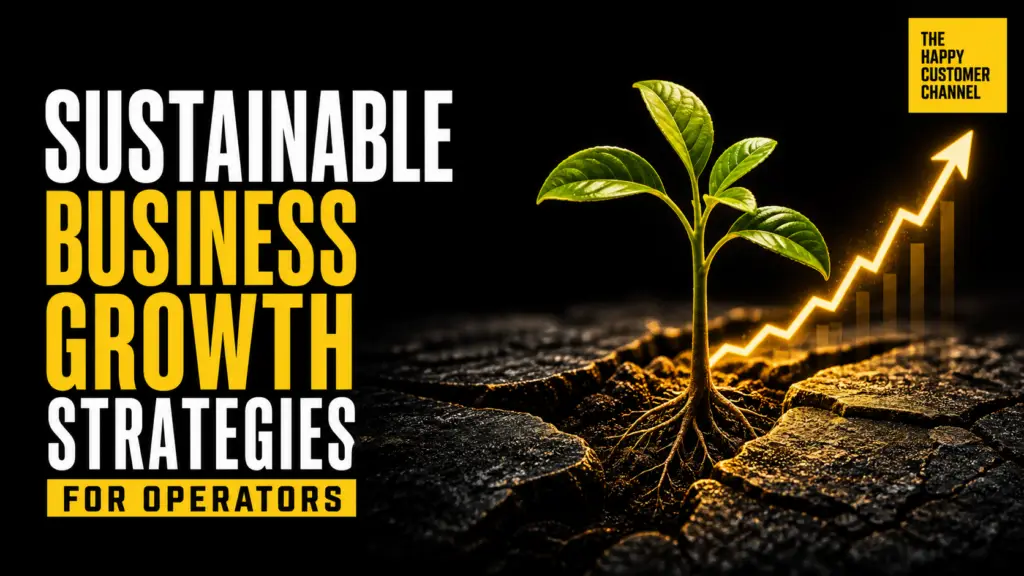
Anyone can grow a business. Sustaining that growth—year after year—separates real operators from the rest. Are your “growth strategies” actually making you stronger or just running you ragged? Let’s get straight to it: Sustainable business growth strategies aren’t about chasing hacks—they’re about relentless discipline, trust, and clarity. If you’re tired of the startup noise and want a real shot at business growth that endures, strap in. This is for you.
The Dangerous Allure of Hype Growth
Let me say it directly: Fast growth is easy, but it’s rarely sustainable. I’ve seen operators bet the farm on the flavor of the month—viral campaigns, fire-sale promotions, or splashy acquisitions. The spreadsheets look incredible, until the dust settles and the cracks start to show. Customer churn spikes. Teams burn out. Worse, the business starts losing its soul.
If your enterprise is built on short-term wins, you’re building on sand. Real, sustainable business growth strategies require you to get comfortable with saying no. Ignore trends that don’t fit your core advantage. Focus is the ultimate growth hack. Ask yourself: What part of my business makes us unbreakable?
- Don’t get distracted by shiny objects. Ruthlessly prioritize your best levers for profit and customer impact.
- Align your leaders. Everyone up top has to point at the same North Star—no exceptions.
- Turn “discipline” from a buzzword into an operating habit. Document what works. Research what doesn’t. Make it repeatable for anyone coming after you.
Growth for its own sake? That’s easy—and fragile. Growth anchored in discipline and clarity? That’s how you last ten years, not two.
Customer Trust: The Real Multiplier
Let’s talk about what actually drives sustainable business growth strategies. Customer trust is not a soft metric. It’s the lever most operators overlook until it’s too late. Growth at the expense of trust is a ticking time bomb. On the other hand, trust compounds. Loyal customers spend more, refer more, and ride out your mistakes when things get tough.
So how do you operationalize trust at scale?
- Map your customer journey, end to end, and look for pain points. No shortcuts. Where are you dropping the ball?
- Be honest—painfully honest—about where your brand over-promises and under-delivers. If you have a trust leak, plug it before pouring in more customers.
- Treat complaints as gold. A fast, transparent recovery system turns angry customers into raving fans. It’s cheaper than constant reacquisition, and it’s what turns businesses from transactional to legendary.
Acquisition costs money. Retention prints it. That’s the power of trust when you build it into your DNA.
The Operator’s Sustainable Growth Framework
Here’s what separates operators who endure from those who flame out. Not luck. Not buzz. Just this framework, tested and refined in the trenches:
- Value Proposition Audit: Is what you’re selling still relevant? Still defensible? If you have to pause to answer, start here.
- Documented Processes: Can a new manager step in and run the core business tomorrow? If not, you’re fragile. Write it down. Make it trainable. Build for turnover, not tenure.
- Talent Pipeline: Growth exposes weak talent pipelines. Are you coaching and developing your people, or just tossing new hires into the fire?
- Real Progress Metrics: Can every leader and line manager track progress without gaming the system? Forget vanity. Measure what matters—customer loyalty, operational reliability, cash conversion. Share results up and down the org chart.
- Customer Trust as a Metric: Don’t make trust a slogan. Measure it. Net Promoter Score? Great. But also monitor repeat business and word of mouth. These are your growth engines.
- Leadership Alignment: Is every top stakeholder clear on definition of success, risk appetite, and priorities? Alignment turns chaos into growth. Discord silently erodes it.
Look at these six factors. Where you hesitate—that’s your roof, your ceiling for growth. That’s where you attack first. Sustainable business growth strategies start and end with this kind of discipline. Anything else is just theater.
For operators hungry for more hands-on frameworks, go deeper with the operator stories and strategies over at The Happy Customer Channel. The best operators aren’t just chasing what’s hot—they’re building what lasts.
Final Thoughts
Sustainable business growth strategies are about boring consistency. Relentless focus. Transparent trust-building. There’s nothing glamorous about discipline, but there’s everything powerfully real about it. Operators who master this outlast the fads, survive downturns, and unlock growth that compounds year after year. Don’t settle for quick wins. Build for forever.
If you live in the middle of the funnel—thinking long-term, hungry for proven tactics—I want you in The Happy Customer Channel community. Join the newsletter for frameworks, operator lessons, and the kind of leadership discipline that keeps great businesses standing.
Common Questions
How do I know if my current growth strategy is actually sustainable?
Listen—if you keep celebrating “big wins,” but your customer retention is slipping or your team is working twice as hard for the same result, you’ve got a problem. Real sustainable business growth strategies show up as steady, reliable progress. If you’re constantly putting out fires or relying on flashy promos, that’s a warning sign. Look for stable repeat business, growing trust metrics, and processes that don’t fall apart every time something changes. If you notice “sprint and stall” cycles, it’s time to rethink the playbook.
What are the biggest mistakes operators make when trying to grow quickly?
Here’s the reality: Most leaders chase growth at the expense of fundamentals. They try everything at once, neglect their best customers, or forget that culture is the backbone. Ignoring process discipline or letting customer complaints pile up—that’s how you burn out a business. At the end of the day, fast growth built on a shaky foundation just sets you up for a longer, harder fall later. Don’t make growth your only goal. Make resilience your strategy.
How can I balance growth targets with operational reality?
Shoot for big numbers, but don’t lie to yourself about gaps. Ambitious targets are good, but they have to reflect what your people and systems can actually deliver. I’ve seen teams implode chasing numbers that looked great on paper. Stress-test your ops. Ask your frontline teams where the wheels get wobbly, then fix that before turning up the gas. Smart operators build growth into their systems, not around them.
Can sustainable growth apply to businesses in turnaround or acquisition mode?
Absolutely—and it’s probably even more important. Turnaround situations magnify every weakness. If you don’t have disciplined frameworks or real trust with customers, everything falls apart fast. Growth here means survival. Lock down your operations. Lean hard into transparency. Bring everyone—customers and team—along for the ride, even when it’s rocky. That’s what gets you out the other side in one piece.