
How to Serve Luxury Brand Customers

FULL EPISODE HERE

How to Serve Luxury Brand Customers: Lessons in Trust, Execution, and Premium Client Management

Serving luxury brand customers requires more than polished presentation or premium aesthetics. It demands disciplined execution, operational credibility, and the ability to guide high-expectation clients with confidence. In this episode, David Finley shares hard-earned lessons from decades of producing high-end displays and branded environments, offering a practical look at what separates trusted premium partners from replaceable vendors. The central idea is simple but demanding: every customer interaction must reflect the authority, accountability, and standards of the brand itself.

What This Episode Covers

This episode breaks down what it really takes to win and retain luxury clients. David Finley explains how premium service is built through trust, honest communication, technical understanding, and the ability to turn ambitious ideas into achievable outcomes.

  • Why every customer-facing employee must represent the full authority of the brand
  • What luxury clients actually expect beyond aesthetics and prestige
  • How to improve a client’s vision without damaging trust
  • Why feasibility, budget, and timeline conversations must happen early
  • How innovation in design and production creates competitive advantage
  • Why patience and professionalism matter in revision-heavy environments
  • How credibility in sales is tied directly to delivery capability

Key Insights

1. Every Customer-Facing Employee Represents the Entire Brand

One of the strongest ideas in the conversation is that clients do not separate the individual they are speaking with from the business as a whole. As Finley puts it, the customer expects that person to be “the CEO of the company.” In practical terms, this means every employee involved in sales, service, project management, or production must communicate with ownership, authority, and accountability. Premium clients want reassurance that the person in front of them can make decisions, solve problems, and stand behind the outcome. Businesses that embed this mindset create stronger trust and a more consistent client experience.

2. Luxury Clients Buy Confidence, Guidance, and Problem-Solving

Luxury customers are not only paying for execution. They are paying for certainty. They expect their service partners to understand the objective, foresee risks, guide decisions, and reduce friction throughout the process. This is an important commercial distinction: high-end clients are not looking for order takers. They want experienced partners who can interpret vision, advise on the best path forward, and keep complex projects moving. Confidence, when backed by real expertise, becomes part of the value proposition.

3. Great Service Means Making the Client’s Idea Better

Finley makes it clear that excellent service is not about blindly saying yes. It is about taking a client’s concept and helping it become stronger, more practical, and more effective. That requires listening closely, understanding intent, and offering alternatives where needed. In premium environments, trust grows when the client sees that you are committed to the best possible outcome, not just the easiest approval. The strongest providers bring creative refinement to the table while protecting the client from avoidable mistakes.

4. Upfront Honesty Protects Trust and Profitability

Clear conversations about budget, timing, and feasibility are not optional. They are foundational. Finley emphasizes the importance of asking direct questions early: What is the budget? What is the deadline? Is the request physically possible? These discussions reduce misalignment, prevent avoidable conflict, and create healthier economics for both sides. Businesses often damage trust not by failing late, but by overpromising early. Honest qualification protects relationships and ensures that commitments are built on reality.

5. Innovation Is a Requirement, Not a Nice-to-Have

In industries tied to design, fabrication, and branded environments, staying current with technology is part of staying credible. Finley highlights the constant need to adapt to new tools, production methods, and capabilities. Innovation matters because premium clients expect leading-edge execution, shorter turnaround times, and higher precision. But adopting new technology also requires discipline. Companies need to research investments carefully, implement them strategically, and extract value before the market moves again. The firms that stay ahead are the ones that treat innovation as an ongoing operating responsibility.

6. Patience Under Pressure Is a Competitive Advantage

Luxury work often involves multiple stakeholders, repeated revisions, exacting standards, and shifting expectations. In that environment, patience is not just a personality trait; it is a business skill. Teams that remain professional under pressure preserve client confidence and protect project momentum. Patience enables better communication, more thoughtful problem-solving, and stronger long-term relationships. It also keeps service quality high when timelines are compressed and decision cycles become complicated.

7. You Should Never Sell What You Do Not Understand

One of the most commercially important lessons from the episode is that credibility begins with knowing what you can actually deliver. Selling beyond operational capability may create short-term opportunity, but it usually leads to disappointment, margin erosion, and reputational damage. Finley’s advice is direct: learn what you are selling before you sell it. The best sales organizations do not rely on persuasion alone; they build confidence by aligning promises with production reality. That discipline turns sales from a transactional function into a trust-building one.

8. Saying Yes Only Works When It Is Backed by Execution

Ambition creates growth, but only when paired with research, adaptation, and disciplined follow-through. Saying yes to complex client demands can open new business opportunities, but only if the company is willing to do the work required to deliver responsibly. This is where premium providers separate themselves from the field. They do not reject difficult work reflexively, but they also do not commit recklessly. They assess, adapt, and execute. That balance of openness and rigor is what allows businesses to expand capability without sacrificing trust.

Framework

Brand Ownership Mindset

  • Treat every customer interaction as if you personally are the company.
  • Accept full responsibility for representing the brand’s standards and promises.
  • Use confidence and accountability to reassure the client and strengthen trust.

This framework is about cultural discipline. When employees operate with ownership, clients experience consistency, clarity, and confidence at every touchpoint.

Feasibility First Qualification

  • Ask for budget upfront.
  • Ask for deadline upfront.
  • Evaluate whether the request is physically possible.
  • Align client expectations before work begins.
  • Decline or redirect requests that cannot be delivered responsibly.

This approach reduces bad-fit projects, protects margins, and prevents unnecessary friction later in the engagement. It is a straightforward but powerful filter for sustainable growth.

Trusted Creative Execution Process

  • Listen closely to the client’s vision.
  • Guide them through the process and provide hands-on support.
  • Offer alternatives when their idea is not practical.
  • Improve the concept where possible.
  • Communicate consistently throughout revisions and production.
  • Secure approval, then move into execution.

This process reinforces the role of the business as a strategic partner rather than a passive vendor. It balances creativity with structure and keeps trust intact from concept through delivery.

Technology Leadership Approach

  • Monitor emerging production and design technologies.
  • Research before investing.
  • Adopt tools that improve capability and client value.
  • Recover return on investment before the technology becomes outdated.
  • Repeat the cycle to stay ahead of competitors.

This framework turns innovation into an operational habit. It ensures the business keeps evolving without making careless technology bets.

Key Takeaways

  • Luxury service is built on trust, clarity, and execution, not image alone.
  • Every employee interacting with customers must project ownership and authority.
  • The best providers improve client ideas instead of simply accepting them at face value.
  • Early conversations about budget, timing, and feasibility prevent larger problems later.
  • Innovation is essential for staying relevant in premium markets.
  • Patience and professionalism help teams manage revision-heavy, high-pressure projects.
  • Sales credibility depends on understanding what the business can truly deliver.
  • Long-term value comes from becoming a trusted execution partner, not just a supplier.

Who This Is For

This episode is especially relevant for:

  • Founders and executives serving premium or high-expectation clients
  • Sales teams selling custom, technical, or high-value services
  • Account managers responsible for client trust and project delivery
  • Creative and production leaders balancing vision with operational reality
  • Agencies, manufacturers, and service firms working in luxury, retail, branding, or experiential environments

Watch the Full Episode

If you want a practical masterclass on premium client service, this episode is worth your time. David Finley offers a grounded view of what it takes to succeed with demanding customers: represent the brand with authority, qualify opportunities honestly, improve the client’s vision, and execute with discipline. Watch the full episode to hear these lessons in full context and apply them to your own customer experience, sales process, and delivery model.

FAQ

What makes luxury clients different from other customers?

Luxury clients typically have higher expectations around execution, responsiveness, and detail. However, the core principles remain the same: they want trust, clarity, competence, and results. What changes is the standard at which those basics must be delivered.

Why is it important to discuss budget and timeline early?

Early budget and timeline conversations create alignment before resources are committed. They help determine what is realistic, reduce costly misunderstandings, and prevent teams from making promises that cannot be delivered profitably or responsibly.

How can a business become a trusted partner instead of a vendor?

A business becomes a trusted partner by combining expertise with honesty. That means listening carefully, offering informed guidance, improving the client’s ideas where possible, setting realistic expectations, and delivering consistently. Trust grows when clients see both ambition and operational discipline.
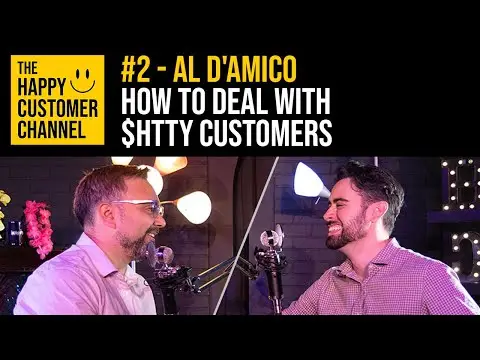
How to Handle Angry Customers with the LAURA Framework

FULL EPISODE HERE

How to Handle Angry Customers: The LAURA Framework for Better Customer Service

Customer loyalty is rarely won when everything goes right. It is won in the moments when customers are frustrated, disappointed, or ready to leave. That is why handling difficult interactions well is not just a support skill. It is a business capability.

In this episode, the guest breaks down a practical approach to customer de-escalation using the LAURA framework: Listen, Acknowledge, Understand, Relate, and Act. Drawing from experience across hospitality and financial services, the conversation makes one point clear: the best customer service is not scripted. It is calm, human, accountable, and focused on solving the problem fully.

The central idea of the episode is simple but powerful. Representatives who stay emotionally detached, listen actively, avoid hard “no” responses, and take ownership of outcomes can turn friction into trust. For leaders, this is more than a service lesson. It is a blueprint for building stronger teams and stronger customer relationships.

What This Episode Covers

This episode explores how businesses can handle frustrated and angry customers more effectively by combining empathy, emotional control, and decisive action. It also explains why service excellence depends on empowering frontline employees to think like owners rather than rely on rigid scripts.

  • How the LAURA framework helps de-escalate difficult customer interactions
  • Why employees should not take complaints personally
  • The role of active listening in reducing customer tension
  • How replacing “no” with alternatives preserves trust
  • Why human connection matters more than scripted responses
  • How accountability and ownership improve customer outcomes
  • Why anticipating needs can prevent future escalation
  • What leaders must do to train teams beyond process and procedure

Key Insights

1. Great customer service starts with emotional detachment

One of the most important lessons from the episode is that customer frustration should not be taken personally. When representatives internalize a complaint, they become defensive, reactive, and less effective. That weakens both the conversation and the customer relationship.

The guest emphasizes the need for emotional discipline. Customers are often responding to a situation, not attacking the individual in front of them. The ability to separate personal emotion from professional response allows employees to stay calm, think clearly, and keep the interaction productive.

This is especially important in high-pressure environments. Teams that can manage emotional intensity without carrying it into the next interaction perform better, recover faster, and maintain service consistency. As the episode puts it, “Don’t take it personal” and “You can’t drag it with you.”

2. Active listening de-escalates tension faster than scripts

Customers do not want to feel processed. They want to feel heard. One of the strongest insights in the episode is that active listening is often more powerful than a prepared answer. The quote “Listen not to respond but to understand” captures the heart of this approach.

When customers are upset, their first need is often recognition, not resolution. They want evidence that someone understands the issue and the impact it has had on them. Representatives who interrupt, rush, or jump into policy mode too quickly often increase tension rather than reduce it.

Active listening creates space for clarity. It helps employees identify the real issue, not just the initial complaint. In many cases, escalation happens because businesses solve the surface problem while missing the underlying frustration. Strong listening lowers defensiveness and improves solution quality at the same time.

3. “No” closes the conversation, but alternatives move it forward

Another major theme is the importance of avoiding hard refusals. Saying “no” too quickly can make customers feel dismissed, cornered, or ignored. It can turn a manageable concern into a larger escalation.

The guest highlights a more effective approach: replace “no” with a constructive alternative. “I can’t do this, but what I can do is that” keeps the conversation alive and signals a willingness to help. This shift matters because it changes the representative’s role from gatekeeper to problem solver.

From a business perspective, this is critical. Alternatives preserve goodwill, reduce conflict, and give customers a sense of movement. Even when the ideal request cannot be fulfilled, customers are more likely to remain engaged when they see effort, creativity, and intent to help.

4. Human connection beats rigid process

The episode makes a clear case against overreliance on scripts. While structure can support consistency, scripted service becomes a problem when it replaces authentic human interaction. Customers can tell when they are hearing memorized lines instead of real engagement.

The guest’s advice is direct: “Be human.” Tone, word choice, and personal presence all shape how customers interpret the interaction. A calm and conversational response can lower tension far more effectively than a polished script delivered without empathy.

This is not an argument against standards. It is an argument for training teams in principles rather than forcing robotic delivery. Businesses that prioritize human communication create stronger trust, especially in moments of friction when customers are deciding whether the brand is worth staying with.

5. Ownership is what turns service into trust

One of the strongest leadership ideas in the episode is that frontline employees should act like the face of the company in every interaction. The quote “For that 10 minutes you are kind of the CEO” captures the level of ownership expected.

Customers do not distinguish between departments, systems, and internal limitations. They experience the business through the person in front of them. When that person takes accountability, follows through, and owns the issue until it is resolved, trust increases. When they deflect, transfer, or hide behind policy, trust erodes quickly.

Accountability is especially valuable because it reduces organizational drag. Empowered employees can solve issues faster, reduce handoffs, and lower the burden on managers. This is not just better service. It is better operations.

6. Anticipating the full problem builds loyalty

The best service professionals do more than answer the question in front of them. They anticipate what comes next. This episode reinforces that solving the immediate issue is not always enough. Representatives should think one step ahead and address related concerns before the customer has to raise them.

This proactive mindset creates a smoother experience and reduces repeat contact. It also signals competence. Customers are more likely to trust a company when its employees understand the broader context of their problem and resolve it fully.

For businesses, this has a measurable impact. Fewer repeat escalations, less managerial intervention, and more complete resolutions all contribute to stronger retention and more efficient service delivery.

7. Customer loyalty is built in moments of friction

A key business takeaway from the episode is that difficult moments are often the most important brand moments. Smooth transactions rarely define customer loyalty. Friction does.

When a business responds well under pressure, it proves its value. It shows customers that the company can be trusted not only when systems work, but when things go wrong. That is why de-escalation, empathy, and follow-through are not soft skills in the abstract. They are drivers of retention, reputation, and brand equity.

The episode makes it clear that service excellence is not just a frontline behavior. It is a leadership system. Companies that train for judgment, empathy, and action create better outcomes than those that train only for compliance and script adherence.

Framework: The LAURA Method for Customer De-Escalation

The episode centers on a practical framework called LAURA. It provides a clear structure for handling angry or frustrated customers without becoming reactive or overly scripted.

Listen

Practice active listening to understand the customer’s issue rather than preparing your response while they are speaking. This helps uncover the full context and lowers emotional intensity.

Acknowledge

Make the customer feel seen. This can be as simple as using their name, recognizing the inconvenience, or validating that the situation matters.

Understand

Show empathy by seeing the issue from the customer’s perspective. This is where emotional intelligence matters most. Customers need to know that you understand the impact, not just the facts.

Relate

Respond in a personal and conversational way. Human connection reduces tension and builds familiarity. This step helps shift the interaction from confrontation to collaboration.

Act

Take action to resolve the problem. If the requested outcome is not possible, offer a practical alternative. As the guest notes, nothing reinforces trust more than action.

Key Takeaways

  • Do not take customer frustration personally if you want to respond effectively.
  • Listening to understand is more effective than relying on memorized responses.
  • Avoid hard “no” answers and offer alternatives that keep the conversation productive.
  • Customers trust human, empathetic communication more than rigid scripts.
  • Ownership and follow-through are essential to strong customer relationships.
  • Empowered frontline employees prevent escalation and reduce operational bottlenecks.
  • Solving the full problem, not just the immediate issue, builds loyalty.
  • Customer service excellence is a leadership system, not just a support function.

Who This Is For

This episode is especially valuable for:

  • Customer service and support leaders
  • Frontline service teams handling complaints or escalations
  • Operations leaders focused on customer retention and service efficiency
  • Sales teams that manage objections and relationship recovery
  • Hospitality, financial services, retail, and service-based businesses
  • Executives looking to strengthen brand trust through better customer experience

Watch the Full Episode

If your team handles customer complaints, service recovery, or high-friction interactions, this episode offers a practical framework worth applying immediately. Watch the full episode to learn how empathy, emotional discipline, and ownership can improve both customer outcomes and business performance.

FAQ

What is the LAURA framework in customer service?

LAURA stands for Listen, Acknowledge, Understand, Relate, and Act. It is a simple framework for de-escalating difficult customer interactions by combining empathy, human communication, and action.

Why is it important not to take angry customers personally?

Taking complaints personally often leads to defensiveness and poor judgment. Emotional detachment helps employees stay calm, think clearly, and focus on resolving the issue rather than reacting to the emotion.

How can businesses reduce customer escalations?

Businesses reduce escalations by training employees to listen actively, avoid rigid scripts, offer alternatives instead of hard refusals, and take ownership of solving the full problem. Empowerment and accountability are key.