Strong Operators Build Better Businesses

FULL EPISODE HERE

How Strong Operators Build Better Businesses: Culture, Retention, Hiring, and Recurring Revenue

Most businesses do not break because of a lack of ambition. They break because the fundamentals were never built well enough to handle pressure. In this mailbag-style episode, the guest delivers a practical operating playbook for founders, executives, and business buyers who want to build durable companies rather than chase surface-level growth.

The conversation spans entrepreneurship, hiring, customer service, acquisitions, and leadership. Across every topic, the central message is consistent: strong businesses are built through clarity, systems, culture, and smart talent decisions. Not hype. Not charisma. Not short-term spikes.

The core idea is simple but powerful. If you want better outcomes, stack the odds in your favor. Choose businesses where you already have an edge. Build systems before scale exposes your weaknesses. Focus on retention and recurring revenue. And protect culture before it starts costing you performance.

What This Episode Covers

This episode offers a concise but highly actionable view into what makes a business resilient. It focuses on the operating disciplines that help leaders reduce risk, improve execution, and build long-term value.

  • Why culture is the most important operating asset in a company
  • How small businesses can improve execution through clear roles, SOPs, and KPIs
  • Why retention matters more than early acquisition spikes
  • What makes customer service scalable and reliable
  • How to think about buying a first business
  • Why recurring revenue is more durable than capital-intensive growth
  • How to identify strong hires beyond resumes and interview performance
  • Why time freedom is a better success metric than visible wealth

Key Insights

Culture is the real stress test for a business

One of the clearest points in the episode is that culture is not a vague or secondary issue. It is a core operating asset. When markets tighten, growth slows, or internal pressure rises, culture determines whether a team stays aligned or starts to fracture.

The guest reinforces this with a direct belief: “Culture is the most important thing in business.” That matters because many companies treat culture as branding or employee sentiment, when in practice it shapes decision-making, accountability, trust, and execution quality.

A healthy culture strengthens resilience. A weak culture magnifies friction. When leaders fail to protect it, they often pay for it in turnover, inconsistency, politics, and declining standards.

Clarity beats improvisation in small-business execution

Small businesses often lose momentum not because the team lacks effort, but because people are unclear on ownership, process, and priorities. This episode makes a strong case for installing structure early.

That means clearly defining roles and responsibilities, building standard operating procedures, and aligning the team around a small number of critical KPIs. The point is not bureaucracy. The point is consistency.

When everyone knows who owns what, how work gets done, and which numbers matter most, decision-making gets faster and execution improves. Leaders also reduce internal confusion before it turns into conflict or underperformance.

For growing companies, this is one of the biggest operating advantages available: simplify what matters and make accountability visible.

Acquisition without retention creates false confidence

Early customer growth can be misleading. A business may look healthy because new customers keep coming in, but if those customers do not stay, the underlying economics are weak.

This is why the episode places such a strong emphasis on retention. Retention is what validates that the business is actually delivering value. It also creates more predictable revenue, stronger margins, and greater operational stability.

The guest’s point that “raving fans stick longer” reflects a practical truth: loyal customers are worth more than short-term demand spikes. Businesses that obsess over acquisition while neglecting retention often confuse motion with progress.

The stronger strategy is to build the retention engine first. Then growth compounds on something durable.

Buy the first business where you already have an edge

For prospective buyers, one of the most useful insights in the episode is that the best first acquisition is rarely the most exciting one. It is the one where your experience creates an advantage.

If you already understand the customer, the talent market, the sales motion, or the operational model, you reduce risk immediately. You gain pattern recognition faster. You can spot problems earlier. You are also more likely to recruit effectively and grow revenue with less trial and error.

This is the logic behind the idea to “stack the deck in my favor.” Rather than entering a business cold, the better move is to acquire within a zone where you already have context and leverage.

That approach does not remove risk, but it improves the odds in meaningful ways.

Recurring revenue creates stronger businesses than capital-heavy expansion

The episode also makes a disciplined case for business models built on recurring revenue and operational improvement. These businesses tend to be more durable than models that depend heavily on constant reinvestment or trend-driven demand.

Recurring revenue improves predictability. It supports planning, stabilizes cash flow, and typically creates higher long-term value. When paired with process improvement, it can also unlock margin expansion without relying purely on top-line growth.

By contrast, capital-intensive growth strategies often look impressive from the outside while masking operational fragility underneath. This episode consistently favors resilience over flash and repeatability over hype.

Customer service only scales when it is systemized

Great customer service is often described as a people problem, but the guest frames it more accurately as a systems problem. If service quality depends entirely on individual interpretation, it will eventually become inconsistent.

The operational answer is to design consistency and speed into the business. That includes clear service standards, response expectations, issue-resolution playbooks, and frontline empowerment.

As the episode notes, “Consistency is a key part of delivering great customer service.” Speed matters too. Customers remember fast resolution and reliable experiences. Those outcomes drive loyalty, referrals, and repeat business.

For operators, the takeaway is straightforward: customer service should be engineered, not improvised.

Hiring quality comes from habits and depth, not polished interviews

One of the strongest hiring lessons in the episode is that interview charisma is often overrated. A polished candidate may perform well in conversation while lacking the discipline, habits, and substance required for the role.

The better approach is to test for depth. Ask better questions. Let candidates talk. Look for consistency in how they think, how they learn, and how they operate over time.

The episode also emphasizes pattern recognition. Strong hiring comes from repeatedly observing the behavioral traits that tend to correlate with high performance: curiosity, self-improvement, discipline, and learning orientation.

These are harder to fake than confidence. Over time, they become far more predictive than resume quality alone.

A bad hire damages the business faster than leaders expect

The guest makes a sharp distinction between a talented person in the wrong role and a genuinely bad hire. Role fit can often be corrected. Toxicity is different.

A bad hire weakens culture, lowers standards, creates friction, and spreads dysfunction. That is why the advice is so direct: “If you have a bad hire, cut that cancer out right away.”

For business leaders, this is less about harshness and more about speed of response. Delaying action on toxic behavior almost always increases the cost. Protecting the culture and performance of the broader team matters more than preserving one poor-fit relationship.

Time freedom is a better metric than status

The episode also challenges a common business illusion: visible wealth is often mistaken for success. But if a leader is financially successful and operationally trapped, the business has not created real freedom.

That is why one of the most memorable lines in the episode is, “Money rich and time poor isn’t a flex. It’s a problem.” The stronger metric is control over your time.

This is not just a lifestyle point. It is an operating point. Businesses with stronger systems, better hires, clearer accountability, and repeatable processes free leaders from constant intervention. That creates a business that can scale without consuming the owner.

As the episode puts it, “The real flex is getting your time back.”

Framework

Stack the Deck in Your Favor

  • Start with industries where you already have experience
  • Use existing relationships to acquire customers faster
  • Recruit from networks and people you already know
  • Match the business model to your strengths, such as sales or operations
  • Prefer businesses where operational improvement and technology can unlock growth

Small Business Operating Foundation

  • Define roles and responsibilities clearly
  • Build SOPs for daily execution
  • Create transparency around goals
  • Set a small number of clear KPIs
  • Master core metrics before adding complexity

Customer Service Delivery Model

  • Ensure consistency across every customer touchpoint
  • Prioritize speed in response and issue resolution
  • Empower frontline employees to solve common problems quickly
  • Build systems and playbooks so service standards are repeatable
  • Turn satisfied customers into referrals, loyalty, and repeat purchases

Hiring Pattern Recognition

  • Look beyond resume quality and interview charisma
  • Ask strong questions and let candidates talk
  • Evaluate consistency of habits and disciplines
  • Favor signs of curiosity, self-improvement, fitness, and learning orientation
  • Use repeated behavioral patterns to improve hiring odds over time

Key Takeaways

  • Culture is a hard business asset, not a soft idea
  • Clear roles, SOPs, and KPIs improve small-business execution quickly
  • Retention is a stronger health signal than early acquisition growth
  • Your first acquisition should be in a business where you already hold an advantage
  • Recurring revenue produces more durable value than flashy expansion
  • Customer service quality must be built into systems to scale
  • Hiring decisions should prioritize discipline, depth, and habits over polish
  • Bad hires should be addressed quickly before they damage the culture
  • Operational freedom is a better definition of success than visible wealth

Who This Is For

This episode is especially useful for:

  • Founders building operational discipline into a growing company
  • Small-business owners trying to improve execution and accountability
  • Business buyers evaluating their first acquisition
  • Operators focused on retention, recurring revenue, and customer experience
  • Leaders who want to hire more effectively and protect culture as they scale
  • Executives redefining success around resilience and time freedom, not optics

Watch the Full Episode

To hear the full conversation and get the complete context behind these operating principles, watch the full episode. It is a practical resource for anyone serious about building a company that performs well under pressure and improves over time.

FAQ

Why does the episode place so much emphasis on culture?

Because culture shapes how a company behaves when pressure rises. It affects accountability, trust, standards, and execution. A strong culture improves resilience, while a weak one amplifies internal problems.

What is the most important operating advice for small businesses in this episode?

Start with clarity. Define roles, document SOPs, and focus the team on a few critical KPIs. That foundation reduces confusion, improves performance, and creates consistency as the business grows.

What makes a business a better first acquisition target?

The best first acquisition is usually one where the buyer already has an edge through experience, relationships, customer knowledge, or operating expertise. That reduces risk and improves the odds of making better decisions after the acquisition.

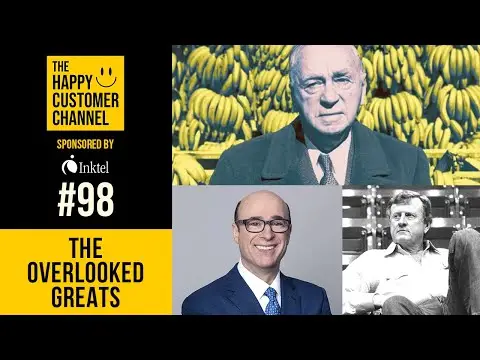
Overlooked Entrepreneurs and Lessons on Business Scale

FULL EPISODE HERE

Overlooked Great Entrepreneurs: What Sam Zemurray, Red McCombs, and Brad Jacobs Teach About Scale, Speed, and Business Execution

Most business coverage focuses on the loudest founders, the biggest personalities, and the most visible companies. This episode takes a different approach by examining three entrepreneurs who created enormous business value without becoming household names: Sam Zemurray, Red McCombs, and Brad Jacobs. Their stories reveal a consistent pattern of success built on aggression, timing, capital allocation, and disciplined execution. The central idea is simple but powerful: some of the most important business lessons come from operators who quietly compound wins over decades rather than founders who win attention in the moment.

What This Episode Covers

This episode explores how three highly effective but underappreciated entrepreneurs built exceptional businesses in very different industries. While their paths were distinct, they shared the same strategic DNA: they recognized underexploited opportunities, moved faster than competitors, and scaled through systems rather than relying on one-time brilliance.

  • Why overlooked entrepreneurs often create outsized long-term impact
  • How fragmented industries become attractive consolidation opportunities
  • Why speed can be a greater advantage than invention
  • How repeatable operating systems drive scalable growth
  • The role of aggressive but disciplined capital allocation
  • Why resilience after major setbacks can lead to even greater outcomes
  • What it means to “play offense” in business

Key Insights

The best opportunities often sit inside neglected markets

One of the clearest lessons from the episode is that exceptional businesses are often built in places others ignore. Sam Zemurray saw value in near-spoiled bananas. Red McCombs built through local dealerships, radio, media, and other fragmented assets. Brad Jacobs repeatedly entered scattered industrial and logistics sectors where structure was missing. The broader business lesson is that disorder creates opportunity for leaders who can impose discipline, process, and scale. For executives and investors, the takeaway is clear: markets that seem messy or unglamorous often offer the highest upside.

Speed is a strategic advantage, not just an execution tactic

“Speed is everything” is more than a quote from the episode. It is a central operating principle. Zemurray’s early success depended on acting quickly enough to turn perishable inventory into profit. That same logic appears in how these entrepreneurs made acquisitions, entered markets, and scaled before slower competitors could react. In many businesses, timing determines economics. A company that moves decisively can capture assets, customers, or margin that disappear once the market catches up. Leaders who treat speed as a core strategic capability often outperform those who overanalyze.

Great operators scale with systems, not heroics

Brad Jacobs is the strongest illustration of this idea. Across multiple businesses, he used similar operating playbooks to create value repeatedly. The message is important for any growth-minded company: scalable businesses are built on transferable systems, not on isolated bursts of founder intuition. Repeatable processes, aligned incentives, disciplined integration, and consistent capital deployment make growth durable. Leaders who want to build beyond a single great year need to focus on methods that can be reused across teams, markets, and acquisitions.

Resilience matters most when it leads to renewed action

One of the most striking moments in the episode is the discussion of Zemurray losing 90% of his net worth. The bigger lesson is not the loss itself, but what followed. Rather than retreat, he re-entered aggressively and bought control of the company that had acquired his original business. That is resilience in its most useful form: not passive endurance, but active re-engagement. For founders, operators, and investors, setbacks are often unavoidable. The differentiator is whether a leader preserves enough conviction, clarity, and capital to act when dislocation creates opportunity.

Capital allocation is a defining leadership skill

All three entrepreneurs understood that business success is not just about operating better. It is also about placing resources where returns are highest. McCombs moved across multiple sectors, shifting capital into opportunities with asymmetric upside. Jacobs repeatedly created value through acquisition strategy and disciplined deployment. Even Zemurray’s comeback was fundamentally a capital allocation move under pressure. The lesson for CEOs and business owners is straightforward: growth does not come from effort alone. It comes from consistently directing time, money, and attention toward the highest-leverage opportunities.

Quiet consistency often beats visible ambition

The episode makes a strong case that business history often underrates methodical builders. McCombs and Jacobs, in particular, are presented as operators whose records far exceed their public profiles. This matters because markets and media tend to overvalue narrative and undervalue consistency. But in practice, category leadership is frequently built by companies that execute well quarter after quarter, acquisition after acquisition, and year after year. “Stack wins without applause” captures the point well. Enduring businesses are usually built by leaders focused more on results than recognition.

Elite builders play offense

The unifying trait across all three stories is offensive thinking. “These guys were aggressive” and “They didn’t actually hesitate to scale” summarize the pattern. None of these entrepreneurs waited for perfect certainty. They recognized timing, moved into opportunity, expanded decisively, and pressed their advantage. In business, defensive leadership can preserve a company for a period, but offensive leadership is what creates category-defining outcomes. Markets reward action when it is backed by judgment. The companies that shape industries are usually led by people willing to move before consensus forms.

Framework

Offensive Operator Framework

This framework captures the common playbook used by the entrepreneurs featured in the episode. It is especially relevant for founders, operators, and investors who want to build in traditional or fragmented markets.

  • Identify overlooked or fragmented markets
  • Move early where others hesitate
  • Use acquisitions or rollups to gain scale
  • Build repeatable systems and operating playbooks
  • Allocate capital aggressively but intelligently
  • Keep scaling without waiting for recognition

Roll-Up Growth Model

Red McCombs and Brad Jacobs are strong examples of how consolidation creates value when industries remain fragmented and operational standards vary widely.

  • Target highly fragmented industries
  • Acquire small businesses at scale
  • Standardize operations across the portfolio
  • Centralize key financial and strategic functions
  • Incentivize management for performance
  • Create value through consolidation, efficiency, and exit timing

Resilient Comeback Strategy

Sam Zemurray’s story demonstrates that large losses do not end a business career if the operator retains conviction and re-enters with control in mind.

  • Absorb major losses without abandoning conviction
  • Preserve enough capital to re-enter decisively
  • Buy when market dislocation creates opportunity
  • Rebuild through control, not caution
  • Turn adversity into a platform for greater scale

Key Takeaways

  • Some of the best business operators are overlooked precisely because they focus on execution over visibility.
  • Fragmented industries can offer enormous upside for leaders who can consolidate and standardize them.
  • Speed is often a core source of advantage, especially in acquisition-driven or time-sensitive markets.
  • Repeatable systems outperform one-off flashes of brilliance.
  • Capital allocation is one of the most valuable skills a business leader can develop.
  • Resilience creates outsized returns when it is paired with conviction and action.
  • Long-term winners tend to play offense and scale decisively when the opportunity is clear.

Who This Is For

This episode is especially valuable for:

  • Founders building in traditional or fragmented industries
  • CEOs focused on scale, acquisitions, and operational discipline
  • Investors looking for durable business patterns beyond hype cycles
  • Executives interested in capital allocation and roll-up strategies
  • Operators who want practical lessons from proven long-term builders

Watch the Full Episode

If you want a sharper understanding of how underappreciated entrepreneurs create outsized results, this episode is worth watching in full. It offers practical lessons on speed, resilience, scale, and operating discipline through the stories of Sam Zemurray, Red McCombs, and Brad Jacobs. More importantly, it reframes what business greatness often looks like in the real world: less fame, more compounding.

FAQ

Why does the episode focus on lesser-known entrepreneurs instead of famous founders?

The episode argues that many of the most important business lessons come from operators who built value consistently over time without becoming public icons. Their relative lack of fame makes their strategies easier to study without distraction from celebrity.

What is the biggest strategic lesson from Sam Zemurray, Red McCombs, and Brad Jacobs?

The biggest lesson is that enduring business success often comes from recognizing underappreciated opportunities, moving quickly, and scaling through repeatable systems. Their advantage was not hype, but disciplined execution.

How can a business apply these lessons today?

Companies can start by identifying fragmented or inefficient markets, improving decision speed, building standardized operating playbooks, and treating capital allocation as a core leadership function. The goal is to compound advantage through repetition, not wait for a breakthrough moment.

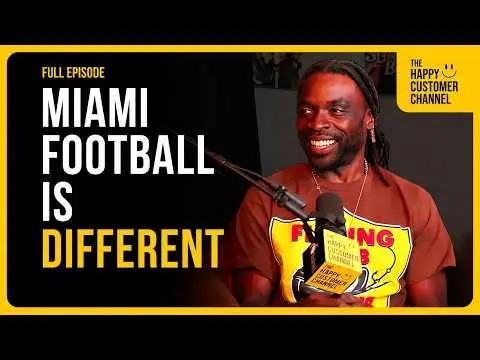
Miami Growth: Why Local Business and Media Matter

FULL EPISODE HERE

Miami Growth, Local Media, and Why Community-Driven Business Wins

Rapid growth can transform a city, but it can also weaken the very qualities that made it attractive in the first place. In this episode, Grant Miller shares a grounded view of Miami’s evolution through the lens of local media, neighborhood business, and civic accountability. As the leader of Miami Community News, Miller brings more than four decades of perspective on what helps communities thrive and what puts long-term growth at risk. The central idea is simple but commercially important: the strongest economies are not built by outside capital alone, but by how well cities support local businesses, protect cultural identity, and ensure that prosperity reaches the people who actually keep the market running.

What This Episode Covers

This episode explores how Miami can continue to grow without losing its entrepreneurial energy, neighborhood character, and economic accessibility. The conversation connects local media, small business success, major event-driven tourism, and public accountability into one larger business question: who truly benefits from growth?

  • Why local ownership keeps wealth circulating within the community
  • How community media fills critical information gaps left by larger outlets
  • What major events like F1, FIFA, and the World Baseball Classic contribute to the local economy
  • How regulation can either support or suppress neighborhood business growth
  • Why affordable housing, schools, and infrastructure are essential to long-term competitiveness
  • How civic transparency strengthens both public trust and economic performance
  • Why preserving local culture is a business strategy, not just a branding exercise

Key Insights

Local Businesses Generate More Durable Economic Value

One of the clearest messages in the episode is that local businesses have a multiplier effect that large national chains often do not. When a locally owned company earns revenue, that profit is more likely to remain in the market through local hiring, local purchasing, and local reinvestment. This creates stronger neighborhood-level economic resilience and broader spillover across the city. For business leaders and policymakers, the implication is straightforward: if you want healthier local economies, you need more than demand generation. You need ownership structures that keep value in-market.

Community Media Plays a Strategic Role in Economic Health

Community-focused media is often underestimated because it does not compete on the same terms as national news brands. Its advantage is relevance. By covering schools, zoning decisions, neighborhood businesses, civic meetings, and local issues that larger outlets ignore, hyperlocal media becomes a critical business and civic asset. It helps residents make better decisions, gives local businesses visibility, and creates a level of accountability that can improve institutional performance. In practical terms, trusted local media contributes to a more informed, more connected, and more investable market.

Major Events Only Matter If the Economic Benefits Spread

High-profile events can bring visibility, traffic, and spending into a city, but the real test is whether that value reaches beyond the headline venues. The episode emphasizes that events like Formula 1, FIFA, and the World Baseball Classic become true economic engines only when restaurants, retailers, service providers, and neighborhoods across the city participate in the upside. That distinction matters for operators and city planners alike. Event strategy should not be measured only by ticket sales or media attention, but by how effectively it creates local commercial spillover.

Bad Regulation Can Erode a City’s Competitive Advantage

Regulation is necessary, but poorly designed regulation can disproportionately hurt the small operators who give a market its identity and vitality. When compliance costs and barriers increase without considering the realities of local businesses, the result is often less entrepreneurship, weaker neighborhood commerce, and a more generic urban economy. This is especially important in cities like Miami, where culture, diversity, and independent business activity are central to the brand. Markets do not lose their edge all at once. They lose it gradually when smaller businesses stop being able to survive.

Miami’s Next Growth Phase Will Be Talent-Led, Not Just Corporate-Led

The discussion suggests that Miami’s future will depend less on corporate relocation headlines and more on whether high-talent individuals choose to build, invest, and stay locally. Founders, operators, creators, and investors are the real long-term growth engine because they build ecosystems over time. That means the city’s advantage will come from creating conditions where ambitious people can launch companies, access networks, and participate in a community with strong local identity. For a business audience, this is an important shift: competitive cities increasingly win by attracting entrepreneurial talent, not just large enterprises.

Housing, Schools, and Infrastructure Are Business Issues

Affordable housing, strong schools, and reliable infrastructure are often treated as policy topics separate from business strategy. This episode makes the opposite case. If teachers, workers, and entrepreneurs cannot afford to live in the market, the city eventually weakens its own labor pool, service quality, and growth potential. The same is true when infrastructure falls behind demand. A city can attract capital in the short term while still damaging its long-term operating environment. Sustainable growth requires investment in the foundational systems that allow the workforce and business base to function.

Accountability Journalism Improves Market Performance

Transparency is not just a civic principle. It is an economic one. When local institutions are covered consistently and held accountable, public spending tends to improve, trust becomes easier to maintain, and stakeholders have better information for decision-making. That creates a healthier operating environment for businesses and residents alike. In this context, accountability journalism is not a side function of community life. It is part of the infrastructure that supports more effective governance and stronger local markets.

Preserving Local Culture Is a Strategic Economic Advantage

Local identity is often discussed in emotional terms, but the episode frames it as a competitive asset. Cities that preserve their character, independent businesses, and cultural distinctiveness stand out in an increasingly standardized global economy. That matters for tourism, talent attraction, brand building, and investor interest. If a city becomes overly corporate, overly regulated, or disconnected from its own communities, it risks losing the qualities that once made it valuable. Preservation, in this sense, is not resistance to growth. It is a way to make growth more durable and differentiated.

Framework

Local Economic Retention Framework

  • Buy local
  • Keep profits in-market
  • Strengthen neighborhood businesses
  • Create community-wide economic spillover

This framework reinforces the idea that local ownership has compounding value. The more revenue stays within the community, the more likely it is to support jobs, vendors, investment, and neighborhood stability.

Sustainable City Growth Framework

  • Attract talent and capital
  • Support entrepreneurs and small businesses
  • Invest in schools and workforce foundations
  • Improve housing affordability and infrastructure
  • Preserve cultural and neighborhood identity

This approach balances growth with long-term viability. It argues that expansion alone is insufficient if the city becomes unaffordable, fragmented, or detached from the people who power its economy.

Community Media Value Framework

  • Focus on hyperlocal relevance
  • Elevate undercovered stories
  • Build trust through consistency
  • Hold institutions accountable
  • Strengthen civic and business ecosystems

This framework shows why local media remains highly relevant in a digital environment. Its value comes from trust, proximity, and the ability to cover the issues that materially affect neighborhoods and businesses.

Key Takeaways

  • Local ownership strengthens the economy because profits stay and recirculate within the market.
  • Community media creates business and civic value by covering what larger outlets miss.
  • Major events deliver the most value when neighborhoods and local businesses share in the upside.
  • Overregulation can weaken small businesses and reduce the distinctiveness of a city.
  • Miami’s long-term growth depends on entrepreneurial talent, not just corporate migration.
  • Housing affordability, school quality, and infrastructure are central to market competitiveness.
  • Transparency and accountability improve public trust and institutional performance.
  • Protecting local culture is a practical strategy for preserving economic differentiation.

Who This Is For

This episode is especially relevant for:

  • Business owners and operators evaluating local market dynamics
  • Economic development leaders and policymakers
  • Founders and investors interested in emerging city ecosystems
  • Media professionals focused on local audience strategy
  • Real estate, hospitality, and tourism stakeholders
  • Civic leaders working on sustainable urban growth
  • Anyone interested in how cities can scale without losing their identity

Watch the Full Episode

To hear Grant Miller’s full perspective on Miami’s growth, community media, and the business case for supporting local ecosystems, watch the complete episode. The discussion offers practical insight for leaders thinking about urban growth, economic resilience, and what it takes to build markets that remain both competitive and livable.

FAQ

Why are local businesses so important to a city’s economy?

Local businesses often create greater economic spillover because profits are more likely to stay within the community. That means more local hiring, more local purchasing, and stronger reinvestment across neighborhoods.

What role does local media play in business growth?

Local media informs residents, highlights neighborhood businesses, and holds institutions accountable. That creates a more transparent, connected, and functional market, which benefits both businesses and communities.

What does Miami need to do to sustain long-term growth?

Miami needs to balance capital attraction with practical investment in housing, schools, infrastructure, small business support, and civic transparency. Long-term growth will depend on whether the city remains accessible and opportunity-rich for the people who make its economy work.

CX Leadership in the Age of AI: Trust Still Wins

FULL EPISODE HERE

Customer Experience Leadership in the Age of AI: Why Trust, Empathy, and Operational Discipline Still Win

As AI adoption accelerates across customer experience, many companies are moving fast on automation without addressing the operational gaps that weaken service in the first place. That is the central challenge explored in this episode featuring Jose Alvarado, who brings a grounded perspective on CX leadership, outsourcing, and the practical role of AI.

Jose’s core message is straightforward: customer experience does not improve because a company adds more technology. It improves when leaders align people, systems, and decisions around values, empathy, and disciplined execution. From outsourcing strategy to AI deployment, the businesses that perform best will be the ones that fix the basics first and treat trust as the foundation of customer loyalty.

What This Episode Covers

This conversation examines what strong customer experience leadership looks like in practice, especially as organizations balance outsourcing, automation, and rising customer expectations. Jose focuses on the leadership habits, operating models, and decision frameworks that create sustainable CX performance.

  • Why outsourcing should be treated as an extension of the brand
  • How values-based leadership improves decision-making
  • Why AI fails when organizations ignore operational fundamentals
  • Where human agents remain critical in the customer journey
  • How cross-functional silos undermine CX outcomes
  • Why behavioral and sentiment-based metrics will matter more going forward
  • How empathy and simplicity drive long-term customer loyalty

Key Insights

1. Chasing AI Without Fixing the Basics Is a Strategic Error

One of the strongest points in the episode is that AI cannot solve broken operations. If a company has poor knowledge management, inconsistent hiring standards, fragmented workflows, and weak implementation discipline, adding AI will often magnify those problems rather than eliminate them.

Jose’s perspective is especially relevant for business leaders under pressure to modernize quickly. AI should not be the starting point. Operational readiness should. That means ensuring the knowledge base is accurate, roles are clearly defined, teams are trained properly, and workflows are stable enough for automation to support them. Companies that strengthen fundamentals first will be in a much better position to scale automation successfully.

2. Values Are a Better Leadership Filter Than Short-Term Metrics Alone

Jose makes the case that leadership decisions should be filtered through values, not just numbers. Metrics matter, but when they become the only decision driver, organizations can make choices that hurt employees, damage customer relationships, and weaken trust over time.

A values-based decision model creates a more durable operating culture. It forces leaders to ask how a decision affects customers, frontline teams, and the long-term reputation of the brand. In practical terms, this helps organizations avoid transactional leadership and short-sighted optimization. Efficiency is important, but not when it comes at the cost of loyalty, retention, or employee well-being.

3. Human Agents Remain Essential in High-Stakes Customer Interactions

AI can handle repetitive and structured tasks efficiently. It can triage requests, categorize issues, and support straightforward resolutions. But as Jose points out, customer service is not limited to clean, predictable scenarios. Many interactions involve ambiguity, emotion, judgment, and exceptions.

This is where human agents remain indispensable. They can interpret nuance, adapt to context, and respond with empathy in ways that automation still cannot reliably replicate. For businesses, that means human support should not be viewed as a legacy expense to minimize at all costs. In complex moments, it is a strategic capability that protects trust and brand reputation.

4. The Best AI Use Case May Be Improving the Agent Experience

A particularly useful insight from the conversation is that AI’s greatest near-term value may not be customer-facing automation. It may be reducing friction for agents. When teams are burdened by excessive clicks, fragmented tools, manual categorization, and poor system design, service quality suffers.

Using AI to simplify internal workflows can create measurable gains across speed, consistency, and employee experience. It allows agents to spend less time navigating systems and more time solving customer problems. For CX and operations leaders, this is a more strategic framing of AI: not just replacing tasks, but enabling better human performance.

5. Cross-Functional Silos Quietly Undermine CX Performance

Jose highlights a common but often overlooked issue in customer experience organizations: recruiting, training, workforce management, and operations frequently operate in isolation. When these functions are disconnected, organizations repeat mistakes, overload frontline teams, and struggle to execute change effectively.

This creates an execution tax that slows progress and harms both customer and employee outcomes. Better CX requires integrated operating models where functions work from the same priorities and feedback loops. Without alignment, even strong individual teams can produce weak end-to-end results.

6. Behavioral Metrics Will Become the Next Competitive Advantage

As AI takes over more routine interactions, traditional output metrics will become less meaningful on their own. Measuring volume and task completion will not be enough to assess service quality in a blended human and AI environment.

Jose points to a future where behavioral indicators matter more. That includes sentiment, coaching effectiveness, communication quality, judgment, and the ability to build trust during interactions. This shift has major implications for leadership, performance management, and talent development. Organizations that learn how to measure and improve these human dimensions will create a stronger competitive edge.

7. Empathy and Simplicity Are Still the Core Drivers of Loyalty

Despite all the discussion around technology, Jose brings the conversation back to a timeless principle: customers stay loyal when experiences are easy and they feel understood. Speed matters, but simplicity and emotional connection matter more than many organizations realize.

Brands that remove friction while preserving empathy will outperform those that optimize only for automation or efficiency. This applies across service, sales, and leadership. Loyalty is built when customers can resolve issues with minimal effort and still feel like they are being treated with care and respect.

Framework

Values-Based Decision Filter

  • Make decisions through core values rather than just performance metrics
  • Prioritize empathy, honesty, service, and long-term relationship-building
  • Evaluate how decisions affect customers, employees, and trust
  • Use values to avoid short-sighted tradeoffs

Fix the Basics Before Scaling With AI

  • Validate and improve the knowledge base
  • Ensure the right hiring profiles are in place
  • Align recruiting, training, workforce management, and operations
  • Avoid launching more initiatives than teams can realistically absorb
  • Build strategy first, then deploy technology

Human + AI Blended CX Model

  • Use AI for triage, categorization, and repetitive tasks
  • Route emotional, nuanced, or ambiguous issues to humans
  • Design seamless handoffs between automation and live agents
  • Protect trust by ensuring automation does not degrade the customer experience

Empathy + Simplicity = Loyalty

  • Create customer journeys with less friction and effort
  • Preserve empathy in moments that have the highest emotional weight
  • Build trust through consistent and respectful interactions
  • Turn ease and emotional understanding into repeat business

Key Takeaways

  • Outsourcing works best when it is treated as a direct extension of the brand
  • AI should scale strong operations, not compensate for weak ones
  • Values-based leadership supports better long-term business decisions
  • Human agents remain critical in complex, emotional, and exception-based interactions
  • AI can create major value by reducing internal friction for service teams
  • Cross-functional alignment is essential to improving CX execution
  • Behavioral and sentiment-based metrics will become more important than pure output metrics
  • Trust, empathy, and simplicity remain the foundation of customer loyalty

Who This Is For

This episode is especially valuable for:

  • CX leaders building service strategies in an AI-driven environment
  • Operations executives managing outsourcing, automation, and performance
  • Customer support and contact center leaders improving team effectiveness
  • Business leaders evaluating how to adopt AI without disrupting trust
  • HR, training, and workforce management teams working to better align with operations
  • Founders and executives who want a more human-centered approach to scale

Watch the Full Episode

To hear Jose Alvarado’s full perspective on CX leadership, outsourcing, AI adoption, and the future of customer loyalty, watch the complete episode. His insights offer a practical blueprint for leaders who want to improve customer experience without losing the human elements that matter most.

Key ideas from the episode include:

  • “Outsourcers don’t dilute the brand, they are an extension of the brand.”
  • “You have to filter your decisions through values.”
  • “Everyone’s chasing the shiny objects.”
  • “You can’t move on to the next level if you can’t fix the basics that you have.”
  • “I don’t think AI is going to replace humans.”
  • “Trust is and will always be the currency.”
  • “Empathy and simplicity equal loyalty.”

FAQ

Why does Jose Alvarado believe outsourcing can strengthen customer experience?

Because outsourcing should not be treated as a separate function. When outsourced teams are managed as a true extension of the brand, they can deliver consistent service, reinforce company values, and expand CX capabilities effectively.

What is the biggest mistake companies make when adopting AI in customer experience?

The biggest mistake is adopting AI before fixing foundational issues such as knowledge management, hiring, workflow design, and cross-functional alignment. Without those basics in place, AI often adds complexity instead of improving performance.

Will AI replace human customer support agents?

Not fully. AI is highly effective for repetitive and simple tasks, but human agents remain essential for situations that require empathy, judgment, flexibility, and nuanced decision-making. The strongest model is a blended one where AI and humans each handle the work they do best.

Ken Shamrock on Leadership and High-Performance Culture

FULL EPISODE HERE

Ken Shamrock on Leadership, Resilience, and Building High-Performance Culture

Most business leaders talk about resilience as a mindset. Ken Shamrock talks about it as a system.

In this episode, the UFC pioneer, WWE star, and founder of the Lion’s Den shares how he went from extreme childhood adversity to elite performance in some of the world’s toughest competitive environments. But this is not just a story about personal toughness. It is a practical lesson in how structure, mentorship, accountability, and adaptability turn raw intensity into repeatable results.

The central idea is clear: talent and aggression alone are not enough. Sustainable performance happens when leaders create rules, trust, discipline, and culture strong enough to channel pressure into output.

What This Episode Covers

This conversation explores how Ken Shamrock built a career and a culture by converting chaos into structure. From personal transformation to team standards and brand-building, the episode offers a business-relevant blueprint for leaders operating in high-pressure environments.

  • How adversity can become an advantage when paired with discipline
  • Why leadership requires both accountability and belief
  • How self-policing cultures outperform slogan-driven cultures
  • Why adaptation after failure is essential for long-term success
  • What UFC and WWE teach about scaling a brand beyond individual stars
  • Why trust is foundational in high-performance teams
  • How Shamrock built the Lion’s Den into a championship pipeline

Key Insights

1. Raw Intensity Only Matters When Structure Directs It

One of the strongest lessons from the episode is that energy without structure is destructive. Shamrock’s early life was full of anger, survival instinct, and volatility. What changed his trajectory was not the removal of those traits, but the introduction of rules and discipline that gave them direction.

This is highly relevant in business. Many organizations hire for hunger, ambition, competitiveness, and drive. But those qualities create value only when they operate inside a clear system. Without process, standards, and role clarity, intensity creates friction. With structure, it creates execution.

Shamrock’s point is simple and powerful: once people understand the rules, they can push hard within them. Leaders should not aim to suppress competitive energy. They should build systems that convert it into measurable performance.

2. Great Leadership Combines Accountability With Belief

Shamrock’s story repeatedly returns to one theme: strong leadership changes lives. The leaders who influenced him did not just impose discipline. They created trust, set expectations, and made it clear that he was capable of more.

That combination matters. Accountability without belief feels punitive. Belief without accountability feels empty. The leaders who change trajectories do both at the same time.

For business leaders, this means high standards are not enough. Teams perform best when people know exactly what is expected and also believe their leaders are invested in their growth. In practical terms, this looks like direct feedback, consistent consequences, active coaching, and visible commitment to development.

Organizations often underestimate how much performance improves when people feel both challenged and backed. That is where loyalty, effort, and trust start to compound.

3. Strong Cultures Are Enforced by the Team, Not Just the Leader

Shamrock’s discussion of culture is especially useful for executives and team builders. He makes it clear that the strongest environments are self-policing. Standards are not maintained because a manager repeats them. They are maintained because the group reinforces them.

This distinction matters. A culture that depends entirely on top-down enforcement is fragile. It weakens when leadership attention shifts. A self-policing culture is different. The team protects the standard because shared expectations are embedded in daily behavior.

That is how elite organizations scale. They move from leader-enforced accountability to peer-enforced accountability. Meetings start on time because the group expects it. Performance gaps are addressed quickly because mediocrity becomes socially unacceptable. The culture becomes operational, not aspirational.

For leaders, the takeaway is clear: stop treating culture as messaging. Treat it as a system of standards, consequences, and mutual enforcement.

4. Adaptation After Failure Separates Winners From Stagnation

Another major theme is Shamrock’s willingness to study losses without ego. He describes the need to step back, remove emotion, and assess what actually happened. That mindset is what turns failure into strategy.

In business, many teams do the opposite. They either personalize setbacks or rush past them. Both responses waste the value of failure. High-performance organizations treat losses as diagnostic tools. They ask what broke, why it broke, and what must change to prevent recurrence.

Shamrock’s approach is especially relevant in volatile markets. Conditions change, competitors adapt, and assumptions become outdated. The organizations that stay dominant are not the ones that avoid failure altogether. They are the ones that respond faster and more intelligently than everyone else.

Resilience, in this sense, is not denial. It is strategic recalibration.

5. Toughness Must Be Systematized to Scale

Shamrock’s success was not just personal. He built the Lion’s Den into a talent pipeline that produced elite competitors. That required more than intensity. It required a repeatable development model.

This is a critical business insight. Founders and high performers often build organizations around their own toughness, instincts, or standards. But individual toughness does not scale by itself. To grow, leaders need systems for selecting talent, training people, reinforcing behaviors, and repeating outcomes.

That is the difference between isolated excellence and institutional performance. If a company can only win when a specific person is in the room, it does not yet have a scalable culture. If it can consistently develop talent into high performers, it does.

Shamrock’s example shows that toughness becomes a strategic asset only when it is translated into process.

6. Trust Is the Hidden Currency of High-Performance Teams

It may seem counterintuitive, but in highly competitive and high-risk environments, trust becomes even more important. Shamrock makes this clear across his experiences in training, fighting, and team environments. People perform better under pressure when they trust the system and the people around them.

In business, trust is often discussed in abstract terms. But operationally, trust has concrete value. It speeds decision-making, reduces defensive behavior, improves collaboration, and allows teams to recover from mistakes faster. Without trust, high-pressure cultures become political. With trust, they become productive.

Trust does not mean low standards. It means confidence that standards are fair, consequences are consistent, and everyone is committed to the same goal. That is what allows teams to move aggressively without falling apart.

7. The Best Brands Become Bigger Than Any One Personality

Shamrock’s observations about UFC and WWE point to an important branding lesson: organizations endure when the platform is stronger than the stars on it. Individual talent can accelerate growth, but it should not become the entire business model.

This is one of the most important insights for founders, operators, and sales leaders. Star performers are valuable, but they create concentration risk when the business depends too heavily on them. If one person owns all the client trust, all the visibility, or all the revenue leverage, the company remains vulnerable.

Strong brands work differently. They create institutional credibility. Talent contributes to the platform, but the platform retains power when talent changes. That is how businesses create continuity, protect valuation, and scale sustainably.

The broader principle is simple: use talent to amplify the brand, not replace it.

8. Resilience Means Finding a New Path, Not Forcing a Broken One

One of Shamrock’s most practical ideas is that resilience is not about refusing to lose. It is about refusing to stop. When the original plan fails, the answer is not blind persistence. It is finding another path.

That distinction matters in leadership. Many companies confuse resilience with stubbornness. They continue investing in flawed strategies because they do not want to admit a mistake. But resilient leaders are reality-based. They respond to changing conditions, preserve the mission, and change the method.

This mindset is especially valuable in sales, operations, and growth strategy. Markets shift. Buyers change. Channels saturate. The teams that keep moving are the ones willing to alter tactics without losing conviction.

Shamrock’s lesson is direct: do not attach your identity to one route. Attach it to the outcome and stay flexible on how you get there.

Framework

Channel Aggression Into Performance

  • Identify raw energy, frustration, or ambition
  • Place it inside a rules-based system
  • Attach it to disciplined training and repetition
  • Convert destructive impulses into measurable output

This framework applies directly to ambitious teams. Instead of trying to neutralize intensity, leaders can channel it through goals, process, and performance metrics.

Self-Policing Culture

  • Establish clear internal standards
  • Let the group reinforce acceptable behavior
  • Make accountability visible and immediate
  • Build mutual respect through shared consequences

This is how culture becomes durable. The standard must live inside the team, not just in management communication.

Failure-to-Strategy Loop

  • Remove ego from the loss
  • Diagnose exactly why you failed
  • Adjust tactics based on reality, not emotion
  • Re-enter with a system designed to neutralize previous weaknesses

This framework is especially useful for teams operating in competitive or changing markets. It turns setbacks into strategic inputs.

Brand Over Talent Model

  • Do not let the business depend entirely on star performers
  • Build a central platform that carries credibility
  • Use talent to amplify the brand, not replace it
  • Ensure the organization retains power when stars leave

This is a critical model for scaling companies beyond founder-led or personality-led growth.

Key Takeaways

  • Adversity becomes an advantage only when paired with structure and discipline
  • Leadership is most effective when it combines accountability with belief
  • Strong cultures are enforced by peers, not just management
  • Failure creates value only when teams diagnose and adapt quickly
  • Toughness does not scale without systems for talent development and repetition
  • Trust is essential in high-pressure teams and fast-moving organizations
  • Durable brands are built when the platform becomes bigger than any one star
  • Resilience is about finding another path when the original plan breaks

Who This Is For

This episode is especially relevant for:

  • Founders building culture in fast-growth environments
  • Executives leading teams through pressure, change, or volatility
  • Sales leaders looking to channel competitiveness into disciplined execution
  • Operators who want to build systems that outlast individual talent
  • Coaches and managers responsible for developing high-performance teams
  • Brand leaders thinking about institutional value versus personality-driven growth

Watch the Full Episode

If you want a deeper look at how Ken Shamrock thinks about resilience, discipline, culture, and brand-building, watch the full episode. His perspective is direct, experience-tested, and highly relevant for leaders who need performance under pressure, not theory.

FAQ

What is the main business lesson from Ken Shamrock’s story?

The main lesson is that raw talent, intensity, and toughness create value only when they are placed inside a disciplined system. Structure, accountability, trust, and adaptation are what turn potential into repeatable performance.

How does this episode apply to leadership and team culture?

It shows that effective leaders do more than motivate. They create clear rules, enforce standards, build trust, and develop environments where the team itself protects the culture. That is how high-performance organizations sustain results.

Why is brand-building a key theme in this conversation?

Because Shamrock’s experience in UFC and WWE highlights a core business principle: organizations scale best when the platform becomes bigger than any one individual. Strong brands retain credibility, continuity, and market power even as talent changes.

Lower Middle-Market Acquisition Success Factors

FULL EPISODE HERE

Why Operational Discipline and Trust Drive Lower Middle-Market Acquisition Success

Growth stories often focus on revenue, deal volume, and headline strategy. This episode takes a more useful angle: what actually makes a business durable enough to scale and attractive enough to acquire well.

Featuring Jamie Huff, CEO of Room Ready, the conversation explores why experienced leaders walk away from large corporate roles in pursuit of ownership, operational control, and long-term value creation. Jamie shares how he helped turn around Room Ready through financial discipline, cash flow management, and EOS implementation, then explains how that same operating rigor now supports the company’s acquisition strategy.

The central idea is clear: in the lower middle market, value is created by disciplined execution before and after the deal. Financial models matter, but trust, systems, diligence, and integration determine whether growth actually holds.

What This Episode Covers

This episode examines the connection between operational excellence and acquisition-led growth. Jamie Huff breaks down what it takes to stabilize a business, build a repeatable operating system, and pursue founder-led acquisitions in a market where relationships often matter more than price.

  • Why leaders leave corporate roles to pursue ownership and control
  • How Room Ready improved performance through financial discipline
  • Why EOS became the company’s operating system for growth and integration
  • How lower middle-market acquisitions are sourced and structured
  • Why founder psychology and trust shape deal outcomes
  • What buyers often miss in diligence, especially around customer contracts
  • Why acquisition programs require dedicated internal infrastructure

Key Insights

Ownership Often Matters More Than Title

One of the strongest themes in the episode is that ambitious leaders are not always motivated by scale, prestige, or corporate title. Jamie left a large executive path because he wanted to run a business in a meaningful way, not simply manage within a larger machine. Without a path to equity or true decision-making authority, leadership can start to feel administrative rather than entrepreneurial.

That distinction matters for both executives and business owners. If a leader wants accountability, autonomy, and long-term upside, ownership becomes a much stronger motivator than status. Companies that want to retain high-performing operators should understand that compensation alone is often not enough. People who want to build value want to participate in it.

Revenue Growth Without Cash Discipline Is Fragile

Room Ready had market demand and solid customers, but that was not enough to make the business healthy. Jamie’s turnaround did not begin with aggressive expansion. It began with fundamentals: enforcing payment terms, reducing inventory pressure, improving balance sheet discipline, and turning growth into real cash.

This is a critical lesson for operators and investors. Revenue can hide weak business mechanics for a long time. A company may appear to be growing while quietly building operational risk underneath the surface. Cash flow, working capital control, and profit conversion are what make growth sustainable.

As Jamie’s perspective suggests, disciplined businesses are not built through complexity. They are often built by doing simple things consistently and enforcing accountability around them.

Standardization Must Come Before Acquisition-Led Scale

Many companies pursue acquisitions before they have a repeatable internal operating model. That creates complexity faster than management can absorb it. Jamie makes the opposite case: standardize how the business runs first, then scale through M&A.

At Room Ready, EOS became the system for creating alignment, measurable performance, and consistent execution. More importantly, it became a non-negotiable integration standard in acquired businesses. That decision reduces ambiguity. New companies are not added as exceptions. They are brought into a common operating rhythm.

This matters because acquisitions do not just add revenue. They add people, habits, communication styles, and management requirements. Without a shared framework, each new deal increases operational drag. With one, integration becomes more repeatable and leadership capacity can scale with the business.

In Founder-Led Deals, Trust Beats Financial Engineering

Lower middle-market acquisitions are rarely won through valuation logic alone. Many founders are deciding not only on price, but also on who will inherit relationships, employees, customers, and legacy. That makes the process deeply emotional, even when the economics are attractive.

Jamie’s insight here is especially relevant for buyers: if sellers do not trust the buyer, the deal often never reaches a serious valuation discussion. Rapport, credibility, patience, and stewardship all shape whether a founder will engage. Buyers who approach these deals as purely transactional often lose to those who understand the human side of the decision.

This is why relationship-building is not a soft skill in M&A. In this segment of the market, it is a core deal competency.

Deal Sourcing Is Easy Compared to Getting Founders to Respond

Many acquirers assume the hard part is finding targets. Jamie argues that the real bottleneck is engagement. Building a list of companies is relatively straightforward. Getting founders to take a call, trust the outreach, and enter a conversation is far more difficult.

That changes how buyers should think about sourcing. Scale alone does not solve the problem. More outbound activity does not automatically produce more quality conversations. Visibility, reputation, networking, referrals, and warm introductions become more valuable than brute-force volume.

For acquisition teams, this means sourcing should be treated as a long-cycle relationship function, not just a top-of-funnel numbers game.

Customer Diligence Is Often More Important Than Surface-Level Legal Review

One of the most practical lessons in the episode is that contract review is not the same as customer diligence. A contract may look acceptable on paper while the actual customer relationship is weak, unstable, or near churn. That gap can destroy deal value quickly after close.

Jamie highlights the risk of assuming revenue durability without understanding renewal likelihood, stakeholder relationships, satisfaction levels, and concentration exposure. Buyers need to know more than what is written in the agreement. They need to understand what is likely to happen in reality once ownership changes.

This is especially important in smaller businesses, where customer loyalty may be tied directly to the founder. If that relationship leaves with the seller, the revenue may be less durable than the financial statements suggest.

Acquisition Programs Need Dedicated Resources to Work

Another key point from the episode is that acquisition-led growth cannot be treated as a side project. As complexity rises, sourcing, diligence, structuring, integration, and post-close execution all require focused ownership.

Jamie’s conclusion is direct: part-time acquisitions lead to failure. Businesses that want to build through M&A need proper infrastructure, including internal leadership capacity and trusted external support. Otherwise, the organization either misses opportunities or struggles to realize value after closing.

This is a strategic discipline issue. Companies do not build successful acquisition programs by adding deals on top of already stretched operators. They do it by investing in the people, process, and systems required to manage repeatable growth.

Framework

EOS as the Operating System for Turnaround and Integration

Jamie credits EOS with helping create consistency inside Room Ready and across acquired companies. Its value comes from making execution measurable and predictable.

  • Establish a clear company vision for 1, 3, and 10 years
  • Build a future-looking scorecard with predictive metrics
  • Hold regular weekly departmental reviews around measurable performance
  • Conduct structured quarterly conversations with employees
  • Use a disciplined rollout process over roughly 18 months during acquisitions
  • Make EOS adoption a non-negotiable integration standard

Acquisition Deal Structure Playbook

The episode also outlines a practical deal structure approach that balances seller alignment with buyer protection.

  • 20% seller note
  • 20% earnout tied to transition
  • Remaining amount paid in cash
  • Use rollover equity when owners or family operators stay involved
  • Add an integration period before final announcement to validate key customers and employees

Acquisition Integration Playbook

Integration starts before the public handoff, not after. Jamie describes a process designed to reduce surprises and validate assumptions before closing is finalized.

  • Sign LOI
  • Complete due diligence
  • Execute purchase agreement with delayed close structure
  • Use a 3–4 week pre-announcement integration period
  • Meet key employees and customers during that window
  • Include cancellation protections if major issues are discovered

Key Takeaways

  • Leadership ambition is often driven more by ownership and control than by corporate title
  • Growth only matters when it converts into profit, cash flow, and balance sheet strength
  • EOS can create the standardization required for both turnaround and acquisition integration
  • Founder-led acquisitions are relationship-driven and depend heavily on trust
  • Getting owners to engage is harder than building a target list
  • Customer diligence should focus on revenue durability, not just contract language
  • Successful M&A programs require dedicated resources and repeatable processes

Who This Is For

This episode is especially relevant for:

  • CEOs and operators building businesses through acquisition
  • Founders considering a sale to a strategic buyer
  • Private equity and independent sponsors focused on the lower middle market
  • Corporate executives thinking about moving into ownership roles
  • Leadership teams implementing EOS to improve accountability and scale
  • Investors looking to understand what really drives value after close

Watch the Full Episode

To hear Jamie Huff explain how Room Ready improved cash discipline, standardized execution with EOS, and built an acquisition strategy around trust and integration, watch the full episode.

This conversation is especially valuable for anyone interested in operational turnarounds, founder-led deals, and the realities of scaling in the lower middle market.

FAQ

Why did Jamie Huff leave a large corporate role for a smaller business?

He wanted ownership, operational control, and the ability to build something directly. The move reflects a broader leadership pattern: for many operators, long-term motivation comes from autonomy and value creation, not title alone.

Why is EOS important in an acquisition strategy?

EOS gives the company a shared operating system for vision, measurement, accountability, and integration. Without that kind of standardization, acquisitions can create management complexity faster than the organization can absorb it.

What is the biggest mistake buyers make in lower middle-market deals?

One major mistake is underestimating the importance of relationships and customer durability. Buyers often focus on valuation and legal review but miss the real drivers of post-close performance: founder trust, employee stability, and whether key customers will stay.

Jared Doller on Building Hana Golf in Public

FULL EPISODE HERE

How Jared Doller Built Hana Golf by Betting on Craftsmanship, Process, and Building in Public

Most founders do not start with perfect timing, complete certainty, or a clear path to scale. In this episode, Jared Doller, founder of Hana Golf, shares how he left a stable corporate career to build a U.S.-made putter company from the ground up with $125,000 of his own capital, no paid marketing, and a willingness to learn manufacturing in real time. His story is not a polished startup narrative. It is a practical look at what it takes to build a product-based business through conviction, operational discipline, authentic branding, and the decision to keep going before the outcome is guaranteed.

What This Episode Covers

This episode explores what happens when a founder turns personal passion into a manufacturing-led business and chooses execution over hesitation. Jared’s journey with Hana Golf offers a grounded view of entrepreneurship, where growth comes from building capability, earning trust, and solving operational challenges one step at a time.

  • Why Jared left a secure corporate path to start Hana Golf
  • How he self-taught manufacturing and product development
  • What it means to build a brand in public without paid marketing
  • Why operations and production capacity matter more than demand alone
  • How personal story, family legacy, and craftsmanship became brand differentiators
  • What underdog founders can learn about process, grit, and long-term execution

Key Insights

The Best Time to Start Rarely Feels Convenient

One of the clearest lessons from Jared’s story is that waiting for the ideal moment usually delays progress rather than improving the odds of success. He made the leap from a stable career not because risk disappeared, but because he understood it would not get easier with time. For founders and operators, this is an important business truth: momentum often begins when commitment becomes real. Once the decision is made, the business starts teaching you what needs to happen next.

Building in Public Can Replace Paid Marketing Early On

Hana Golf grew without spending money on traditional marketing. Instead, Jared used transparent storytelling, social content, and direct audience engagement to build trust and attract customers. This matters because early-stage brands usually lack the budget to buy awareness at scale. By showing the actual process, sharing both wins and setbacks, and letting customers see the business take shape in real time, founders can create a level of credibility that polished advertising often cannot match.

Operations Are the Real Growth Engine in Product Businesses

For physical-product companies, demand is only valuable if the business can fulfill it consistently. Jared’s experience highlights a common but overlooked reality: operational capability is often the biggest bottleneck. Manufacturing, workflow design, machine capacity, quality control, and fulfillment discipline are what enable sustainable growth. In product-led businesses, scale is not driven by attention alone. It is earned through systems that make delivery reliable and repeatable.

Authentic Storytelling Is a Stronger Differentiator Than Manufactured Positioning

Hana Golf is not just selling putters. It is selling a point of view rooted in craftsmanship, family legacy, U.S.-based production, and an underdog identity. That kind of positioning is difficult for competitors to copy because it comes from lived experience rather than branding language alone. For business leaders, this is a strategic advantage. The strongest brands do not invent identity in a conference room. They clarify what is already true and communicate it consistently through product, story, and customer experience.

Naivety Can Sometimes Be an Entrepreneurial Advantage

Jared’s reflection that he might not have started if he fully understood how hard it would be reveals an uncomfortable but useful reality. In the earliest stages, imperfect knowledge can create forward motion. That does not mean founders should ignore risk. It means overanalysis can become a barrier to action. Many businesses only exist because someone started before they had complete certainty, then learned fast enough to survive. Execution often rewards those willing to move before every answer is available.

Process Discipline Beats Premature Strategy

When a business is still proving its model, the most productive focus is not grand planning. It is disciplined execution. Jared’s emphasis on trusting the process reflects a practical founder mindset: improve the workflow, solve the next bottleneck, and let the business reveal what strategy should come next. This is especially relevant in manufacturing-led businesses where daily operations shape growth more directly than high-level forecasting. Strong process creates leverage, even when long-term direction is still evolving.

Practical, High-Agency Talent Creates Real Leverage

The episode also reinforces the value of trade skills and hands-on capability. In businesses that make physical products, practical talent can accelerate progress faster than credentials alone. People who can solve problems, adapt quickly, and improve production systems create immediate value. For founders, this is a hiring lesson worth taking seriously. Growth often depends less on adding impressive resumes and more on bringing in capable operators who can increase output, quality, and speed.

Framework

Burn the Boats

  • Remove the fallback option
  • Commit fully to the mission
  • Use urgency to force action and execution

This framework reflects the mindset behind Jared’s decision to leave a stable career and go all in. Full commitment increases pressure, but it also sharpens focus. When there is no easy path back, execution becomes non-negotiable.

Trust the Process

  • Focus on daily execution
  • Improve the workflow step by step
  • Let outcomes emerge from consistency rather than short-term reaction

Rather than trying to control every outcome, this approach prioritizes operational discipline. It is especially effective in uncertain growth phases where the next breakthrough usually comes from improving systems, not chasing shortcuts.

Build in Public

  • Share wins and losses openly
  • Use transparency to create audience connection
  • Turn storytelling into an organic demand channel

For early-stage brands with limited budgets, visibility can come from honesty instead of ad spend. Sharing the real journey creates trust and gives customers a reason to care before the company reaches scale.

Manufacturing-First Scaling

  • Stabilize production before accelerating marketing
  • Increase efficiency before adding demand
  • Add machines and people as capacity constraints become clear

This is one of the most relevant frameworks for product-based founders. If production is unstable, more demand only creates more strain. Sustainable growth starts by strengthening the system that delivers the product.

Key Takeaways

  • There is rarely a perfect time to start, and waiting usually increases hesitation more than readiness.
  • Building in public can create trust, audience, and demand before a company can afford paid acquisition.
  • In physical-product businesses, operations are not back-office functions. They are the foundation of growth.
  • Authentic brand differentiation comes from real story, real values, and consistent execution.
  • Early founder progress often depends on moving before every challenge is fully understood.
  • Process discipline is more valuable than overly complex strategy in the early stages.
  • Practical, high-agency hires can unlock capacity and accelerate progress faster than pedigree alone.

Who This Is For

This episode is especially relevant for:

  • Founders building product-based or manufacturing-led businesses
  • Entrepreneurs considering leaving stable careers to start something of their own
  • Brand operators looking to grow without relying heavily on paid marketing
  • Small business owners trying to balance storytelling with operational execution
  • Leaders hiring early teams in hands-on, production-oriented environments
  • Anyone interested in how authenticity and process can create durable competitive advantage

Watch the Full Episode

To hear Jared Doller’s full story, including how he built Hana Golf, learned manufacturing from scratch, and turned transparency into a growth strategy, watch the full episode. It is a valuable conversation for founders who want a more honest view of what it takes to build a real business in real time.

FAQ

What makes Hana Golf’s growth strategy different from other early-stage brands?

Hana Golf grew without paid marketing by relying on transparent storytelling, direct-to-consumer sales, golf course placements, and custom orders. The brand built trust through visibility and authenticity rather than purchased reach.

What is the main business lesson from Jared Doller’s story?

The biggest lesson is that commitment alone is not enough. Long-term success comes from pairing conviction with process discipline, operational improvement, and a brand story that customers genuinely believe.

Why is operations such a major theme in this episode?

Because in a manufacturing-led business, growth depends on the ability to produce consistently and efficiently. Demand can create opportunity, but only operational capability turns that opportunity into sustainable revenue.

Leadership Lessons on Power, Precision, Accountability

FULL EPISODE HERE

Ricardo “Monkey” Morales: What Business Leaders Can Learn About Power, Precision, and Accountability

Most leaders will never operate in the kind of extreme world explored in this episode, but the underlying dynamics are highly familiar: high-stakes decisions, unclear incentives, fragmented authority, and the hidden cost of execution without accountability. In this conversation, Ricardo Morales Jr. and co-author Sean Oliver unpack the extraordinary and controversial life of Ricardo “Monkey” Morales, a man whose path crossed Cuban intelligence, anti-Castro operations, the CIA, the FBI, organized crime, and some of the most debated events of the Cold War era. At the center of the discussion is not just a historical figure, but a case study in how rare talent becomes valuable inside chaotic systems. The main idea for business leaders is clear: elite capability can drive outcomes, but without oversight, alignment, and consequences, it can also create serious strategic and human risk.

What This Episode Covers

This episode examines the life and legacy of Ricardo “Monkey” Morales through the perspective of his son and co-author, revealing how one highly skilled operator moved across intelligence, politics, violence, and survival. For business audiences, it offers a sharp lens into leadership under pressure, operational discipline, stakeholder complexity, and the dangers of unmanaged power.

  • The life and reputation of Ricardo “Monkey” Morales
  • How elite operators function inside chaotic environments
  • The role of informal power networks in shaping outcomes
  • Why cultural fluency matters in high-risk operations
  • How secrecy and plausible deniability distort accountability
  • The impact of fragmented incentives on mission execution
  • The personal and family cost of high-stakes leadership decisions

Key Insights

Elite talent creates outsized value where institutions lack visibility

One of the strongest themes in the episode is that rare operators become most valuable in environments where official systems cannot see clearly. Morales was described as someone with exceptional memory, technical skill, and the ability to move between worlds others could not access. In business, this is the equivalent of a market operator, regional leader, or dealmaker who understands the realities on the ground better than headquarters does. These people often create disproportionate value because they can interpret ambiguity, identify risk early, and act with precision where formal systems are slow or blind.

Shared objectives do not guarantee aligned behavior

A recurring lesson from the episode is that multiple stakeholders can appear to be working toward the same mission while operating under entirely different rules. That is where some of the most dangerous organizational failures begin. When incentives are poorly aligned, execution drifts, accountability weakens, and rogue behavior becomes easier to justify. In business, this shows up when investors, executives, operators, partners, and local teams all pursue growth, but define success differently. Alignment cannot be assumed; it must be built and enforced.

Operational discipline separates strategic action from reckless activity

The transcript repeatedly emphasizes precision. One notable line, “The thing with them was no casualties,” reflects the distinction between capability and control. High performance is not just about getting results; it is about executing in a way that avoids unnecessary damage. For business leaders, this means the best operators are not simply aggressive or bold. They are disciplined. They know when to act, how to contain downside, and how to stay tied to strategic value rather than ego, impulse, or mission drift.

Cultural intelligence is a competitive advantage

Another standout insight is the importance of understanding people, language, context, and local dynamics. As the quote puts it, “They didn’t understand the culture.” Institutions often fail not because they lack resources, but because they misunderstand the environment they are entering. In business, cultural intelligence matters in market expansion, sales, hiring, negotiation, partnerships, and crisis response. Leaders who rely only on formal analysis often miss what insiders know instinctively. Local fluency is not a soft skill; it is a strategic asset.

Plausible deniability protects leaders in the short term but weakens trust over time

The episode illustrates how compartmentalization and deniable action can help leadership avoid direct exposure. But the long-term consequence is diffused accountability. When leaders create distance between themselves and operational risk, they may preserve optics, but they also lose visibility, moral authority, and often control. In business settings, this can happen when difficult work is outsourced to intermediaries or when controversial decisions are pushed downward without clear ownership. The cost is not always immediate, but over time it erodes trust across teams, stakeholders, and institutions.

Insiders are powerful because they translate between formal systems and informal networks

One reason Morales became so valuable was his ability to bridge official structures and hidden realities. The quote, “Here’s someone who can take us inside,” captures the business value of insiders. Organizations rely on these people because they can interpret what data, org charts, and surface-level reporting cannot reveal. In practical terms, these are the employees, advisors, operators, and partners who understand how things actually get done. However, the lesson is not to depend blindly on insiders. Their value must be paired with oversight, validation, and clear guardrails.

Reputation can create leverage, but notoriety creates collateral damage

Reputation compounds power. In the episode, Morales is remembered through conflicting lenses, reflected in the quote, “Hero, villain. Depends who you talk to.” That ambiguity is instructive. A strong reputation can open doors, command attention, and create strategic leverage. But unmanaged notoriety can isolate teams, attract scrutiny, and burden everyone connected to the individual. In business, founder brand, executive visibility, and operator reputation all carry this dual nature. If not actively managed, personal reputation can become an organizational liability.

The hidden cost of high-risk leadership is often paid by others

Perhaps the most important takeaway is that the consequences of extreme execution are often absorbed by families, close teams, and adjacent stakeholders rather than the decision-makers themselves. The emotional thread running through the episode is the burden carried by Morales’ family, who lived with secrecy, danger, and public perception. In business, leaders sometimes treat human impact as secondary to performance. That is a mistake. The real cost of strategy includes burnout, fear, broken trust, turnover, and long-term reputational damage. High performance without human consideration is not sustainable leadership.

Framework

Operational Precision vs. Rogue Execution

  • Define a clear objective tied to strategic value
  • Use controlled methods and disciplined execution
  • Avoid unnecessary collateral damage
  • Continuously evaluate whether actors remain aligned with the mission
  • Intervene quickly when behavior becomes self-serving or destabilizing

This framework is useful for leaders managing top performers in volatile environments. The central question is whether high activity is still serving the strategy or simply serving the operator.

Insider Leverage Framework

  • Identify individuals with technical mastery
  • Pair that mastery with cultural and network fluency
  • Use insiders to interpret hidden dynamics
  • Validate trust through measurable results
  • Maintain oversight so the insider does not become the system

For growth leaders, this framework applies directly to market entry, partnerships, enterprise sales, and turnaround situations. Insiders can accelerate learning, but they should never replace governance.

Compartmentalized Power Structure

  • Leadership sets broad goals
  • Intermediaries manage execution layers
  • Operators carry out deniable actions
  • Information is segmented to reduce exposure
  • Accountability becomes diffused unless intentionally restored

This is a useful model for understanding why some organizations move fast but lose control. It explains how complexity, secrecy, and layered decision-making can produce outcomes without clear ownership.

Key Takeaways

  • Rare talent is most valuable in environments where formal systems have limited visibility
  • Alignment matters as much as capability when multiple stakeholders are involved
  • Discipline and precision are what make execution strategically useful
  • Cultural intelligence is a major advantage in unfamiliar or fragmented markets
  • Plausible deniability may reduce exposure, but it weakens trust and accountability
  • Insiders create leverage when they can translate between systems and networks
  • Reputation can drive influence, but unmanaged notoriety creates risk
  • The human cost of high-stakes decisions should be treated as a leadership issue, not a side effect

Who This Is For

This episode is especially relevant for:

  • CEOs and founders leading in volatile or fast-changing markets
  • COOs and operators responsible for high-risk execution
  • Sales leaders managing complex stakeholder environments
  • Investors evaluating leadership quality beyond headline performance
  • Strategy leaders navigating ambiguity, influence, and organizational politics
  • Anyone interested in how power, reputation, and accountability interact under pressure

Watch the Full Episode

To hear the full conversation with Ricardo Morales Jr. and Sean Oliver, watch the complete episode. Beyond the historical intrigue, it offers a compelling study in leadership, informal power, execution under pressure, and the true cost of operating without clear accountability.

FAQ

What makes this episode relevant for business leaders?

While the story is rooted in intelligence and geopolitical history, the lessons are directly applicable to business. The episode explores incentives, operational discipline, cultural fluency, stakeholder management, and the risks that emerge when leadership relies on high performers without sufficient oversight.

What is the biggest leadership lesson from Ricardo “Monkey” Morales’ story?

The biggest lesson is that capability alone is never enough. Exceptional talent can create major strategic advantage, but without alignment, controls, and accountability, that same talent can create confusion, reputational damage, and long-term organizational risk.

How can companies apply these insights in practice?

Companies can apply these lessons by aligning incentives across stakeholders, giving their best operators clear strategic boundaries, investing in cultural intelligence, validating insider knowledge with strong governance, and treating the human consequences of leadership decisions as part of performance management.

Control the Controllables for High-Performance Teams

FULL EPISODE HERE

Control the Controllables: Sales, Leadership, and the Operating System Behind High-Performance Teams

Most businesses do not fail because they lack ambition. They fail because leaders spend too much time reacting to outcomes they cannot control and too little time building the systems that actually drive performance.

In this episode, the guest breaks down what separates sustainable companies from inconsistent ones: disciplined execution, strong sales capability, rigorous hiring, protected culture, and clear playbooks. Drawing from entrepreneurship, business building, and lessons shaped by football and high-performance environments, the conversation makes one point clear: long-term advantage comes from standards, process, and the ability to focus on what is truly controllable.

The central idea is simple but powerful. Markets fluctuate. Deals stall. People make unpredictable decisions. But leaders can still control focus, actions, hiring standards, cultural expectations, and operating discipline. That is where durable business performance is built.

What This Episode Covers

This episode explores how leadership, sales, culture, and execution work together to create long-term business success. It challenges common assumptions about sales, reframes leadership as an act of influence, and shows why elite organizations are built through disciplined inputs rather than wishful outcomes.

  • Why controlling the controllables is a foundational leadership principle
  • Why sales is one of the most important and misunderstood business skills
  • How entrepreneurship develops independent thinking and opportunity creation
  • Why talent selection has outsized impact on performance
  • How leaders must actively defend culture from misalignment
  • Why playbooks matter when they define how work actually gets done
  • How relationship-building and reciprocity create long-term business leverage

Key Insights

The Best Leaders Focus on What They Can Actually Control

One of the strongest ideas in the episode is that business performance improves when leaders stop obsessing over outcomes they cannot directly force. Revenue, client decisions, market timing, and close rates all involve variables outside your control.

What remains controllable is where high performers place their attention: focus, action, standards, consistency, and emotional discipline. This mindset reduces noise and increases execution quality. Instead of chasing certainty, leaders build reliability into the things they can repeat every day.

That is why the phrase “My edge is that I control the controllable” matters. It is not motivational language. It is an operating principle. It shifts attention from frustration to execution.

Sales Is Not a Department. It Is a Core Leadership Skill

The episode strongly challenges the idea that sales belongs only to sales teams. In reality, every executive sells. Leaders sell strategy, direction, priorities, standards, and change. Founders sell vision to investors, candidates, customers, and partners. Managers sell accountability and alignment internally.

This is why undervaluing sales is such a costly mistake. Sales is not just persuasion or scripting. It is understanding people, managing objections, building trust, and staying consistent despite rejection and uncertainty. Those are leadership capabilities, not just commercial ones.

The quote “That’s not sales” speaks to a common misunderstanding. Sales is often reduced to theory, tactics, or personality. But real sales is rooted in psychology, resilience, repetition, and disciplined action over time.

Consistent Action Beats Credentials and Theory

Another key takeaway is that sales success depends less on credentials or perfect messaging and more on the ability to take action consistently. In sales, there is often only one thing fully in your control: your action.

That means outreach, follow-up, pipeline development, meeting volume, touch points, and relationship maintenance matter more than waiting for ideal conditions. The strongest sales professionals do not rely on momentum alone. They create momentum through repeated activity.

This applies well beyond sales teams. In business generally, execution compounds while hesitation creates drag. Companies that build consistent action into their operating rhythm are better equipped to navigate volatility.

Hiring Is a High-Leverage Leadership Responsibility

The episode makes a direct point: talent quality determines organizational performance. Weak hiring decisions do not create isolated problems. They create downstream issues across productivity, morale, collaboration, client experience, and managerial bandwidth.

The quote “Garbage in, garbage out” captures this reality clearly. If leaders compromise on talent at the entry point, they often spend months or years paying for that decision operationally.

Strong hiring requires discernment, patience, and a refusal to lower standards just to fill seats. Great teams are built intentionally. As the episode emphasizes, “A players want to play with A players.” High performers are attracted to strong environments, and they are repelled by tolerated mediocrity.

Culture Is a Standard, Not a Slogan

Many companies speak about culture in broad, aspirational terms. This episode takes a more practical view: culture is what a team tolerates, reinforces, and protects every day.

That is why toxic behavior must be addressed quickly. Misalignment spreads. Poor standards erode trust. Leaders who delay action in the name of comfort often create larger performance and morale issues later.

The quote “We are not a family. We are a high performance team” reflects a business-first view of culture. It does not reject care or respect. It simply recognizes that organizations exist to perform, and performance requires clarity, accountability, and standards that are actively maintained.

Playbooks Create Scalable Execution

One of the most practical parts of the conversation is the emphasis on playbooks. High-performing companies do not just tell people what to do. They train them in how to do it.

This distinction is critical. Strategy without execution standards creates inconsistency. Playbooks close that gap by defining process, decision-making, expectations, and workflows in a way that can be repeated and scaled.

When results fluctuate, process becomes the stabilizer. Teams with strong playbooks can maintain execution quality even when the environment becomes less predictable. That is a major competitive advantage.

A Full Pipeline Is a Form of Risk Management

The episode also reinforces an essential sales truth: pipeline strength protects teams from volatility. Deals slip. Prospects go quiet. Budgets freeze. Timelines change. Overdependence on a few large opportunities creates unnecessary vulnerability.

That is why disciplined outreach and funnel management matter so much. The quote “Are you feeding the ducks?” is a memorable reminder that pipeline generation cannot be neglected. Teams must keep prospecting, following up, and building new opportunities even when current deals look promising.

A strong pipeline does more than increase revenue potential. It improves negotiating position, reduces pressure, and creates operational confidence.

Relationships Compound Into Strategic Assets

One of the most valuable themes in the episode is the long-game view of relationships. Trust-based relationships often produce benefits that are not immediately visible. They influence referrals, hiring opportunities, partnerships, introductions, and brand reputation over time.

The key is reciprocity without short-term desperation. Value should be created early and consistently, without demanding immediate return. Thoughtful introductions, reliable follow-through, and careful stewardship of trust all strengthen network effects.

This is especially important in leadership roles. Reputation compounds. So does credibility. Leaders who invest in people over the long term often create hidden business advantages that transactional operators never access.

Framework

1. Control the Controllables

  • Focus on only two things: what you choose to focus on and what you choose to do
  • Ignore outcomes that depend on other people’s decisions or market conditions
  • Build discipline around daily behaviors and emotional consistency
  • Use process as the stabilizer when results fluctuate

This framework is the foundation of the episode. It helps leaders stop reacting emotionally to uncertainty and start managing the inputs that produce better outcomes over time.

2. Talent, Culture, Playbooks

  • Talent: Recruit and select high-quality people carefully
  • Culture: Protect standards and remove toxic influences quickly
  • Playbooks: Define how work gets done so execution becomes consistent and scalable

Together, these three elements create operating strength. Talent sets the ceiling, culture protects the environment, and playbooks drive repeatable execution.

3. Sales Process Discipline

  • Set clear annual goals and break them into quarterly priorities
  • Measure activity and process, not just final outcomes
  • Keep the funnel full because deals stall, slip, and disappear
  • Maintain direct outreach, follow-up, and in-person meetings to deepen trust

This framework reinforces the episode’s view that sales is won through structure and consistency, not random effort.

4. Long-Game Reciprocity

  • Build relationships without demanding immediate return
  • Make thoughtful introductions and create value early
  • Protect trust by recommending only people who will reflect well on you
  • Let reputation and network effects compound over time

This framework highlights how relationship capital becomes a durable business asset when managed with integrity and patience.

Key Takeaways

  • The strongest competitive advantage is disciplined focus on what you can control
  • Sales is a leadership skill every executive should develop
  • Consistent action matters more than theory, scripts, or credentials
  • Hiring quality has compounding effects across the organization
  • Culture must be actively defended, not passively discussed
  • Playbooks improve consistency by teaching teams how to execute
  • A healthy pipeline reduces risk and protects against deal volatility
  • Long-term relationships create strategic value beyond immediate transactions
  • High standards sustained over time are what produce durable business results

Who This Is For

This episode is especially relevant for:

  • Founders building performance-driven companies
  • Sales leaders looking to improve consistency and pipeline discipline
  • Executives who want to strengthen influence and leadership communication
  • Managers responsible for hiring, culture, and team standards
  • Entrepreneurs seeking a more disciplined operating system for growth
  • Business owners who want to scale through process rather than personality

Watch the Full Episode

If you are building a company, leading a team, or trying to improve commercial performance, this episode offers a practical framework for doing it with more discipline and less distraction. Watch the full conversation to hear how sales, culture, talent, and process combine to create sustainable high performance.

FAQ

Why is controlling the controllables such an important business principle?

Because it directs energy toward the inputs that leaders can actually manage. Instead of wasting time on outcomes shaped by markets or other people’s decisions, teams can improve execution by focusing on behavior, standards, consistency, and process.

Why does the episode say every executive needs to learn sales?

Because leadership is fundamentally about influence. Executives must sell vision, alignment, accountability, strategic change, and direction. Sales capability improves communication, trust-building, and the ability to move people toward action.

What makes culture and hiring so critical to performance?

Talent quality affects everything downstream, from productivity to morale to customer outcomes. Culture determines what behavior is accepted and repeated. Weak hiring and tolerated toxicity create drag that no strategy can fully overcome.

Customer Service in a Recession: Competitive Advantage

FULL EPISODE HERE

Customer Service in a Recession: How Leaders Can Turn Experience Into a Competitive Advantage

Customers feel it. Employees see it. And businesses that ignore it are paying the price.

In this episode, customer experience expert John DiJulius breaks down what he calls a “customer service recession,” a market reality where customers are paying more and receiving less. His argument is direct: in an environment where service standards are slipping, companies that treat customer experience as a leadership priority can separate themselves faster than ever.

The conversation goes beyond generic advice about being “customer-centric.” It outlines a practical operating model for leaders who want to improve loyalty, reduce friction, strengthen culture, and build teams that consistently deliver memorable experiences. The core idea is simple but powerful: better human experiences are not accidental. They are designed, trained, measured, and led from the top.

What This Episode Covers

This episode explores how customer service, leadership, hiring, training, and sales all connect through one business principle: companies grow when they intentionally create better human interactions. John DiJulius explains why executive sponsorship matters, why soft skills are becoming a competitive edge, and how organizations can use clear service standards to outperform in a low-expectation market.

  • Why customer experience must start with CEO-level obsession
  • What a “customer service recession” means for modern businesses
  • How human connection is becoming a stronger differentiator
  • Why culture and training matter more than hiring alone
  • How curiosity, listening, and follow-up questions improve leadership and sales
  • Why measurable service behaviors outperform vague service goals
  • How AI and human empathy should work together, not in opposition

Key Insights

Customer experience only works as a strategy when leadership owns it

One of the clearest messages from the episode is that great service does not begin on the front line. It begins in the executive team. As DiJulius puts it, the companies known for exceptional customer experience usually have one thing in common: “Their top person is obsessed.”

That matters because customer service is not a department initiative. It is an organizational standard. If the CEO and senior leaders are not actively reinforcing it, funding it, measuring it, and modeling it, service will remain inconsistent and reactive. In most businesses, customer experience fails not because employees do not care, but because leadership has not turned it into a true operating priority.

For business leaders, the implication is straightforward: if customer experience is supposed to differentiate the brand, it must show up in hiring, training, KPIs, meetings, recognition, and decision-making.

The current market makes service excellence easier to prove

DiJulius describes today’s environment as a “customer service recession,” where “people are paying more and they’re getting less.” That diagnosis captures a broad market frustration: rising expectations are being met with slower responses, lower accountability, and weaker human interaction.

For disciplined companies, this is not just a challenge. It is an opening.

When the standard in the market declines, even modest improvements in responsiveness, personalization, follow-through, and professionalism become highly visible. Businesses no longer need to be perfect to stand out. They need to be intentional. As DiJulius says, “It’s never been easier to be great at customer service because the bar is so low.”

This is particularly important in competitive categories where products are similar and price pressure is high. Better service reduces commoditization. It gives customers a reason to stay beyond price alone.

AI should improve efficiency, but human empathy creates loyalty

The episode takes a balanced view of technology. AI has a clear role in reducing friction, streamlining workflows, and accelerating service. But efficiency is not the same as connection.

When customers are confused, disappointed, frustrated, or uncertain, they do not just want speed. They want reassurance, understanding, and context. Trust is often recovered through empathy, not automation.

The strategic takeaway is that businesses should use AI to remove low-value friction while preserving human involvement in the moments that matter most. Automation should handle repetitive tasks. People should handle trust-building, emotional nuance, and complex recovery situations.

In practice, the strongest service organizations will not choose between AI and human interaction. They will design systems that combine both effectively.

Human connection is becoming a rare and valuable business asset

As face-to-face interaction declines, the value of in-person presence, active listening, and authentic engagement rises. DiJulius makes the case that proximity and human attention now create disproportionate advantages in customer relationships, employee relationships, and sales.

“Proximity is power” is more than a memorable line. It is a business principle. Teams that spend more time in real conversations often uncover more information, build more trust, and spot more opportunities. Leaders who stay close to employees create stronger buy-in. Sales professionals who connect beyond scripted interactions build stronger pipelines.

This also explains another standout quote from the episode: “Relationships are built in the rabbit holes.” The most meaningful business connections often happen in unscripted moments, not formal presentations. The side conversation before a meeting, the follow-up question after a customer comment, or the moment of curiosity that goes beyond the agenda often creates the relationship depth that formal processes miss.

Training and culture are more powerful than hiring alone

Many companies overestimate the role of hiring and underestimate the role of development. DiJulius argues that culture and training are slightly more important than talent alone because great organizations shape behavior after people join.

This is a critical management point. Service excellence is not a personality trait that only a few people naturally possess. It is a system of expectations, examples, habits, and reinforcement. Strong cultures make ordinary performers better because they reduce ambiguity and increase consistency.

That does not mean hiring is unimportant. It means hiring without a training system is insufficient. If an organization cannot define what great service looks like in observable terms, it cannot reliably produce it at scale.

The best companies build service capability through clarity, repetition, coaching, and purpose. They do not assume people simply “get it.”

Vague service goals create confusion; measurable behaviors create consistency

One of the most practical lessons in the episode is that broad statements like “deliver excellent service” rarely improve performance. They sound right, but they are too vague to coach, measure, or replicate.

Operational excellence requires behavioral specificity. Employees need to know exactly what good service looks like in action. What should happen in the first five seconds of an interaction? How should a greeting sound? What are the non-negotiable standards for responsiveness, tone, body language, and follow-up?

Once service is translated into measurable behaviors, accountability becomes possible. Coaching improves. Recognition becomes more objective. Consistency increases across teams and locations.

This is one of the biggest shifts leaders can make: stop describing service as a value and start defining it as a set of observable standards.

Listening and curiosity are hard commercial skills, not soft extras

DiJulius strongly reframes listening, curiosity, and follow-up questions as performance drivers. In leadership, they improve trust and buy-in. In sales, they improve discovery and positioning. In service, they reveal what customers actually need.

“Curiosity is a superpower” and “Intelligence is demonstrated through the questions people ask” capture this idea well. The best professionals do not dominate conversations with polished speeches. They ask better questions, stay present longer, and go deeper before responding.

This matters because many business failures are not caused by poor intent. They are caused by shallow understanding. Leaders assume instead of exploring. Salespeople pitch before diagnosing. Managers respond before fully hearing the concern.

The organizations that train people to listen more effectively gain a significant advantage in problem-solving, retention, and revenue generation.

Feedback is an asset, and silence is the bigger risk

Another valuable principle from the conversation is that employees and customers who speak up should not be viewed as problems. They are early-warning systems. Silence is usually more dangerous than criticism because it hides issues until they become expensive.

Organizations that create space for candid input are better positioned to recover customers, improve processes, and strengthen trust. That requires leaders who can hear feedback without becoming defensive.

The business value here is substantial. A culture that surfaces problems early can fix them faster, retain more customers, and reduce internal friction. A culture that discourages feedback may look calm on the surface, but it usually carries hidden risk.

Framework

The episode offers several practical frameworks that leaders, managers, and teams can apply immediately.

FORD: A simple model for building rapport

  • Family
  • Occupation
  • Recreation
  • Dreams

FORD helps people move beyond transactional conversation and uncover meaningful personal context. It is especially useful in sales, leadership, networking, and service environments where stronger relationships create better outcomes.

The Five E’s: Defining hospitality in measurable terms

  • Eye contact
  • Enthusiastic greet
  • Ear-to-ear smile
  • Engage
  • Educate

This model turns hospitality into observable behavior. Instead of vaguely asking teams to be more welcoming, leaders can evaluate and coach against specific interaction standards.

The 4-to-1 Question Ratio: Listen more than you speak

  • Ask four questions for every one answer you give

This framework is especially effective in leadership, customer service, and sales. It forces better discovery, reduces premature assumptions, and strengthens connection through curiosity.

Listen Like You’re Wrong: A better approach to conflict and feedback

  • Suspend defensiveness
  • Assume the other person has a valid perspective
  • Explore their reasoning before responding

This approach improves customer recovery, internal communication, and leadership credibility. It creates better conversations because it prioritizes understanding before reaction.

Key Takeaways

  • Customer service becomes a real differentiator only when senior leadership actively owns it.
  • In a low-service market, disciplined companies can stand out faster with consistent execution.
  • AI should reduce friction, but human empathy remains essential for trust and loyalty.
  • Human connection is becoming more valuable as in-person interaction becomes less common.
  • Culture and training often have more impact than hiring alone.
  • Specific service behaviors create accountability; vague values do not.
  • Curiosity, listening, and follow-up questions improve leadership, sales, and service performance.
  • Feedback from employees and customers is valuable data, not a nuisance.

Who This Is For

This episode is especially relevant for:

  • CEOs and founders who want customer experience to become a growth lever
  • Customer service and CX leaders building more consistent service standards
  • Sales leaders looking to improve discovery, trust, and relationship-building
  • HR and people leaders focused on culture, training, and frontline capability
  • Operations leaders who want service quality to be more measurable and repeatable
  • Managers leading teams in hybrid or remote-influenced work environments

Watch the Full Episode

If your business is facing rising customer expectations, uneven service execution, or declining relationship quality, this episode offers a clear playbook. John DiJulius lays out practical ways to build a culture of service, train stronger people skills, and create experiences that customers and employees actually remember.

Watch the full episode to hear the complete conversation and see how these frameworks can be applied across leadership, customer experience, sales, and team development.

FAQ

What does “customer service recession” mean?

It refers to the current business environment where customers are often paying more while receiving worse experiences. Service quality has declined in many industries, creating frustration but also opportunity for companies that invest in doing it better.

Why is executive sponsorship so important for customer experience?

Because customer experience only becomes consistent when leadership makes it a visible priority. Without CEO and executive commitment, service efforts tend to remain fragmented, underfunded, and difficult to sustain.

How can companies improve service without relying only on hiring better people?

By building stronger training systems, defining measurable service behaviors, coaching consistently, and creating a culture where customer experience is reinforced every day. Great organizations do not just find talent. They develop it.

DON'T MISS AN EPISODE
Lessons From Leaders Who Build and Scale

SIGN UP

For our newsletters to neger miss an episode about business, leadership, customer experiences, and business growth.