
Are you confusing growth with luck? Let me be clear: most leaders chase revenue and call it a strategy. It isn’t. There’s a reason some companies explode and others fizzle—understanding and applying the right types of business growth strategies separates operators from amateurs. Want sustainable results? Stop gambling. Start executing with discipline. Let’s break down what most leaders get dead wrong—and how real business growth happens.
The Growth Strategy Gap
Every founder claims they want growth. But ask them “how?” and you get a jumble of generic goals or buzzwords. That’s why so many organizations stall out. Growth isn’t a magic trick. It’s a choice. A set of deliberate moves tailored to your stage, your team, and your market. If you’re not using the right framework, you’re reacting—not leading. Let’s get specific on the difference between hope and true strategy.
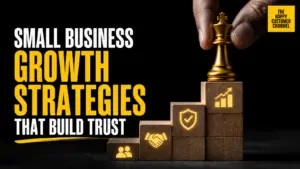
The Four Core Types of Business Growth Strategies
There are four proven lanes. They’re not interchangeable. You pick one, go deep, and drive. Here’s how leaders who win think about their options:
- Market Penetration. Sell more of your existing product to your current customers. Simple concept, brutal in practice. Are you maximizing trust, repeat purchases, and usage? Or just burning pipeline hoping for a one-time spike? Operators who own this lane obsess over their delivery, customer experience, and customer success. The playbook: focus, iterate, rinse, repeat.
- Market Development. New customers, new markets, new geographies. Are you targeting an adjacent vertical? Expanding into a fresh demographic? This move requires process. Too many companies rush here before their fundamentals are locked. Result: confusion, wasted capital, and eroded brand. Don’t fall for the greenfield trap unless you can consistently deliver what your promise.
- Product or Service Expansion. Building new features, services, or products for your current customers. Seems smart, right? But it’s where “innovation” goes to die if you’re not disciplined. Solve a real pain. Validate demand. Resource properly. Otherwise, you just distract your whole org and dilute what used to work.
- Acquisition & Partnerships. Sometimes, building is too slow. Buying can leapfrog capabilities or capture new territory—if your culture, customer relationships, and leadership foundation are ironclad. This is advanced mode. It’s not a shortcut for broken basics.
Choose your growth strategy the same way you’d choose your next market move: methodically. Don’t mix and match. Don’t “dabble” in all four. Leaders who win drive one play at a time, with clarity and discipline. Here’s a simple operator checklist to pressure-test your plan:
- Do I know—right now—which specific growth strategy I’m pursuing?
- Have I resourced my team to execute that single strategy effectively?
- Does every key person know how their daily work fuels this move?
- Am I measuring progress in ways that reflect customer trust—not just revenue?
If you can’t check every box, you’re not ready to scale. Real execution starts here.
Why Most Growth Efforts Stall: The Discipline Factor
Picking a strategy isn’t enough. Anyone can print a slide deck or slap up a goal. The graveyard is full of companies that “tried everything” but couldn’t commit. Strategy is about discipline—sticking with your choice, aligning every team, and running through walls to deliver consistent customer value. If you’re not measuring the right signals or holding your people accountable, you’re guessing. And customers can feel it: their trust drops, your reputation slips, and growth stops cold. Want unstoppable growth? Nail the play. Relentlessly align your people around that play, and execute every day.
Final Thoughts
Business growth only looks like luck from the outside. The truth? It’s methodical, disciplined, and grounded in reality. You don’t need more ideas—you need ruthless focus, real alignment, and a commitment to earn trust with every customer interaction. That’s the foundation sustaining every meaningful outcome. Want more field-tested tactics and war stories? Head to The Happy Customer Channel and surround yourself with real operators—not spectators.
If you’re serious about leading with impact, go beyond the articles. Join our newsletter for frameworks, playbooks, and operator-only insights you won’t see anywhere else.
Common Questions
How do I know which business growth strategy is right for my company?
Listen—the reflex is to chase everything at once. But that’s a recipe for mediocrity. What I’ve seen is this: Diagnose your core. Are your current customers happy? Loyal? Still untapped? Start with market penetration. If you’re hitting a ceiling and have true repeatability, then you can explore new markets or new products. But don’t even think about it until your foundation is airtight. At the end of the day, the best strategy is the one best matched to your current business maturity—not your wishlist.
What’s the biggest mistake leaders make with growth strategies?
Trying to do too much, too fast, with too little discipline. I see it all the time—one quarter it’s “Let’s expand!” Next quarter it’s “New product!” Everyone’s busy, nobody’s winning. You want real growth? Pick one play, align every resource, and execute. Anything else is noise. Growth isn’t an accident; it’s relentless focus executed over time.
How do growth strategies tie back to customer trust?
Here’s the reality: Every big move you make either reinforces trust—or erodes it. If you stretch too thin, delay promises, or deliver half-baked products, customers smell it instantly. The winners are obsessed with keeping promises. Every chosen move should amplify your ability to deliver what matters. Break that discipline, and you break the very engine powering your growth.
When is the right time to pursue acquisitions as a growth strategy?
Don’t get blinded by shiny objects. Acquisitions aren’t shortcuts—they’re multipliers for healthy, stable organizations. Pursue it only after you’ve mastered your own fundamentals. If your core business isn’t repeatable and solid, M&A will just magnify your mess. Nail your culture, dial in your processes, and own your customer relationships first. Only then are you ready to buy or partner with impact.