
Great customer service can hide a broken business—for a while.
If customers need your team to save the day, the experience already failed. That is the hard line most companies do not want to draw.
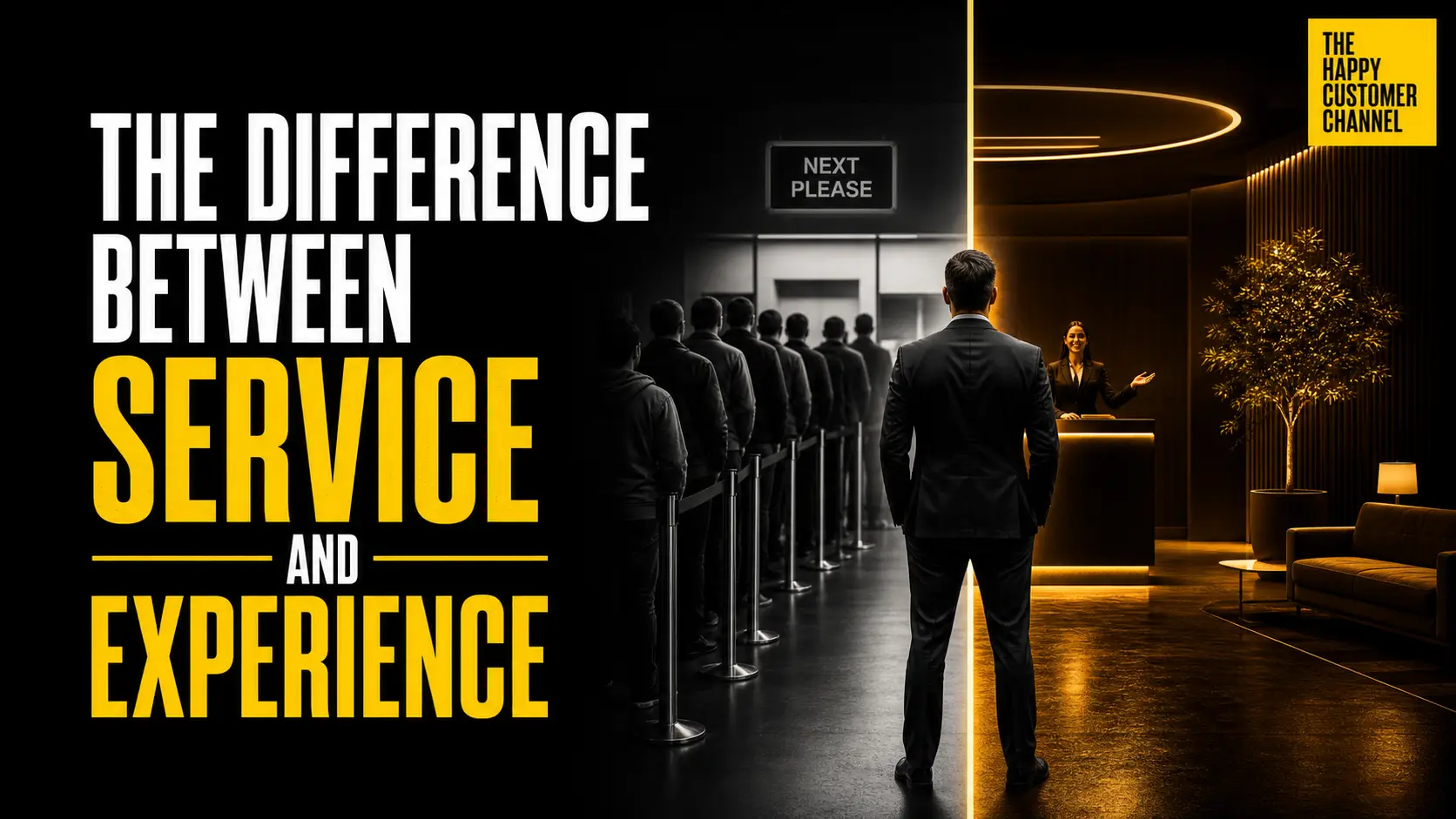
I say this often on The Happy Customer Channel: the conversation around customer service vs experience gets watered down because people want them to mean the same thing. They do not. Customer service is what happens when the customer raises their hand. Customer experience is everything that happened before they felt they had to.
What I’ve seen over and over is simple. Companies celebrate fast replies while ignoring the broken paths that created the questions. They praise friendly agents while customers are stuck with confusing onboarding, unclear pricing, missed handoffs, and policies that protect the business more than the relationship.
Service Is a Reaction. Experience Is the System.
Customer service begins at the moment of need. A customer calls. A customer emails. A customer opens a chat. Something happened, and now they want help.
Experience starts earlier. Much earlier. It starts with the promise you made in the ad. The expectation set on the sales call. The words on your website. The first invoice. The onboarding flow. The product handoff. The delivery update. The follow-up that did or did not happen.
Service handles the visible issue. Experience determines why the issue happened in the first place.
Here’s what actually happens in a lot of businesses. A customer signs up because the sales process made everything sound simple. Then onboarding feels clunky. The account details are incomplete. The invoice looks different than expected. The product has steps nobody explained. Now the customer contacts support.
The support agent is kind. They apologize. They solve the immediate problem. Everyone feels better for a minute.
But the business learned the wrong lesson if it stops there. The win was not the apology. The real work is finding the upstream break. Why was the expectation unclear? Why did the handoff fail? Why did the customer need to ask at all?
That is the difference. Service saves the moment. Experience shapes the relationship.
Your Support Team Is Not Your CX Strategy
Support teams become the cleanup crew for decisions made upstream. I have seen it too many times. It is not fair. It is not sustainable. And it is not strategy.
Sales overpromises, and support explains. Operations misses details, and support absorbs the frustration. Billing confuses the customer, and support calms them down. Product creates unnecessary friction, and support writes the workaround. Leadership calls it “customer obsession” because the team is responsive.
No. That is not obsession. That is damage control.
A strong service team matters. Let’s be clear about that. You need people who listen well, respond fast, and know how to de-escalate a hard moment. But even the best team cannot outrun a broken system forever.
This is where customer service vs experience becomes a leadership issue. Customers do not care which department caused the problem. They do not say, “Billing failed me, but the brand is still great.” They do not separate the sales promise from the onboarding reality. They do not see your org chart. They see one company.
If the journey feels messy, the brand feels messy.
So when leaders only invest in better scripts, faster tools, and more agents, they may improve service while leaving the experience broken. That creates a dangerous illusion. The dashboard looks better. Response times improve. CSAT stays acceptable. Meanwhile, customers are silently losing trust.
And when trust drops, customers do not always complain. They leave.
Measure Friction, Not Just Friendliness
Response time matters. If customers wait too long, you have a problem. CSAT matters. If customers hate the interaction, you have a problem. But those numbers only tell part of the story.
They tell you how well you handled the problem. They do not always tell you why the problem existed.
That is the gap.
A company serious about customer experience looks beyond friendliness. It looks at friction. Repeat contacts. Refund reasons. Escalation rates. Onboarding delays. Churn after purchase. Time-to-value. The same question being asked again and again. The same complaint showing up in different words from different customers.
That is where the truth lives.
If customers contact you three times to understand one invoice, that is not a service issue. That is a billing clarity issue. If they keep asking how to get started, that is not just a support volume issue. That is an onboarding issue. If they complain that the product does not match what they were told, that is not an agent training issue. That is a sales alignment issue.
The best companies do not just ask, “How fast did we respond?” They ask, “Why did this customer need to contact us?”
That question changes the business.
It moves the conversation from reaction to prevention. It forces teams to look at the full journey. It makes customer pain visible to the people creating it. And it stops support from being the only team accountable for customer trust.
The goal is not to make service harder to reach. That is a mistake some companies make. They hide the phone number, bury the chat, and call it efficiency. That is not customer experience. That is avoidance.
The goal is different. Reduce unnecessary problems. Keep real help easy to access. Make the journey clear enough that customers do not need to fight their way through it.
Final Thoughts
In customer service vs experience, service is rescue. Experience is design.
A strong company does not force support to be heroic every day. It builds a journey that needs fewer rescues in the first place. Fix the system, and service becomes what it should be: support, not damage control.
Common Questions
Is customer service the same as customer experience?
Listen, no. Customer service is one part of the experience, but it is not the whole thing. Service usually happens when the customer needs help. Experience includes the product, the promise, the process, the payment, the handoff, and every little moment around it. If you shrink experience down to support tickets, you miss where most of the damage is being created.
Can great customer service make up for a bad customer experience?
Here’s the reality: it can buy you time, but it cannot save you forever. A great agent can calm an upset customer. They can recover a bad moment. But if the same friction keeps happening, customers eventually stop being impressed by the recovery. They start asking why the problem keeps happening at all.
Who should own customer experience inside a company?
What I’ve seen is that support often sees the problems first, but leadership has to own the experience. Product shapes it. Sales shapes it. Operations shapes it. Billing shapes it. Marketing shapes it. At the end of the day, if every department affects the customer, leadership has to make sure every department is accountable to the customer.
What should we fix first: customer service or customer experience?
At the end of the day, you stabilize service first because customers still need help right now. Do not leave people waiting while you redesign the journey. But do not stop at faster replies. Pull the top reasons customers contact you and look upstream. Find the broken handoff, unclear promise, confusing policy, or missing explanation. Fix that, and you reduce the pressure on service while improving the actual experience.