
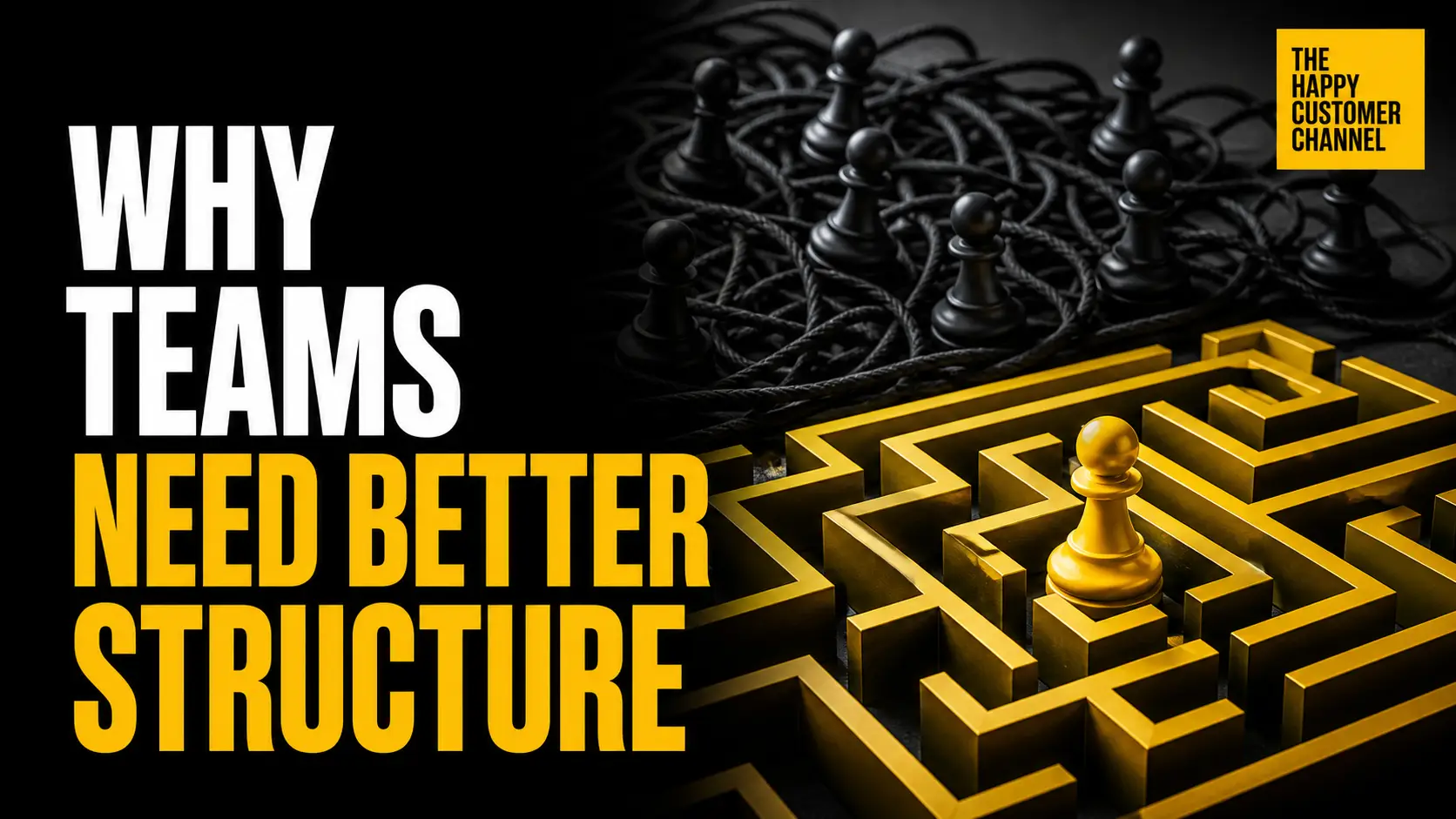
Most teams do not fail because people lack talent. They fail because the structure makes good work harder than it should be.
That is the part leaders do not always want to hear. It is easier to say the team needs more discipline. More urgency. More ownership. But if the system is built on unclear roles, slow decisions, and overlapping responsibilities, even strong people start to look average. That is why team structure optimization is not optional. It is the difference between a team that works hard and a team that actually moves.
What I’ve seen, over and over again, is this: growing teams do not break all at once. They drift. One person owns too much. Another person is involved in everything but accountable for nothing. Decisions get passed around. Meetings multiply. Then leadership wonders why execution feels heavy.
Talent Cannot Outrun Bad Structure
There is a dangerous belief in business that better people will fix a broken setup. Hire stronger managers. Add a senior operator. Bring in someone with more experience. Sometimes that helps. But not if the structure is still confusing.
Strong people still need clear lanes. They need to know what they own. They need to know where decisions live. They need to know when to lead, when to support, and when to stay out of the way. Without that, you do not get collaboration. You get collision.
Here’s what actually happens. Two leaders think they own the same outcome. So both start giving direction. A team member gets stuck between competing priorities. Nobody wants to step on anyone’s toes, so the decision gets delayed. Then the work slows down. Then the customer feels it.
This is where structure becomes a customer experience issue. Internal confusion does not stay internal. It leaks into delivery. It shows up in missed timelines, inconsistent communication, rework, and promises the team cannot keep. Customers rarely see your org chart, but they feel the consequences of it.
The best teams I’ve seen are not always the biggest. They are not always the loudest. They are usually the clearest. Clear ownership. Clear handoffs. Clear decision rights. That is not bureaucracy. That is how serious teams protect momentum.
Confusion Is the Real Productivity Killer
Most leaders underestimate the cost of confusion because confusion looks like activity. People are busy. Calendars are full. Slack is moving. Projects are being discussed. On the surface, it looks like work is happening.
But look closer. How many conversations are repeats? How many meetings exist because nobody knows who can make the call? How many projects are waiting because three people need to align before one person can move? That is not productivity. That is organizational drag.
The reality is, unclear structure creates invisible taxes. It taxes time. It taxes energy. It taxes trust. People start protecting themselves because they are not sure who owns what. They copy extra people on messages. They ask for permission too often. They hesitate. Not because they are weak. Because the system trained them to slow down.
This is where leaders need to be honest. If every decision has to run through you, you do not have a high-accountability team. You have a bottleneck. If every project needs a meeting just to clarify roles, you do not have alignment. You have ambiguity. If multiple people are responsible for the same outcome, there is a good chance nobody is truly accountable.
Ownership cannot be vague. It has to be visible. A team should know who is driving the outcome, who is contributing, who needs to be consulted, and who simply needs to be informed. When that is unclear, smart people waste time trying to decode the system instead of doing the work.
And let’s be direct. Confusion frustrates good employees. High performers do not want to spend their day chasing approvals, navigating politics, or guessing who has the final say. They want to contribute. They want to move. They want to win. Bad structure makes winning harder than it needs to be.
Optimize the System Before Blaming the People
When execution slows down, leaders often look at the people first. Who dropped the ball? Who missed the deadline? Who did not communicate? Those are fair questions sometimes. But they are not the first questions.
The first question should be: did we design the work clearly enough for people to succeed?
That is the heart of team structure optimization. It is not about creating a fancy org chart. It is about designing the way work actually moves. Who owns the result? Who makes the decision? Where does the handoff happen? What gets escalated? What should never need escalation in the first place?
When those answers are clear, teams speed up. Not because people suddenly became more talented, but because they are no longer fighting the system. They stop spending energy on internal navigation. They spend it on execution.
What I’ve seen is that leaders often wait too long to address structure. They tell themselves the team is still small. They say, “We’ll figure it out as we grow.” Then growth exposes every loose edge. The informal conversations stop working. The founder cannot be in every room. The early employees who used to hold everything together become overwhelmed. Suddenly, the company has more people but less clarity.
That is the moment structure becomes urgent. But it should not take pain to make it important.
Better structure does not mean every move needs a process document. It means the important things are not left to chance. Revenue ownership is clear. Customer ownership is clear. Delivery ownership is clear. Team leadership is clear. When something breaks, people know where to look. When something needs to move, people know who drives it.
And here is the part some leaders miss: structure is not the enemy of speed. Poor structure is. Clean structure gives people permission to act. It tells them, “This is your lane. Drive it.” That kind of clarity creates confidence. Confidence creates action. Action creates results.
Final Thoughts
A better team structure does not make people robotic. It gives good people the conditions to do their best work without fighting the system every day.
At the end of the day, leaders have to stop treating structure like an administrative detail. It is a performance lever. It is an execution lever. It is a customer experience lever. If your team feels busy but not aligned, do not just ask people to work harder. Ask whether the way the team is built is helping them win or forcing them to compensate.
Because talented people can carry a bad structure for a while. But not forever.
Common Questions
How do I know if my team structure is the problem?
Listen… if people are constantly asking who owns what, that is a signal. If decisions keep getting escalated to the same few leaders, that is another signal. If multiple people are working on the same thing but nobody is truly accountable, the structure is probably broken. What I’ve seen is that weak structure usually shows up as confusion before it shows up as failure. Pay attention to the friction before it becomes a fire.
Is team structure optimization only for large companies?
No. Here’s the reality: small teams need clarity just as much as big teams. Sometimes they need it more because every unclear role creates immediate drag. In a small company, one bad handoff can slow the whole business down. You do not need heavy process. You need clean ownership and simple decision rules. That is how small teams stay fast without becoming chaotic.
What is the first thing leaders should fix?
Start with ownership. Not titles. Not reporting lines. Ownership. Every major outcome should have one clear driver. Other people can support, advise, or contribute, but one person has to carry the result. At the end of the day, shared responsibility often becomes shared confusion. Give the outcome a real owner and watch the noise drop.
Will better structure make the team less flexible?
Listen… bad structure creates rigidity, not good structure. When people do not know who decides, they wait. When they do not know what they own, they hesitate. Good structure actually creates flexibility because people understand where they can move fast and where alignment is needed. The goal is not to control every action. The goal is to remove the guesswork so the team can act with confidence.