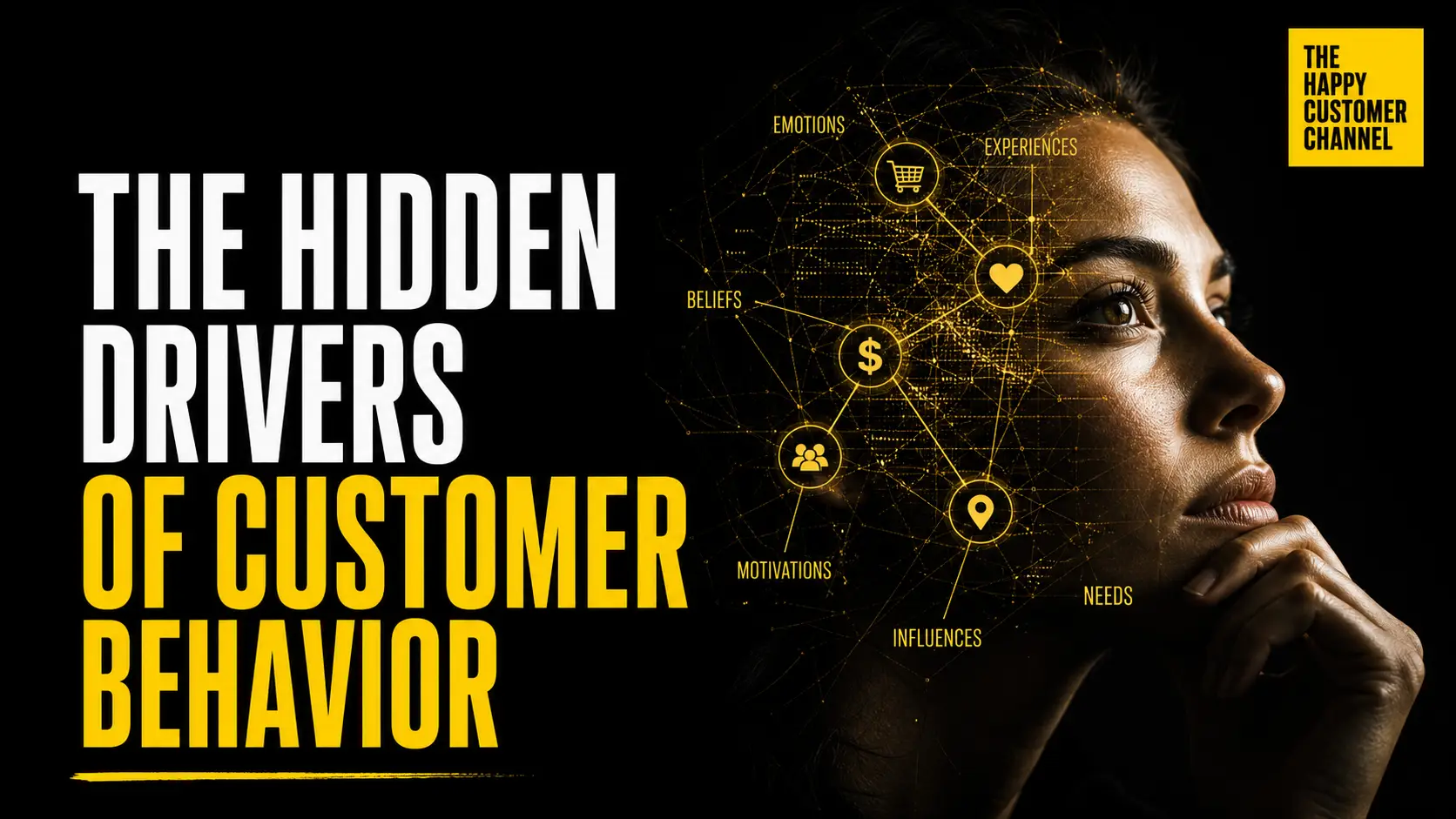
Customers rarely lie. They just don’t always know why they buy.
That is where real consumer behavior insights begin. Not in the perfect survey answer. Not in the polished focus group quote. Not in the customer who says exactly what the room wants to hear. The truth usually sits in the gap between what people say, what they feel, and what they actually do.
Most businesses miss that gap. They treat feedback like a verdict. They hear “price is too high” and immediately discount. They hear “we need more features” and immediately build. Then they wonder why conversion still struggles, churn still rises, and customers still hesitate.
Here’s the reality. Customer feedback matters. But it is not the full truth. It is often the customer’s explanation after the decision, not the trigger that caused the decision.
Customers Don’t Buy the Way They Explain
Ask a customer why they bought, and they will usually give you a clean answer. It sounds logical. It sounds practical. It sounds easy to put into a slide deck.
But buying is rarely that clean.
A buyer may say they chose you because of price. What they may really mean is they felt less risk. They trusted your promise. They believed your product would not embarrass them, waste their time, or create another problem they had to explain to their boss.
That is a very different insight.
If you think the issue is price, you cut price. If you understand the issue is risk, you build proof. You show results. You clarify the guarantee. You make the next step feel safer. That is how you move behavior.
I’ve seen this pattern over and over in product launches, campaign reviews, sales calls, and churn analysis. The stated reason is often rational. The real driver is often emotional, social, or habitual.
Customers say they want more features. Sometimes they do. But many times, what they really want is confidence. They want to know the product can handle their situation. They want to feel smart choosing it. They want fewer doubts before they commit.
Customers say they want speed. Sometimes they do. But what they may really want is control. They want to feel like the process is not going to trap them. They want the ability to act without waiting on someone else.
This is why customer interviews can be useful and dangerous at the same time. Useful because people will tell you what they notice. Dangerous because they will also explain behavior they do not fully understand.
You have to listen closely. Then you have to watch what they do.
The Real Signals Are in the Gaps
The strongest signals are not always loud. They show up in hesitation. In shortcuts. In repeat usage. In abandoned carts. In complaints that sound small but keep coming back.
This is where consumer behavior insights become useful. Not as theory. As evidence.
Look at high interest but low conversion. People are curious, but they are not committing. That gap usually points to friction, doubt, unclear value, or lack of urgency.
Look at strong signups but weak retention. People believed the promise, but the experience did not reinforce it fast enough. That gap may reveal onboarding confusion, a slow first win, or a product that asks too much before giving enough back.
Look at positive reviews but slow repeat purchase. Customers may like you, but they do not remember you. Or they do not have a reason to come back. Satisfaction is not the same as habit.
That distinction matters.
A happy customer can still disappear. A satisfied customer can still choose someone else. A customer can praise your brand on Monday and ignore your email on Friday.
Why? Because behavior is shaped by context. Timing. Convenience. Trust. Effort. Status. Fear. Familiarity.
Most companies overvalue stated preference and undervalue observed behavior. They ask, “What do customers want?” That is not a bad question. But it is incomplete.
The better question is, “What are customers already showing us?”
Where do they pause? Where do they click twice? Where do they ask for help? Where do they skip the process you designed and create their own workaround?
Those moments are not noise. They are clues.
If customers keep asking the same “simple” question, the question is not simple. Your explanation is failing. If customers keep dropping off at the same step, the step is not neutral. It is costing you trust.
Behavior tells the truth faster than a survey can.
Turn Insight Into Business Advantage
Insight that does not change a decision is just decoration.
I mean that.
Too many teams collect research, build a beautiful deck, present it once, and then go right back to operating the same way. Nothing changes in the product. Nothing changes in the message. Nothing changes in onboarding, pricing, support, or retention.
That is not insight. That is storage.
The best consumer behavior insights should force action. They should change how you position the offer. They should change what you say first. They should change what you remove from the buying path.
If customers are hesitating because they do not trust the outcome, your next move is not more promotion. It is proof. Case studies. Clear expectations. Better guarantees. Real examples from real customers.
If customers are abandoning because the process feels heavy, your next move is not another reminder email. It is removing friction. Fewer steps. Better language. A clearer first action.
If customers are churning after the first month, your next move is not begging them to stay. It is finding out whether they reached value fast enough. Did they get a win? Did they know what success looked like? Did anyone reinforce why they made the right choice?
This is where growth becomes practical.
You stop guessing. You stop treating every problem like a marketing problem. You start seeing the connection between behavior and business design.
Pricing is behavior. Onboarding is behavior. Messaging is behavior. Support is behavior. Every touchpoint either reduces doubt or creates more of it.
That is the work.
Not chasing what customers say in isolation. Not blindly reacting to every comment. The work is finding the pattern underneath the words and building around that pattern.
Final Thoughts
The customer will give you a story. Their behavior will give you the truth.
Smart businesses respect both. But they do not confuse them. They listen to the story, then they test it against action.
At the end of the day, customers show you what they value through what they choose, repeat, avoid, share, and abandon. Build around that truth. That is where better products, stronger brands, and happier customers come from.
Common Questions
Why do customers say they want one thing but buy something else?
Listen, most people are not trying to mislead you. They are trying to make sense of their own decision. The problem is that buying often happens faster and deeper than the explanation that comes after it. A customer may say they wanted the cheapest option, but what actually moved them was trust, timing, or fear of making the wrong choice. Here’s the reality: people explain with logic, but they often decide with emotion, habit, and context.
How do we find hidden customer drivers if surveys are not enough?
What I’ve seen is this: you need to combine what customers say with what they do. Look at support tickets, drop-off points, repeat purchase patterns, sales objections, refund reasons, and onboarding behavior. Then look for contradictions. If people say the product is easy but keep asking for help, believe the behavior. If people say they are interested but never convert, something is creating doubt. That is where the real work starts.
What behavior signals should we track before customers churn?
Here’s the reality: churn usually whispers before it shouts. Watch for lower usage, slower response times, fewer logins, skipped steps, repeated complaints, and a drop in engagement after the first win. Also watch for silence. Silence can look peaceful, but many times it means the customer has already checked out mentally. The key is to act before they disappear, not after they cancel.
Are these insights only useful for marketing?
No. That is too narrow. At the end of the day, customer behavior touches the whole business. Marketing may bring the customer in, but product, sales, onboarding, support, and pricing all shape what happens next. If your team treats customer behavior as only a campaign issue, you will keep fixing symptoms. The better move is to use the insight across the entire customer journey.