Repeat Customer Strategy Is a Trust System

Customers do not come back because you asked nicely. They come back because the last experience gave them confidence. That is the part most companies miss when they talk about a repeat customer strategy. They think it starts with an email. Or a coupon. Or a loyalty program. It does not. It starts with whether the customer believes you will deliver again.

Here’s the reality. Repeat business is not created at the moment you ask for the next sale. It is created in everything that happened before that ask. The product worked. The service was clear. The delivery showed up when promised. The problem got handled without drama. The follow-up felt useful, not desperate. That is what brings people back.

Most businesses are still treating repeat business like a marketing problem. It is not. It is an operating system problem. If the experience is inconsistent, your campaign will expose the weakness faster. You can send the prettiest message in the world, but if the customer remembers friction, confusion, or disappointment, they are already halfway gone.

Repeat Business Starts After the Sale

Too many companies celebrate the conversion and disappear. They ring the bell. They count the revenue. They move on to the next lead. Big mistake.

The first purchase is not the finish line. It is the test. The customer is asking one simple question: “Was that worth it?” Everything that happens after the sale answers that question. The confirmation email. The delivery experience. The onboarding. The support response. The way your team handles a mistake. All of it counts.

What I’ve seen over and over again is that companies spend heavily to win attention, then underinvest in keeping trust. They put money into ads, funnels, campaigns, and automation. Then the customer has to chase an update. Or repeat the same issue to three different people. Or wait too long for help. That is how repeat business dies quietly.

The customer may not complain. That is the dangerous part. They just do not come back. They do not write a dramatic goodbye letter. They do not announce their exit. They simply choose someone else next time.

Repeat business begins the moment the first transaction ends. That is when confidence is either reinforced or weakened. If the customer feels like the experience got worse after they paid, you taught them something. You taught them that your best effort was reserved for the sale, not the relationship.

That is not how trust works. Trust is built when the customer sees consistency after the money changes hands. They want to know you are still paying attention. They want to know the promise was real. They want to know that buying from you again will not feel like a gamble.

Customers Do Not Return for Points

Loyalty programs can work. Points can help. Discounts can create movement. But let’s be honest. None of that replaces a reliable experience.

A customer will abandon points if the experience is painful. They will ignore perks if support is slow. They will stop caring about rewards if your delivery is unpredictable. People do not stay loyal to confusion. They do not stay loyal to friction. They stay loyal to confidence.

This is where many businesses get it backward. They try to manufacture loyalty before they have earned trust. They launch rewards before fixing service gaps. They send offers before understanding why customers stopped returning. They build a program around incentives when the real issue is inconsistency.

Here’s what actually happens. A customer buys once. The experience is average. Maybe it works. Maybe it does not. Then the company sends a discount to get them back. The customer returns only if the price is attractive enough. Now the business thinks it has a retention strategy. It does not. It has trained the customer to wait for the next deal.

That is a dangerous habit. Discounts can create transactions, but they do not automatically create loyalty. If the only reason someone comes back is price, you are always vulnerable to someone cheaper. That is not a strategy. That is a race you do not want to win.

A real repeat customer strategy makes the next purchase feel easier, safer, and smarter. It removes hesitation. It uses what the business already knows about the customer. It does not blast the same offer to everyone and call it personalization. It pays attention.

If a customer bought a product that needs replenishment in 45 days, do not follow up randomly in six months. If a customer had a support issue, do not send a generic “We miss you” message before checking whether the issue was solved. If a customer is new, do not treat them like a long-term buyer. Timing matters. Context matters. Relevance matters.

Customers do not want more noise. They want better usefulness. That is the difference between marketing that feels like pressure and communication that feels like service.

Build Around Customer Triggers

Repeat business is not magic. It is memory plus timing. The customer remembers the experience, and your business needs to understand when the next need appears.

This is where operators and marketers need to work together. Marketing may send the message, but operations creates the belief behind it. If the business cannot deliver consistently, the message has no weight. If service recovery is weak, the next offer feels tone-deaf. If customer data is messy, the follow-up feels careless.

Start with the obvious triggers. When should this customer need you again? Is there a reorder cycle? A usage pattern? A renewal point? A seasonal moment? A service interval? A common pain point after the first purchase? These are not abstract questions. They are the foundation of repeat revenue.

Then look at behavior. Did the customer engage after the purchase? Did they ask for help? Did they leave a review? Did they browse again? Did they open a follow-up message? Did they stop responding? These signals tell you where confidence is rising or breaking.

The mistake is treating all customers the same. First-time buyers do not need the same message as loyal customers. A customer who had a smooth experience does not need the same handling as one who had a complaint. A high-value buyer does not need to be buried in generic offers. They need to feel understood.

That does not require perfection. It requires discipline. Clean data. Clear ownership. Fast service recovery. Smart timing. Simple communication. Real accountability when something goes wrong.

What I’ve seen is that the best companies do not wait until churn shows up in a dashboard. They watch for hesitation earlier. They pay attention to the moments that create doubt. A delayed response. A confusing bill. A missed expectation. A handoff that forces the customer to repeat themselves. Those small moments become big reasons not to return.

And here is the part leaders need to hear. Retention is not owned by one department. Sales cannot promise one thing while operations delivers another. Marketing cannot keep sending campaigns while support is drowning. Leadership cannot demand repeat business while ignoring the customer experience that creates it.

The customer does not care how your org chart works. They experience one company. One brand. One promise. If that promise breaks, they do not blame a department. They blame you.

Final Thoughts

Repeat business is earned in the moments customers remember. Not the slogans. Not the points. Not the clever campaign. The real advantage is being the company that makes the next decision easy. When customers know you will deliver, they come back with less hesitation. That is the trust system. That is the work. And that is what separates businesses chasing one-time sales from businesses building real customer value.

Common Questions

How do we get customers to come back without always offering discounts?

Listen… stop making price the only reason to return. If the second purchase is easier than the first, you do not have to beg as much. Use better timing, clearer follow-up, and recommendations that actually make sense. Check whether the customer got value from the first purchase before pushing the next one. The reality is, discounts are often used to cover weak follow-through. Fix the experience first. Then use offers with purpose, not panic.

Do loyalty programs still work?

Here’s the reality. Loyalty programs work when the customer already trusts the business. They do not work when the core experience is broken. Points will not save slow support. Perks will not erase missed expectations. What I’ve seen is that strong companies use loyalty programs as an amplifier, not a bandage. If people like buying from you, rewards give them one more reason to continue. If they do not, rewards just become noise.

What should we measure in a repeat customer strategy?

At the end of the day, you need to measure whether confidence is growing or shrinking. Track repeat purchase rate, time between purchases, customer lifetime value, support issues, complaints, refunds, and post-purchase engagement. But do not just stare at numbers. Ask what the numbers are telling you about trust. Where do customers slow down? Where do they disappear? That is where the real work starts. A dashboard should point you to the broken moment.

When should we follow up after a first purchase?

Listen… follow up when it helps the customer, not just when it helps your sales calendar. Sometimes that is right after delivery. Sometimes it is after first use. Sometimes it is before a reorder window or renewal date. The key is relevance. If your message solves a problem, answers a question, or removes friction, it feels useful. If it only asks for more money, customers feel that too. Timing is not about being everywhere. It is about showing up when it matters.

FIFA World Cup 2026 Customer Experience Lessons

FULL EPISODE HERE

EP. 113 – 5 Things FIFA Got Right at the 2026 World Cup

Most large-scale events promise unforgettable experiences. Few deliver them without friction.

In this episode, the speaker shares a firsthand perspective after attending six World Cup matches across four cities, breaking down the five things FIFA got right at the 2026 World Cup. The core takeaway is not just that the event was exciting, but that it was executed with a level of operational discipline that made an enormously complex experience feel simple for fans.

For business leaders, this episode offers more than event commentary. It provides a practical lesson in customer experience, operational excellence, and how strong systems, technology, and frontline teams can work together to build trust at scale.

What This Episode Covers

This episode examines how FIFA delivered a seamless fan experience across transportation, digital tools, volunteer coordination, event atmosphere, and behind-the-scenes execution. It highlights what businesses can learn when complexity is managed internally and simplicity is delivered externally.

  • Why transportation became a competitive advantage rather than a pain point
  • How the FIFA app improved customer experience through centralized information
  • The role volunteers played in shaping trust and emotional connection
  • Why fan engagement starts long before the match begins
  • What strong execution looks like at a massive operational scale
  • How safety, convenience, and entertainment increase perceived value
  • Why great customer experience is built through systems, not luck

Key Insights

1. Great Customer Experience Is Engineered, Not Accidental

One of the strongest messages in the episode is that great customer experience does not happen by chance. It is built through planning, coordination, and disciplined execution. The World Cup felt seamless to attendees because thousands of small decisions were made correctly across multiple teams and locations.

This matters for any business. Customers rarely see the complexity behind a service, but they always feel the result. If the experience is smooth, confidence increases. If friction appears, trust declines quickly. Leaders should view customer experience as an operational outcome, not just a branding exercise.

2. Logistics Can Strengthen the Brand

Transportation stood out as one of the clearest examples of FIFA getting the fundamentals right. Moving large numbers of people in and out of venues across multiple cities is inherently difficult. Yet when done well, it becomes part of the value of the experience rather than a source of frustration.

For businesses, logistics is often treated as a back-office function. This episode shows why that is a mistake. When operations reduce friction at scale, they directly influence brand perception. A customer may come for the core product, but their overall judgment is shaped by how easy the entire journey feels.

3. Digital Tools Are a Core Service Layer

The episode makes a strong case that technology is no longer just a support tool. It is a central part of customer service. As the speaker put it, “The FIFA app was outstanding.” That response reflects a larger truth: digital platforms create outsized value when they simplify decisions, centralize information, and reduce uncertainty.

Customers do not want to hunt for instructions, schedules, updates, or access details across disconnected channels. They want one reliable source of truth. When businesses create that level of clarity, they lower stress and increase engagement. The digital experience becomes part of the product itself.

4. Frontline Teams Shape Trust in Real Time

Volunteer coordination was another standout area because it revealed how much brand perception depends on people at the point of service. Frontline teams are often the face of the experience, especially when customers need guidance, reassurance, or help in unfamiliar environments.

The episode reinforces that human support still matters deeply, even in highly digital experiences. Technology can provide efficiency, but people create emotional confidence. Well-prepared frontline staff help customers feel safe, supported, and welcomed. That emotional layer is often what makes an experience memorable.

5. Fan Experience Starts Before the Main Event

One of the most important business lessons in the episode is that the product alone is not enough. The best brands design the full experience around the core offering. In FIFA’s case, that meant creating energy, entertainment, and atmosphere before fans even reached their seats.

This is highly relevant for sales, marketing, and customer success leaders. Demand grows when the surrounding experience reinforces the value of the main product. Customers are more engaged when the journey feels immersive rather than transactional. The event became more than a match; it became a complete experience.

6. Perceived Simplicity Comes From Cross-Functional Coordination

The World Cup succeeded because transportation, digital systems, volunteers, safety measures, and event operations worked together. No single feature created the experience on its own. The strength came from integration.

This is where many organizations struggle. Teams often optimize their own function without designing for the full customer journey. Customers, however, do not experience departments separately. They experience one brand. Perceived excellence happens when planning, technology, and human support operate as one system.

7. Safety and Convenience Increase Engagement

Enjoyment grows when customers feel secure and know what to expect. The episode highlights how safety, clear logistics, and ease of movement allowed fans to stay present and enjoy the event more deeply. That sense of confidence has measurable business value.

When customers feel supported, they stay longer, participate more, and build stronger emotional associations with the brand. Convenience and safety are not secondary features. They are core drivers of satisfaction, retention, and advocacy.

8. Scale Raises the Standard for Execution

Large organizations are often excused for friction because complexity is expected. This episode challenges that assumption. FIFA set a new benchmark by making a highly complex global event feel intuitive for attendees.

The lesson for business leaders is clear: scale is not an excuse for poor experience. It increases the need for precision. As organizations grow, invisible systems become even more important. The brands that win are the ones that absorb operational complexity internally while delivering simplicity externally.

Framework

Five Drivers of World-Class Event Experience

  • Transportation: Reduce friction in arrival, departure, and movement
  • Digital Experience: Use technology to centralize service and information
  • Volunteer/Frontline Support: Create human connection and real-time assistance
  • Fan Experience: Build entertainment, energy, and value beyond the core event
  • Execution: Coordinate planning, teamwork, and systems to deliver consistency at scale

This framework is valuable well beyond sports and events. It applies to any organization trying to deliver a high-quality customer experience. The principle is straightforward: excellence comes from designing every major touchpoint with intention and making sure they work together.

Seamless Experience Principle

  • Complex operations happen behind the scenes
  • Customer-facing interactions feel intuitive and effortless
  • Success depends on hundreds of small actions performed correctly
  • Cross-functional coordination is what creates perceived simplicity

This principle captures the bigger business lesson of the episode. Customers should not have to absorb internal complexity. The more sophisticated the organization, the more important it becomes to make the external experience feel simple, reliable, and easy to navigate.

Key Takeaways

  • Great customer experience is built through disciplined execution
  • Logistics and operations can become a powerful brand differentiator
  • Digital tools create value when they simplify the customer journey
  • Frontline people have a major influence on trust and emotional connection
  • The full experience matters as much as the core product
  • Customers judge brands holistically across every touchpoint
  • Safety, convenience, and clarity increase engagement and satisfaction
  • Large-scale success depends on making complexity feel effortless

Who This Is For

This episode is especially relevant for:

  • Business leaders focused on customer experience and operational excellence
  • Sales and marketing teams looking to create stronger brand engagement
  • Operations leaders managing scale, logistics, and service consistency
  • Event professionals designing high-volume customer journeys
  • Customer success and service teams responsible for trust and retention
  • Executives who want practical examples of systems working together effectively

Watch the Full Episode

To hear the complete breakdown of the five things FIFA got right at the 2026 World Cup, watch the full episode: EP. 113 – 5 Things FIFA Got Right at the 2026 World Cup.

The discussion offers a strong example of how world-class execution, digital strategy, and human support can combine to create a memorable customer experience at scale.

FAQ

What are the five things FIFA got right at the 2026 World Cup?

The episode identifies transportation, digital experience, volunteer coordination, fan engagement, and overall execution as the five standout areas. Together, these made the event feel smooth, safe, and memorable despite its scale and complexity.

What is the main business lesson from this episode?

The main lesson is that customer experience is the result of systems working together. Strong planning, technology, frontline support, and logistics create trust and make a complex experience feel effortless for the customer.

Why is this episode relevant beyond sports and events?

The insights apply to any business that serves customers across multiple touchpoints. Whether you run a service company, retail brand, software platform, or large enterprise, the same principle holds: customers remember how easy, supported, and well-orchestrated the experience felt.

Customer Response Time Is a Revenue Signal

A slow reply rarely feels neutral. To the customer, it feels like a preview of the relationship.

That is why customer response time is not just a support metric. It is a trust signal. It tells the customer whether your company is alert, organized, and ready to take ownership. And trust moves money.

Here’s the problem. Most companies measure response from the inside. Tickets. Queues. SLAs. Dashboards. Customers measure it from the outside. Silence. Uncertainty. Risk. They are not asking, “Did this fit your workflow?” They are asking, “Am I being ignored?”

The Customer Clock Starts Before Your System Does

Your process may start when a ticket is created. The customer’s clock starts the moment they hit send.

That gap matters. It is where frustration grows. It is where doubt enters. It is where a buyer starts comparing you to a competitor, a customer starts questioning the renewal, or an unhappy person starts thinking about leaving a review.

What I’ve seen is simple. Companies often believe they are doing fine because the dashboard says they are doing fine. The SLA is green. The ticket is assigned. The queue is moving. But the customer has already waited two hours, sent a follow-up, and started wondering if anyone is actually paying attention.

That is the disconnect.

The business sees a workflow. The customer feels a relationship.

If someone reaches out with a problem, they are already spending emotional energy. Maybe their order is late. Maybe the product is not working. Maybe a sales lead has a question before signing. Maybe a long-term customer needs help before an internal deadline. The issue itself is only part of the moment. The bigger question is whether your business creates confidence or adds more stress.

The first meaningful response sets the trust baseline. Not the automated confirmation. Not the “we received your message” note. The first real response. The one that says, “We see this. We own this. Here is what happens next.”

Speed Without Substance Is Theater

Fast is good. Empty is not.

A quick reply that says nothing useful does not build trust. It may even make things worse. Customers can tell when they are being handled by a process instead of helped by a person.

There is a dangerous belief inside many teams: “We responded, so we did our part.” No. You sent words. That is different.

Here’s what actually happens. A customer reaches out. They get an instant auto-reply. Then nothing. Or they get a vague message that says, “We’re looking into it.” Then nothing. Or they get passed from one person to another, each person asking for the same context. That is not responsiveness. That is friction with a friendly tone.

Customers do not need perfection in the first reply. They need confidence.

A strong first response answers three questions. Who owns this? What happens next? When will I hear back?

That is it.

You do not need to solve every issue in five minutes. But you do need to remove uncertainty. If the answer will take time, say that. If another team needs to review it, say that. If the customer needs to send something else, be specific. Do not hide behind soft language.

A useful response sounds like ownership. “I’m taking this from here. I’m checking the shipment status now. If I do not have a final answer in one hour, I’ll still update you by 2 PM.” That changes the energy of the situation. The customer may still be waiting, but they no longer feel abandoned.

That is the difference between speed and trust.

Response Time Compounds Into Revenue

Slow replies do not stay isolated. They compound.

A delayed sales response can cool down a ready buyer. A delayed support response can turn a small problem into an escalation. A delayed service response can create refunds, cancellations, bad reviews, and repeat contacts. None of that shows up neatly in one metric, but it hits the business anyway.

That is the real impact of customer response time. It protects momentum.

Momentum matters in every customer relationship. When a buyer is interested, momentum helps close the deal. When a customer is upset, momentum helps calm the situation. When a client is waiting on an answer, momentum keeps trust from leaking out of the relationship.

Here’s the reality. Every unanswered message creates a second job. The customer follows up. Someone else gets copied. A manager gets pulled in. The issue moves from service to escalation. Now the team is not just solving the original problem. They are also repairing the feeling of being ignored.

That is expensive.

And most companies underestimate it because the cost is spread out. A few extra emails here. A few lost deals there. A few customers who do not renew. A few negative comments that make the next buyer hesitate. It does not always look dramatic in the moment, but over time, slow response becomes a revenue leak.

The fix is not to tell your team to “reply faster” and hope discipline solves it. That is lazy leadership. The fix is to design the handoff, the ownership model, and the response standards around the customer’s anxiety, not just your internal workflow.

If the customer is waiting, someone must own the silence.

Final Thoughts

Response time is not about being polite. It is about proving your business can be trusted when attention, money, and confidence are on the line.

Customers remember the moment they had to wait and wonder. They remember who showed up fast with clarity. They remember who made them chase. And when it is time to buy again, renew, refer, or leave, those memories become business outcomes.

Do not treat response time like a back-office metric. Treat it like a front-line revenue signal.

Common Questions

How fast should our customer response time actually be?

Listen, there is no magic number that works for every business. But if a customer waits long enough to wonder whether anyone saw the message, you are already creating risk. For urgent issues, minutes matter. For standard issues, the first meaningful reply should still happen the same business day. The real standard is not just speed. It is how quickly you give the customer confidence that someone owns the outcome.

Does faster response really lead to more revenue?

Here’s the reality. Faster response does not automatically create revenue, but slow response absolutely destroys it. In sales, delay kills momentum. In service, delay creates escalation. In retention, delay makes customers question whether they matter. What I’ve seen is that companies with strong response discipline protect more deals, reduce unnecessary churn, and spend less time cleaning up avoidable frustration.

Is an automated reply enough, or does it hurt trust?

Listen, automation is not the enemy. Empty automation is the enemy. An automated reply can help if it sets clear expectations and tells the customer what happens next. But if it pretends to be service while no one actually follows up, it hurts trust. Customers are smart. They know the difference between a confirmation and real ownership.

What if our team cannot give a full answer right away?

Then say that clearly. Do not disappear while you search for the perfect answer. At the end of the day, customers can handle waiting better than they can handle uncertainty. Tell them who is working on it, what is being checked, and when they will get the next update. If the deadline changes, update them before they have to ask. That one habit alone separates professional teams from reactive ones.

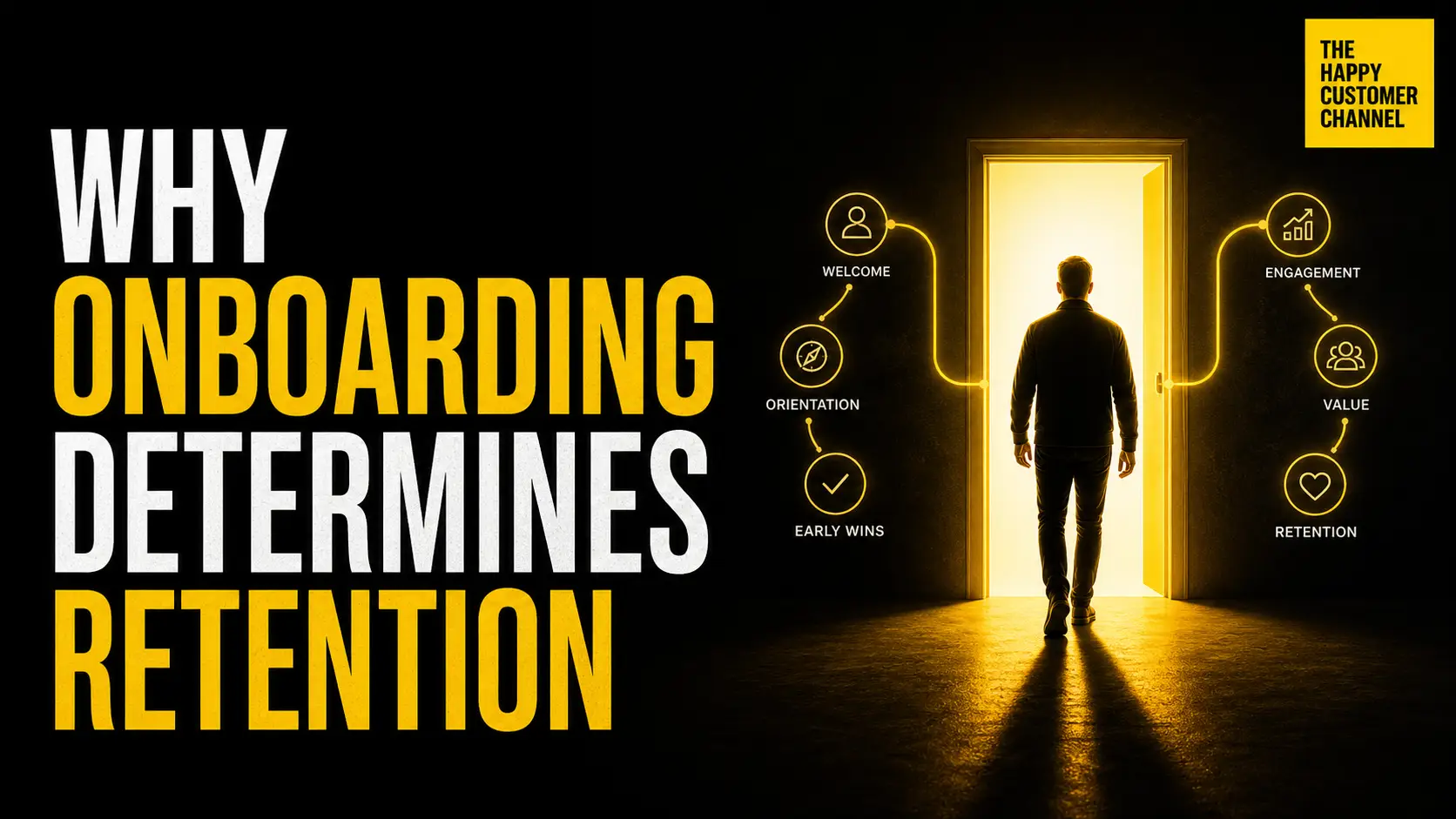
Your Customer Onboarding Process Is Retention

Most companies don’t lose customers at renewal. They lose them in onboarding. Renewal is just when the damage finally shows up on the dashboard.

The customer onboarding process is the first real test of your promise. Sales created belief. Marketing created urgency. The contract created commitment. But onboarding is where the customer asks, “Was this actually the right decision?”

That moment matters. A lot.

Because customers do not judge you by your internal process. They judge you by progress. They judge you by clarity. They judge you by how quickly the promise they bought starts turning into something they can feel, measure, and defend inside their business.

Here’s the reality: if onboarding feels slow, confusing, or disconnected, trust starts leaking immediately. Not loudly. Not dramatically. Quietly. One delayed kickoff. One unclear next step. One stakeholder left out. One “Wait, didn’t we already explain this during sales?”

That is how retention starts breaking before your team even calls the account “live.”

Retention Starts Before Renewal

Churn rarely begins at the renewal conversation. That is just the official moment. The real decision starts much earlier.

It starts when the customer realizes the experience after purchase does not match the confidence they had before purchase. That gap is dangerous. During the sales cycle, everything felt clear. The pain was understood. The outcome was defined. The team was responsive. The customer felt seen.

Then the deal closes.

And suddenly the energy changes. The customer gets handed to a new team. They repeat their goals. They explain their business again. The urgency drops. The language shifts from outcomes to setup. What used to feel strategic now feels administrative.

That is where doubt enters.

What I’ve seen over and over is this: customers forgive hard work. They do not forgive confusion. If the path is clear and the value is obvious, they will stay engaged. But if they feel like they are managing your process instead of being led through it, you are creating risk.

Onboarding is not a post-sale task. It is the first retention event.

That changes how you run it. It changes who owns it. It changes what you measure. You stop asking, “Did we complete onboarding?” and start asking, “Did the customer reach first value with confidence?”

Those are different questions. One is internal. The other is what the customer actually cares about.

The Handoff Is Where Trust Breaks

Sales sells outcomes. Onboarding often receives tasks.

That is the problem.

The customer bought a business result. Lower manual work. Faster reporting. Better adoption. Cleaner operations. Less revenue leakage. Whatever the promise was, it had a reason behind it. It had pressure behind it. It had people inside the company who needed that result to happen.

But too many handoffs reduce that entire story into notes, fields, and implementation steps. The emotion disappears. The urgency disappears. The “why” disappears.

Here’s what actually happens. Sales knows the pain. The customer success team gets the account. Implementation gets the checklist. Product gets a request later when something breaks. Nobody is trying to create a bad experience, but the customer feels the disconnect instantly.

They have to repeat themselves.

That is not a small thing. Repetition tells the customer your teams are not connected. It tells them the information they gave during the buying process did not matter. It tells them the relationship is starting over from zero.

And customers notice.

A strong handoff does not mean a long internal meeting. It means the receiving team understands the promise, the buyer’s pressure, the success metrics, the key stakeholders, the risks, and the first meaningful outcome the customer expects to see.

Not someday. Early.

If your onboarding team cannot answer, “What does success look like for this customer in the first 30 to 60 days?” then you are not ready to lead that customer. You are ready to process them. There is a big difference.

Build Onboarding Around Proof, Not Process

A strong customer onboarding process is not built around checkboxes. It is built around proof.

Proof that the customer made the right decision. Proof that your team understands the business problem. Proof that value is moving closer. Proof that the people involved know their roles. Proof that friction is being caught before it becomes frustration.

This is where many companies get it wrong. They measure onboarding like an internal project. Kickoff completed. Training delivered. Admin configured. Data imported. Box checked. Account marked live.

Fine. But did the customer get value?

Did the main stakeholder see progress they can explain to their boss? Did the users understand why the product matters? Did usage start in the places that connect to the original business case? Did your team identify early warning signs, or did you wait until adoption dropped?

Activity does not equal confidence.

The better move is to define first value before the kickoff. Not during. Not after. Before. Your team should know the first outcome that will make the customer say, “Okay, this is working.” That moment becomes the center of onboarding.

Then you build backward.

Who needs to be involved? What needs to be configured? What data matters? What behavior needs to change? What risk could slow this down? Who has authority if decisions stall?

This is not complicated. But it does require discipline.

Stop treating onboarding completion as the finish line. Completion is not the goal. Confidence is the goal. Momentum is the goal. A customer who reaches first value quickly is easier to retain, easier to expand, and easier to turn into an advocate.

That is not theory. That is what happens when onboarding is designed around the customer’s reality instead of your internal comfort.

Final Thoughts

Customers do not renew because they were welcomed. They renew because they saw proof early enough to believe they made the right decision.

If onboarding creates clarity, speed, ownership, and measurable progress, retention gets stronger. If onboarding creates confusion, delay, and repeated explanations, churn is already forming.

At the end of the day, onboarding is where the customer decides whether your promise was real.

Common Questions

How long should a customer onboarding process take?

Listen… the answer is not “30 days” or “90 days.” The answer is: long enough to reach first meaningful value, and not a day longer than necessary. Too many companies confuse time with thoroughness. The customer does not care how many steps are in your internal plan. They care when they can see progress. If your timeline is built around your team’s checklist instead of the customer’s first win, you are already creating risk.

What should we measure during onboarding?

Here’s the reality: completed tasks are not enough. You need to measure time-to-first-value, stakeholder participation, product usage, unresolved friction, and whether the original business outcome has a clear owner. If nobody owns the outcome, the account drifts. If key stakeholders disappear, the account is at risk. If usage starts low and stays low, do not wait for renewal to call that a problem. The signals are there early if you are willing to look.

Should customer success or sales own onboarding?

What I’ve seen is that both teams have accountability, but not the same accountability. Sales owns the accuracy of the promise. Customer success owns the path to value. If sales overpromises, onboarding inherits a trust problem. If customer success ignores the business reason behind the purchase, the customer gets a process instead of a result. The customer should never have to pay for your org chart.

How do we know if onboarding is causing churn later?

At the end of the day, churn leaves clues. Look for delayed activation, weak usage after launch, repeated customer confusion, missing stakeholders, and renewal feedback tied to unmet expectations. If customers say they “never really got value,” that usually did not start in month eleven. It started when onboarding failed to connect the product to the outcome. Ask better questions earlier. The renewal conversation will get a lot easier.

Your Customer Onboarding Process Drives Retention

Retention is not won at renewal. It is won or lost in the first 30 days. That is where trust either gets stronger or starts leaking. A weak customer onboarding process does not create churn later. It creates churn immediately. The customer just has not said it out loud yet.

Most companies do not want to hear that. They would rather blame pricing. Or product gaps. Or a tough economic environment. Sometimes those things matter. But what I’ve seen over and over is this: the customer decided how confident they felt about you long before the renewal conversation showed up.

That decision starts right after the contract is signed. Expectations are high. Attention is sharp. The buyer is watching. The team is watching. Everyone wants proof that this was the right call. If onboarding feels slow, vague, or disconnected from what was promised, you are already behind.

Retention Starts Before the Customer Feels Safe

There is a moment after the sale that most companies underestimate.

The customer has signed. The deal is closed. The sales team celebrates. Finance books the revenue. Everyone internally feels like something has been completed.

But for the customer, nothing has been completed. The risk has just become real.

They now have to prove the decision was smart. They have to justify the spend. They have to get internal teams aligned. They have to explain why people need to change how they work. That is not a small thing.

So what are they looking for?

Confidence.

Not a product tour. Not a login. Not a 60-minute call full of feature explanations. They are looking for early proof that your company understands what they are trying to accomplish.

This is where many teams miss the mark. They treat onboarding like orientation. “Here is how the platform works.” “Here is where the settings live.” “Here is your help center.” That may be useful, but it is not enough.

The reality is simple. Customers do not retain because they were trained. They retain because they saw value fast enough to believe the journey was worth continuing.

If the first few weeks feel messy, the customer starts forming a story. Maybe this is harder than we thought. Maybe the sales process made it sound easier. Maybe our team will not adopt this. Maybe we should have waited.

That story matters. Once it starts, it is hard to unwind.

The Handoff Is Where Trust Leaks

Here’s what actually happens inside too many companies.

Sales sells the outcome. Onboarding delivers the tasks.

That gap is dangerous.

The customer bought a result. More efficiency. Better visibility. Faster response times. Lower cost. Higher retention. Whatever the promise was, it had business meaning. Then onboarding begins, and suddenly the conversation shifts to access, integrations, permissions, fields, workflows, and timelines.

Those things matter. Of course they do. But they are not the reason the customer bought.

When customer success or implementation does not inherit the real business context, the customer feels it immediately. They feel like they are starting over. They have to explain the problem again. They have to repeat goals. They have to re-educate a team that should already know why they are there.

That is trust leakage.

Not dramatic. Not loud. But very real.

What I’ve seen is that weak handoffs create the first emotional drop in the customer relationship. The buyer starts asking quiet questions. Did sales understand us? Did they pass anything along? Is this team prepared? Are we just another account in the queue?

This is why the sales-to-success handoff cannot be a formality. It has to transfer context, risk, expectations, stakeholder dynamics, and the definition of success. Not just the contract details. Not just the package purchased.

A strong customer onboarding process starts before the kickoff call. It starts with alignment inside your own company. If your teams are not aligned, do not expect the customer to feel aligned.

The kickoff should not feel like discovery from scratch. It should feel like momentum.

Early Value Is the Metric That Matters

Most onboarding teams track activity.

Calls completed. Tasks finished. Users invited. Training sessions delivered. Implementation milestones checked off.

That is not bad. But it is incomplete.

Activity is not value.

You can finish every task and still leave the customer wondering whether anything meaningful has changed. You can complete onboarding on schedule and still fail to create confidence. That is the part many leaders miss.

The best teams define the first measurable win before onboarding begins. Not someday. Not after full adoption. Not after the customer becomes an expert. Early.

What is the first signal that the customer is getting value?

It might be the first workflow running correctly. It might be the first report used in a leadership meeting. It might be a reduction in manual work. It might be a team using the product without being pushed. It might be one department seeing a clear improvement fast enough to create internal belief.

The point is not that every customer has the same first win. They do not.

The point is that every customer needs one.

Time-to-value is one of the clearest indicators of customer health. When value shows up early, customers lean in. They ask better questions. They bring more people into the process. They start connecting the product to bigger goals.

When value is delayed, customers pull back. They miss meetings. They slow down decisions. They stop inviting key stakeholders. Then months later, everyone acts surprised when the renewal is at risk.

It was not sudden.

It was visible.

The signs were there in onboarding.

This is why leaders need to stop asking only, “Did we onboard them?” The better question is, “Did they experience the value they bought?” That question changes the entire operating model.

It forces teams to measure adoption differently. It forces better handoffs. It forces clearer success criteria. It forces accountability around outcomes, not just motion.

Final Thoughts

If you need a heroic renewal push to save the account, the failure probably happened months earlier. Retention is not a last-minute rescue mission. It is built through early confidence, clear value, and disciplined execution. Get onboarding wrong, and every team downstream pays for it. Get it right, and retention stops feeling like a fight.

Common Questions

How long should a customer onboarding process actually take?

Listen, there is no magic number. It depends on the product, the customer complexity, and the outcome they bought. But here’s the reality: long onboarding is not automatically bad. Unclear onboarding is bad. If the customer knows what is happening, why it matters, and when they should expect value, they will stay engaged. If they feel lost, even a two-week onboarding can feel painful.

What should we measure during onboarding besides task completion?

What I’ve seen is that task completion gives teams a false sense of confidence. You need to measure whether the customer is moving toward value. Are the right stakeholders involved? Are users activating? Is the customer using the product in a way tied to the original business goal? Did they hit a first meaningful win? At the end of the day, completed tasks do not matter if the customer still feels unsure.

How do we know if poor onboarding is causing churn?

Here’s the reality: look backward from churned accounts and study the first 30 to 60 days. Were kickoff goals clear? Was there a strong handoff from sales? Did the customer reach value quickly? Were decision-makers still engaged after onboarding? If you see weak adoption, missed milestones, unclear ownership, and slow value, you are not looking at a renewal problem. You are looking at an onboarding problem that finally became visible.

Who should own onboarding: sales, customer success, or implementation?

Listen, ownership depends on your model, but accountability cannot be blurry. Sales owns the promise. Customer success owns the relationship and outcome. Implementation may own the technical path. But the customer does not care about your org chart. They care about progress. Someone has to be clearly responsible for making sure the customer gets to value without feeling passed around.

Customer Relationship Management Breaks Before Churn

You don’t lose a customer when they leave. You lose them when they stop believing your words match your actions.

That is where customer relationship management breaks. Not in the cancellation email. Not in the renewal call. Not when procurement says they are “reviewing options.” It breaks earlier, in the gap between what your company promised and what your customer actually experienced.

The churn event is just the receipt. The damage was already done.

The Break Starts Before the Complaint

Most companies wait for the customer to complain.

That is already late.

Customers usually signal distrust before they say they are unhappy. They slow down. They stop replying with energy. They stop sharing what is really going on inside their business. They start asking for things in writing. They bring new people into meetings. They get quieter.

That silence is not peace. It is distance.

Here’s what actually happens. Sales makes a promise. Delivery hears a version of it. Customer success gets pulled in after the customer has already formed expectations. Then everyone acts surprised when the customer says, “This is not what we thought we were getting.”

That is not a communication issue. That is an ownership issue.

What I’ve seen across sales, success, delivery, and leadership teams is simple: everyone owns the relationship until there is risk. Then suddenly the ownership gets blurry. The account manager thought delivery had it. Delivery thought success had reset expectations. Success thought sales had already explained the limits.

The customer does not care about your internal map.

They care about whether your company is aligned enough to protect their outcome. If they have to translate your internal confusion, the relationship is already cracking.

CRM Is Not a Database. It’s a Promise Ledger.

A CRM can show activity and still hide a broken relationship.

Four calls logged. Three emails sent. Next step scheduled. Green status. Looks healthy.

But what was promised? Who owns it? What changed? What risk did the customer raise? What expectation was set in the first meeting that never made it to delivery?

That is the part most systems miss.

Real customer relationship management is not just tracking contact records and pipeline stages. It is tracking trust. Every commitment creates either confidence or debt. If your team says, “We’ll get that to you Friday,” and Friday passes with no update, that is debt. If your team says, “This will be simple,” and it takes six weeks, that is debt. If your team says, “We understand your business,” but keeps asking the customer to repeat themselves, that is debt.

Trust debt compounds.

One missed promise may not break the relationship. Five small misses will. Not because the customer is unreasonable. Because the customer is now doing risk management around you.

That is the shift leaders need to catch.

When customers start building backup plans, asking for extra documentation, escalating around normal channels, or reducing scope quietly, they are telling you something. They are saying, “We are no longer fully confident you can carry this.”

A healthy CRM process should make that visible. Not buried in notes. Not trapped in someone’s inbox. Visible enough that leaders can act before the relationship turns into a renewal problem.

Silence Damages More Than Mistakes

Customers can forgive problems.

They struggle to forgive ambiguity.

A mistake with a clear owner, a clear explanation, and a clear next step can actually build trust. Why? Because the customer sees how you operate under pressure. They see whether your company tells the truth when it is inconvenient.

But silence feels different.

Silence makes the customer wonder what else is being hidden. Silence makes small issues feel bigger. Silence forces the customer to chase. Once the customer starts chasing, the emotional balance of the relationship changes.

You are no longer leading. You are being managed.

Here’s the reality. Most teams do not go silent because they do not care. They go silent because they do not have an answer yet. They are waiting for internal alignment. They are waiting for leadership. They are waiting for product, finance, delivery, legal, or operations.

But the customer is not waiting inside your org chart.

They are waiting for truth.

Fast truth beats perfect answers. Tell the customer what you know. Tell them what you do not know yet. Tell them who owns the next step. Tell them when they will hear from you again. Then do exactly that.

This is where mature companies separate themselves. They do not pretend every issue is clean. They do not hide behind vague updates. They make ownership obvious. They make expectations specific. They move fast when trust is exposed.

That is how relationships survive pressure.

Final Thoughts

A customer relationship breaks when the customer feels they have to protect themselves from your company.

Not when the contract ends. Not when the competitor shows up. Not when pricing gets challenged.

It breaks when your customer no longer trusts your ability to own the outcome you sold them. The fix is not more check-ins. The fix is cleaner promises, clearer ownership, and faster truth.

If your customers have to chase, translate, escalate, or guess, the relationship is already paying a tax. Remove that tax before it becomes churn.

Common Questions

Why do customers leave even when the product or service is working?

Listen… the product can work and the relationship can still be exhausting. Customers do not only measure features. They measure effort, uncertainty, and how much pressure they carry to get value. If every issue requires chasing three people, the product feels smaller. If every meeting creates a new promise with no follow-through, trust starts leaking. At the end of the day, customers leave when staying feels risky, even if the tool technically does the job.

How can we tell a customer relationship is breaking before churn happens?

What I’ve seen is that the signs show up in behavior before they show up in data. The customer gets slower to respond. They stop being candid. They bring procurement or executives into conversations earlier than expected. They ask for documentation they never needed before. They stop talking about expansion and start talking about obligations. That is not random. That is the customer reducing exposure.

Is customer relationship management owned by sales, customer success, or leadership?

Here’s the reality: leadership owns the system, but every team owns its part of the promise. Sales owns what gets said before the deal closes. Customer success owns the rhythm of trust after the deal closes. Delivery owns the experience of the work. Leadership owns whether those groups operate as one company or three disconnected departments. If the customer has to stitch the story together, the business has failed the relationship.

What should we track besides renewal rates and customer satisfaction scores?

Listen, renewal rate is a lagging indicator. By the time it moves, the relationship has usually been under stress for months. Track open promises. Track missed dates. Track unresolved risks. Track how often customers have to repeat the same issue. Track whether there is a named owner for every critical expectation. The real question is simple: can you see trust getting weaker before the customer decides to leave?

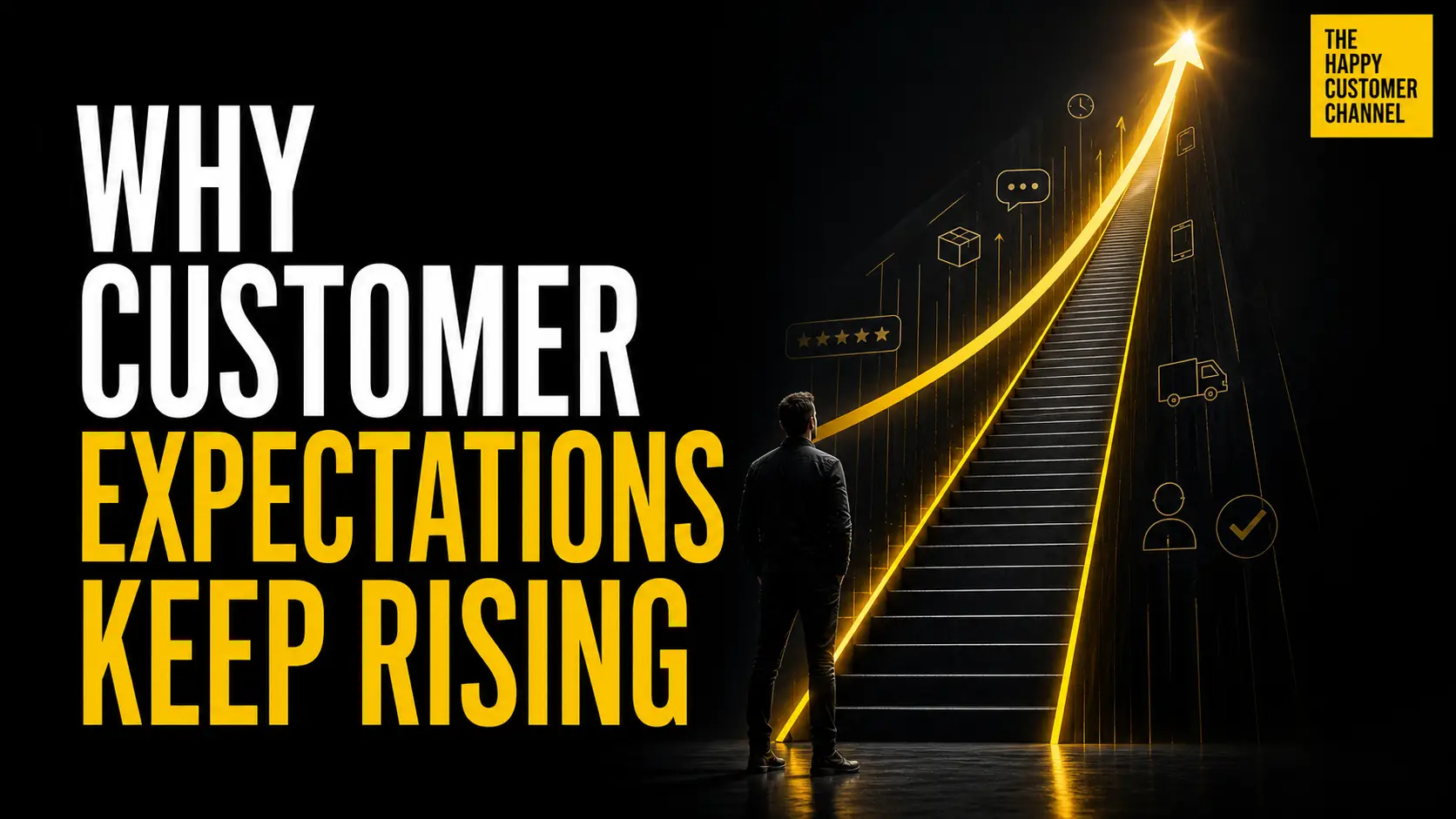
Customer Expectations Management Is Broken

Customer Expectations Management Is Broken

Customers are not becoming unreasonable. They are becoming harder to fool.

That is the part many companies still do not want to face. Customers are not sitting around inventing new demands just to make your team miserable. They are reacting to what the market has already taught them. Faster updates. Cleaner communication. Easier buying. Better visibility. Less friction.

This is why customer expectations management is not a support script. It is not a polite email after something goes wrong. It is the discipline of making promises your business can actually keep.

Here’s what actually happens. Marketing creates the desire. Sales simplifies the story. Operations inherits the complexity. Support absorbs the frustration. Then leadership calls it a customer service issue. It is not. It is a promise problem.

Your Real Competitor Is the Last Great Experience

Your customer is not comparing you only to the company down the street. That idea is outdated. They are comparing you to the last great experience they had anywhere.

If they ordered food and tracked it in real time, they expect visibility. If they booked a trip in three clicks, they expect speed. If their bank sent proactive fraud alerts, they expect you to notify them before they have to chase you. Fair or not, that is the new baseline.

Customers do not care that your industry is complicated. They do not care that your internal process has seven steps, three approvals, and one person named Kevin who has to manually fix the account. They see the outcome. That is what they judge.

What I’ve seen is simple. The best companies do not argue with rising expectations. They study them. They ask, “Where did this expectation come from?” Then they decide whether to meet it, reset it, or clearly explain why it works differently in their world.

The weak companies do something else. They blame the customer. They say people are impatient. They say buyers do not understand the process. Maybe that is true. But if your customer does not understand the process, that is still your problem to solve.

The Expectation Gap Starts Before the Complaint

By the time a customer complains, the damage is already in motion. The gap did not start with the complaint. It started earlier. Usually in the promise.

It started when the website said “simple” but the setup took three weeks. It started when sales said “easy” but onboarding required five meetings. It started when pricing looked clear but the real cost showed up later. Customers remember that.

This is where companies misread the issue. They think customer frustration comes from failure alone. Not always. Customers can handle delays when they are told the truth early. They can handle limits when those limits are explained. What they do not handle well is surprise disappointment.

Real customer expectations management starts before the buyer says yes. It starts in the language you use. It starts in the claims you make. It starts in the timeline you show. It starts in whether your sales team is rewarded for closing clean business or just closing any business.

Marketing overpromises. Sales simplifies. Operations inherits the gap. Support takes the blame. That is the pattern. I have seen it again and again across industries. The customer-facing team gets treated like the problem because they are closest to the pain. But they did not create the mismatch. They are just standing at the impact zone.

If leadership wants fewer escalations, fewer refunds, fewer angry calls, and better retention, they have to go upstream. Look at the promise. Audit the handoff. Listen to the words being used before the customer ever signs. The expectation gap is usually built long before the first ticket is opened.

Manage the Promise, Not Just the Problem

Most companies are reactive. They wait for the customer to get frustrated. Then they apologize. Then they escalate. Then they offer a discount. That is expensive. It is also lazy.

The better move is to manage the promise from the beginning. Be clear about what happens next. Be honest about what takes time. Tell people what they need to do. Tell them what you will do. Tell them what could slow things down.

That does not weaken your offer. It strengthens trust. Customers do not need everything to be instant. They need to know what is happening. They need to know you are in control. They need to know the promise was real.

There is a big difference between setting expectations and lowering expectations. Lowering expectations sounds like fear. Setting expectations sounds like leadership. One says, “Please do not expect too much from us.” The other says, “Here is exactly how we deliver this well.”

That distinction matters. Strong companies do not hide their process. They explain it. They do not pretend tradeoffs do not exist. They name them. They do not let every department tell a different version of the truth. They align the message from first click to final delivery.

This is where founders and executives need to pay attention. If your teams are making promises in isolation, the customer will feel the cracks. Marketing cannot say one thing, sales another, onboarding another, and support another. The customer experiences all of it as one company.

So the question is not, “How do we make customers more patient?” That is the wrong question. The better question is, “Where are we creating expectations we are not built to fulfill?” That question will tell you more about your customer experience than a dashboard full of satisfaction scores.

Final Thoughts

Customer expectations will keep rising. That is not the threat.

The threat is pretending your old operating model can still carry your new promises. If your market message has evolved but your delivery system has not, customers will expose the gap. Not because they are unreasonable. Because they are paying attention.

At the end of the day, trust is built when the promise and the experience match. Not perfectly. Consistently. That is where loyalty starts.

Common Questions

Why do customer expectations seem higher than they used to be?

Listen, customers have more reference points now. They see what good looks like every day, across every industry. Fast shipping, instant updates, clean apps, simple returns, proactive communication. Once people experience that, they do not forget it. The bar moves. Your business may not have moved with it, but the customer already has.

How do we manage customer expectations without lowering the value of our offer?

Here’s the reality: clarity does not make your offer weaker. It makes it more believable. You can still sell the value, but you have to explain the path. What happens first? What takes time? What does the customer need to provide? Confidence comes from truth, not hype.

Is this a marketing problem, a sales problem, or an operations problem?

What I’ve seen is that it is usually all three. Marketing shapes the first expectation. Sales turns that expectation into a commitment. Operations has to deliver the result. If those teams are not aligned, support gets stuck cleaning up the mess. The customer does not care which department caused the gap. They only know the company missed.

What causes the biggest gap between what customers expect and what companies deliver?

At the end of the day, the biggest gap comes from vague promises. Words like easy, fast, simple, premium, and seamless sound great until nobody defines them. The customer creates their own meaning. Your team has a different meaning. Then reality shows up. That is where disappointment begins.

Trust in Business Relationships Wins Deals

Every transaction has paperwork. Contracts. Terms. Signatures. Approval chains. But the real deal is decided before the ink dries. It comes down to one question: do I trust you when money, risk, and reputation are on the line?

That is where most businesses get it wrong. They treat trust like something that comes after the sale. It does not. Trust in business relationships is what makes the sale possible in the first place. Without it, every number feels too high. Every promise sounds fragile. Every delay feels suspicious. Every small problem becomes a signal that maybe this was a bad decision.

Here’s the reality. People do not just buy products, services, or contracts. They buy confidence. They buy the belief that you will do what you said, when you said, the way you said. And if they cannot believe that, the transaction gets heavy fast.

Trust Is the Real Currency

Money moves after confidence is established. That is the part too many teams forget. They obsess over pricing. They polish the deck. They tighten the proposal. They automate the follow-up. All of that matters. But none of it replaces the basic question sitting in the buyer’s mind: can I count on you?

What I’ve seen is simple. A buyer can like your offer and still not move forward. They can understand the value and still hesitate. They can have the budget and still delay. Why? Because something in the relationship does not feel solid enough to carry the decision.

Trust is not built by saying, “You can trust us.” That line means nothing. Trust is built when your behavior makes the other person feel safe moving forward. You respond when you said you would. You explain the trade-offs. You do not hide the risk. You do not oversell the outcome just to get the signature.

Business leaders need to understand this clearly: trust is not a personality trait. It is an operating standard. It shows up in how fast you communicate, how clearly you scope the work, how honestly you discuss limits, and how consistently you follow through when nobody is applauding.

The strongest deals I have seen were not always the cheapest. They were not always the flashiest. They were the ones where the buyer believed the seller would protect the outcome, not just chase the payment. That belief changes everything. It lowers resistance. It shortens the path. It makes the buyer feel like they are not stepping into uncertainty alone.

Low Trust Makes Everything Expensive

Low trust has a cost. It may not show up as a line item, but it is there. More meetings. More proof. More discounts. More legal review. More internal convincing. More “let me think about it.” The deal slows down because the relationship has not reduced the perceived risk.

Here’s what actually happens when trust is weak. The buyer starts protecting themselves. They ask for extra references. They push harder on price. They want more guarantees. They involve more people. They take longer to answer. They read every sentence in the contract like they are looking for a trap.

And honestly, can you blame them?

If your communication has been unclear, they will assume the delivery will be unclear. If you missed a follow-up before the sale, they will wonder what happens after they pay. If you avoided a hard question, they will assume there are other things you are not telling them. Small signals become big warnings.

This is why trust in business relationships protects margin. When people trust you, they do not need to squeeze every dollar out of the deal just to feel safe. They are not buying the lowest price. They are buying the least risky path to the result they want.

Too many businesses think they have a pricing problem when they really have a trust problem. They think the buyer is being difficult. Sometimes, yes. But often the buyer is just not convinced. Not convinced you understand the stakes. Not convinced you will own the outcome. Not convinced you will still answer the phone when the invoice is paid.

Low trust creates friction. Friction burns time. Time kills momentum. And once momentum is gone, even a good deal starts to feel like work.

Trust Is Built in the Small Moments

Trust does not usually break in one dramatic scene. It leaks out in small moments. A late reply. A vague answer. A missed deadline. A surprise fee. A promise that sounded good in the meeting but disappeared in execution.

The same is true in reverse. Trust is built in small moments. You send the update before they ask. You admit when something changed. You clarify expectations early. You say, “That is not realistic,” instead of pretending you can do everything. You make the next step obvious.

This is where real operators separate themselves from performers. Performers sound impressive in the room. Operators build confidence after the room. They document the decision. They recap the action items. They flag risks before those risks become fires. They do the boring things consistently because those boring things are what make people feel safe.

What I’ve seen over and over is that customers remember how you handled uncertainty. They remember whether you disappeared when the situation got complicated. They remember whether you blamed someone else or took ownership. They remember whether your tone changed after the contract was signed.

Pressure reveals the truth. Anyone can be charming when the deal is easy. Anyone can be responsive when the opportunity is hot. But the real test comes when there is a delay, a mistake, a change in scope, or a difficult conversation. That is when trust either becomes stronger or starts to crack.

If you want stronger transactions, build stronger signals before the pressure shows up. Be clear. Be direct. Be consistent. Do not make the customer chase you for basic answers. Do not leave people guessing. In business, silence rarely feels neutral. It usually feels like risk.

Final Thoughts

Every transaction is a test of trust. If people do not trust your word, your process, or your intent, the deal becomes harder than it needs to be. You can have the best pitch in the room and still lose because the relationship cannot carry the weight of the decision.

At the end of the day, trust is not decoration. It is infrastructure. Build it before you need it. Protect it when things get hard. Because when the moment of decision arrives, trust is often the difference between a signed deal and a polite goodbye.

Common Questions

How do you build trust with a client before they buy from you?

Listen, you build trust before the sale by proving you are serious before money changes hands. Show up prepared. Ask better questions. Follow up when you said you would. Be honest about what you can and cannot do. Do not try to win the deal by pretending there are no limits. What I’ve seen is that buyers respect clarity more than perfection. If you can be trusted in the small conversations, you have a better chance of being trusted with the larger commitment.

What breaks trust fastest in a business relationship?

Here’s the reality: trust breaks fastest when expectations and behavior do not match. If you promise speed and move slowly, that breaks trust. If you promise transparency and avoid hard conversations, that breaks trust. If you act attentive before the sale and disappear after the invoice, that really breaks trust. People can forgive a mistake when you own it quickly. They have a much harder time forgiving silence, excuses, and surprises.

Can a business recover after losing a client’s trust?

Yes, but not with speeches. Listen, once trust is damaged, your words carry less weight. That is fair. The only way back is through consistent action over time. Own what happened without hiding behind process or people. Then set clear expectations and meet them repeatedly. At the end of the day, you do not talk your way back into trust. You behave your way back into it.

Why do some deals fall apart even when the product or price is strong?

Because buyers are not only evaluating the offer. They are evaluating the risk of believing you. A strong product helps. A fair price helps. But if the buyer senses confusion, pressure, or inconsistency, they may walk away anyway. What I’ve seen is that many lost deals were not lost on features. They were lost because the buyer did not feel confident enough to move forward.

Sales Performance Improvement: Stop Missing Easy Wins

Most sales teams don’t miss easy opportunities because they’re lazy. They miss them because the business never made “easy” visible, owned, or urgent.

That is where real sales performance improvement starts. Not with another motivational meeting. Not with another demand for more calls. It starts when leaders stop blaming reps for every missed dollar and start fixing the system that allowed the opportunity to disappear in the first place.

Here’s the reality. Easy wins are rarely loud. They don’t always show up waving a flag. They sit inside old proposals, warm inbound leads, current customers, churn-risk accounts, renewal windows, and lost deals that suddenly have a new reason to reopen.

If your team is missing those, you do not have a hustle problem. You have a visibility problem.

The Easy Win Is Usually Hiding in Plain Sight

Every sales leader wants more pipeline. I get it. Pipeline creates energy. It gives the team something to chase. It gives leadership something to forecast.

But here’s what actually happens. While everyone is chasing new logos, the easiest revenue is sitting right in front of the team. Existing customers who could expand. Old opportunities that went cold but never really died. Prospects who asked for pricing and never got a real follow-up. Accounts using the product heavily but never getting a commercial conversation. Renewals sitting too close to the deadline with no plan.

That is not rare. That is normal.

What I’ve seen across teams is simple. Salespeople are often busy, but busy does not mean focused. They work the accounts that are obvious, urgent, or assigned. But if the business has not defined what a buying signal looks like, the rep has to guess. And when reps guess, easy revenue gets missed.

There is a dangerous assumption in sales leadership. Leaders assume that if an opportunity is easy, someone will naturally pick it up. That sounds logical. It is also wrong.

Easy does not mean visible. Easy does not mean owned. Easy does not mean urgent.

A customer mentioning growth in a support call is an opportunity. A prospect revisiting your website after six months is an opportunity. A lost deal hiring a new VP is an opportunity. A customer asking about another feature is an opportunity. But none of that matters if those signals do not reach the right person at the right time.

And that is the gap. Not intent. Not effort. The gap is the operating rhythm.

Your CRM Is Not a Database. It’s a Crime Scene.

Most teams treat the CRM like a storage locker. Put the notes in. Move the stage. Update the close date. Log the activity. Done.

That is not enough.

Your CRM should show you where revenue is leaking. It should expose the moments where interest turned into silence, where a next step disappeared, where pricing was shared and nobody followed up, where a hot lead became a stale record because no one had clear ownership.

Missed opportunities leave evidence. Untouched leads. Overdue tasks. Deals with no next step. Contacts with recent engagement but no outreach. Proposals sitting open for weeks. Expansion signals buried in customer notes. Closed-lost reasons that say “no decision” when the real answer was “we stopped leading the conversation.”

This is where sales performance improvement becomes practical. You stop guessing. You inspect the leakage.

Look at the accounts that had engagement but no movement. Look at the leads that came in and never reached a real conversation. Look at the deals that stalled after pricing. Look at the customers with usage growth but no expansion motion. Look at the renewals that were treated like paperwork instead of revenue conversations.

The CRM will tell you the truth if you are willing to look at it without excuses.

And listen, the point is not to beat up the team. That is lazy leadership. The point is to find the breaks in the system. Where did the signal appear? Who saw it? Who owned it? What was supposed to happen next? Did it happen? If not, why not?

That is how you move from opinion to evidence.

Too many sales meetings are built around feelings. “We need more urgency.” “We need better follow-up.” “We need reps to be more proactive.” Fine. But where? With which segment? At which stage? After which trigger?

If you cannot answer that, you do not have a performance plan. You have a slogan.

Fix Ownership Before You Blame Effort

If every opportunity has three possible owners, it has no owner.

That sentence will save you money if you take it seriously.

Sales teams miss easy wins when ownership is fuzzy. Marketing thinks sales is following up. Sales thinks customer success is handling the account. Customer success thinks the account executive owns expansion. RevOps built the alert, but no one checks it. The manager assumes the rep knows what to do. The rep assumes it is not a priority.

And the customer? The customer just moves on.

This is where leaders have to get specific. Who owns inbound follow-up? Who owns expansion signals? Who owns dormant accounts? Who owns renewal risk? Who reopens closed-lost opportunities when a new trigger appears? How fast should the first action happen? What counts as a completed follow-up? What gets escalated?

That may sound basic. Good. Basic is where a lot of revenue is lost.

Strong sales teams do not rely on heroics. They rely on clear rules. They make buying signals visible. They assign ownership. They define response times. They review missed follow-ups. They make sure managers can see the difference between a rep who is working hard and a process that is quietly failing.

Accountability has to be operational, not emotional.

Emotional accountability sounds like, “You need to want it more.” Operational accountability sounds like, “This lead came in at 9:12 a.m., it matched our high-intent criteria, it should have been touched within one hour, and it sat untouched for two days. Why did the system allow that?”

See the difference?

One creates defensiveness. The other creates clarity.

The best leaders are not soft on missed opportunities. They are precise. They do not just ask for more activity. They ask whether the right activity happened at the right time on the right opportunity.

Final Thoughts

If your team needs heroics to catch easy opportunities, your system is already failing.

The best sales teams do not just sell harder. They build a machine that makes obvious revenue impossible to ignore. They make signals visible. They make ownership clear. They make follow-up non-negotiable.

At the end of the day, easy wins are only easy when the business is built to catch them. Otherwise, they become another quiet loss that shows up later as a missed number.

Common Questions

How do I know if my sales team is missing easy opportunities?

Listen, start with the quiet places. Look at old proposals, inbound leads, stalled deals, renewal lists, and current customers with growth signals. If you find accounts with engagement but no follow-up, you have leakage. If you find deals with no next step, you have leakage. What I’ve seen is that leaders often discover the issue in the CRM before they hear it from the team. The data usually whispers before the forecast screams.

Is this really a rep performance issue, or is our sales process broken?

Here’s the reality. Sometimes it is the rep. But many times, the rep is operating inside a weak system. If ownership is unclear, triggers are undefined, and follow-up expectations are vague, missed opportunities are predictable. You cannot coach your way out of a broken operating rhythm. Fix the process first, then judge performance with cleaner eyes.

What should we track besides pipeline volume and closed deals?

Track the moments where revenue usually slips. Speed to lead. Overdue next steps. Deals with no scheduled follow-up. Proposal follow-up time. Expansion signals from current customers. Closed-lost accounts with new triggers. At the end of the day, pipeline and closed deals are outcomes. If you want control, track the behaviors and signals that create those outcomes.

How quickly should reps follow up on warm leads or buying signals?

Listen… faster than feels comfortable. Warm interest cools quickly. If someone raises their hand, visits a key page, asks about pricing, or shows expansion intent, the team should act with urgency. Not panic. Urgency. The right timing depends on your business, but the principle is simple: the hotter the signal, the shorter the response window. Waiting two days on a strong buying signal is not patience. It is revenue leakage.

Customer Service vs Experience: The Real Gap

Great customer service can hide a broken business—for a while.

If customers need your team to save the day, the experience already failed. That is the hard line most companies do not want to draw.

I say this often on The Happy Customer Channel: the conversation around customer service vs experience gets watered down because people want them to mean the same thing. They do not. Customer service is what happens when the customer raises their hand. Customer experience is everything that happened before they felt they had to.

What I’ve seen over and over is simple. Companies celebrate fast replies while ignoring the broken paths that created the questions. They praise friendly agents while customers are stuck with confusing onboarding, unclear pricing, missed handoffs, and policies that protect the business more than the relationship.

Service Is a Reaction. Experience Is the System.

Customer service begins at the moment of need. A customer calls. A customer emails. A customer opens a chat. Something happened, and now they want help.

Experience starts earlier. Much earlier. It starts with the promise you made in the ad. The expectation set on the sales call. The words on your website. The first invoice. The onboarding flow. The product handoff. The delivery update. The follow-up that did or did not happen.

Service handles the visible issue. Experience determines why the issue happened in the first place.

Here’s what actually happens in a lot of businesses. A customer signs up because the sales process made everything sound simple. Then onboarding feels clunky. The account details are incomplete. The invoice looks different than expected. The product has steps nobody explained. Now the customer contacts support.

The support agent is kind. They apologize. They solve the immediate problem. Everyone feels better for a minute.

But the business learned the wrong lesson if it stops there. The win was not the apology. The real work is finding the upstream break. Why was the expectation unclear? Why did the handoff fail? Why did the customer need to ask at all?

That is the difference. Service saves the moment. Experience shapes the relationship.

Your Support Team Is Not Your CX Strategy

Support teams become the cleanup crew for decisions made upstream. I have seen it too many times. It is not fair. It is not sustainable. And it is not strategy.

Sales overpromises, and support explains. Operations misses details, and support absorbs the frustration. Billing confuses the customer, and support calms them down. Product creates unnecessary friction, and support writes the workaround. Leadership calls it “customer obsession” because the team is responsive.

No. That is not obsession. That is damage control.

A strong service team matters. Let’s be clear about that. You need people who listen well, respond fast, and know how to de-escalate a hard moment. But even the best team cannot outrun a broken system forever.

This is where customer service vs experience becomes a leadership issue. Customers do not care which department caused the problem. They do not say, “Billing failed me, but the brand is still great.” They do not separate the sales promise from the onboarding reality. They do not see your org chart. They see one company.

If the journey feels messy, the brand feels messy.

So when leaders only invest in better scripts, faster tools, and more agents, they may improve service while leaving the experience broken. That creates a dangerous illusion. The dashboard looks better. Response times improve. CSAT stays acceptable. Meanwhile, customers are silently losing trust.

And when trust drops, customers do not always complain. They leave.

Measure Friction, Not Just Friendliness

Response time matters. If customers wait too long, you have a problem. CSAT matters. If customers hate the interaction, you have a problem. But those numbers only tell part of the story.

They tell you how well you handled the problem. They do not always tell you why the problem existed.

That is the gap.

A company serious about customer experience looks beyond friendliness. It looks at friction. Repeat contacts. Refund reasons. Escalation rates. Onboarding delays. Churn after purchase. Time-to-value. The same question being asked again and again. The same complaint showing up in different words from different customers.

That is where the truth lives.

If customers contact you three times to understand one invoice, that is not a service issue. That is a billing clarity issue. If they keep asking how to get started, that is not just a support volume issue. That is an onboarding issue. If they complain that the product does not match what they were told, that is not an agent training issue. That is a sales alignment issue.

The best companies do not just ask, “How fast did we respond?” They ask, “Why did this customer need to contact us?”

That question changes the business.

It moves the conversation from reaction to prevention. It forces teams to look at the full journey. It makes customer pain visible to the people creating it. And it stops support from being the only team accountable for customer trust.

The goal is not to make service harder to reach. That is a mistake some companies make. They hide the phone number, bury the chat, and call it efficiency. That is not customer experience. That is avoidance.

The goal is different. Reduce unnecessary problems. Keep real help easy to access. Make the journey clear enough that customers do not need to fight their way through it.

Final Thoughts

In customer service vs experience, service is rescue. Experience is design.

A strong company does not force support to be heroic every day. It builds a journey that needs fewer rescues in the first place. Fix the system, and service becomes what it should be: support, not damage control.

Common Questions

Is customer service the same as customer experience?

Listen, no. Customer service is one part of the experience, but it is not the whole thing. Service usually happens when the customer needs help. Experience includes the product, the promise, the process, the payment, the handoff, and every little moment around it. If you shrink experience down to support tickets, you miss where most of the damage is being created.

Can great customer service make up for a bad customer experience?

Here’s the reality: it can buy you time, but it cannot save you forever. A great agent can calm an upset customer. They can recover a bad moment. But if the same friction keeps happening, customers eventually stop being impressed by the recovery. They start asking why the problem keeps happening at all.

Who should own customer experience inside a company?

What I’ve seen is that support often sees the problems first, but leadership has to own the experience. Product shapes it. Sales shapes it. Operations shapes it. Billing shapes it. Marketing shapes it. At the end of the day, if every department affects the customer, leadership has to make sure every department is accountable to the customer.

What should we fix first: customer service or customer experience?

At the end of the day, you stabilize service first because customers still need help right now. Do not leave people waiting while you redesign the journey. But do not stop at faster replies. Pull the top reasons customers contact you and look upstream. Find the broken handoff, unclear promise, confusing policy, or missing explanation. Fix that, and you reduce the pressure on service while improving the actual experience.