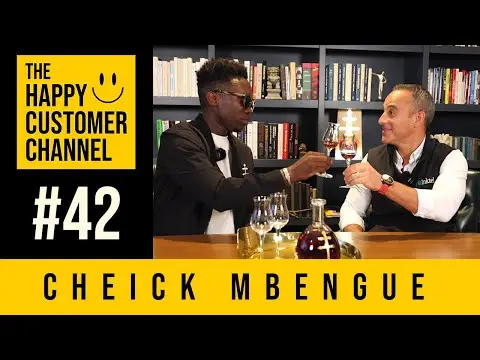
D’USSÉ’s Luxury Cognac Brand Strategy

FULL EPISODE HERE

How D’USSÉ Is Building a Luxury Cognac Brand Through Premium Positioning, Lifestyle Marketing, and Sales Execution

Most premium brands fail for a simple reason: they want premium pricing without doing the work required to earn premium perception. In this episode, the guest breaks down how D’USSÉ is being built as a luxury cognac brand through disciplined branding, selective placement, cultural relevance, and high-touch relationship building. The conversation goes beyond marketing theory and shows what it actually takes to scale a premium consumer brand in competitive markets. From product truth and consumer education to activations and face-to-face selling, the episode offers a practical blueprint for leaders focused on growth. The central idea is clear: premium brands win when they control the experience, protect the details, and sell a lifestyle that customers want to be part of.

What This Episode Covers

This episode is a case study in how to build and scale a premium brand with intention. It explores how D’USSÉ combines product differentiation, brand consistency, strategic partnerships, and experiential marketing to strengthen market position and drive commercial results.

  • How D’USSÉ differentiates itself by starting at VSOP
  • Why premium placement matters in bars, hotels, restaurants, and elevated spaces
  • The role of education in selling premium spirits
  • Why face-to-face selling still matters in modern brand growth
  • How lifestyle marketing shapes consumer perception and adoption
  • The value of Bacardi’s infrastructure and Roc Nation’s cultural influence
  • Why activations are critical to both awareness and sales conversion

Key Insights

Brand Consistency Is a Competitive Advantage

One of the strongest themes in the episode is that premium brands cannot afford inconsistency. Small errors in spelling, logo usage, pronunciation, messaging, or presentation weaken trust and dilute perception. For a luxury product, details are not minor issues; they are signals of value. D’USSÉ’s emphasis on branding reflects an important business truth: premium consumers and premium buyers judge brands by execution as much as by product quality. Consistency becomes a form of discipline, and discipline becomes a differentiator.

Premium Positioning Must Be Backed by Product Truth

D’USSÉ’s premium strategy is not built on branding alone. The guest explains that the brand starts at VSOP, which immediately places it in a more elevated category. That matters because premium positioning is most effective when it is grounded in something real and defensible. Consumers may be drawn in by image, but long-term brand equity depends on product credibility. When a brand can explain why it deserves its price point and status, it creates stronger retention, trust, and advocacy.

Placement Shapes Perception

Where a product appears has a direct impact on how the market values it. The episode makes the case that D’USSÉ is intentional about showing up in high-end, diverse, and culturally aligned spaces. Premium brands are not just sold; they are staged. Hotels, upscale bars, restaurants, nightlife venues, and curated events all reinforce what the brand stands for. This is a critical lesson for any business: distribution is not only about reach, it is about context. The wrong environment can undermine the right product.

Face-to-Face Selling Still Closes Business

Despite digital channels and remote communication, the guest is direct about the importance of in-person relationship building. Face-to-face interaction creates a level of trust, emotional reading, and responsiveness that digital communication often cannot match. Especially in premium categories, where buyers are evaluating risk, fit, and opportunity, personal presence can accelerate conversion. This is particularly relevant for founders, field sales teams, and brand leaders operating in competitive markets. When trust matters, proximity still wins.

Lifestyle Marketing Is a Revenue Driver, Not Just a Branding Tool

The conversation strongly reinforces that lifestyle is central to how premium brands create demand. Music, fashion, nightlife, and cultural credibility are not side elements; they are part of the sales engine. D’USSÉ is positioned not simply as a bottle, but as an expression of identity and aspiration. This is why activations matter so much. When the consumer experiences the brand in a setting that feels elevated and relevant, trial becomes more likely and affinity grows faster. Lifestyle marketing works when it is authentic, targeted, and tied to the audience’s aspirations.

Consumer Education Is Essential in Premium Categories

Premium products often require explanation. If customers do not understand what makes the product different, they are less likely to value it correctly. In D’USSÉ’s case, education around aging, cognac quality, category distinctions, and brand positioning helps justify both the price and the placement. This is a broader lesson for any premium brand: education is not optional when your differentiation needs context. A well-informed buyer is more likely to convert, recommend, and stay loyal.

Partnerships Create Leverage

Another major business takeaway is the role of ecosystem support. Culture can generate attention, but infrastructure turns attention into revenue. The episode highlights how Roc Nation contributes cultural energy while Bacardi helps close deals and scale commercial execution. This balance matters. Many brands can create excitement, but fewer can sustain supply, placement, sales support, and expansion. Strategic partnerships are most valuable when they bridge the gap between brand heat and operational follow-through.

Emerging Brands Win Through Hustle and Execution

The guest makes it clear that new and growing brands must do the trench work that legacy brands often no longer need to do. That means showing up, building relationships directly, educating the market, and proving value repeatedly. Premium growth is not passive. It requires belief, repetition, and a willingness to manage every touchpoint closely. For early-stage and challenger brands, this is an important reminder: momentum is built through disciplined execution long before it looks effortless from the outside.

Framework

Premium Brand Positioning Through Product Truth

  • Start with an authentic differentiator: D’USSÉ begins at VSOP rather than a lower tier
  • Match the product to premium environments: hotels, bars, restaurants, and elevated spaces
  • Protect visual and verbal brand consistency: spelling, logo usage, pronunciation
  • Reinforce value through education: explain aging, quality, and category distinctions

Face-to-Face Sales Conversion Model

  • Open the relationship through personal presence
  • Read energy and build trust in real time
  • Use product story and cultural context to create emotional buy-in
  • Rely on operational partners to help finalize and scale the commercial win

Lifestyle-Led Marketing Strategy

  • Position the brand inside aspirational settings
  • Use music, fashion, nightlife, and culture to shape brand identity
  • Create activations that feel elevated rather than transactional
  • Convert interest into trial through experience and storytelling

Key Takeaways

  • Premium branding requires relentless consistency across every touchpoint.
  • Positioning works best when it is supported by real product differentiation.
  • Distribution strategy should reinforce brand value, not just increase visibility.
  • In-person selling remains one of the most effective ways to build trust and close business.
  • Activations and lifestyle marketing can directly support sales when executed well.
  • Consumer education is critical for premium products that need context.
  • Strong partnerships help brands combine cultural relevance with operational scale.
  • Emerging brands must outwork incumbents through disciplined execution.

Who This Is For

This episode is especially relevant for brand leaders, consumer product executives, spirits and beverage marketers, sales teams, founders, and operators building premium offerings. It is also useful for anyone working on go-to-market strategy, experiential marketing, luxury positioning, or channel expansion. If your business depends on perception, placement, trust, and conversion, there is practical value here.

Watch the Full Episode

If you want to understand how a premium brand is built from the ground up through product truth, lifestyle positioning, field execution, and strategic partnerships, this episode is worth watching in full. It offers a direct look at what it takes to turn brand ambition into market traction and revenue growth.

FAQ

Why does starting at VSOP matter for D’USSÉ’s positioning?

Starting at VSOP gives D’USSÉ an immediate premium point of differentiation. It helps the brand establish credibility in a higher-value segment rather than competing from a lower entry tier.

Why is face-to-face selling still important for premium brands?

In-person interaction helps build trust faster, allows teams to read buyer reactions in real time, and creates stronger relationships. In premium categories, that often improves conversion and long-term account value.

How do activations support actual sales growth?

Activations create direct brand experience, which helps consumers and buyers connect the product to a lifestyle and identity. When done well, they increase trial, strengthen perception, and create momentum that supports retail and on-premise sales.
TikTok Commerce and E-Commerce Fulfillment Strategy

FULL EPISODE HERE

TikTok Commerce, Global Logistics, and Fulfillment Strategy: What Modern E-Commerce Leaders Need to Get Right

E-commerce is changing on two fronts at once: how demand is created and how that demand is fulfilled. In this episode, Matt Herz breaks down why platforms like TikTok are becoming meaningful commerce engines, why trust-based channels are outperforming traditional advertising in many categories, and why logistics strategy has become a competitive weapon rather than a back-office concern.

The central idea is simple but consequential: companies that win today are the ones that align channel strategy, fulfillment design, and business model decisions with real customer behavior. Growth is no longer just about better ads or lower costs. It increasingly depends on trust, operational resilience, and choosing systems that can handle complexity better than competitors.

What This Episode Covers

This conversation examines the convergence of social commerce, cross-border competition, and supply chain execution. Matt Herz explains how commerce is shifting toward fragmented, trust-based digital ecosystems while operational pressure intensifies across fulfillment and logistics.

  • Why TikTok is becoming a serious commerce platform
  • How influencer trust is reshaping conversion economics
  • Why Temu and Shein are gaining share through logistics and structural cost advantages
  • How supply chains should be managed in a disruption-heavy environment
  • Why fulfillment success depends on handling exceptions well
  • Why one-size-fits-all logistics models fail in e-commerce
  • What makes a subscription business model actually viable

Key Insights

TikTok Is No Longer Just a Marketing Channel

One of the clearest messages from the episode is that TikTok has moved beyond awareness and into conversion. As Herz puts it, “TikTok is really starting to emerge as a serious competitor.” For certain demographics and product categories, it is already outperforming more established e-commerce channels.

The reason is structural. TikTok compresses product discovery, social proof, entertainment, and purchase intent into a single environment. That reduces friction in the buyer journey and accelerates conversion in ways traditional digital funnels often cannot match. Brands that still treat TikTok as an experimental top-of-funnel channel may be underestimating its revenue potential.

For leadership teams, this means channel strategy needs to be reassessed. The question is no longer whether TikTok matters. The question is whether the brand’s audience, product format, and content model are suited to how commerce now happens on the platform.

Trust-Driven Influencers Are Outperforming Traditional Advertising

Herz highlights a broader shift away from centralized media and toward trust-based distribution. Influencers, podcasts, and creator-led ecosystems work because they combine awareness, credibility, and recommendation in one relationship. As he notes, “There’s a lot of trust that’s built.”

This is what makes influencer commerce so effective. Traditional advertising often creates awareness without confidence. Influencer-driven commerce creates both at once. The recommendation carries more weight because the audience already has an established relationship with the person delivering it.

For brands, this changes how performance should be evaluated. The right creator is not just an acquisition channel. They are often a conversion layer. Businesses that understand this can build more efficient demand generation strategies than those relying too heavily on standard paid media playbooks.

Temu and Shein Show That Logistics Innovation Can Be a Competitive Advantage

Another major insight from the episode is that companies like Temu are not winning solely through aggressive marketing or low-cost products. They are winning because their business models are designed around logistics arbitrage and structural advantages in cross-border shipping.

That matters because it reframes competition. In many categories, the competitive edge is not just product innovation or branding. It is the ability to move goods through global networks more efficiently, more cheaply, and with fewer constraints than domestic rivals.

This creates a serious challenge for established brands. If international marketplaces can undercut price while maintaining acceptable delivery times, domestic operators must compete through stronger brand positioning, better customer experience, superior product differentiation, or more resilient operating models. They cannot assume proximity alone will protect them.

Supply Chain Leadership Is About Managing Disruption, Not Just Optimizing Stability

One of Herz’s most practical observations is that supply chains should not be designed around the assumption of normal conditions. Disruption is not an exception to the system. It is part of the system.

That changes what good operations leadership looks like. It is not enough to optimize cost and efficiency in steady-state scenarios. High-performing operators build organizations that can respond faster and better when volatility hits. Delays, shortages, compliance issues, carrier problems, and geopolitical changes are all part of the operating environment.

In that context, resilience becomes a strategic capability. Businesses that rely too heavily on fragile global dependencies expose themselves to risk that can move quickly from operational inconvenience to existential threat. The stronger approach is to design supply chains that are adaptable, visible, and built for response.

Fulfillment Is an Exceptions-Management Business

Herz states it directly: “Fulfillment is the business of exceptions management.” He extends the same logic to logistics more broadly. This is one of the most important operational ideas in the episode.

Most fulfillment systems perform reasonably well when everything goes according to plan. But companies do not scale based on how they handle standard orders. They scale based on how they handle the 3 to 5 percent of cases where something breaks. That is where customer trust is won or lost, margins are protected or eroded, and operational maturity becomes visible.

Lost packages, split shipments, inventory discrepancies, damaged items, and delivery exceptions are not rare edge cases. They are a recurring feature of direct-to-consumer operations. Businesses that treat fulfillment as a commodity process often underestimate how much competitive advantage lies in issue triage, exception workflows, and service recovery.

One-Size-Fits-All Fulfillment Networks Do Not Work

The episode also pushes back on the idea that a single logistics model can serve every e-commerce business equally well. Different products create different operational requirements. Different customer expectations create different service standards. Different order profiles create different cost structures.

That means fulfillment network design must reflect category reality. A bulky item, a high-velocity consumable, a temperature-sensitive product, and a premium low-volume item should not necessarily move through the same system in the same way.

When companies force specialized businesses into generic operational models, performance suffers. Costs rise, service levels decline, and complexity increases. The better approach is to build or select fulfillment infrastructure based on actual product, customer, and margin dynamics rather than broad assumptions about scale efficiency.

Subscription Only Works When the Product Fits Real Consumption Patterns

Recurring revenue is attractive, but Herz makes clear that not every product deserves a subscription model. The businesses that succeed in subscription are those tied to genuine recurring need. As he puts it, “The businesses that I’ve seen have most success in subscription are those that you truly need.”

This is a useful corrective for founders and operators. Subscription should not be treated as a growth hack. It should be tested against product behavior. Does the customer actually use the product repeatedly? Is the reorder cadence predictable? Do the economics support repeat shipping and fulfillment? Is the value high enough to justify the model?

Novelty products and inconsistent consumption patterns often make poor subscription candidates. Replenishable, necessary, higher-value products are typically better fits. Businesses that ignore this distinction risk building recurring revenue models that look good in theory but fail in retention.

Business Model Fit Now Sits at the Intersection of Trust, Infrastructure, and Customer Behavior

The overarching lesson from the episode is that advantage comes from understanding where demand generation and operational execution meet. TikTok and creator ecosystems shape how trust and conversion happen. Logistics and fulfillment determine whether those conversions can be delivered profitably and consistently.

Many businesses struggle because they apply generic models to specialized realities. They choose channels because they are popular, not because they fit buyer behavior. They adopt fulfillment structures that scale in theory but not in practice. They launch subscriptions without proving recurring demand.

The companies that outperform are the ones that align decisions with how customers actually buy and how systems actually break. That is a more durable source of competitive advantage than chasing best practices disconnected from operational reality.

Framework

Fulfillment as Exceptions Management

This framework reframes fulfillment as a discipline defined by how well a business handles what goes wrong.

  • Most operations function adequately under normal conditions
  • Real differentiation appears when disruptions and edge cases occur
  • Strong operators build systems and teams that can identify and resolve issues quickly
  • Competitive advantage often comes from managing the small percentage of orders where execution fails

Subscription Viability Framework

This framework helps determine whether a product is actually suited to subscription.

  • The product must solve a real recurring need
  • Delivery cadence must align with actual usage patterns
  • Economics must support repeat fulfillment and shipping
  • Necessary and replenishable products tend to outperform novelty-driven offers

Port-to-Porch Model

This model describes an integrated approach to moving goods from overseas origin to the end customer.

  • Manage freight from origin to final delivery
  • Combine container visibility, warehousing, fulfillment, and last-mile delivery
  • Simplify execution through one operating partner or tightly connected system
  • The main challenge is coordinating multiple disconnected supply chain functions at high reliability

Key Takeaways

  • TikTok is becoming a meaningful commerce platform with real revenue potential
  • Influencer trust can outperform traditional advertising because it shortens the path from awareness to conversion
  • Logistics innovation can be as strategically important as product or marketing innovation
  • Supply chains should be designed for disruption, not for ideal conditions
  • Fulfillment excellence depends on managing exceptions better than competitors
  • Generic logistics models often fail because product categories require different operating structures
  • Subscription works only when there is authentic recurring demand and viable economics
  • Durable advantage comes from aligning channel strategy, infrastructure, and customer behavior

Who This Is For

This episode is especially relevant for:

  • E-commerce founders evaluating new growth channels
  • Operations leaders responsible for fulfillment and logistics performance
  • Consumer brand executives competing with cross-border marketplaces
  • Marketing teams rethinking influencer and creator-led acquisition
  • Supply chain professionals building more resilient operating models
  • Subscription businesses assessing product-market-model fit

Watch the Full Episode

If you are building, operating, or scaling an e-commerce business, this episode offers a practical look at where growth is really coming from and where operational risk is actually concentrated. Watch the full episode to hear Matt Herz explain how social commerce, logistics structure, and fulfillment execution are reshaping competitive advantage.

FAQ

Why is TikTok becoming such an important e-commerce channel?

TikTok combines discovery, trust, entertainment, and conversion in one experience. That creates a shorter path to purchase than many traditional channels, especially for demographics already native to creator-led buying behavior.

What does it mean that fulfillment is an exceptions-management business?

It means most businesses can process normal orders reasonably well. The real difference appears when inventory issues, shipping delays, damaged goods, or delivery errors happen. Companies that resolve those problems quickly and effectively scale better.

What makes a subscription business model succeed?

A strong subscription business is built around real recurring consumption. The product must be needed regularly, the replenishment timing must match customer usage, and the economics must support repeated fulfillment without destroying margin.

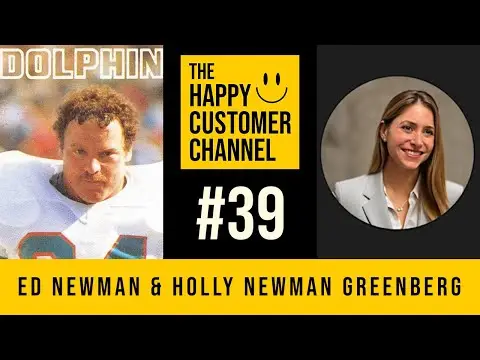
Ed Newman on Leadership, Reinvention & Plan B

FULL EPISODE HERE

Ed Newman on Reinvention, Leadership, and Building a Plan B While Performing at the Highest Level

Most professionals think about reinvention only when they are forced into it. This episode shows why that is a mistake. In this conversation, Ed Newman shares how he moved from elite athletics to law, union leadership, and the bench, building multiple high-performance careers through discipline, preparation, and long-term thinking. The central idea is simple and highly relevant for business leaders: sustained success does not come from one identity or one win, but from the ability to keep performing while preparing for what comes next.

What This Episode Covers

This episode explores Ed Newman’s journey from NFL standout to judge, using his career as a lens for leadership, resilience, standards, and long-term professional strategy. Through stories spanning football, education, negotiation, and public service, the conversation offers practical lessons for anyone building a career that must evolve over time.

  • How to build a Plan B while still excelling in your current role
  • Why elite performance is driven by standards rather than shortcuts
  • What trust looks like when it is earned over time
  • How adversity can become the foundation for reinvention
  • The role of demanding leadership in shaping performance and culture
  • Why transferable skills can create unexpected competitive advantage
  • How reputation and service open doors beyond formal credentials

Key Insights

Build Your Next Chapter Before You Need It

One of the strongest lessons from the episode is that top performers do not wait for disruption before they prepare for change. Newman pursued law school while still competing at the highest level in football, proving that long-term career resilience starts before a transition becomes urgent. In business, this means investing in future capabilities, relationships, and credibility while current performance is still strong. The professionals with the most options later are usually the ones who started building early.

Excellence Comes From Standards, Not Shortcuts

The episode makes clear that sustained success is built on discipline and repeated effort. Newman’s story reflects a mindset grounded in preparation, physical and mental toughness, and a willingness to do more than what is required. That principle applies directly to leadership and business performance. Organizations that win consistently are not relying on hacks or momentum alone; they build systems and expectations that make high performance repeatable.

Trust Is Earned Through Reliability Under Pressure

Talent may create opportunity, but reliability creates trust. A key theme in the conversation is that trust was not granted automatically; it had to be earned through repeated performance over time. In business settings, this is what separates promising contributors from indispensable leaders. Showing up consistently, improving steadily, and handling pressure well are the behaviors that make others willing to place real responsibility in your hands.

Adversity Is Often the Start of Reinvention

Newman’s career illustrates that setbacks should not be treated as signals to stop, but as part of the path forward. Whether facing professional pressure, career uncertainty, or competitive obstacles, he continued building. That mindset matters in every business function, from sales to leadership to entrepreneurship. Resilience is not simply endurance; it is the ability to convert difficulty into capability and direction.

Leadership Style Shapes Whether Pressure Produces Greatness or Fear

The discussion around Don Shula highlights an important leadership tension: high standards can create elite teams, but the way those standards are enforced defines the culture. Accountability is necessary. But leaders also need to understand the difference between pressure that sharpens performance and pressure that erodes trust. For executives and managers, the lesson is not to lower standards, but to be intentional about how standards are communicated and sustained.

Transferable Skills Create Hidden Advantage

One of the most valuable business takeaways is that career advantages do not always come from obvious credentials. Newman’s path from wrestling to football to law shows how capabilities developed in one environment can outperform expectations in another. Strength, discipline, preparation, strategic thinking, and competitive endurance all transferred across domains. This is especially relevant for hiring and leadership development, where unconventional backgrounds often contain overlooked strengths.

Patience Can Be a Competitive Strategy

Not every career accelerates immediately. The episode reinforces that waiting behind established top performers is not wasted time if growth continues. In many organizations, professionals quit too early because progress is not visible enough. Newman’s story suggests the opposite approach: stay ready, keep improving, and let time compound your value. Patience, when paired with effort, can become a significant strategic advantage.

Service and Reputation Expand Opportunity

Another major lesson is that titles alone rarely create long-term opportunity. Newman’s involvement in union leadership and public service built credibility that extended beyond his original career. In business, this translates into a simple truth: people open doors for those they trust, respect, and see contributing beyond themselves. Reputation is built through service, consistency, and character, and those assets often outperform self-promotion over time.

Framework

Plan B While Performing

  • Excel in your current role without assuming it will last forever
  • Invest early in future capabilities and credentials
  • Use your current platform to create long-term optionality
  • Transition from one identity to the next without starting from zero

This framework is one of the clearest strategic lessons from the episode. It is not about hedging commitment. It is about combining present excellence with future readiness. Leaders, founders, and professionals who apply this approach reduce risk and increase leverage when career inflection points arrive.

Earned Trust Through Repetition

  • Show up consistently
  • Improve every year
  • Prove you can handle responsibility under pressure
  • Become someone leadership can rely on when stakes are high

Trust compounds when performance is repeatable. This framework matters in every business environment because promotions, partnerships, and leadership opportunities often follow demonstrated dependability rather than potential alone.

Transferable Strength Framework

  • Build core capabilities in one domain
  • Apply them in adjacent environments
  • Leverage overlooked strengths others underestimate
  • Turn nontraditional experience into differentiated performance

For companies and individuals alike, this framework is a reminder to value adaptable capability, not just linear experience. Some of the most durable advantages come from applying hard-earned strengths in places where others fail to see the connection.

Key Takeaways

  • Prepare for your next career before your current one ends
  • High performance is sustained by standards, not shortcuts
  • Trust is built through consistency and reliability under pressure
  • Adversity can strengthen reinvention if treated as part of the process
  • Leadership accountability is powerful, but delivery shapes culture
  • Transferable skills often create underestimated competitive advantage
  • Patience and persistence can outperform early recognition
  • Reputation and service create opportunities credentials alone cannot

Who This Is For

This episode is especially valuable for executives, founders, sales leaders, athletes in transition, and ambitious professionals navigating career growth or reinvention. It is also highly relevant for managers responsible for developing talent, building trust, and sustaining standards in demanding environments. Anyone thinking about succession, leadership durability, or long-term career optionality will find practical lessons here.

Watch the Full Episode

Watch the full episode to hear Ed Newman’s full story and the leadership lessons behind his transition from elite competition to law, labor advocacy, and public service. His experience offers a practical blueprint for anyone looking to sustain excellence across multiple chapters of a career.

FAQ

What is the main business lesson from Ed Newman’s story?

The main lesson is that sustainable success comes from performing at a high level while preparing for what comes next. Newman’s career shows that reinvention is strongest when it is built in advance through discipline, education, and consistent credibility.

Why is trust such a central theme in this episode?

Trust is central because it determines who gets responsibility, leadership opportunities, and long-term influence. The episode shows that trust is not based on talent alone, but on repeated reliability, steady improvement, and performance under pressure.

How does this episode apply to business leaders today?

It applies directly to leadership, talent development, and career strategy. Business leaders can use these lessons to build stronger cultures, create accountability without damaging trust, and help teams prepare for long-term success rather than short-term wins alone.

Muhammad Ali vs Sonny Liston Business Lessons

FULL EPISODE HERE

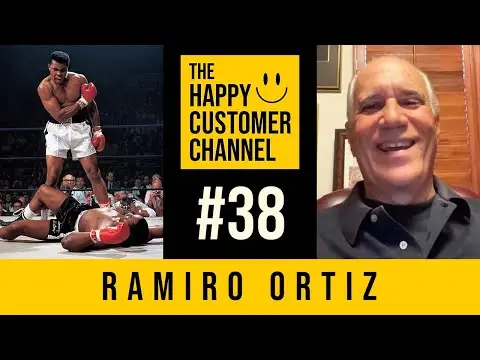
Muhammad Ali vs. Sonny Liston: The Business Lessons in Branding, Psychology, and Market Disruption

Most leaders study competition through spreadsheets, strategy decks, and market share reports. But some of the most important lessons about disruption come from moments that changed public perception before they changed the scoreboard. The 1964 Muhammad Ali–Sonny Liston heavyweight title fight is one of those moments.

In this episode, the conversation revisits the night Cassius Clay, later known as Muhammad Ali, defeated the seemingly unbeatable Sonny Liston. More importantly, it explores why that upset mattered far beyond boxing. Ali did not just win a fight. He rewrote the rules of attention, branding, and competitive positioning.

The central idea is clear: markets are often shaped before the formal contest begins. Through confidence, media instincts, psychological pressure, and disciplined preparation, Ali showed that a challenger can overturn conventional power by changing the terms of engagement.

What This Episode Covers

This episode examines the 1964 title fight as a turning point in sports, culture, and business thinking. It looks at how Ali used storytelling, promotion, and psychological strategy to reshape expectations before stepping into the ring.

  • Why Cassius Clay entered the fight as a massive underdog
  • How Sonny Liston represented established dominance and credibility
  • How Ali used self-promotion and spectacle to control public attention
  • The role of psychological warfare in shifting competitive dynamics
  • Why media narratives became as important as physical preparation
  • What business leaders can learn about branding, positioning, and disruption

Key Insights

Winning Often Starts Before the Contest Begins

One of the strongest ideas in this episode is that performance does not begin when the event starts. It begins when perception starts forming. Before the first punch was thrown, Ali had already influenced how the public, the media, and even his opponent experienced the fight.

For business leaders, this is a critical principle. Customers, investors, employees, and competitors all react to narrative signals before a product is fully tested in the market. Positioning affects confidence, and confidence affects outcomes. If you wait until launch day to shape perception, you are already behind.

A Challenger Can Beat an Incumbent by Changing the Rules

Sonny Liston represented the traditional model of power: dominant, feared, proven, and physically overwhelming. Ali could not outplay that reputation by competing on Liston’s strengths alone. Instead, he changed the nature of the contest.

He used speed, unpredictability, and relentless messaging to create a different kind of battlefield. In business, challengers win when they stop validating the incumbent’s frame. They create new criteria for relevance. That could mean redefining value, changing customer expectations, or competing on experience rather than scale.

Psychological Strategy Is a Real Competitive Advantage

Ali understood that pressure is not only physical. It is emotional and mental. His taunts, public confidence, and theatrical behavior were not random antics. They were designed to destabilize Liston and energize everyone else around the event.

Businesses often underestimate psychology because it feels less concrete than operations or finance. But perception, momentum, and emotional positioning shape decisions every day. Brands that can unsettle a competitor’s certainty while increasing their own audience’s belief create an edge that is difficult to measure but impossible to ignore.

Attention Is a Commercial Asset

The episode makes a powerful case that Ali’s entertainment instincts were not separate from his success. They were part of the strategy. He knew how to attract a crowd, generate headlines, and make people care. That visibility increased the scale and importance of the event.

In business terms, attention is not vanity. It is distribution. It is demand creation. It is leverage. Many technically strong companies underperform because they assume quality alone will earn interest. Ali showed that commanding attention can move the market before traditional proof catches up.

Showmanship Can Outperform Traditional Credibility

At the time, many observers dismissed Clay because he did not look or sound like what they expected from a serious contender. He was loud, theatrical, and unconventional. That made him easy to underestimate.

This pattern repeats across industries. Innovators are often discounted because they break the accepted model of credibility. They may seem too bold, too consumer-facing, too personality-driven, or too unconventional for established gatekeepers. But when audience behavior changes, the old markers of seriousness can become liabilities. What looks like spectacle at first can become strategic advantage later.

Confidence Only Works When It Is Backed by Preparation

Ali’s confidence was memorable because it was extreme, but the episode makes clear that it was not empty. His self-belief was paired with obsessive preparation and complete commitment. That is why his message carried force.

For executives and founders, this is a key distinction. Bold claims without disciplined execution damage trust. Bold claims backed by real preparation create momentum. Confidence becomes an asset when it reflects internal readiness, not just external performance.

Great Promoters Manufacture Emotional Stakes

Ali did not simply help sell tickets. He turned the fight into a public drama people felt compelled to follow. He made the audience emotionally invested in the outcome. That is a much higher level of promotion than awareness alone.

Strong companies do the same thing. They do not just explain a product. They frame what is at stake. They make customers feel that a decision matters now, not later. In crowded markets, emotional stakes often determine whether attention turns into action.

Narrative Can Turn an Event into a Historic Inflection Point

Not every competition becomes history. What elevates an event is often the story around it. This fight mattered because it represented more than a sporting result. It embodied a shift in culture, media, identity, and public voice.

That is the larger business lesson. When timing, messaging, and market tension align, a single launch, campaign, or public moment can become an inflection point. Leaders who recognize those moments do not just participate in them. They shape them.

Industry-Changing Leaders Often Look Outrageous Before They Are Proven Right

Ali’s behavior challenged expectations so directly that many people could not interpret it as strategy. They saw noise where there was actually design. They saw arrogance where there was positioning. They saw entertainment where there was competitive leverage.

This is common in disruption. The leaders who reset industries often appear unserious to incumbents precisely because they are using a different operating model. Markets tend to dismiss what they do not yet know how to evaluate. That creates opportunity for challengers willing to endure skepticism long enough for results to validate the method.

Framework

Psychological Market Disruption

This framework explains how a challenger can shift the balance of power before direct competition is resolved.

  • Identify the dominant incumbent with the strongest perceived advantage
  • Refuse to compete only on the incumbent’s strengths
  • Create constant visibility to control public attention
  • Use bold messaging to unsettle the opponent and energize the audience
  • Reinforce the message with relentless preparation behind the scenes
  • Convert perception shifts into real performance advantage

Ali followed this pattern closely. He understood Liston’s power, but he refused to fight only on Liston’s terms. He built visibility, changed the emotional environment, and paired the spectacle with serious preparation.

Showmanship-to-Demand Model

This framework shows how personality and promotion can generate demand even before traditional experts are convinced.

  • Capture attention through personality and spectacle
  • Build curiosity even when the establishment remains skeptical
  • Turn every appearance into a promotional event
  • Make the audience feel part of the story
  • Use visibility to drive turnout, interest, and momentum
  • Let performance validate the brand after the market is already watching

This model is especially relevant for founders, creators, sales leaders, and challenger brands. It demonstrates that demand can be built through visibility and emotional engagement before widespread credibility arrives.

Key Takeaways

  • Perception often shapes outcomes before formal competition begins
  • Underdogs win by changing the frame, not by copying incumbents
  • Psychological pressure can be as powerful as operational strength
  • Attention is a business asset that drives demand and influence
  • Showmanship becomes strategic when it supports a clear objective
  • Confidence works only when it is backed by preparation
  • Strong narratives can elevate ordinary events into category-defining moments
  • Disruptors are often dismissed early because they break conventional expectations

Who This Is For

This episode is especially relevant for:

  • Founders building challenger brands
  • CMOs and marketers focused on positioning and demand generation
  • Sales leaders who want to understand the role of narrative in persuasion
  • Executives competing against larger, more established players
  • Creators and public-facing leaders building influence through personality and message
  • Anyone interested in how media, branding, and preparation combine to drive breakthrough outcomes

Watch the Full Episode

If you want to understand how branding, psychology, and preparation can overturn established power, this episode is worth watching in full. The conversation goes beyond boxing and offers a practical case study in how influence is built, how underdogs create leverage, and how market narratives are won before the official result arrives.

Watch the full episode to hear the firsthand memories, key quotes, and deeper analysis behind one of the most important disruption stories in modern sports history.

FAQ

Why is the Ali vs. Liston fight relevant to business leaders?

Because it shows that competition is not won by strength alone. Ali demonstrated how branding, attention, psychology, and preparation can shift market perception and create an advantage before direct performance is evaluated.

What is the biggest business lesson from this episode?

The biggest lesson is that challengers do not need to beat incumbents on the incumbent’s terms. They can win by controlling attention, reshaping the narrative, and making the market evaluate the contest differently.

How can companies apply these lessons today?

Companies can apply these lessons by investing in clear positioning, building public visibility, using messaging strategically, and ensuring bold promises are supported by strong execution. The goal is not just to compete better, but to define the conversation in a way that favors your strengths.

Leadership Lessons from NFL Player Jocelyn Borgella

FULL EPISODE HERE

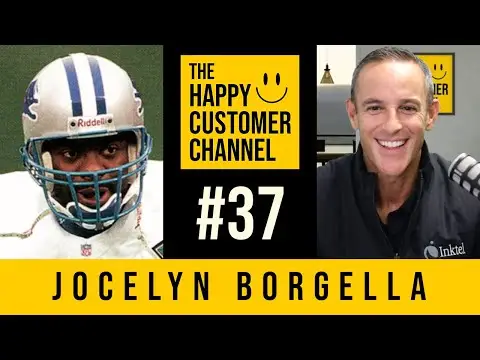
Discipline, Leadership, and Legacy: What Business Leaders Can Learn from Former NFL Player Jocelyn Borgella

Talent gets attention, but discipline builds careers that last. In this episode, former NFL player Jocelyn Borgella shares a leadership story shaped by immigrant grit, personal accountability, and a deep commitment to service. As the first Haitian to play in the NFL, Borgella’s journey goes far beyond sports. It offers practical lessons for leaders, sales professionals, and anyone building a meaningful career in high-pressure environments.

The central idea is simple but powerful: lasting success does not come from hype, ego, or raw ability alone. It comes from consistency, preparation, education, and the willingness to turn personal achievement into service for others. Borgella’s experience shows that real credibility is earned through habits, and real legacy is built by helping other people grow.

What This Episode Covers

This episode explores the connection between performance, character, and long-term impact. Borgella reflects on the discipline that shaped his rise, the mindset required to sustain performance, and the responsibility that comes with success.

  • How identity can become a source of resilience and purpose
  • Why practice matters more than self-perception or hype
  • How accountability can turn early mistakes into turning points
  • Why leadership begins at home and in your immediate environment
  • The role of education in building long-term career leverage
  • How service creates a meaningful second act after professional success
  • Why sustainable performance depends on what happens off the field

Key Insights

Leaders Prove Their Value Through Work, Not Self-Belief Alone

One of the clearest lessons from Borgella’s story is that strong leaders do not wait to feel exceptional before they act. They commit to the process, do the work consistently, and let results reveal their value over time.

In business, this matters because many professionals overestimate the importance of confidence and underestimate the importance of repetition. Confidence can help, but it does not replace execution. The people who build durable careers are often the ones who stay focused on the next right action instead of trying to prove themselves through image.

Practice Is the Real Competitive Advantage

Borgella’s message is direct: “Practice is everything.” That principle applies just as strongly in business as it does in sports. Raw talent may create opportunity, but preparation is what allows people to perform when the stakes are high.

For leaders and sales teams, practice shows up in preparation, follow-through, role-play, skill development, and daily standards. The market does not reward potential for long. It rewards readiness. Teams that build a culture of preparation outperform teams that rely too heavily on natural ability.

Setbacks Become Assets When Paired With Accountability

Borgella’s path includes early mistakes, but those moments became a line of demarcation rather than a permanent limitation. That shift happened because of accountability. Instead of allowing setbacks to define him, he used them to change direction.

This is a critical business lesson. High performers are not people who avoid every mistake. They are people who respond to mistakes with responsibility, adjustment, and discipline. When organizations create accountability without excuses, they turn failure into learning and protect long-term performance.

Leadership Starts Close Before It Scales Wide

Another strong theme in the episode is that leadership begins with example, especially within family and community. Before leadership becomes public, it is personal. Before it becomes strategic, it becomes visible in everyday standards.

In business terms, this means credibility starts in the immediate circle. Leaders set the tone through punctuality, preparation, conduct, and consistency. People trust leaders whose behavior aligns with their message. Influence grows outward from the standards people can observe up close.

Education Creates Long-Term Career Leverage

Borgella makes a point that every business professional should take seriously: short-term success is fragile. Athletic careers can be short, but the same is true for many business roles, market conditions, and industries. That is why education and personal development must remain foundational.

His quote, “Without education, you can’t move forward,” reflects a strategic mindset. Learning expands options. It protects people from overidentifying with one title, one company, or one phase of success. In business, education is not just academic. It includes learning how to communicate, lead, manage, and think long term.

The Best Mentors Focus People on Controllables

One of the most practical ideas from the episode is the principle: “You can only control what you can control.” Borgella repeatedly centers growth around effort, behavior, preparation, and decision-making rather than outcomes outside his influence.

This is especially valuable in sales, leadership, and performance-driven cultures. Teams waste energy when they obsess over variables they cannot manage. The most effective leaders help people build discipline around controllables: activity, preparation, mindset, responsiveness, and standards. That focus reduces noise and improves consistency.

Legacy Begins When Success Becomes Service

After football, Borgella redirected his experience into coaching, mentoring, nonprofit work, and serving vulnerable people in his community. That second chapter reinforces an important leadership truth: success becomes more meaningful when it creates value beyond the individual.

For business audiences, this is the difference between status and contribution. A title may signal achievement, but service creates legacy. The strongest leaders use their experience to develop others, build better systems, and create pathways for people who come after them.

High Performance Depends on What Happens Off the Field

Borgella also highlights a theme that translates directly into organizational performance: sustainable success depends on what happens off the field, not just on it. Readiness, health, preparation, and conduct all shape performance when the spotlight turns on.

Businesses often focus on visible outcomes while ignoring the underlying conditions that produce them. High-performance cultures understand that recovery, discipline, preparation, and decision-making matter just as much as execution in public moments. Smart preparation protects performance.

Framework

Control What You Can Control

  • Focus energy on personal effort, preparation, behavior, and decisions
  • Do not waste energy on outcomes or factors outside your influence
  • Build success through daily discipline in the areas you can manage

This framework is highly applicable in business environments where pressure, uncertainty, and competition are constant. It helps leaders create clarity and keeps teams grounded in action rather than distraction.

Student-Athlete First

  • Education comes before athletics
  • Performance on the field must be matched by conduct off the field
  • Long-term success depends on preparation for life beyond the primary career

The business parallel is clear: professionals should never build their identity around one role alone. Long-term resilience comes from developing skills, knowledge, and character that extend beyond a single job or title.

Lead by Example

  • Set the tone through personal standards and behavior
  • Demonstrate discipline before demanding it from others
  • Use visibility, presentation, and consistency to reinforce leadership credibility

This framework captures Borgella’s broader message about influence. Leadership is not primarily positional. It is behavioral. The example a person sets often communicates more powerfully than the instructions they give.

Key Takeaways

  • Discipline outperforms ego over the long run
  • Practice and preparation are more sustainable than raw talent
  • Accountability can turn setbacks into growth points
  • Leadership begins with personal standards and visible example
  • Education creates leverage beyond any single career chapter
  • The best leaders teach people to focus on controllables
  • Legacy is built when success turns into mentorship and service
  • Performance under pressure is shaped by habits developed away from the spotlight

Who This Is For

This episode is especially valuable for:

  • Business leaders building performance-driven teams
  • Sales professionals who need consistency under pressure
  • Coaches, mentors, and managers responsible for developing others
  • Professionals navigating career transitions or second acts
  • Founders and operators who want to build culture through example
  • Anyone looking to connect personal success with broader community impact

Watch the Full Episode

If you want a deeper look at how discipline, education, accountability, and service shape lasting success, watch the full episode featuring Jocelyn Borgella. His story offers practical lessons for anyone who wants to lead with substance and build a legacy that extends beyond personal achievement.

FAQ

What is the main leadership lesson from Jocelyn Borgella’s story?

The main lesson is that enduring leadership is built through discipline, accountability, and example. Borgella shows that credibility comes from consistent action, not title or hype.

Why is this episode relevant for business professionals and sales teams?

Because the principles discussed apply directly to performance-driven work. Preparation, controllables, education, resilience, and service all contribute to stronger leadership and more sustainable results.

What makes Borgella’s perspective different from typical success stories?

His perspective is rooted not just in achievement, but in what comes after achievement. He focuses on humility, long-term thinking, and using success as a platform to educate, mentor, and elevate others.

Trader Joe’s, Amazon, and Competitive Advantage

FULL EPISODE HERE

How Trader Joe’s and Amazon Build Competitive Advantage Through Focus, Simplicity, and Smart Economics

Most companies assume growth comes from expanding selection, increasing reach, and trying to appeal to as many customers as possible. This episode challenges that assumption. It shows how Trader Joe’s and Amazon create outsized value by making sharper strategic choices, not broader ones.

The discussion explores two very different businesses with one shared principle: customer obsession only becomes a true advantage when it is built into the operating model. Trader Joe’s does this through limited assortment, private label dominance, small-footprint stores, and a memorable in-store experience. Amazon does it by making a strategic investment in Diamond Sports that strengthens Prime, improves sports distribution, and reinforces its broader ecosystem.

The core idea is simple but powerful: businesses win when customer experience, economics, and strategic focus are tightly aligned.

What This Episode Covers

This episode examines how strong business models are designed around intentional tradeoffs. Using Trader Joe’s and Amazon as case studies, it connects retail strategy, operating discipline, and capital allocation to long-term competitive advantage.

  • Why Trader Joe’s generates exceptional revenue per square foot
  • How limited assortment can improve customer experience and efficiency
  • Why private label is a strategic advantage beyond margin improvement
  • How word of mouth becomes a scalable growth engine
  • The role of small store footprints and low overhead in pricing flexibility
  • How loss leaders drive profitable traffic when used intentionally
  • Why Amazon’s Diamond Sports investment strengthens Prime
  • How ecosystem-driven acquisitions create more value than standalone deals
  • Why revenue predictability matters for long-term asset value

Key Insights

1. Focus beats breadth when a company knows exactly who it serves

One of the clearest lessons from this episode is that businesses grow faster when they stop trying to be everything to everyone. Trader Joe’s is a strong example of this principle in action. It does not attempt to match the scale, assortment, or mass-market positioning of a traditional supermarket. Instead, it serves a clearly defined customer segment extremely well.

That strategic restraint creates clarity. Customers know what to expect, the business avoids unnecessary complexity, and the brand becomes more distinct in the market. As the episode puts it, “It’s not all things to all people.” That is not a weakness. It is a competitive advantage.

2. A smaller assortment can improve both customer experience and sales efficiency

Many retailers assume more choice creates more value. In practice, too much choice often creates friction. Trader Joe’s demonstrates the opposite model. By keeping category selection intentionally narrow, it reduces decision fatigue, simplifies store navigation, and creates a faster shopping experience.

Operationally, this also improves efficiency. A smaller SKU count reduces inventory complexity, supports faster turnover, and makes store execution easier. The result is a model where limited assortment does not constrain performance. It strengthens it.

As highlighted in the episode, “They keep the category small.” That single decision has implications across merchandising, operations, customer satisfaction, and profitability.

3. Private label is a strategic lever, not just a margin strategy

Private label is often discussed as a way to increase gross margin. This episode makes a more important point: private label also creates control. Trader Joe’s has built a model where “Eighty-five percent of their products are private label.” That gives it greater pricing power, faster product development, stronger differentiation, and less dependence on national brands.

When a company controls product design and sourcing, it can respond faster to trends, manage costs more directly, and create a brand experience competitors cannot easily replicate. Private label also strengthens loyalty because the product is tied to the retailer itself rather than a third-party manufacturer.

In other words, private label is not just about improving economics. It is about owning the value proposition.

4. Customer experience becomes a growth engine when it is distinct enough to talk about

Memorable experiences reduce the need for traditional advertising. Trader Joe’s is a strong example. As the episode notes, “You never really see Trader Joe’s ads.” Yet the brand continues to generate loyalty and traffic at scale.

That happens because the experience itself is marketable. Unique products, rapid product rotation, approachable store environments, and strong brand personality create something customers want to share. Word of mouth is not an accidental byproduct. It is the result of a model designed to be distinctive.

For business leaders, the takeaway is significant: when customer experience is strong enough, it can lower acquisition costs and increase retention at the same time.

5. Low overhead creates strategic flexibility that larger competitors often lack

Trader Joe’s small-format stores and disciplined operating model give it a major structural advantage. Lower overhead means the company can price more aggressively, maintain strong unit economics, and avoid the cost burden that comes with oversized footprints and excessive complexity.

This matters because cost structure shapes strategic options. A leaner model allows a company to invest in value where customers notice it most while staying profitable. Larger competitors may have more scale, but scale alone does not guarantee efficiency. In many cases, complexity erodes the benefits of size.

This is why operational simplicity can outperform scale when it is paired with a clear customer proposition.

6. Loss leaders work when they drive profitable basket behavior

Loss leaders are often misunderstood. They are not simply cheap products designed to attract attention. They are effective when they are part of a broader basket strategy. Trader Joe’s uses highly visible value items to bring customers into the store, but the economic payoff comes from what happens next: those customers purchase a wider mix of higher-margin products.

Used well, loss leaders reinforce overall value perception while supporting profitable traffic patterns. Used poorly, they simply erode margin. The difference is whether the business has a coherent system for converting traffic into broader purchasing behavior.

This episode makes clear that isolated tactics do not create advantage. Connected decisions do.

7. Strategic acquisitions create outsized value when they strengthen an ecosystem

The episode’s shift to Amazon and Diamond Sports shows the same principle in a different context. The investment is framed as a smart, low-risk move because its value is not limited to the asset itself. It enhances a larger platform.

Sports content improves Prime’s value proposition, supports subscriber growth, and expands Amazon’s presence in a highly engaging content category. As one quote puts it, “This is a no-brainer for Amazon.” The logic is straightforward: the deal helps Amazon deepen customer participation in an ecosystem it already owns.

This is what separates a strategic acquisition from a financial one. The best deals create value through adjacency, distribution, and cross-platform behavior.

8. Predictable revenue increases confidence, planning ability, and asset value

For industries built on long-term rights, infrastructure, or media economics, revenue predictability matters as much as top-line growth. When future cash flows become easier to forecast, businesses can plan more effectively, investors gain confidence, and underlying asset values improve.

This is especially relevant in the context of sports media. Distribution certainty and subscription integration reduce uncertainty, which makes the business more durable and more valuable over time. Amazon’s involvement signals not only distribution capability but also monetization potential within a larger ecosystem.

The broader lesson is that reducing uncertainty can be just as valuable as increasing revenue.

Framework

Focused Retail Model

  • Serve a specific demographic rather than the mass market
  • Limit SKU count to reduce complexity
  • Use private label to control costs and differentiation
  • Keep store footprints small to lower overhead
  • Refresh products rapidly to sustain excitement and freshness
  • Build loyalty through service and brand personality

Fast and Fresh

  • No reliance on constant discounting or sales
  • Maintain low inventory breadth
  • Turn inventory quickly
  • Introduce new and seasonal products frequently
  • Preserve freshness while improving capital efficiency

Ecosystem Expansion Strategy

  • Acquire or invest in adjacent assets at attractive prices
  • Improve the customer experience of the acquired category
  • Use the new asset to drive subscriptions into a broader platform
  • Monetize beyond the asset itself through ecosystem behavior
  • Strengthen brand positioning in high-engagement categories like sports

Loss Leader Traffic Model

  • Offer a few highly visible, ultra-affordable products
  • Use them to increase store traffic and purchase frequency
  • Convert that traffic into purchases of higher-margin items
  • Reinforce value perception across the broader brand

Key Takeaways

  • Focused business models often outperform broad ones because they reduce complexity and improve clarity.
  • Limiting assortment can increase conversion, simplify operations, and improve inventory productivity.
  • Private label creates strategic control over pricing, speed, and brand differentiation.
  • Distinctive customer experiences can reduce reliance on paid advertising through word of mouth.
  • Low overhead gives businesses more flexibility to compete on value without sacrificing margins.
  • Loss leaders only work when they support a larger basket and profitability strategy.
  • Strategic investments create more value when they reinforce an existing ecosystem.
  • Revenue predictability strengthens planning, investor confidence, and long-term asset valuation.
  • Enduring advantage comes from aligned decisions, not isolated tactics.

Who This Is For

This episode is especially relevant for:

  • Retail executives rethinking assortment, pricing, and store strategy
  • Consumer brand leaders building differentiation in crowded markets
  • Operators looking to improve profitability through simplicity
  • Founders deciding which customer segment to serve most effectively
  • Investors evaluating business models with strong structural advantages
  • Media and platform strategists interested in ecosystem-driven acquisitions
  • Business leaders who want to connect customer experience decisions to financial outcomes

Watch the Full Episode

Watch the full episode to see how these ideas apply in practice, from Trader Joe’s retail model to Amazon’s ecosystem strategy in sports media. The conversation offers a useful blueprint for leaders who want to build businesses that are easier to operate, harder to copy, and stronger financially over time.

FAQ

Why does Trader Joe’s perform so well with a limited assortment?

Because limited assortment reduces customer overwhelm, simplifies operations, improves inventory turnover, and allows the company to focus on a curated experience. Instead of offering everything, Trader Joe’s offers a narrower mix that aligns closely with what its target customer values most.

Why is private label such a strong advantage for Trader Joe’s?

Private label gives Trader Joe’s more control over pricing, product development, differentiation, and margins. It also makes the shopping experience more unique because customers cannot easily find the same products elsewhere.

What makes Amazon’s Diamond Sports investment strategically valuable?

The investment strengthens Amazon’s broader ecosystem rather than functioning as a standalone bet. It improves sports content distribution, enhances the value of Prime, supports subscriber growth, and deepens Amazon’s position in a high-engagement category.

Niche Specialization for Local Service Business Growth

FULL EPISODE HERE

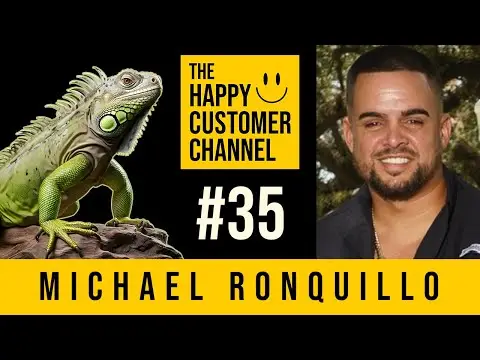
How Niche Specialization and Customer Education Built a High-Growth Local Service Business

Most service businesses try to grow by offering more. This episode shows why offering less, but doing it better than anyone else, can be the smarter strategy.

In this conversation, Mike from Humane Iguana Control shares how he turned a widespread South Florida problem into a highly specialized business with strong local demand. What started as a shift from landscaping into iguana control became a practical lesson in niche positioning, educational marketing, customer trust, and operational discipline.

The core idea is simple but powerful: when a business solves a visible, recurring problem and becomes the clearest authority in that category, it creates a competitive advantage that broader service providers struggle to match.

What This Episode Covers

This episode explores how Mike identified an underserved market, built credibility through education, and used service quality plus digital visibility to turn a local nuisance into a scalable business opportunity.

  • How a narrow niche can create strong market differentiation
  • Why customer education improves conversions
  • How Instagram, YouTube, TikTok, and Google supported growth
  • The role of reviews in building trust and increasing lead conversion
  • Why punctuality, communication, and professionalism matter commercially
  • How recurring service options create more long-term business value
  • Why some local service problems need ecosystem-level solutions

Key Insights

A Narrow Niche Can Create a Large Opportunity

One of the strongest lessons from this episode is that a niche business does not have to mean a small business. In many cases, the opposite is true. When a problem is widespread, costly, and not being solved well by generalists, specialization becomes a growth strategy.

Mike identified exactly that dynamic. Iguanas were causing visible damage and frustration across South Florida, but the market lacked a clear, trusted specialist. By focusing entirely on this one issue, he positioned Humane Iguana Control as the obvious choice for customers who wanted expertise rather than a generic service provider.

This is an important business principle: authority grows faster when the offer is specific. Companies that solve one painful problem exceptionally well often outperform companies that try to be everything to everyone.

Educational Marketing Outperforms Pure Promotion

Mike’s approach reinforces a key modern marketing truth: customers respond better to businesses that explain than businesses that simply advertise. When people do not fully understand a problem, they are less likely to take action. Once they understand the risks and costs of ignoring it, urgency increases.

That is why educational content works. It reduces uncertainty, builds credibility, and helps customers justify the decision to buy. Instead of pushing the sale, Mike focuses on helping people understand the negative impacts of iguana activity and why professional control matters.

For business leaders, this has broad relevance beyond pest control. In any market where customers are unfamiliar with the true cost of inaction, the company that teaches best often sells best.

Customer Service Is a Revenue Driver, Not a Support Function

One of the clearest themes in the episode is Mike’s belief that “customer service is our number one tool.” That statement is strategically important. In many businesses, customer service is treated as a back-end activity. In reality, it is often a front-end sales advantage.

Clear communication, punctuality, professionalism, and thorough explanations all reduce friction in the buying process. Customers are more likely to move forward when they understand what is happening, what to expect, and why the provider can be trusted.

Mike’s point is especially relevant in service categories where customers may feel uncertainty or discomfort. The more unfamiliar the issue, the more valuable reassurance becomes. Good service does not just improve satisfaction after the sale. It increases conversion before the sale.

Social Media Builds Demand When It Educates, Entertains, and Proves Expertise

The episode also offers a practical view of social media for small businesses. Platforms like Instagram, YouTube, and TikTok are most effective when they do more than create visibility. They need to demonstrate expertise in a way that is easy for customers to understand and remember.

Mike’s content strategy works because it combines three elements: it raises awareness, shows the real-world problem, and proves capability through visible service execution. That mix makes the business more credible and more discoverable.

For niche operators, this is especially powerful. Content can create category leadership long before a prospect reaches out. By the time a customer needs help, the business already feels familiar and authoritative.

Google Captures Intent, Reviews Close the Gap

While social platforms help build awareness, Mike makes it clear that Google search is a major source of clients. This highlights an important distinction in digital growth: social creates attention, but search captures intent.

When someone searches for a solution, they are already problem aware. At that point, trust assets matter most. This is where reviews become commercially significant. As Mike notes, reviews help the next customer feel more comfortable. That comfort directly affects conversion.

Too many businesses treat review collection as an afterthought. This episode makes the opposite case. Reviews are a core part of the sales engine because they validate the brand, reduce perceived risk, and reinforce expertise at the exact moment prospects are deciding.

Operational Excellence Strengthens Brand Trust

Brand reputation is often discussed in terms of logos, messaging, and visibility. This episode is a reminder that reputation is built operationally. Trust comes from doing what you said you would do, when you said you would do it, in a professional way.

Mike emphasizes detailed explanations, responsiveness, and punctual execution. Those behaviors matter because they make customers feel secure. In service businesses, that feeling is often the difference between a one-time job and long-term loyalty.

Operational excellence also supports premium positioning. Customers are more willing to choose a specialist when the experience feels organized, reliable, and professional from first contact through service delivery.

Some Problems Must Be Solved at the Ecosystem Level

Another valuable insight from the episode is that some business problems cannot be solved effectively in isolation. In Mike’s case, handling one property without considering surrounding areas may produce weaker long-term results.

This introduces a broader strategic idea: some services create better outcomes when approached at a system level rather than a single transaction level. That can influence how offers are structured, how accounts are expanded, and how recurring revenue is built.

For local service companies, this means growth may not come only from winning one customer at a time. It may come from expanding into neighborhoods, associations, commercial zones, or adjacent properties where the same problem exists.

Structured Service Options Increase Business Value

One-off jobs generate revenue. Structured service packages generate predictability, retention, and stronger business economics. The episode points to the value of moving beyond transactional fixes and creating recurring solutions that maintain results over time.

This is a critical shift for any service business looking to scale. Recurring service models improve cash flow visibility, deepen customer relationships, and reduce the constant pressure to replace completed jobs with new leads.

When a recurring local issue is involved, packaging maintenance or ongoing protection into the offer can transform the business from reactive service provider to long-term partner.

Framework

Niche Problem-to-Business Model

  • Identify a recurring local problem
  • Observe where current solutions are failing
  • Build a specialized service around that pain point
  • Educate the market on the consequences of ignoring it
  • Create recurring service packages to maintain results

This framework explains the business model behind Mike’s growth. He did not invent demand. He recognized a recurring pain point, noticed that the market was underserved, and built a focused solution around it. The advantage came from combining specialization with education and repeatable service delivery.

Content-Driven Trust Framework

  • Use content to raise awareness
  • Show real-world examples of the problem
  • Demonstrate the service in action
  • Reinforce credibility with reviews and testimonials
  • Convert trust into word of mouth and search demand

This framework is especially relevant for local businesses that need to build authority quickly. Educational and proof-based content can create familiarity before a customer is ready to buy, making the eventual sales process faster and more trust-based.

Customer Service Differentiation Model

  • Explain the issue thoroughly from the first contact
  • Set expectations clearly before service begins
  • Communicate process and timing in detail
  • Be punctual and professional in execution
  • Follow through in a way that makes customers feel secure

This model shows why service quality is not just operational hygiene. It is a strategic differentiator. In categories where trust matters, the company that communicates best often wins.

Key Takeaways

  • Niche specialization can unlock major growth when the underlying problem is widespread and underserved.
  • Educational marketing is highly effective because it helps customers understand the cost of inaction.
  • Customer service directly affects revenue by reducing uncertainty and increasing buyer confidence.
  • Social media performs best when it combines awareness, education, and proof of expertise.
  • Google search and online reviews are critical conversion drivers for local service businesses.
  • Some recurring problems require ecosystem-level solutions, not isolated one-time fixes.
  • Structured recurring services create more durable business value than purely transactional work.

Who This Is For

This episode is especially valuable for:

  • Local service business owners looking to differentiate in crowded markets
  • Entrepreneurs exploring niche business opportunities
  • Operators who want to turn expertise into a stronger brand position
  • Sales and marketing leaders focused on trust-based conversion
  • Businesses that rely on reviews, search visibility, and word of mouth
  • Founders interested in building recurring revenue from local service demand

Watch the Full Episode

Watch the full episode to hear how Mike identified the opportunity, built authority through education, and turned service quality into a strategic advantage. His story is a strong example of how a focused business can grow quickly by solving a real local problem better than anyone else.

FAQ

Why is niche specialization such a strong business strategy?

Niche specialization helps a business become the clear expert in a specific category. When customers face a recurring problem and want confidence in the solution, they are often more likely to choose a focused specialist than a broad generalist.

How does educational content help generate leads?

Educational content builds trust by helping prospects understand the problem, the risks of ignoring it, and the value of the solution. This makes marketing feel credible instead of promotional and often improves conversion quality.

What is the biggest customer acquisition lesson from this episode?

The biggest lesson is that visibility alone is not enough. Growth happens when digital content creates awareness, Google captures buyer intent, reviews reinforce trust, and customer service removes friction from the decision-making process.

Customer Service Lessons From 2023 Winners & Losers

FULL EPISODE HERE

Customer Service Winners and Losers of 2023: What Business Leaders Can Learn From Uniqlo, MLB, Disney, and More

Customer service is often discussed as a frontline function. In practice, it is much bigger than that. It shows up in pricing, process design, speed, access, communication, and whether an organization makes it easy or frustrating to do business with them.

In this episode, the discussion centers on which organizations improved customer service in 2023 and which ones undermined it. Drawing examples from retail, sports, hospitality, and government, the conversation makes one point clear: the organizations that won made the experience faster, easier, and more aligned with what customers actually want. The organizations that lost added friction, ignored loyalty, or failed to act on obvious opportunities.

The main idea is simple but important for business leaders: customer service improves when organizations design for customer ease rather than internal convenience.

What This Episode Covers

This episode breaks down the best and worst customer service moves of the year across multiple industries. It looks beyond traditional support functions and examines how operational decisions shape the full customer experience.

  • Why Uniqlo stood out for improving store experience through operational innovation
  • How MLB’s on-field rule changes strengthened the fan experience
  • What In-N-Out gets right when expanding into new markets
  • Why Disney damaged loyalty by over-monetizing the guest relationship
  • How MLB still missed major engagement opportunities despite improving its core product
  • Why government bureaucracy is also a customer service issue
  • The broader business lesson: winners remove friction, losers create it

Key Insights

1. The fastest way to improve customer service is to remove friction

The strongest pattern across the episode is that service winners simplify while service losers complicate. Friction can take many forms: long checkout times, confusing policies, hidden fees, slow processes, excessive restrictions, or unnecessary red tape.

Uniqlo is highlighted as a winner because it improved the overall in-store experience. The takeaway is not just that the company introduced better technology, but that it used it to make shopping faster and easier. That is what customers notice. When a business reduces waiting, confusion, or inconvenience, service quality rises immediately.

By contrast, organizations like Disney and the state of California are criticized for layering on complexity. In both cases, the issue is not only dissatisfaction but trust erosion. Customers begin to feel that the organization is optimizing for itself, not for them.

2. Technology matters most when it improves both convenience and operations

Technology does not create customer value simply because it is new. It creates value when it improves the customer experience and strengthens the operational engine behind it.

Uniqlo’s use of technology is a strong example. The benefit is not limited to customer convenience at checkout. Better systems can also improve inventory visibility, transaction speed, and accuracy across the operation. That combination creates leverage: customers get a smoother experience, while the business runs more efficiently.

This is a critical point for leaders making technology investments. The best returns come from tools that reduce friction on the front end and improve execution on the back end. Customer service and operations should not be treated as separate functions. In strong businesses, they reinforce each other.

3. Listening to customer complaints can unlock growth

One of the clearest examples in the episode is MLB’s response to fan frustration around the pace of games and lack of in-game action. As noted in the conversation, “Fans started complaining that there wasn’t enough in-game action.” MLB responded with meaningful rule changes rather than minor cosmetic adjustments.

The result was a better fan experience and stronger business performance. “The numbers are fantastic” captures the outcome. This is an important lesson for any established organization: customer complaints are often a roadmap to growth if leadership is willing to act decisively.

Too many businesses dismiss recurring complaints as noise, especially when they are rooted in long-standing traditions or internal assumptions. The smarter move is to identify repeated customer pain points and ask whether solving them could improve engagement, retention, and revenue.

4. Loyalty breaks when companies treat core customers like revenue targets

Disney is presented as a clear loser because it alienated some of its most loyal supporters. As the episode puts it, “They really alienated some of their biggest supporters and fans.” This is a warning sign for any business with a strong brand and a passionate customer base.

Loyalty is fragile when companies begin extracting more value without protecting the benefits customers already count on. New fees, reduced perks, more restrictions, and pay-to-access mechanics may improve short-term yield, but they can weaken the long-term relationship.

This is especially dangerous because loyal customers are not just repeat buyers. They are advocates, promoters, and a source of organic growth. Once they feel taken for granted, the damage extends beyond churn. It affects reputation and word-of-mouth as well.

5. Expansion requires culture transfer, not just process replication

In-N-Out is highlighted as a winner not simply because it grows, but because it expands in a way that protects consistency. The episode emphasizes the importance of sending experienced employees into new locations so that “The new employees will embrace the culture.”

This is a major lesson for scaling businesses. Standard operating procedures are necessary, but they are not enough. Service quality often depends on informal habits, expectations, standards, and behaviors that top performers model every day.

When companies expand without transferring culture, quality tends to drift. The process may be documented, but the customer experience becomes inconsistent. Leaders who want to scale successfully need to treat culture as an operating asset and move it intentionally into new markets.

6. Customer experience is a year-round engagement strategy

MLB improved its core product during games, but the episode also points out a missed opportunity in the offseason. The critique is straightforward: audience engagement cannot stop when the primary event ends.

For any organization with a seasonal, event-based, or cyclical business model, this matters. Customer service is not limited to the transaction itself. It includes how the brand stays relevant, accessible, and valuable between major moments.

This applies well beyond sports. Retailers, hospitality brands, subscription businesses, and media companies all need a plan for maintaining attention and engagement across the full customer lifecycle. If the audience already cares, the job is to keep serving that interest rather than going silent.

7. Missed attention is missed revenue

One of the sharpest business observations in the episode is that some engagement opportunities are obvious, low-cost, and highly valuable. Referring to underused content and marketing moments, the episode notes, “It’s sort of easy and cheap content.”

This reflects a broader truth: if customers are already paying attention to a moment, organizations should package, promote, and extend it. Failing to do that leaves revenue and engagement on the table.

Many companies spend heavily to acquire attention while neglecting the moments they already own. Strong operators do the opposite. They maximize existing interest, build content and communication around it, and turn audience attention into deeper loyalty and monetization.

8. Bureaucracy is a customer service failure

One of the most important ideas in the episode is that customer service principles apply outside traditional business settings. The criticism of California makes that explicit: “They’re not listening to their residents, right? And their residents are their customer.”

Complexity, bureaucracy, and red tape are not just administrative issues. They are customer experience failures. Whenever people have to work harder than necessary to access services, complete processes, or get answers, trust declines.

This is relevant to both public and private sector leaders. A confusing application process, a slow onboarding flow, excessive approvals, and fragmented communication all create the same effect: the organization shifts effort onto the customer. That is poor service, regardless of industry.

Framework

Friction Reduction as Service Strategy

  • Identify where the customer journey is slow, confusing, or inconvenient
  • Remove unnecessary steps, delays, or manual processes
  • Use technology to accelerate transactions and improve accuracy
  • Extend those efficiencies into inventory, supply chain, and operations

Customer Feedback to Revenue Loop

  • Listen to repeated customer complaints
  • Make structural changes to improve the experience
  • Measure impact through time savings, engagement, and revenue lift
  • Continue refining based on results and customer response

Culture Transfer Expansion Model

  • Deploy top-performing employees into new locations
  • Give them clear incentives and a fixed onboarding window
  • Use them to teach both formal playbooks and informal service habits
  • Build local team independence while preserving brand consistency

Loyalty Preservation Principle

  • Protect core customer benefits before introducing new fees or restrictions
  • Avoid eroding value for your highest-frequency users
  • Recognize that loyal customers are brand advocates and growth drivers
  • Reverse policies quickly when trust begins to erode

Key Takeaways

  • Customer service is the total design of the experience, not just frontline support
  • The fastest gains come from removing friction from the customer journey
  • Technology creates more value when it improves both convenience and operations
  • Customer complaints often point directly to revenue opportunities
  • Loyal customers should be protected, not over-monetized
  • Scaling successfully requires culture transfer, not only process documentation
  • Audience engagement should continue beyond the core transaction or event
  • Bureaucracy and complexity are service failures that damage trust
  • Organizations grow when they design for customer ease rather than internal convenience

Who This Is For

This episode is especially relevant for:

  • CEOs and founders looking to improve customer experience at a strategic level
  • Operations leaders responsible for process design and efficiency
  • Customer experience and service executives focused on loyalty and retention
  • Retail, hospitality, and consumer brand leaders managing scale and consistency
  • Sports, media, and entertainment executives building year-round engagement
  • Public sector and service-oriented leaders working to reduce bureaucracy and improve access

Watch the Full Episode

Watch the full episode to hear the full breakdown of 2023’s customer service winners and losers, including the lessons business leaders can apply to improve loyalty, reduce friction, and drive growth through better experience design.

FAQ

What is the main customer service lesson from this episode?

The main lesson is that customer service improves when organizations remove friction. Businesses that make experiences faster, easier, and clearer tend to strengthen loyalty and growth. Businesses that add complexity, fees, or unnecessary barriers tend to damage trust.

Why are companies like Uniqlo and In-N-Out considered winners?

They are considered winners because they improved the customer experience in practical ways. Uniqlo used technology to make the in-store experience smoother, while In-N-Out protected consistency during expansion by transferring culture through experienced employees.

Why are Disney and California discussed as customer service losers?

They are presented as examples of what happens when organizations create friction and fail to listen. Disney weakened loyalty by alienating core customers through over-monetization, while California was criticized for making it too hard for residents to navigate services and processes.

Business Growth Lessons from The Curse of Joe Robbie

FULL EPISODE HERE

The Curse of Joe Robbie: What Business Leaders Can Learn About Growth, Legacy, and the Cost of Ignoring Context

Most business failures are not caused by a lack of strategy. They happen when strong strategy overlooks the deeper forces that shape trust, identity, and long-term performance. In this episode, filmmaker Aaron Salgado discusses his documentary, The Curse of Joe Robbie, which examines whether the Miami Dolphins’ long decline began with a stadium decision rooted in commercial vision but disconnected from historical and cultural realities. What starts as a sports mystery becomes a broader business lesson: growth can create value, but when leaders ignore place, symbolism, and legacy, the consequences can last for decades.

What This Episode Covers

This conversation explores how one documentary connects sports history, archaeology, leadership, and brand identity into a compelling case study on unintended consequences. Aaron Salgado shares how a small clue became a larger investigation into the Dolphins’ decline, the business logic behind Joe Robbie Stadium, and why infrastructure decisions can reshape an entire ecosystem.

  • The origin story behind The Curse of Joe Robbie
  • How a single detail led Aaron Salgado into investigative storytelling
  • Joe Robbie’s stadium strategy and its long-term business logic
  • The idea that sacred land and overlooked history shaped franchise decline
  • How stadium decisions affected the Dolphins, Marlins, and Hurricanes
  • Why physical spaces matter to brand equity, community, and loyalty
  • What leaders can learn about balancing expansion with stewardship

Key Insights

1. Visionary leadership can still create unintended damage

Joe Robbie’s decision to build a privately funded stadium was forward-thinking and commercially smart. It was designed not just for football, but for larger revenue opportunities, including major events like the Super Bowl. From a business standpoint, that kind of infrastructure play reflects ambition, ownership, and long-term value creation. But the episode makes a more important point: a decision can be strategically brilliant and still create downstream consequences if it ignores cultural, emotional, or symbolic factors that matter deeply to stakeholders.

That is a critical lesson for executives. Expansion strategies often focus on measurable upside while underestimating the less visible assets already in place, such as tradition, belonging, and identity. When those assets are disrupted, performance may suffer in ways a spreadsheet cannot predict.

2. The best stories start with a small, overlooked clue

Salgado’s documentary did not begin with a grand thesis. It began with a detail that seemed too specific to dismiss. From there, he traced historical records, archaeological evidence, tribal context, and repeated examples of sports disappointment. That process demonstrates how strong narrative thinking works in business: you do not begin with noise; you begin with a signal.

For marketers, founders, and sales leaders, this is highly relevant. The most memorable business narratives often emerge from one surprising inconsistency, one repeated complaint, or one unresolved question. When investigated properly, those details can unlock a larger story that reshapes how audiences understand a brand, a market, or a turning point in company history.

3. Physical spaces are not just assets; they are containers of brand equity

One of the strongest ideas in the episode is that stadiums are never just stadiums. They are symbols. They carry memory, ritual, emotion, and identity. The move to a new environment may increase revenue potential, but it can also weaken the intangible forces that made a team or institution powerful in the first place.

This applies far beyond sports. Offices, retail stores, flagship locations, event venues, and even digital communities shape how customers and employees experience a brand. Leaders who treat these spaces as purely functional miss the fact that place influences loyalty. Once that symbolic connection erodes, rebuilding it is expensive and slow.

4. Revenue optimization can create hidden long-term costs

“That stadium wasn’t built for the Dolphins. That stadium was built for Super Bowls.” That quote captures the business tension at the center of the conversation. The stadium represented scale, monetization, and future opportunity. But the documentary argues that those gains may have come with hidden costs: a weakened team identity, a fractured emotional connection, and a break from the conditions that once supported sustained success.

This is a familiar pattern in business. Companies often make infrastructure or operating decisions to improve margins, expand capacity, or unlock new revenue. Those decisions can be correct in narrow financial terms while still damaging customer experience, employee morale, or brand meaning. The initial numbers may look strong, but the strategic cost can emerge years later.

5. Narrative framing turns fragmented facts into commercial value

Salgado’s work is a case study in narrative positioning. On the surface, the documentary is about a football curse. In practice, it is about leadership decisions, overlooked history, and the ripple effects of place. By connecting archaeology, fandom, business strategy, and franchise decline, he creates a memorable lens that makes the story bigger, sharper, and more marketable.

This matters in every business category. Audiences rarely remember disconnected facts, but they do remember patterns. The ability to frame events inside a compelling narrative is not just creative skill; it is commercial leverage. It helps brands earn attention, shape perception, and make complex ideas easier to retain.

6. Respect is not a soft value; it is a strategic one

Several of the episode’s strongest quotes center on recognition and respect. “Sometimes you just want recognition and respect.” That line speaks to a larger business truth. Stakeholders do not only evaluate whether leaders are effective. They also evaluate whether leaders understand what matters to them.

In practice, this includes communities, customers, legacy employees, longtime supporters, and cultural stakeholders. When organizations dismiss those voices as emotional or nonessential, they create trust gaps that strategy alone cannot close. Respect is not separate from performance. In many cases, it is a prerequisite for sustained performance.

7. Legacy institutions decline when they lose alignment with their environment

The episode suggests that the Dolphins’ struggles were not simply the result of bad luck or poor execution. They may have reflected a deeper break from the environment that once gave the franchise its identity and edge. That idea translates directly into business. Institutions decline when they scale away from the conditions that made them meaningful.

That could mean moving too far from the customer, abandoning the original product ethos, replacing community with efficiency, or prioritizing monetization over belonging. Growth is not the problem. Misalignment is. The companies that endure are the ones that expand without severing the relationship between success and source.

Framework

Narrative Pattern Recognition

This framework helps leaders, marketers, and creators turn recurring problems into a clear and compelling story.

  • Start with a recurring pain point or unexplained outcome.
  • Identify a historical trigger event that may explain the shift.
  • Gather factual evidence from credible sources.
  • Connect the timeline to emotionally memorable examples.
  • Build a bigger story that gives the audience a new lens on familiar problems.

This is the structure Salgado uses effectively. He starts with repeated sports heartbreak, identifies the stadium move as a possible trigger, validates the idea through research, and then frames the evidence in a way audiences can feel as well as understand.

Growth vs. Identity Tradeoff

This framework is useful for evaluating major expansion or infrastructure decisions before the hidden costs emerge.

  • Pursue expansion to unlock new revenue streams.
  • Assess what core environmental or cultural factors are being left behind.
  • Evaluate the effect on customer experience, tradition, and brand perception.
  • Measure whether the new asset strengthens scale but weakens belonging.
  • Reconcile business growth with symbolic and community value.

The lesson is straightforward: growth should not come at the expense of the identity that makes growth possible. Strong leaders do both. They scale the business while protecting the meaning attached to it.

Key Takeaways

  • Strong strategy can still fail when it ignores cultural and historical context.
  • Revenue-generating assets can weaken brand identity if they disrupt place and tradition.
  • Compelling narratives often begin with one overlooked detail.
  • Physical spaces shape emotional connection, loyalty, and long-term brand equity.
  • Recognition and respect are strategic levers, not just interpersonal values.
  • Legacy organizations lose momentum when they detach from the environment that built them.
  • Leaders create more durable outcomes when expansion is paired with stewardship.

Who This Is For

This episode is especially relevant for:

  • Business leaders making growth or infrastructure decisions
  • Brand strategists focused on loyalty, identity, and customer connection
  • Marketers looking to build stronger narrative positioning
  • Sales teams who want better context for how trust is formed and lost
  • Sports business professionals interested in venue strategy and franchise identity
  • Creators and documentary storytellers studying how to turn niche topics into broad commercial stories

Watch the Full Episode

If you are interested in how leadership, place, history, and brand identity intersect, this episode is worth watching in full. Aaron Salgado’s perspective offers more than a sports story. It provides a sharp business lens on how organizations can pursue growth while accidentally undermining the legacy that made them valuable in the first place.

FAQ

What is The Curse of Joe Robbie about?

It is a documentary by Aaron Salgado that explores whether the Miami Dolphins’ long period of struggles began when Joe Robbie Stadium was built on sacred Native burial ground. The film combines sports history, archaeology, tribal context, and investigative storytelling to examine the idea.

What is the main business lesson from this episode?

The main lesson is that strategy alone is not enough. Leaders must account for context, symbolism, place, and legacy when making growth decisions. A move that looks smart financially can still create hidden long-term costs if it weakens trust, identity, or belonging.

Why does this topic matter beyond sports?

Because the underlying issue applies to any organization making expansion, infrastructure, or brand decisions. The episode shows how physical environments, stakeholder respect, and historical context can influence performance just as much as operational execution or revenue planning.

Amazon Prime One Medical and the Future of Care

FULL EPISODE HERE

Amazon Prime One Medical: What Amazon’s Healthcare Strategy Means for Employers, Consumers, and the Future of Care

Healthcare is one of the largest, most expensive, and most inefficient sectors in the economy, which is exactly why it continues to attract major disruptors. In this episode, the conversation focuses on Amazon’s expanding healthcare strategy through Prime One Medical and examines what that move could mean for employers, consumers, and the broader care ecosystem.

The core idea is straightforward: Amazon is not just trying to sell another healthcare product. It is attempting to build a scalable healthcare platform around convenience, affordability, and integrated services. But in healthcare, scale and brand recognition are not enough. Success depends on trust, operational depth, clinician access, and the ability to solve real cost and care delivery problems.

What This Episode Covers

This episode breaks down why healthcare remains such a compelling market for Amazon, why its earlier efforts struggled, and why the One Medical acquisition gives it a stronger position. It also explores what business leaders should pay attention to as healthcare shifts toward more integrated, employer-driven, and data-enabled models.

  • Why healthcare is a strategically attractive market for Amazon
  • How Prime One Medical is positioned in the market
  • Why trust is the biggest barrier to healthcare adoption
  • What Amazon gained by acquiring One Medical instead of building from scratch
  • Why previous healthcare initiatives failed to gain traction
  • How employers are pushing demand for better healthcare economics
  • The growing role of direct contracting, food as medicine, and AI in healthcare transformation

Key Insights

Trust Is the Real Currency in Healthcare

The strongest insight from the episode is that trust matters more than technology in healthcare. Consumers are not simply buying convenience. Employers are not simply buying a lower-cost vendor. Both groups need confidence that the provider can deliver quality care, guide people to appropriate next steps, and operate reliably within a highly sensitive system.

This is why Amazon’s most important move was not launching another digital health service. It was acquiring One Medical, which already had established patient relationships, clinician credibility, and enterprise trust. As one of the episode’s central ideas puts it, Amazon “kind of bought trust.” In a market where confidence drives adoption, that may be more valuable than any standalone technical capability.

Low-Cost Access Reduces Friction and Drives Trial

Prime One Medical’s pricing strategy matters because it lowers perceived risk. When a healthcare access product is offered at a very low subscription price, more customers are willing to test it without needing to fully commit. The logic is simple: if the price point feels negligible, trial becomes easier.

That makes Prime One Medical compelling as an entry point into healthcare relationships. It is not positioned as a replacement for comprehensive insurance. Instead, it serves as a convenient, low-friction front door to primary care access. For business leaders, this reinforces an important go-to-market principle: adoption increases when the offer is simple, affordable, and tied to a clear use case.

Brand Alone Cannot Solve Healthcare Complexity

One of the clearest lessons from Amazon’s earlier healthcare efforts is that healthcare disruption fails when companies underestimate operational complexity. Healthcare is not just a software problem, a logistics problem, or a customer acquisition problem. It is a delivery problem that requires clinicians, workflows, referrals, care coordination, compliance, and sustained patient trust.

Amazon Care struggled because healthcare requires more than consumer reach and technical capability. It requires dense provider infrastructure and a model that works for multiple stakeholders at once. The episode makes this point clearly: healthcare is very complicated, and market entry is fragile when a company overestimates the power of brand alone.

Acquisition Can Be the Fastest Path to Credibility and Scale

The One Medical acquisition gave Amazon what it could not build quickly enough on its own: clinicians, patients, enterprise contracts, and an operating care model already in market. That matters because in complex industries, speed is not just about launching faster. It is about compressing the time needed to earn legitimacy.

For executives thinking about expansion strategy, this is a useful reminder that acquisitions create value when they bring more than technology. In this case, the real assets were embedded relationships and care delivery infrastructure. Amazon did not just buy a healthcare company. It bought distribution, trust, and operating capability.

Employers Are Becoming a Major Force in Healthcare Change

The employer market is central to this discussion because rising healthcare costs continue to pressure self-insured organizations. Employers are increasingly willing to explore new models when those models produce direct and measurable savings. That is especially true when traditional spending keeps rising without corresponding improvements in employee outcomes.

This is why enterprise healthcare adoption must be evaluated differently from consumer adoption. Employers care about cost reduction, utilization patterns, and financial predictability. If a new model can help reduce unnecessary spending or improve care navigation, it becomes far more attractive. Healthcare innovation is no longer just about patient experience. It is also about business economics.

Direct Contracting Could Reshape Healthcare Purchasing

One of the most practical opportunities discussed in the episode is direct contracting. The appeal is straightforward: employers can reduce costs by bypassing traditional middle layers and negotiating more directly with providers. As the episode notes, “you cut out the middleman.”

That creates the potential for dramatically better pricing and more transparent economics. For employers, direct contracting is not just a procurement tactic. It is a structural strategy for regaining control over healthcare spend. As pressure builds on benefit budgets, this approach is likely to become more important.

The Future of Healthcare Is Integrated, Not Isolated

A major strategic takeaway is that the next wave of healthcare innovation will likely come from integrated ecosystems rather than disconnected products. Amazon has an unusual advantage here because it can potentially connect primary care, pharmacy, nutrition, and consumer convenience in one experience.

That matters because healthcare outcomes are shaped by more than clinical visits alone. Medication access, food quality, ongoing engagement, and navigation all influence results. The discussion around “food is looked at as medicine” points to a broader shift in how care is understood. Long-term value may come from companies that can coordinate these adjacent services instead of treating them as separate categories.

AI’s Near-Term Value Is Operational, Not Just Clinical

AI is often discussed in healthcare in terms of diagnosis and clinical decision-making, but this episode highlights a more immediate use case: improving efficiency and patient communication. In the near term, AI can create real advantage by helping organizations respond faster, guide patients better, and reduce administrative friction.

The quote that “the machine was more empathetic than the human clinician” is especially notable because it challenges assumptions about where AI can add value. While full clinical transformation may take time, operational and communication improvements are already meaningful. In healthcare, better responsiveness and clearer guidance can materially improve the customer experience.

Framework

Trust + Data Framework

Trust: Consumers and employers must believe the provider can deliver quality care and appropriate referrals.

Data: Scaled healthcare models create value when they effectively capture and use health, pharmacy, and behavioral data.

Implication: A healthcare platform can only scale when customer confidence and data-driven coordination work together.

Dual Perspective Evaluation

Employer perspective: Focus on cost savings, particularly for self-insured organizations.

Consumer perspective: Focus on convenience, access, and confidence in care quality.

Implication: Healthcare offerings must solve for both buyer economics and end-user trust.

Build vs. Buy Market Entry Strategy

Build: Amazon Care represented an internal attempt to create a healthcare solution.

Buy: One Medical delivered clinicians, patients, and enterprise contracts immediately.

Implication: In complex industries, acquisition is often the faster and lower-risk route to scale.

Healthcare Ecosystem Integration Model

  • Primary care access through One Medical
  • Pharmacy fulfillment through Amazon
  • Nutrition and food access through Whole Foods
  • Potential AI-enabled engagement and navigation

Implication: Long-term competitive value comes from integrating adjacent services into a single consumer experience.

Key Takeaways

  • Healthcare is attractive to Amazon because it is massive, inefficient, and costly.
  • Prime One Medical is a low-cost access point, not a replacement for full insurance.
  • Trust is the biggest barrier to adoption in healthcare.
  • Amazon’s acquisition of One Medical accelerated entry by providing clinicians, patients, and enterprise relationships.
  • Healthcare disruption requires operational depth, not just technology and brand recognition.
  • Employers are increasingly motivated to adopt new models that produce measurable savings.
  • Direct contracting can reduce costs by removing middle layers in healthcare purchasing.
  • The future of healthcare will likely be driven by integrated ecosystems across care, pharmacy, nutrition, and navigation.
  • AI will create near-term value first through operational efficiency and better patient communication.

Who This Is For

This episode is especially relevant for:

  • Employers evaluating new healthcare benefit models
  • HR and benefits leaders managing self-insured healthcare costs
  • Healthcare operators tracking competitive and market shifts
  • Strategy leaders studying build-versus-buy decisions in complex industries
  • Founders and investors interested in healthcare innovation
  • Commercial teams selling into employer healthcare markets

Watch the Full Episode

To hear the full discussion on Amazon’s healthcare strategy, Prime One Medical, employer cost pressure, direct contracting, and the future role of AI and integrated care ecosystems, watch the complete episode.

FAQ

Is Prime One Medical meant to replace traditional health insurance?

No. Prime One Medical is positioned as a low-cost, convenient primary care access point. It can improve access and patient experience, but it is not a substitute for comprehensive insurance coverage.

Why did Amazon acquire One Medical instead of building its own healthcare system?

Because healthcare requires trust, clinician networks, patient relationships, and enterprise contracts that are difficult to build quickly. One Medical gave Amazon immediate operating infrastructure and credibility that internal buildout could not deliver fast enough.

Why should employers care about Amazon’s move into healthcare?

Employers, especially self-insured ones, are under growing pressure from rising healthcare costs. If new models from companies like Amazon can improve access while producing measurable savings, they could become meaningful alternatives in employer-sponsored healthcare.