Scaling Customer Experience Is an Ops Problem.
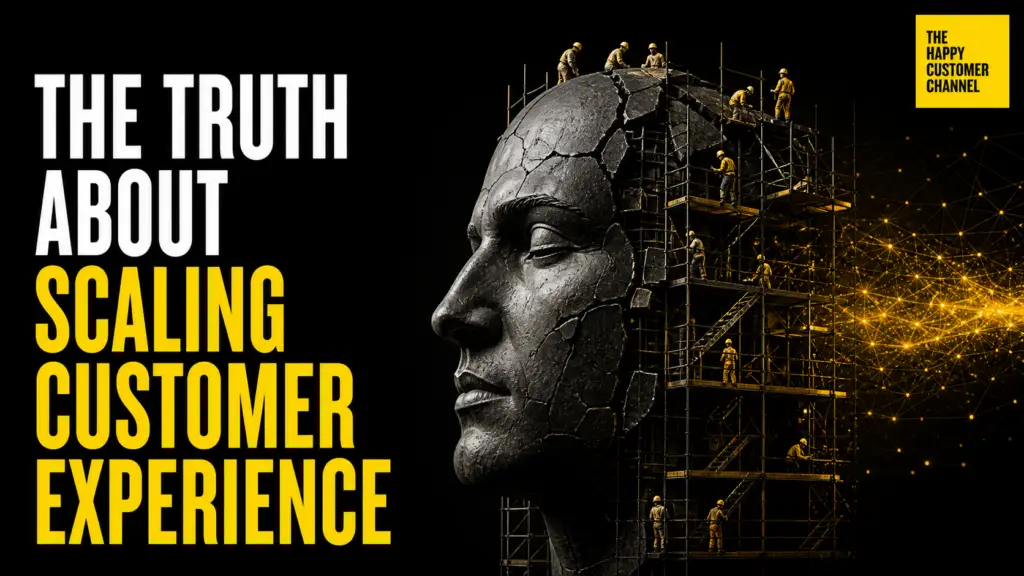
Most companies don’t scale customer experience. They scale complexity—and then make the customer absorb it.
That is the uncomfortable truth about scaling customer experience. The issue usually is not effort. Teams are working hard. Support is answering tickets. Customer Success is jumping into calls. Product is trying to fix gaps. Leadership is watching dashboards. But the customer still feels friction because nobody has turned good judgment into a repeatable way of operating.
Growth exposes the truth. What worked when you had fifty customers breaks when you have five thousand. Not because the people got worse. Because the system was never built to carry the weight.
Volume Doesn’t Break CX. Variance Does.
Here’s what actually happens in fast-growing companies. Early on, the customer experience is powered by heroes. The founder jumps in. The Head of Support knows every edge case. Someone in Customer Success remembers the workaround. A Slack message gets sent. A favor gets pulled. The customer gets saved.
That feels good. It also hides the problem.
Heroics are not a system. Memory is not a process. Slack is not ownership. When volume goes up, those informal moves stop working. Now one customer gets a fast answer. Another waits three days. One account gets a clean handoff. Another gets bounced between teams. One agent knows the policy. Another makes it up because the documentation is outdated.
The customer does not care that your team is busy. They care that the answer changed. They care that they had to explain the same issue twice. They care that your sales promise does not match your onboarding reality.
This is where leaders misread the problem. They say, “We need more people.” Sometimes they do. But more people inside a loose system creates more inconsistency. You do not just get more capacity. You get more versions of the customer experience.
What I’ve seen is simple. Scale does not create the cracks. Scale reveals them. The cracks were already there in the handoffs, the unclear standards, the missing decision rights, and the internal assumptions nobody challenged.
Stop Confusing Tools With Maturity
A new platform will not fix a messy customer journey. A chatbot will not repair unclear ownership. A CRM will not create discipline. AI will not magically know what “good” looks like if your team has never defined it.
The reality is this: technology amplifies whatever system you already have. If the system is clean, tools make it faster. If the system is broken, tools make the broken experience move faster too.
I’ve seen companies rush into automation because ticket volume is rising. They build macros. They launch bots. They create more channels. They add dashboards. But they never answer the basic questions. What should happen when a customer is stuck? Who owns the moment? What can frontline teams decide without approval? When does an issue move from support to product? What promise did sales make that operations now has to fulfill?
Those are not small details. Those are the customer experience.
Before you automate, define the standard. What does a good resolution look like? What does a good handoff look like? What is the acceptable response time for each customer segment? What should never happen, no matter how busy the team gets?
That is the work. Not the glamorous work. Not the work that gets celebrated in software demos. But it is the work that determines whether customers feel confidence or chaos.
Too many leaders want the efficiency of scale without the discipline of operations. It does not work. You cannot automate your way out of ambiguity. You have to remove the ambiguity first.
Build the CX Operating System
Scaling customer experience is not about making every interaction identical. That is not the goal. Customers do not need robotic consistency. They need reliable consistency. There is a difference.
Reliable consistency means the customer knows what to expect. Your team knows what to do. Ownership is clear. Escalation is clean. Feedback gets captured. Patterns get fixed. The same problem does not keep showing up in different departments wearing a different name.
This is where the operating system matters.
A real CX operating system includes standards, decision rights, handoffs, customer promises, feedback loops, and accountability. It tells teams how to make judgment calls. It defines who owns each moment in the journey. It connects customer pain back to the teams that can actually fix the cause.
Support cannot own customer experience alone. That idea has broken a lot of companies. Support feels the pain first, but they rarely create all of it. Sales shapes expectations. Marketing attracts the wrong or right customers. Product creates ease or friction. Onboarding creates confidence or confusion. Finance creates trust or tension. Operations creates flow or drag.
The customer does not experience your departments separately. They experience the company as one relationship. If your internal teams are disconnected, the customer feels that disconnect as friction.
So the question is not, “Who answers the ticket?” The better question is, “Who owns the outcome?”
That changes the conversation. Now you are not just measuring response time. You are measuring repeat contacts. You are looking at escalation causes. You are studying failed handoffs. You are asking why customers needed help in the first place. You are turning complaints into operating intelligence.
That is how CX becomes scalable. Not by asking frontline teams to keep absorbing every failure. Not by adding another dashboard nobody acts on. By building a system where the business learns from the customer and improves the machine behind the experience.
Final Thoughts
The customer does not feel your org chart. They feel the handoff.
If that handoff is slow, vague, or careless, they lose trust. If it is clean, confident, and owned, they feel the difference immediately. Scaling a great experience is not about removing the human touch. It is about making the right experience repeatable when no hero is in the room.
That is the standard. Build for that.
Common Questions
How do we know if our customer experience is ready to scale?
Listen… ready to scale does not mean every customer loves you today. It means your team can deliver a consistent experience without depending on one or two heroic people. If customers get different answers depending on who they talk to, you are not ready. Look for variance in response times, escalation paths, onboarding quality, and issue resolution. That variance tells you where the system is weak. Scale will not hide it. Scale will put a spotlight on it.
Should we hire more support reps or invest in automation first?
Here’s the reality: hiring and automation are both bad answers if the process is unclear. If reps do not know what decisions they can make, adding more reps spreads the confusion. If customers are already getting inconsistent answers, automation just delivers inconsistency faster. Fix the decision points first. Define ownership, standards, and escalation rules. Then hire or automate based on the work that is actually worth scaling.
How do we scale CX without making it feel robotic?
What I’ve seen is that robotic experiences usually come from lazy standardization. Companies script everything because they do not trust the system. Customers do not hate structure. They hate being treated like a ticket number. Keep human judgment where judgment matters, especially in emotional, complex, or high-value moments. Standardize the basics so your people have more room to be human where it counts.
Who should actually own customer experience as the company grows?
At the end of the day, one leader needs accountability, but the whole business owns the experience. Support often sees the problems first. But support cannot fix a bad sales promise, a confusing product flow, or a billing process that creates distrust. Sales owns expectations. Product owns usability. Finance owns commercial friction. Operations owns the connective tissue. The CX leader’s job is to make the truth visible and make sure the business acts on it.