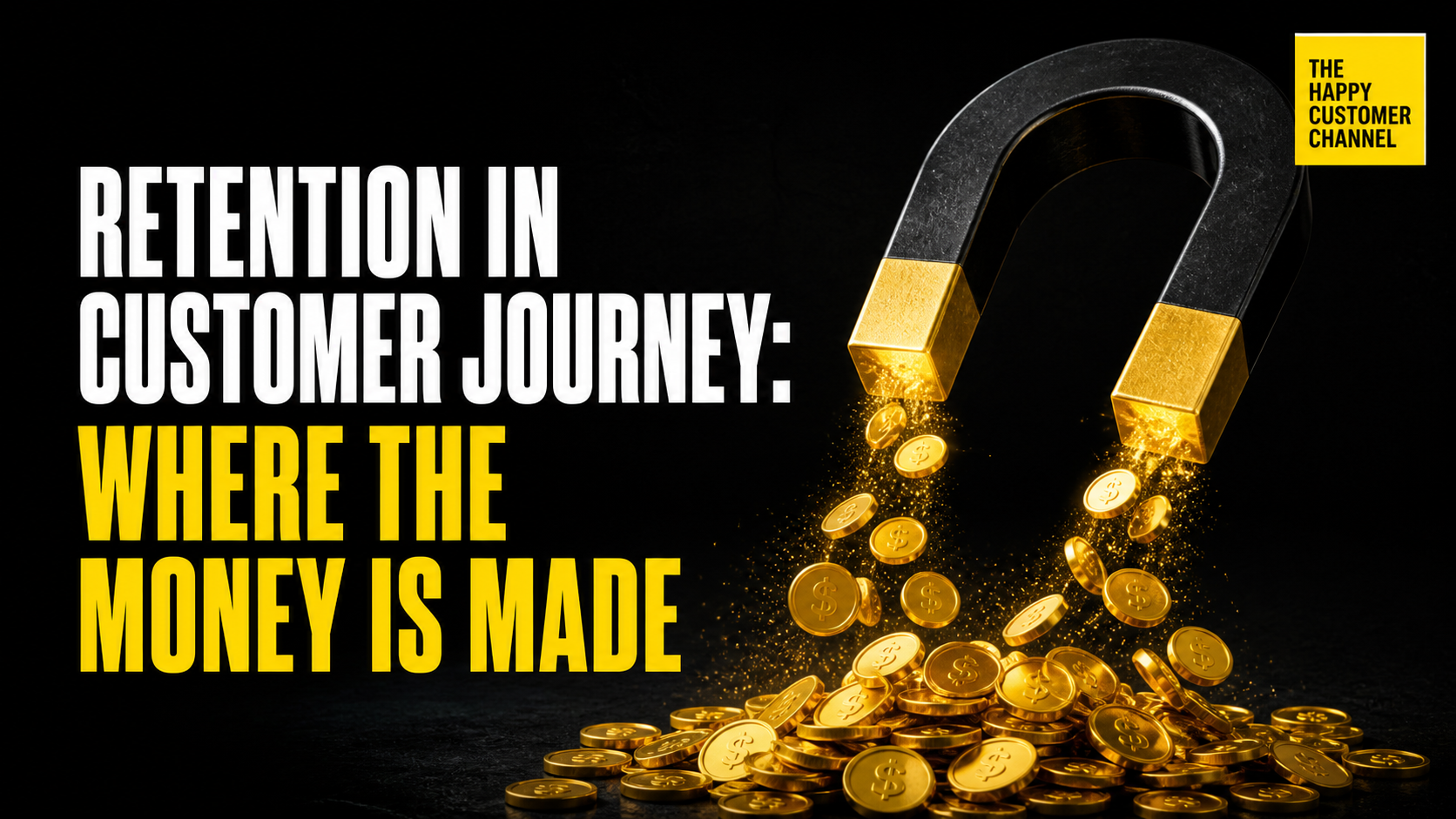
Are you still obsessed with landing new customers while your existing ones walk quietly out the back door? If you don’t own retention in your customer journey, someone else will. Let’s get real: your P&L is screaming for focus on what really drives sustainable profit—and it’s not another acquisition campaign. Retention in customer journey is the engine room where trust, reputation, and compounding margin are built. If you miss this, your competitors are waiting to collect your fallout.
Retention Is the Only Real Profit Center
You don’t get rich by winning customers—you get rich because they stay. Acquisition fuels headlines and ego, but it burns cash. Retention builds real business equity. If you’re serious about profitability, stop worshipping at the altar of new logos and start measuring what actually matters: how many customers will come back again, pay happily, and bring their friends.
Decades of hard numbers back this up. A modest 5% boost in retention can drive up to 95% more profit. Why? Compounded value. Trust that’s built post-sale. Margins that deepen because you’re not paying through the nose to replace churn. Anyone who’s run a business knows: transaction volume means nothing without repeat behavior. Your job isn’t just to move people through a funnel—it’s to build advocates who stick. That’s what real customer experience & retention looks like.
Here’s the operator’s stance: Every customer journey map you build must define—and actually measure—what happens after the sale. Not just a pat on the back or a boilerplate follow-up. I’m talking about actual commitment to the moments that build trust, create problem resolution, and set the tone for a lasting relationship. If you haven’t mapped your “moment of truth” post-sale, you haven’t mapped your journey.
Where Retention Dies—And How to Fix It
Whiteboards don’t lose customers—your operations do. Most journey maps look beautiful until reality crashes the party. That seamless funnel? It breaks at the first missed follow-up or dropped post-sale handoff. Leadership drops the baton from sales to operations. Nobody owns the “value handoff” stage. Sound familiar? Here’s what that gets you: runaway churn, broken promises, reputation repair, wasted budgets.
The root cause? Leaders treat retention like a support function. A problem for someone else. Meanwhile, value leaks away at every friction point after the deal closes. This is the silent killer that never shows up in your pipeline reports, but absolutely wrecks your P&L.
Here’s my fix—grab this and run it in your next ops meeting:
- Ownership: Assign clear responsibility for every stage in your customer journey. Especially post-sale. If everyone owns it, nobody owns it.
- KPIs: Set retention-facing KPIs for every operator. Not just account managers—every frontline, every back-office player. If you’re not measured, you’re not accountable.
- Standards: Install real, operating standards. Not one-time process cleanups. I’ve seen more customer experience strategies die due to lack of discipline than due to weak ideas. Want proof? Why Customer Experience Strategy Fails Without Operating Standards is required reading for every leader who wants retention to deliver repeatable results.
- Inspection: Inspect your post-sale touchpoints weekly. Don’t wait for QBRs or lagging metrics. Do a hard read every week—where are we dropping the ball?
- Incentives: Pay for retention. Full stop. If you only reward acquisition, you’ll never win the back half of the journey.
This retention operating checklist is non-negotiable if you want to see revenue models that compound, not just churn-and-burn.
Retention Is Leadership’s Discipline, Not a Department’s Problem
Let’s cut to the chase: Customer trust is built on consistency. Not heroics. Not “one great save” stories. Real retention in the customer journey comes from discipline—across every team, every day. Leaders, your fingerprints need to be all over the post-sale experience. It’s your job to make sure customers see your brand at its best, even after the ink dries.
This isn’t about putting more pressure on your customer success reps. It’s about embedding ownership and high standards across the whole org. Ask yourself: Who actually fixes the process when trust slips? Who is empowered to make things right fast? If you can’t answer, your customers already know—because they’re living the gaps.
When we hosted a powerhouse operator—she ran a $100M book of business—she flipped her whole bonus structure to reward retention, not just new deals. Her team’s customer lifetime value doubled in a year. Not storytelling—just proof that relentless leadership focus moves the needle. Compounding retention comes down to leadership that cares more about customers staying than customers coming.
Final Thoughts
Retention in customer journey isn’t a technical challenge. It’s a leadership discipline. You want business that’s predictable, profitable, and built for the long haul? Get obsessed with what happens after the sale. Sweat every handoff. Operate like your reputation—because your margin depends on it—rides on keeping customers beyond the first purchase. Revenue gravity is real. Own it before your competition does. That’s the secret to building companies that print cash, not just win headlines.
Want operator-level, battle-tested frameworks like this in your inbox? Sign up for The Happy Customer Channel newsletter and get the real plays that drive retention every single day.
Common Questions
What are some quick wins for improving retention in our customer journey?
Listen, most teams overthink this. Get ruthless about mapping your post-sale touchpoints. Assign clear ownership for every one. Set real KPIs. If your customer can go even a week without a genuine, value-driving touch, you’re leaving money on the table. And don’t just respond to problems—close the loop hard. Customers remember the finish, not the start.
How can we measure whether our retention work is actually moving the needle?
Here’s the reality: Don’t wait for quarterly churn reports. Look at quantitative shots—churn rate, lifetime value, repeat orders. But the real story lives in qualitative feedback. Are your NPS scores climbing after the sale? Are complaints getting resolved faster? Review those signals every week, not once a year. That’s how you stay in control.
Who should truly own retention in our business?
At the end of the day, this is a leadership problem. Retention needs a seat at the executive table—full stop. But every operator in the journey has to be accountable. If your job touches the customer, you’re on the hook for retention. Incentivize it everywhere. Don’t allow silos if you want real results.
Why do so many customer experience strategies fail to drive retention?
What I’ve seen is simple: People treat CX like a pet project or an event. They want flashy moments, not repeatable standards. Without discipline, review cycles, and consequences for falling short, your customer experience becomes theater. You need muscle—not theater—to power retention in the customer journey.
Return to The Happy Customer Channel