Digital Customer Journey Gaps That Destroy Trust

Your digital customer journey is leaking trust—where, exactly, is the hole? Are you measuring what matters, or are you letting silent friction erode everything you’ve worked for? Most leaders I meet claim to obsess over customer experience and retention. Yet, day after day, we watch trust bleed out from gaps no one even acknowledges. The hard truth? Digital customer journey gaps are silent, compounding liabilities that eat away at hard-earned loyalty. You’ll never find them on a dashboard unless you know exactly where to look. Let’s talk about the real price—and what it actually takes to fix it.

Silent Liabilities: Where Digital Customer Journeys Fail

This isn’t about bad tech. Most digital journeys don’t fail because a chatbot crashed or the website was slow. They fail in moments that never hit a report: missed handoffs, impersonal automation, or support that quietly drops the ball. These are the invisible assassins of trust. The ones you don’t see coming.

Here’s what I see in the trenches. Customers start their journey with hope—maybe even excitement. Then they get bounced from chat to email. Or forced to repeat their story, again. Or they receive a perfectly phrased, soulless response from an automated system. One awkward handoff, one “I can’t help you” closes that hope down. You lose a bit of trust every time. No single moment screams “crisis,” but the corrosion compounds. Organizations just keep layering tech on the problem instead of closing the real gaps.

On The Happy Customer Channel, we see the patterns across industries: Retention tanks even as CX budgets climb. Why? Because friction hides at the seams between teams, tools, and touchpoints. And I promise this—your customers notice those seams long before you do.

Operator’s Checklist: Find and Fix the Breaks Before They Break You

Stop wasting time waiting for tech to save you. Close the gaps that matter with discipline—real operator discipline. Here’s the only checklist you need for your digital customer journey:

  • Map key digital moments. Don’t just list the channels. Identify the crucial transitions where emotion spikes—when a customer moves from searching to buying, or from self-service to human support. Are these moments seamless, or jagged?
  • Assign cross-functional ownership. Every step of the digital journey should have a name next to it. Not a team. A name. If someone can’t tell you “I own this handoff,” you’re in trouble.
  • Audit for robotic, impersonal moments. Read transcripts. Watch recordings. Solicit unfiltered feedback. Find where automation is killing trust, not saving cost. Customers know the difference—why don’t you?
  • Set operating standards for follow-through and handoffs. If you’re not enforcing how digital handoffs work, you’re breeding inconsistency. Take the time to set actual standards (and if you want to see why operating standards matter, check out Customer Experience Strategy Fails Without Operating Standards).
  • Measure trust directly. Surveys and lagging NPS only tell you who’s already mad or gone. Build leading indicators. Ask, “Would you trust us with another problem?” before it’s too late.

If you want to protect and grow your brand, enforce this checklist like your bottom line depends on it—because it does. Brands lose millions in churn and negative word-of-mouth every year, all because micro-gaps slip through the cracks.

From Gaps to Gains: Who Really Wins in Digital CX

Here’s what separates the winners from the rest. The best leaders I know treat every gap as a strategic battleground. They don’t delegate away the mess. They don’t hide behind tools. They operationalize discipline, top to bottom. Customer trust isn’t a “nice to have.” It’s the true asset on the balance sheet.

The average operator spends their days spinning up new features, integrating new AI, or chasing the next shiny thing. The disciplined leader focuses on continuity. They close micro-gaps relentlessly. They make accountability visible. And when trust wobbles, they don’t throw their hands up—they fix the break in the journey, permanently.

Every digital customer journey is tested at the seams. Brand equity is decided in the ugly, ordinary moments—the ones most organizations ignore. If you want to outperform on retention, build a culture of relentless gap-hunting. Use standards and own every single metric that signals trust is slipping. That’s how you build a reputation money can’t buy.

Dig Deeper: Want hands-on, operator-level breakdowns and real stories from the field? Keep an eye on THCC episodes for practical conversations that pull no punches. That’s where the real details come alive, straight from those who’ve fought—and closed—these customer journey gaps.

Final Thoughts

Brands rise or fall on what nobody sees. In a digital world, trust is currency. Gaps are silent tax collectors—you pay for them in churn, lost revenue, and damaged reputation. The leaders who hunt them down, close them, and enforce discipline win. Their customers win too. Don’t let those invisible leaks define your outcomes. Do the work.

For operator-level, practical playbooks on closing CX gaps, join the THCC Newsletter today.

Common Questions

How do I pinpoint customer journey gaps in an existing digital CX architecture?

Listen—dashboards won’t show you where trust is leaking. What I’ve seen is that true gaps hide in transitions: channel to channel, human to bot, sales to support. Start with hands-on journey mapping. Bring together people from across silos and walk, step by painful step, through the customer’s eyes. Test your own processes. Ask the frontlines where things break down. You’ll find the pain in the places nobody wants to own—because that’s where ownership is missing. And if you’re not sweating the details there, you’re losing ground fast.

What’s the real financial impact of missed digital customer journey gaps?

Here’s the reality—trust erosion inflates costs everywhere. Churn skyrockets. Referrals evaporate. Your support team gets buried fixing preventable problems. Too many leaders don’t connect broken journeys to dollars lost, but I’ve watched organizations bleed millions a year. It’s all silent until the bottom line slaps you in the face. Track retention, lifetime value, and referral drop-off. When those numbers swing, chances are your journey has gaps, not just a messaging problem.

Does adding more customer journey tech solve the trust problem?

This is the myth that keeps consultants rich. More tech only multiplies problems if you haven’t fixed the foundations. Automation isn’t the enemy—sloppy automation is. Without clear ownership and operating standards, all you’re doing is scaling your worst habits. Listen, tech is a tool. Discipline and accountability are solutions. Get those right first. Otherwise, you’re just adding digital noise to digital confusion.

Who in the organization should own closing these digital journey gaps?

At the end of the day, customer experience isn’t one person’s gig. It’s not just for CX or the digital team. It requires cross-functional discipline all the way from frontlines to the C-suite. Everyone’s job is to own their piece, and leaders must make that ownership explicit. No more hiding in a group. Attach every journey step to someone who will sweat the details and be measured on trust. That’s real accountability. That’s how you win.
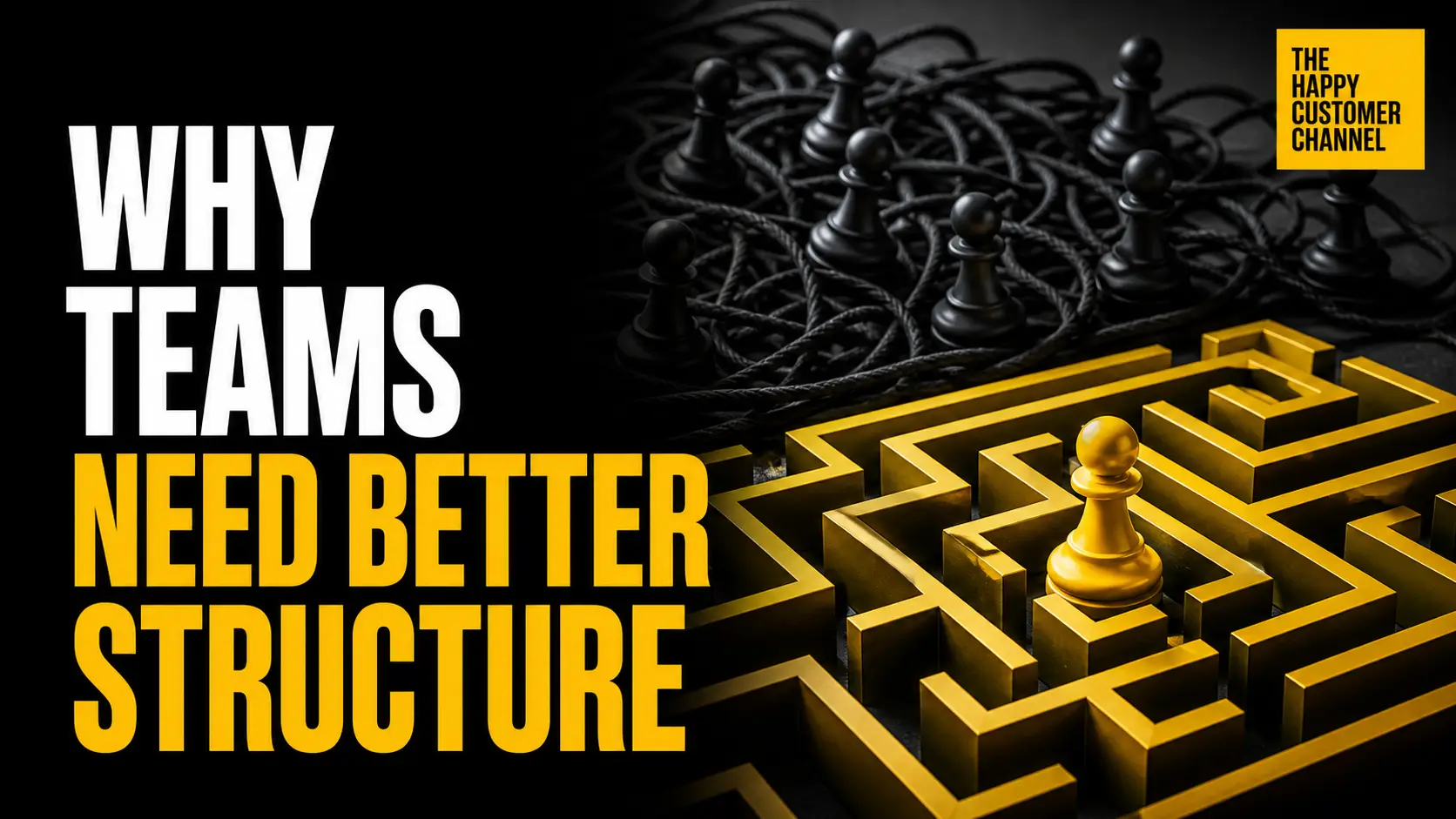

Team Structure Optimization Is Not Optional

Most teams do not fail because people lack talent. They fail because the structure makes good work harder than it should be.

That is the part leaders do not always want to hear. It is easier to say the team needs more discipline. More urgency. More ownership. But if the system is built on unclear roles, slow decisions, and overlapping responsibilities, even strong people start to look average. That is why team structure optimization is not optional. It is the difference between a team that works hard and a team that actually moves.

What I’ve seen, over and over again, is this: growing teams do not break all at once. They drift. One person owns too much. Another person is involved in everything but accountable for nothing. Decisions get passed around. Meetings multiply. Then leadership wonders why execution feels heavy.

Talent Cannot Outrun Bad Structure

There is a dangerous belief in business that better people will fix a broken setup. Hire stronger managers. Add a senior operator. Bring in someone with more experience. Sometimes that helps. But not if the structure is still confusing.

Strong people still need clear lanes. They need to know what they own. They need to know where decisions live. They need to know when to lead, when to support, and when to stay out of the way. Without that, you do not get collaboration. You get collision.

Here’s what actually happens. Two leaders think they own the same outcome. So both start giving direction. A team member gets stuck between competing priorities. Nobody wants to step on anyone’s toes, so the decision gets delayed. Then the work slows down. Then the customer feels it.

This is where structure becomes a customer experience issue. Internal confusion does not stay internal. It leaks into delivery. It shows up in missed timelines, inconsistent communication, rework, and promises the team cannot keep. Customers rarely see your org chart, but they feel the consequences of it.

The best teams I’ve seen are not always the biggest. They are not always the loudest. They are usually the clearest. Clear ownership. Clear handoffs. Clear decision rights. That is not bureaucracy. That is how serious teams protect momentum.

Confusion Is the Real Productivity Killer

Most leaders underestimate the cost of confusion because confusion looks like activity. People are busy. Calendars are full. Slack is moving. Projects are being discussed. On the surface, it looks like work is happening.

But look closer. How many conversations are repeats? How many meetings exist because nobody knows who can make the call? How many projects are waiting because three people need to align before one person can move? That is not productivity. That is organizational drag.

The reality is, unclear structure creates invisible taxes. It taxes time. It taxes energy. It taxes trust. People start protecting themselves because they are not sure who owns what. They copy extra people on messages. They ask for permission too often. They hesitate. Not because they are weak. Because the system trained them to slow down.

This is where leaders need to be honest. If every decision has to run through you, you do not have a high-accountability team. You have a bottleneck. If every project needs a meeting just to clarify roles, you do not have alignment. You have ambiguity. If multiple people are responsible for the same outcome, there is a good chance nobody is truly accountable.

Ownership cannot be vague. It has to be visible. A team should know who is driving the outcome, who is contributing, who needs to be consulted, and who simply needs to be informed. When that is unclear, smart people waste time trying to decode the system instead of doing the work.

And let’s be direct. Confusion frustrates good employees. High performers do not want to spend their day chasing approvals, navigating politics, or guessing who has the final say. They want to contribute. They want to move. They want to win. Bad structure makes winning harder than it needs to be.

Optimize the System Before Blaming the People

When execution slows down, leaders often look at the people first. Who dropped the ball? Who missed the deadline? Who did not communicate? Those are fair questions sometimes. But they are not the first questions.

The first question should be: did we design the work clearly enough for people to succeed?

That is the heart of team structure optimization. It is not about creating a fancy org chart. It is about designing the way work actually moves. Who owns the result? Who makes the decision? Where does the handoff happen? What gets escalated? What should never need escalation in the first place?

When those answers are clear, teams speed up. Not because people suddenly became more talented, but because they are no longer fighting the system. They stop spending energy on internal navigation. They spend it on execution.

What I’ve seen is that leaders often wait too long to address structure. They tell themselves the team is still small. They say, “We’ll figure it out as we grow.” Then growth exposes every loose edge. The informal conversations stop working. The founder cannot be in every room. The early employees who used to hold everything together become overwhelmed. Suddenly, the company has more people but less clarity.

That is the moment structure becomes urgent. But it should not take pain to make it important.

Better structure does not mean every move needs a process document. It means the important things are not left to chance. Revenue ownership is clear. Customer ownership is clear. Delivery ownership is clear. Team leadership is clear. When something breaks, people know where to look. When something needs to move, people know who drives it.

And here is the part some leaders miss: structure is not the enemy of speed. Poor structure is. Clean structure gives people permission to act. It tells them, “This is your lane. Drive it.” That kind of clarity creates confidence. Confidence creates action. Action creates results.

Final Thoughts

A better team structure does not make people robotic. It gives good people the conditions to do their best work without fighting the system every day.

At the end of the day, leaders have to stop treating structure like an administrative detail. It is a performance lever. It is an execution lever. It is a customer experience lever. If your team feels busy but not aligned, do not just ask people to work harder. Ask whether the way the team is built is helping them win or forcing them to compensate.

Because talented people can carry a bad structure for a while. But not forever.

Common Questions

How do I know if my team structure is the problem?

Listen… if people are constantly asking who owns what, that is a signal. If decisions keep getting escalated to the same few leaders, that is another signal. If multiple people are working on the same thing but nobody is truly accountable, the structure is probably broken. What I’ve seen is that weak structure usually shows up as confusion before it shows up as failure. Pay attention to the friction before it becomes a fire.

Is team structure optimization only for large companies?

No. Here’s the reality: small teams need clarity just as much as big teams. Sometimes they need it more because every unclear role creates immediate drag. In a small company, one bad handoff can slow the whole business down. You do not need heavy process. You need clean ownership and simple decision rules. That is how small teams stay fast without becoming chaotic.

What is the first thing leaders should fix?

Start with ownership. Not titles. Not reporting lines. Ownership. Every major outcome should have one clear driver. Other people can support, advise, or contribute, but one person has to carry the result. At the end of the day, shared responsibility often becomes shared confusion. Give the outcome a real owner and watch the noise drop.

Will better structure make the team less flexible?

Listen… bad structure creates rigidity, not good structure. When people do not know who decides, they wait. When they do not know what they own, they hesitate. Good structure actually creates flexibility because people understand where they can move fast and where alignment is needed. The goal is not to control every action. The goal is to remove the guesswork so the team can act with confidence.

Customer Led Growth: Why Listening Is Your Missing Multiplier

Is your “customer focus” just talk? Here’s the hard truth—most leaders say they listen, but when it’s time to act, it’s business as usual. The gap between what you think you hear and what your customers actually need can make or break your retention. Customer led growth doesn’t start with philosophy. It starts with uncomfortable honesty and better listening, every single week.

Stop Pretending You’re Listening

Let’s call out the elephant in the boardroom. Too many companies are stuck in feedback theater. They run surveys. They check NPS scores. They ask for reviews. Then they move on. Maybe a few leaders gather for a monthly readout and pat themselves on the back for being “customer obsessed.” That doesn’t cut it. Not anymore.

Real listening isn’t about dashboards. It’s about discipline. Ask yourself this: Aside from reading PowerPoint summaries, when was the last time your team actually changed something based on what a real customer said? Show me the metric. Show me the result. If there’s no evidence, you’re not listening—you’re going through motions.

This isn’t just theory. It’s what I watch play out again and again. Businesses believe they’re in tune. Customers feel ignored. Competitors scoop up your churned accounts. You want customer led growth? Step one is to stop lying to yourself about how well you actually hear your market.

Great businesses don’t just capture data—they use it to drive actual change. That’s where trust starts, and that’s where retention compounds.

Want proof? Look at your last quarter’s roadmap. How many items came straight from the customer’s mouth—not the roadmap you wanted, but what the customer needed? If you can’t answer fast, you have work to do. That’s the work that separates operators from talkers.

If you need a starting point for best-in-class customer experience, check out The Happy Customer Channel. You’ll get strategies grounded in reality, not theory.

The Listening-To-Action Framework

I’m not interested in concepts. I’m interested in frameworks that operators can run every week. If you want real customer led growth, here’s the checklist—the gap between intention and results:

  • Signal Collection: Forget the vanity survey. Collect hard evidence from frontline conversations, support cases, account reviews, actual churn reasons, social feedback, and usage data. If you think you’re over-listening, you’re probably just getting started.
  • Sense-Making (Together): This is where most teams drop the ball. You need a regular, cross-functional “listening standup.” Bring in CX, sales, product—everyone who owns a piece of the journey. Group signals by severity and potential impact. Strip away excuses.
  • Ownership & Fast Action: Nothing happens without an owner. Assign leaders who can fix top issues. Set deadlines. Build one measurable change into your operations: “What will be different by Friday?” No one leaves the room without a commitment.
  • Close the Loop: Do your customers know what changed? Do your internal teams? Share what signals you heard, what actions followed, and what’s next—for both customers and staff. That’s what creates buy-in, trust, and urgency.
  • Measure Impact: If your actions aren’t shifting retention, NPS, upsell, or ticket volume in a quantifiable way, you’re still stuck in theory. Force the conversation: Where’s the gap between what we heard and what we did? No hiding.

This approach isn’t about perfection. It’s about relentless repetition. The companies that operationalize this framework move faster, adapt better, and win loyalty that competitors can’t steal.

If you’re wondering why your CX strategy keeps falling flat, it’s probably because you’re missing this level of operational discipline. Dive deeper with Why Your Customer Experience Strategy Fails Without Operating Standards. Without standards, listening runs in circles.

Trust and Growth Are Consequences, Not Goals

Stop obsessing over trust scores and growth charts. They’re outputs, not inputs. Trust is earned in small moments, not grand gestures. Every time you close the loop on feedback—internally and externally—you earn a little more permission to grow.

That’s what most leadership teams miss. They want scalable results with none of the messy, weekly rigor. But customer led growth is only possible when you listen relentlessly and act when it’s hard, not just when it’s convenient.

It’s about discipline. Not “once a year,” but every quarter, every month, every week. Change shows up not in the slogans you plaster on the wall, but in your daily operating standards. Customer signals become leadership priorities. You get better retention, more word-of-mouth, more upsell—because your customers trust you. And they trust you because you proved you’d listen and deliver.

Here’s the blunt truth: Companies that compound trust win. If you want to outgrow the market, start by out-listening it. Then out-execute everyone else.

Final Thoughts

You want to win? Make yourself and your team uncomfortable. Stop with the safe, sanitized feedback rituals and embrace radical listening. Act on what you hear—even when it stings. Turn listening into habit, not hype. That’s the engine for compounding, sustainable growth. Everyone says they’re customer led. Few are disciplined enough to live it. Choose to be one of the few.

Ready to go deeper? Join the newsletter for proven, operator-level guides and frameworks that actually move the needle on customer led growth.

Common Questions

What does “customer led growth” actually mean in practice?

Listen… Customer led growth isn’t a slogan. It’s an operator’s reality. You use what customers tell you—through tickets, usability issues, even complaints—and let those signals shape your product roadmap, your processes, and your strategy. This isn’t about collecting stories and moving on. It’s about disciplined, regular action based on what the market is screaming for. If your decisions aren’t visible to the customer, you’re doing it wrong.

How do I build a culture where listening drives measurable change?

Here’s the reality—culture doesn’t change because a CEO sends a memo. It changes when teams see feedback turn into real wins, quickly. Build weekly listening reviews. Assign clear ownership. Reward people when they move the customer metric, not just when they run a meeting. Make public what’s heard and what’s fixed. Action and accountability set the tone, not mission statements. It’s gritty work, but that’s where transformation happens.

Is gathering more data the answer, or is it about doing more with what we have?

Most folks are drowning in data already. It’s not about more—it’s about getting off the hamster wheel and acting on the data you have. How many complaints does it take before you fix a broken process? How much feedback do you need before you change a policy? The winning companies trim the fat, clarify signals, and move. If you can’t point to a change you made this quarter because of what you heard, that’s your problem—not the quantity of input.

How do I prevent “listening fatigue” among my teams?

This one comes up all the time. Listening fatigue happens when teams hear the same issues on a loop, and nothing ever changes. Want to kill morale? Make people collect customer pain then ignore it. Instead, set clear rules: Only track what you can act on. Only commit to fixing what you can change quickly, and say “no” to the rest—with full transparency. Celebrate not just the feedback, but the follow-through. That’s how you fight fatigue and keep the culture sharp.

Customer Satisfaction Strategy Starts With Trust

Customers are not asking to be impressed. They are asking to stop being disappointed by the same broken promise.

That is where most companies miss it. They treat customer satisfaction like a support problem. They run a survey. They chase a score. They tell the service team to “do better.” But a real customer satisfaction strategy is not built in the support queue. It is built everywhere the business makes a promise.

The reality is simple. Customers judge the whole company. Sales. Product. Delivery. Billing. Communication. Recovery. If one part breaks trust, the whole experience takes the hit.

Stop Measuring Smiles. Measure Broken Promises.

Surveys are useful. But they are not the strategy. A CSAT score tells you how the customer felt after an interaction. It does not tell you why the business created that feeling in the first place.

That difference matters.

What I’ve seen over and over is this: companies fall in love with the measurement and avoid the mirror. They look at the number. They debate the wording of the question. They compare this month to last month. Meanwhile, the same issues keep showing up.

Late delivery. Confusing onboarding. Product gaps. Billing mistakes. Slow internal handoffs. No proactive updates. Promises made in sales that operations cannot consistently keep.

That is the real work. Not asking, “Was the customer happy?” Ask, “Where did we break trust?”

Start with the promise. What did the customer believe would happen? Who created that belief? Was it the salesperson? The website? The onboarding team? The product demo? The renewal conversation?

Then follow the promise through the business. Where does it slow down? Where does it get handed off? Where does ownership disappear? Where does the customer have to repeat themselves?

This is not theory. This is how customers actually experience your company. They do not care about your org chart. They do not care that sales sits in one department and billing sits in another. They bought from one company. They expect one experience.

Customer satisfaction is not about delight. It is about confidence. Confidence that the company will do what it said. Confidence that someone owns the outcome. Confidence that if something goes wrong, the customer will not be left chasing answers.

Satisfaction Is Built Before the Support Ticket

By the time a customer contacts support, something has already failed. Maybe the product confused them. Maybe the process broke. Maybe the invoice was wrong. Maybe the update never came.

Support may be the first team to hear about it. But that does not mean support caused it.

Here’s what actually happens. The customer waits. Then they wonder. Then they get frustrated. Then they contact support. Now your team is starting from a trust deficit.

That is expensive. It costs time. It costs energy. It costs goodwill. And if it happens often enough, it costs retention.

This is why your customer satisfaction strategy has to live outside the support department. It has to reach sales, product, operations, finance, and leadership. If the root cause sits in one part of the business and the complaint lands in another, you do not have a support problem. You have an ownership problem.

Strong companies reduce friction before customers feel forced to complain. They set expectations early. They communicate before customers ask. They make handoffs clean. They remove unnecessary steps. They design processes around the customer’s reality, not internal convenience.

And let’s be clear. This does not require perfection. Customers do not expect perfection. They expect honesty. They expect progress. They expect not to be surprised by bad news that the company already knew.

If there is a delay, say it early. If something is not available, do not bury it. If a customer needs to take action, make the action obvious. If the next step takes three days, say three days. Not “soon.” Not “as quickly as possible.” Real timelines build trust.

The best satisfaction work happens upstream. Before the ticket. Before the escalation. Before the apology. That is where loyalty is protected.

Recovery Speed Beats Perfect Scripts

Problems happen. Customers know that. What they judge is what happens next.

This is where many companies lose the room. They train people on scripts. They approve polite language. They teach teams to say, “We apologize for the inconvenience.” Then they give those same teams no authority to fix the problem.

That is not service. That is theater.

Listen to the customer’s experience. They do not want a perfect sentence. They want movement. They want a name. They want a timeline. They want proof that someone is taking ownership.

Recovery is not about sounding sorry. It is about making the customer feel safe again.

A strong recovery process has four things. Clear ownership. Fast acknowledgment. Honest updates. Real resolution authority. Without those, the customer gets trapped in the loop. They explain the issue again and again. They wait for approvals. They hear different answers from different people.

That is how trust dies.

What I’ve seen is that customers will forgive a mistake faster than they will forgive confusion. They can accept a delay if they understand it. They can accept a fix if they trust the person managing it. But they will not accept being ignored, passed around, or treated like the problem is theirs to solve.

Give your teams decision rights. Give them escalation paths that actually work. Give them the ability to say, “I own this, here is what happens next, and I will update you by this time.”

That one sentence can change the entire experience. But only if the business stands behind it.

Fast recovery is not chaos. It is discipline. It means your company has already decided how to handle common failures. It means leaders have removed the internal friction that slows down resolution. It means the team is not begging for permission while the customer gets angrier.

The goal is not to close tickets faster. The goal is to restore trust faster.

Final Thoughts

Customers reward companies that make life predictable. Not flashy. Not complicated. Predictable.

If your strategy does not help the business keep its promises, it is not a customer satisfaction strategy. It is reporting.

The companies that win do not just ask customers how they feel. They study where trust breaks. Then they fix the system that caused it. That is the work. That is the advantage.

Common Questions

What actually drives customer satisfaction the most?

Listen… it starts with kept promises. Customers want the experience to match what they were told. That means the product works the way it was positioned. The timeline is real. The communication is clear. The support team knows what is going on. At the end of the day, satisfaction comes from confidence, not surprise.

Should we focus on CSAT scores or customer complaints first?

Here’s the reality: start with complaints. Scores show the temperature. Complaints show the fire. A low score tells you something is wrong, but the complaint usually tells you where to look. Do not ignore the score, but do not worship it either. The money is in the pattern behind the complaint.

How do we improve customer satisfaction without giving discounts?

What I’ve seen is that discounts usually cover up friction. They rarely fix it. If customers are frustrated, look at delays, confusing communication, poor handoffs, billing mistakes, and unresolved issues. Fix those first. A discount may calm someone down for a moment, but reliability keeps them from leaving. That is the better investment.

How do I know if this is a support problem or an operations problem?

Listen… if the same issue keeps reaching support, it is probably not a support problem. Support is absorbing the failure, not creating it. Ask where the issue started before the customer made contact. Was it a process gap? A product issue? A promise made too early? At the end of the day, repeated tickets are signals. Follow the signal upstream.

Customer Service Culture: Build It Before the Complaint

If your first conversation with a customer is damage control, you’re already too late. Are you building a customer service culture that anticipates needs—or one that’s always cleaning up its own mess? Here’s the truth: Customer experience isn’t made in moments of crisis. It’s forged in the quiet, everyday details before anyone ever feels the need to complain. Let’s talk about building a service culture that keeps customers loyal—and keeps problems rare.

Culture Is Not a Reaction—It’s an Operating System

Most businesses treat customer service culture like a fire extinguisher: useful only when the fire’s already raging. That’s backward thinking. If you’re waiting for complaints to set the tone, you’re operating from behind. Exceptional brands don’t play catch-up with negative feedback. They win by scripting positive moments into every process, every day. They rarely rally around a bad review—because they rarely get them.

Want proof? Look at any business with sky-high customer retention. You won’t find a team that only comes together after someone’s angry. Instead, you’ll see discipline, standards, and daily behaviors designed to make complaints nearly obsolete. Culture isn’t about saving face. It’s about never losing it in the first place.

If you need to set your own standard, build your foundation first. Don’t assume “good customer service” is obvious. Spell it out, reinforce it, and measure it long before trouble occurs. For more foundational customer experience insights, head to The Happy Customer Channel.

Codify Behaviors Before You Need Them

You can’t drive retention with hope and intention. Hope is not a plan. You need operating standards that define what “great” actually means for your organization. Is every frontline employee in sync with your promises? Or are they making it up as they go?

Here’s where most businesses miss. Processes get vague. Onboarding falls flat. Standards get posted on a wall and then ignored. The result? Inconsistency, miscommunication, and endless cleanup after customer frustration hits. If you want a customer service culture that holds up, you have to get granular. Define the non-negotiables. Make them visible. Train with real scenarios—not just scripts.

  • Start with Clear Onboarding: Make sure every employee knows your service principles from day one.
  • Create Visual Standards: Post service behaviors and checkpoints where the work actually happens—not just in training decks.
  • Define Escalation Paths: Make sure staff know how and when to elevate issues, so small problems never become big ones.
  • Model Leadership Behaviors: Leaders should demonstrate—daily—what “above and beyond” actually looks like.

Building real culture isn’t about checking boxes. It’s about operationalizing your values into daily habits. Need a blueprint? See this on why customer experience strategy fails without operating standards. This is where most brands fall down. Don’t be one of them.

Leadership Discipline Drives Trust (and Retention)

Let’s cut to it: Leadership sets the temperature for customer service culture. Not with slogans. Not by reacting to the loudest complaints. With repetition. With discipline. With quiet, daily accountability. If your leaders aren’t modeling and measuring the standards, the culture won’t stick. And if it doesn’t stick, all the customer-facing talent in the world won’t save you.

Great customer service culture is boring—in the best way. It’s the result of relentless, predictable behaviors that build trust before anything goes wrong. Customers remember how you made them feel when little things went right. That trust is your insurance policy. It’s what keeps people coming back after an issue, or even better: It stops issues from surfacing in the first place.

So ask yourself: Are your routines building expectation and confidence, or are they just putting out fires? At the end of the day, your customers know the answer—even if you don’t.

The Operator’s Checklist: Build Culture Before the Complaint

If you want a customer service culture that delivers, run this checklist. It’s blunt. It works:

  • Do all employees know the brand’s non-negotiable service standards? Spell them out. Repeat them—often.
  • Are expectations and escalation paths clearly documented and visible on the floor?
  • Is leadership demonstrating the behaviors they demand from frontline staff every day?
  • Are you regularly measuring and publicly discussing customer retention, not just satisfaction?
  • When is the last time you improved a process before a complaint—rather than after?

If you can’t answer yes to every item, you’re not as proactive as you think. Time to raise your standard.

Final Thoughts

Here’s the bottom line. The ultimate success metric isn’t how fast you recover from a complaint—it’s how few you generate in the first place. The world’s best customer service cultures are built—and lived—long before trouble shows up. Want less churn? Fewer headaches? Better ROI? Build your culture before you need it. Leave firefighting to your competitors.

Ready to turn practical ideas into daily habits? Join the leaders who start with discipline. Sign up for The Happy Customer Channel newsletter and get actionable frameworks like this delivered straight to your inbox.

Common Questions

How do I know if my customer service culture is proactive or reactive?

Listen… If most of your “improvements” show up after a customer complaints meeting, you’re reactive. Are you only training and fixing when things go wrong? Or do you have systems in place to sharpen skills and standards before issues appear? What I’ve seen is simple: The best operators act early, not just after the fact. Track your changes. Are you building for tomorrow or stuck cleaning up yesterday?

What are the first steps to strengthen our customer service culture?

Here’s the reality: You start by broadcasting “what great looks like.” Spell it out for the team—don’t assume they know. Then, back it up with real training. Not just PowerPoints—actual behaviors. Make your standards public, revisit them often, and let leadership live them loudly. At the end of the day, culture starts at the top and survives in the day-to-day details.

Why does customer trust depend on culture, not just individual staff?

Great question. Individual stars help, but what if they’re not on shift? A true culture delivers the same experience no matter who’s at bat. It’s about reliability. Customers trust brands, not random moments. So if you want real loyalty, you need every touchpoint dialed in—not just your “best” people delivering hero moments. Make consistency your secret weapon.

How does service culture directly impact retention?

Let’s be sharp here. Retention isn’t just about fixing errors—it’s about stopping them cold. When customers feel seen, valued, and respected on the regular, they don’t shop around. Consistency and anticipation are your tools. I’ve seen businesses reduce churn by simply putting customer-first standards in the DNA—before any fires ever start. That’s how you grow value. It’s that simple.

Brand Messaging Strategy: Clarity Converts

If your market cannot repeat what you do, they will not buy it. That is not a marketing opinion. That is buyer behavior.

Confused buyers do not convert. They pause. They compare. They ask for more information. Then they disappear.

This is why a clear brand messaging strategy matters. Not because your company needs prettier words. Because your buyer needs a faster path to trust.

Most businesses do not have a traffic problem first. They have a clarity problem first. They are spending money to send people into a message that does not land.

Confusion Is a Revenue Leak

Here’s what actually happens inside a lot of growing companies.

The founder explains the business one way. Sales explains it another way. Marketing puts a polished version on the website. Customer success uses different language after the deal closes.

Everyone is working hard. Everyone means well. But the market hears noise.

That noise costs money.

When your message is unclear, buyers have to do the work. They have to figure out who you serve, what problem you solve, why it matters, and why they should care now. Most people will not do that work. They are busy. They are skeptical. They are being hit with options every day.

The reality is simple. Buyers reward clarity. They move toward companies that make the problem obvious, the value easy to understand, and the next step low-friction.

What I’ve seen again and again is this: the offer may be strong, but the explanation is weak. The company can deliver. The team is capable. The product works. But the message sounds like every other company in the category.

“We help businesses scale.”

“We provide innovative solutions.”

“We are your trusted partner.”

Those words do not create demand. They create doubt.

If your buyer cannot quickly see themselves in the message, they will assume it is not for them. If they cannot understand the value, they will assume the value is not clear. If they cannot explain it to their team, your deal slows down.

That is the part leaders underestimate. Messaging is not just external. It affects internal momentum too. If your own team cannot explain the company the same way, the market will not understand it either.

Messaging Is Strategy, Not Wordsmithing

A lot of teams treat messaging like copywriting cleanup. Change the headline. Tighten the tagline. Make the website sound better.

That is not enough.

A real brand messaging strategy is not a collection of clever phrases. It is the operating language of the business. It defines what you say, who you say it to, why it matters, and what makes it believable.

Good messaging answers the hard questions.

Who exactly are we built for? What painful problem do we solve? What is the cost of leaving that problem unresolved? How are we different from the other options? What proof do we have? What should the buyer do next?

Those questions are not cosmetic. They are strategic.

If you skip them, your content becomes vague. Your sales calls become inconsistent. Your campaigns become expensive experiments. Your website becomes a brochure instead of a conversion tool.

What I’ve seen in real businesses is that unclear messaging usually comes from internal assumptions. Teams think buyers already understand the category. They do not. Teams think buyers care about all the features. They do not. Teams think the market has time to decode their value. It does not.

Your buyer is asking a few direct questions, whether they say them out loud or not.

Is this for me? Do they understand my problem? Can they solve it? Why should I trust them? Why now?

Your message has to answer those questions fast.

Not with hype. Not with jargon. Not with a wall of text. With clear thinking translated into clear language.

The strongest messaging usually sounds obvious after you hear it. That is the point. Clarity feels simple because the hard work happened before the words made it to the page.

Clarity Makes Every Team More Effective

Clear messaging does not just help marketing. It helps the whole company move better.

Sales gets sharper. Reps stop inventing the pitch every time. They know the core problem, the core promise, the proof points, and the language that resonates with the buyer.

Marketing gets more focused. Campaigns stop chasing random angles. Content becomes easier to create because the team knows what the company stands for and what the audience actually needs to hear.

Product gets more aligned. Roadmap conversations become grounded in customer value, not internal preference. The team can connect features back to the problems that matter.

Leadership gets cleaner. The company story becomes repeatable. Investor conversations, hiring conversations, customer conversations, and partner conversations all start to reinforce the same point.

That is when messaging becomes a multiplier.

Here’s the reality. A business can have a great offer and still lose because the market does not understand it. A competitor with a weaker product but clearer positioning can win the attention, the meeting, and the deal.

That frustrates leaders. But it should not surprise them.

The market does not buy the best-kept secret. The market buys what it understands, trusts, and can justify.

Clear messaging reduces buying friction before the sales conversation even starts. It gives the buyer language they can use internally. It makes the value easier to repeat. That matters because most B2B buying decisions involve more than one person.

Your champion has to sell you when you are not in the room.

If your message is clear, they can. If it is not, they struggle. And when they struggle, your deal stalls.

Final Thoughts

The clearest company usually beats the cleverest one.

That does not mean you should be boring. It means you should be understood. Clever language might get a smile. Clear language gets action.

At the end of the day, your strategy is not finished if your customer cannot understand your value quickly. Do not hide a strong business behind weak language. Say what you do. Say who it is for. Say why it matters. Then make it easy to believe.

Common Questions

How do I know if our messaging is unclear?

Listen, your market will tell you. If prospects keep asking basic questions, that is a signal. If your sales team explains the company differently every time, that is a signal. If your website could belong to five competitors, that is a signal. What I’ve seen is that unclear messaging shows up as longer sales cycles, weaker conversion, and a lot of “send me more information.” That usually means the buyer does not get it yet.

Is brand messaging strategy different from branding?

Here’s the reality: yes, they are connected, but they are not the same thing. Branding is the bigger perception of the company. It includes identity, experience, reputation, and how people feel when they interact with you. Messaging is the language and logic that makes your value clear. You can have a beautiful brand and still confuse the market. Pretty does not fix unclear.

When should we revisit our messaging?

What I’ve seen is that companies wait too long. You should revisit messaging when your market changes, your offer changes, or your buyer starts responding differently. You should also revisit it when your team cannot explain the business in one clean, consistent way. That is not a small issue. That is a growth issue. If the company has evolved but the message has not, the market is hearing an old version of you.

Can better messaging actually improve sales?

At the end of the day, yes, if the offer has real value. Clear messaging will not save a weak product. But it can unlock demand that is already there and already being lost through confusion. Think about it. If buyers understand the problem faster, trust the solution faster, and can explain it internally faster, the sales process has less drag. That is not theory. That is what happens when clarity shows up before the sales call.

Customer Journey Optimization Demands Relentless Ownership

Who owns your customer journey—really? If your answer is “everyone,” you’re already hemorrhaging value. This isn’t theory. It’s the hard truth sabotaging your customer journey optimization, killing retention, and letting customer trust flicker out. Let’s get brutally honest about what’s broken—and exactly how relentless ownership changes everything.

Why Customer Journey Optimization Stalls Without Ownership

Most businesses love to say they’re “customer-centric.” Many even build out journey maps, brand touchpoints, and vision statements until everyone feels great. But let me ask you: when was the last time you saw a customer complaint get solved fast because “everyone” owned the outcome? Shared responsibility is a myth. It breeds confusion, delay, and finger-pointing, not better experiences. Here’s the reality—the very thing holding back scalable customer journey optimization is the simple lack of clear, accountable ownership at each major stage.

I’ve watched growth teams pass the baton to customer experience, only for operations to drop it. Customers notice. Churn rises. Margins erode. Accountability goes missing. If you want a customer journey that delivers retention and trust, you start by naming owners. Not “groups.” Not “teams.” Real names, real accountability. The cost of ignoring this? Lost revenue, lost confidence, and reputations that don’t bounce back. If you want brass-tacks strategies for CX and retention, The Happy Customer Channel exists for you. But don’t expect a pat on the back for surface-level fixes. Expect standards. Expect impact.

Building Ownership: The Practical Framework

Talk is cheap. Accountability is the price of admission. Here’s how real customer journey optimization gets done—stage by stage, owner by owner, no excuses. Start by mapping the critical journey moments:

  • Awareness
  • Consideration
  • Purchase
  • Onboarding
  • Support
  • Renewal or Advocacy

Now, hand each one to a single owner. Not a committee. Not a dotted-line report that changes every quarter. One accountable name per stage. Attach one or two clear KPIs. Define winning and failing—objectively, not in PowerPoint. Here’s a checklist for brutal clarity:

  • Does every journey stage have a single, named owner?
  • Is that ownership written into job scorecards and quarterly goals?
  • Are outcomes reviewed in a standing cadence—monthly, if not weekly?
  • Do journey owners have both authority and accountability for fixes?
  • Are customer complaints and friction points mapped back to stage owners—every time?

Sounds simple. Try enforcing it past the first month. This is where most organizations get lazy and hope for the best. And this is exactly where your competition is quietly winning. They out-discipline you at every stage. They know that journey success isn’t about who cares the most—but who’s hired to fix what’s broken. You want better retention? Simpler CX? Start touting names, not committees.

Operating Standards, Trust, and Outcomes

Ownership alone isn’t enough. It has to be backed by operating standards. Otherwise, it’s theater. Here’s why: standards drive behavior. They define how each touchpoint runs—and how owners show up. If you want your customer journey optimization to mean something, you can’t treat it like a wild guess. Build standards into your ops review. Make them public inside your org. Then—most critically—enforce them. I’m not talking about inflexible scripts. I’m talking about baseline expectations for every interaction, every handoff, every fix. If you think this is overkill, you’re already losing trust. Customers can smell it. They won’t say, “Your ownership model is weak,” but they’ll vote with data, reviews, and spend. Internally, you’ll see it too: conflicting emails, unresolved issues, unhappy customers bouncing from agent to agent.

Don’t take my word for it. See the case studies and patterns from companies who learned the hard way—strategy always fails without operating standards. For proof and practical tactics, read Customer Experience Strategy Fails Without Operating Standards. Bottom line: the companies that win treat the customer journey like an asset, not an afterthought. Their P&L shows it.

When ownership and standards align, magic happens. Customers feel the difference. Teams stop hiding behind process and start fixing real pain. That’s where trust—and lifetime value—start piling up. That’s what leadership discipline looks like. It’s not easy. But it’s the only way to play for keeps.

Final Thoughts

Until you demand clear, relentless ownership at every stage, your customer journey optimization is just theater. The organizations that win—really win—are the ones with the guts to trade “shared vision” for accountable action. Discipline beats diffusion every time. Still waiting for someone else to take the lead? Stop. Be the operator who sets the standard. Your customers—and your margins—will notice.

Ready to get practical, operator-level frameworks for real customer experience and retention? Join the THCC newsletter—get the sharpest CX insights delivered to your inbox every month.

Common Questions

Who should “own” the customer journey in a mid-sized company—CX, marketing, or operations?

Listen, departmental lines are a distraction. The right answer? It’s not about where you sit. It’s about who’s held to the outcome. Every journey stage needs a single owner—someone who lives and dies by real results, no excuses. If you’re trapped picking between CX, marketing, or ops, you’re missing the point. Assign the right person, give them authority, and make them accountable. That’s what gets results. Otherwise, everyone’s responsible, and nothing gets done.

What are the practical first steps to shift to true journey ownership?

Here’s the reality: The first move is a tough one—audit every journey touchpoint. No gloss, no politics. Map the stages, then name one accountable owner for each. Write it down. Next, attach real metrics: response time, resolution rate, NPS, whatever matters for that stage. Operationalize it. Set up review rhythms. Make it part of job scorecards. If this sounds heavy, good—it means you’re finally getting serious about your customer journey optimization.

How do I keep journey owners accountable without micro-managing?

At the end of the day, accountability is about cadence and clarity, not control. Define outcomes. Set up regular reporting—monthly or even weekly. Don’t micromanage process—focus on results. Owners should bring numbers, friction points, and fixes to the table without you chasing them. If they don’t, ownership is already slipping. Give autonomy but make results public. It’s about trust, not surveillance.

What does a lack of ownership look like from the customer’s perspective?

What I’ve seen is simple—customers feel the pain, even if they can’t name it. They get bounced from rep to rep, hear excuses, and wait longer than they should. Issues fall through the cracks. Frustration builds. Loyalty collapses. Internally, you’ll spot it too: unresolved problems, defensive teams, and nobody raising their hand for clean-up duty. That’s when trust and retention bleed out. Fix it with real ownership—fast.

Empathy in Customer Experience Drives Growth

Empathy in Customer Experience Drives Growth

Most companies say they care about customers. Then they make those same customers repeat themselves, chase updates, and fight broken systems.

That is where empathy in customer experience gets exposed. Not in the brand promise. Not in the customer service script. In the moment when something goes wrong and the customer is wondering, “Does this company actually understand what I’m dealing with?”

Empathy is not a soft skill. It is not a warm tone. It is not saying “I apologize for the inconvenience” while doing nothing useful.

Empathy is an operating discipline. It shows up in how fast you resolve issues, how clearly you communicate, how well your teams hand off information, and how much effort you remove from the customer’s day.

Empathy Is Not Being Nice

Being nice is the floor. It is not the strategy.

A customer does not feel understood because your team used polite language. They feel understood when they do not have to explain the same issue to three different people. They feel understood when the next step is clear. They feel understood when the company takes ownership instead of hiding behind policy.

Here’s what actually happens in many businesses. A customer has a problem. They contact support. The agent is friendly. The script is polished. The email says all the right things.

But the process is broken.

The customer gets transferred. The notes do not carry over. The refund needs approval from someone who is unavailable. The customer is told to wait, but nobody explains what they are waiting for.

That is not empathy. That is politeness wrapped around friction.

What I’ve seen is simple. Customers judge empathy by outcomes. Did you make the hard moment easier? Did you reduce uncertainty? Did you remove the burden? Did you protect their time?

If the answer is no, the customer does not care how nice the message sounded.

Your Metrics May Be Killing Trust

A lot of companies say they want better customer relationships. Then they measure teams in ways that punish real problem-solving.

Handle time. Ticket closure. Call volume. Deflection rate.

Those numbers matter. But they can become dangerous when they become the only numbers that matter.

Here’s the reality. If you reward people for ending conversations quickly, they will end conversations quickly. If you reward them for closing tickets, they will close tickets. If you reward them for deflecting customers away from humans, they will build walls between the customer and the answer.

The business may look efficient on paper. The customer feels abandoned in real life.

This is where real empathy in customer experience requires leadership discipline. You have to ask better questions. Are customers contacting us more than once for the same issue? Are they escalating because they are frustrated or because our process failed? Are we solving the root problem, or are we just moving the customer through a queue?

Speed matters. Nobody wants slow support. But speed without resolution is just a fast way to lose trust.

Customer effort tells the truth. Repeat contact tells the truth. Complaint patterns tell the truth. Retention tells the truth.

Your customers can feel your incentives. If your systems are built to protect internal convenience, they will know. If your teams are built to protect customer confidence, they will know that too.

Operational Empathy Creates Loyalty

Empathy becomes powerful when it leaves the training room and enters the operating system of the business.

That means policies. Handoffs. Escalation paths. Product decisions. Communication standards. Employee authority.

It means your frontline team is not forced to say, “I understand,” while having no power to fix anything. That is one of the fastest ways to frustrate both customers and employees.

Give your people the ability to solve reasonable problems. Give them clear boundaries. Give them context. Give them permission to use judgment.

Operational empathy looks practical. It looks like sending proactive updates before the customer has to ask. It looks like writing policies in human language. It looks like designing forms that do not ask for information you already have. It looks like making sure the next person already knows the story.

Small things become big signals.

A clean handoff tells the customer, “We were paying attention.” A clear timeline tells the customer, “You are not being ignored.” A fair policy tells the customer, “We value the relationship, not just the transaction.”

This is not charity. This is growth.

Customers come back to companies that lower stress. They recommend companies that make problems easier. They trust companies that act with ownership when things get messy.

Loyalty is not built when everything goes perfectly. Loyalty is often built when something breaks and the company handles it better than expected.

Final Thoughts

Customers do not remember empathy as words. They remember whether you made the hard moment easier.

That is the standard.

If your customer has to fight your process, your message does not matter. If your team cares but your system blocks them, the customer still loses. If your metrics reward speed over resolution, trust will erode quietly.

Empathy is not what you say after friction happens. It is how you design the business so less friction happens in the first place.

Common Questions

How do we show empathy without slowing down support?

Listen, empathy does not mean every conversation has to be long. That is the wrong way to look at it. Empathy means removing unnecessary effort so the customer gets to the right outcome faster. If your team has the right information, clear authority, and better tools, support can be both faster and more human. The goal is not longer conversations. The goal is better resolution with less customer frustration.

How do you measure whether customers actually feel understood?

Here’s the reality: you have to look beyond satisfaction scores. Watch repeat contacts, escalation rates, complaint themes, customer effort, and retention. If customers keep coming back for the same issue, they do not feel understood. If they are repeating themselves across channels, your system is failing them. The data is usually already there. Most companies just do not want to look at what it is saying.

Isn’t empathy just customer service training?

What I’ve seen is that training helps, but it does not fix a broken operating model. You can train people to sound caring, but if the policy is rigid and the system is messy, the customer still feels the pain. Your people need more than scripts. They need authority, context, and processes that support the customer. Otherwise, you are asking employees to deliver empathy with their hands tied.

What if the customer is unreasonable?

At the end of the day, empathy does not mean saying yes to everything. That is not business. It means being clear, fair, respectful, and accountable even when the answer is no. Some customers will push too far, and your team needs boundaries. But you can hold a boundary without being dismissive. The best companies know how to protect their people and still communicate with professionalism.

Empathy in Customer Experience Is a Revenue Lever

Most companies don’t have an empathy problem. They have a courage problem when customers point to what’s broken.

That is where the conversation gets uncomfortable. Because empathy in customer experience is not about sounding warmer on the phone. It is not about adding a softer sentence to an email template. It is not about telling your support team to “be more understanding” while giving them no power to fix anything.

Customers are not judging your empathy by your language. They are judging it by your behavior. Did you remove the friction? Did you own the mistake? Did you stop making them repeat themselves? Did you respect their time?

Here’s the reality. A customer can forgive a mistake faster than they can forgive indifference. And indifference does not always look cold. Sometimes it looks like a beautiful journey map that nobody acts on. Sometimes it looks like a survey dashboard that everyone reviews and no one changes. Sometimes it looks like an apology followed by the same broken process.

That is the gap. Companies say they care. Customers feel the system.

Empathy Is Not Soft. It’s Signal.

Empathy gets treated like a soft skill. That is the first mistake.

Empathy is not softness. It is signal recognition. It is the ability to hear frustration and understand what it is really telling you about the business.

When a customer is angry, there is usually a pattern underneath it. Confusing pricing. Weak onboarding. Poor handoffs. Rigid policies. Slow support. A product promise that did not match the actual experience. The emotion is loud, but the message is practical.

What I’ve seen is that many companies train their teams to manage the emotion, but not investigate the cause. So the agent says the right thing. The email sounds professional. The ticket gets closed. But the problem stays alive.

That is not empathy. That is containment.

Real empathy asks harder questions. Why did this happen? How many other customers experienced it and stayed quiet? What part of our process created this friction? Who owns the fix? What decision do we need to make so this complaint stops showing up?

This is where empathy becomes business intelligence. Customer frustration is not noise. It is early warning data. It tells you where trust is leaking. It tells you where revenue is at risk. It tells you where your internal process looks good in a meeting but fails in the real world.

The companies that understand this move differently. They do not romanticize complaints. They study them. They do not ask frontline teams to absorb pain forever. They use those teams as sensors. They listen for repeated friction and turn it into decisions.

That is where empathy in customer experience starts to matter. Not when someone says, “I understand how you feel.” It matters when the company proves it understood by changing what caused the feeling in the first place.

Customers Feel Your Process

Customers do not care which department owns the problem.

They do not care if billing needs to talk to operations. They do not care if product has it on the roadmap. They do not care if sales made the promise and support now has to clean it up.

They care about the experience they are living through.

Here’s what actually happens inside a lot of companies. Every team optimizes its own lane. Sales wants speed. Product wants scale. Finance wants control. Support wants resolution. Operations wants consistency. None of those goals are wrong. But when they are not connected, the customer becomes the person paying the price for your internal gaps.

That is why customers feel your process. They feel the transfer. They feel the delay. They feel the policy. They feel the repeated explanation. They feel the silence between departments. They feel when your company is built around itself instead of around them.

And let’s be clear. Customers are not asking for perfection. Most reasonable customers know things go wrong. What they want is ownership. They want someone to connect the dots. They want a company to stop acting surprised by a problem that has obviously happened before.

The danger is that internal efficiency often becomes external friction. A policy might make sense inside the business. A form might make reporting easier. A script might protect consistency. An automated workflow might reduce cost. But if the customer has to work harder because of it, you have not improved the experience. You have moved the burden.

That burden is expensive.

It shows up as repeat contacts. It shows up as bad reviews. It shows up as longer resolution times. It shows up as churn that gets blamed on price when the real issue was trust. Customers rarely leave because of one moment. They leave because the pattern became clear.

They realized the company was listening to respond, not listening to change.

Turn Listening Into Decisions

Listening is only valuable if it changes something.

This is where a lot of companies fall short. They collect feedback. They run surveys. They track CSAT. They review dashboards. They ask customers how they feel. Then they keep the same policies, the same bottlenecks, the same handoffs, and the same approval chains.

That is not a listening culture. That is feedback theater.

If you want empathy to become a revenue lever, it has to show up in the operating system of the business. Not just the language. Not just the training. Not just the brand values on the wall.

It has to show up in escalation paths. Can the frontline move a real issue quickly, or are they trapped behind layers of permission?

It has to show up in closed-loop feedback. When customers identify a recurring problem, does anyone tell them what changed? Does the team know what was fixed? Or does the same issue keep coming back under a different ticket number?

It has to show up in empowered judgment. Automation can handle simple tasks. It can speed up basic requests. It can reduce wait times when used well. But when a customer is dealing with a complex, emotional, high-stakes moment, they need a human being with authority.

That matters more now because companies are investing heavily in AI, automation, and customer journey tools. Some of that investment is smart. But technology does not automatically create empathy. Sometimes it creates a faster wall.

If the bot solves the issue, great. If the bot blocks the customer from reaching help, you just made the problem worse. Speed without judgment is not service. It is acceleration without accountability.

The best companies do not choose between automation and empathy. They design both with discipline. They let automation remove low-value friction. Then they let trained people handle the moments where trust is on the line.

That is the difference. Empathy is not a mood. It is a management decision.

You measure it by what changes. Repeat contacts should go down. Customer effort should go down. Resolution time should improve. Complaints should become more specific because the obvious pain points are being removed. Retention should improve because customers feel the company is easier to trust.

If none of that is happening, then the empathy is cosmetic.

Final Thoughts

Empathy is not the opposite of performance. It is how performance is experienced.

A company can be fast and still feel cold. It can be polite and still feel useless. It can collect feedback and still ignore the truth. Customers know the difference.

The businesses that win do not just sound more caring. They remove the reasons customers have to complain. They treat frustration as data. They give their people authority. They fix the patterns. And they understand that empathy is not what you say when something goes wrong. It is what you build so fewer things go wrong in the first place.

Common Questions

How do we measure empathy in customer experience?

Listen, you measure it by looking at friction, not feelings alone. Track repeat contacts, unresolved issues, churn after support interactions, complaint themes, recovery time, and customer effort. If customers keep calling about the same issue, the business has not learned yet. A high satisfaction score can hide a broken process if the customer had to work too hard to get help. The real question is simple: did the experience become easier because we listened?

Can empathy scale with AI and automation?

Here’s the reality. AI can scale speed, but it cannot replace judgment in moments that require trust. Automation works when it removes simple friction and gets customers to answers faster. It fails when it becomes a wall between the customer and someone who can actually help. What I’ve seen is that customers do not hate automation. They hate being trapped by automation. Use AI to clear the easy path, then route complex moments to people with authority.

Does empathy mean saying yes to every customer?

No. And this is where leaders need to be clear. Empathy does not mean giving away the business or bending every rule. It means being honest, fair, and accountable. You can say no and still make the customer feel respected. At the end of the day, customers can handle boundaries when they understand the reason and feel the company is acting in good faith.

Where should a company start if customers feel unheard?

Start with the complaints you are tired of hearing. That is usually where the truth is. Pick the top recurring friction point, assign one owner, and fix something visible fast. Do not start with a massive transformation project that takes a year to explain. Start with proof. Then tell your customers and your frontline team what changed, because trust grows when people see that speaking up actually matters.

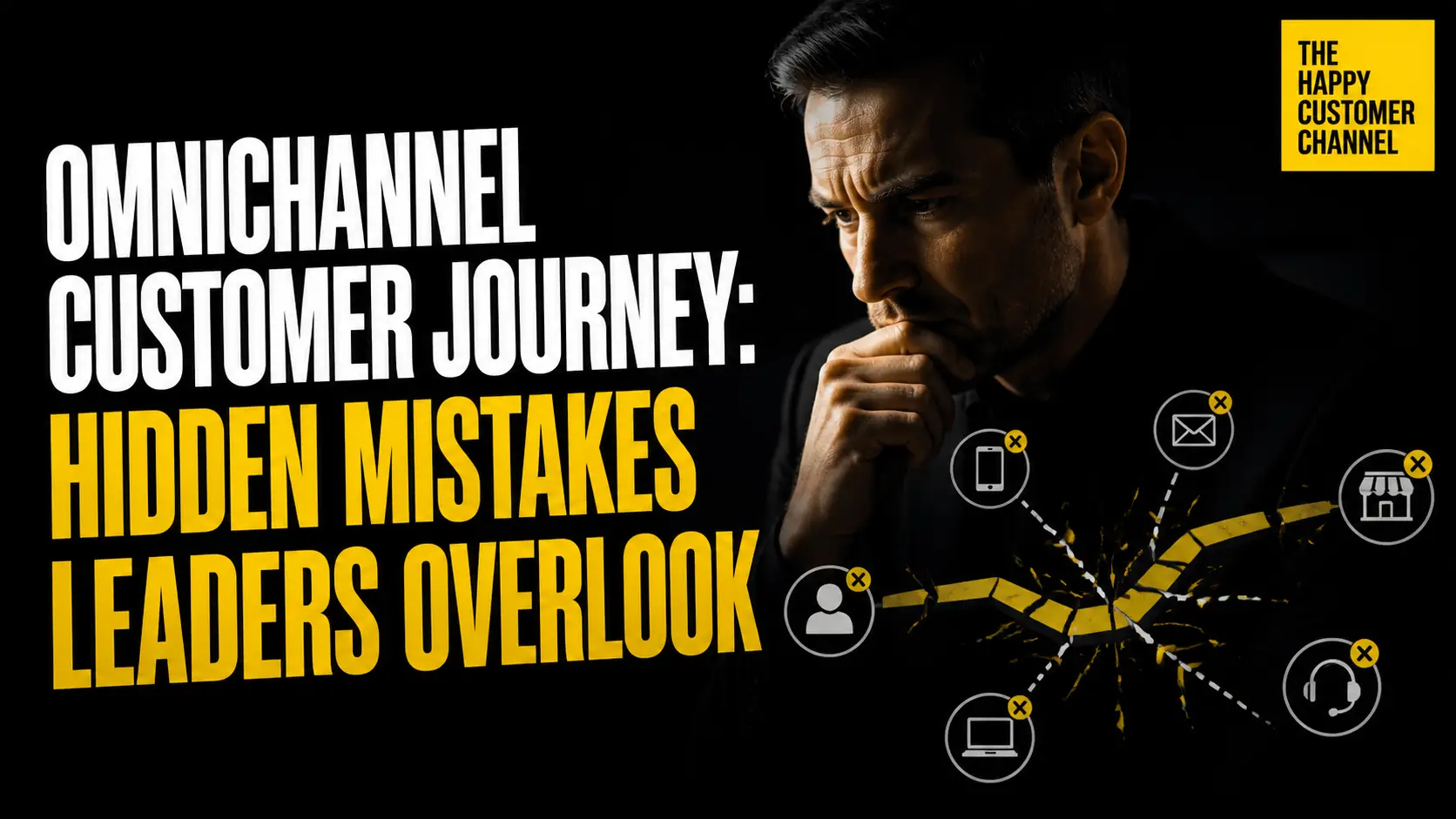
Omnichannel Customer Journey: Hidden Mistakes Leaders Overlook

Everyone talks omnichannel. But let’s get real—how many leaders have the guts to dig into their own omnichannel customer journey and name the places where customer trust gets shredded? You can buy all the tech in the world. Doesn’t matter if your customer has to repeat their story three times, gets bounced between teams, or hits a wall of “that’s not my job.” People love to say they’re customer-centric. The reality? Most are flying blind where it counts. If you think your omnichannel journey is bulletproof, this is for you.

Omnichannel Isn’t Just a Channel Problem. It’s a Leadership Problem.

Here’s the mistake I see over and over. Companies treat the omnichannel customer journey like it’s a software deployment or a marketing campaign. Leadership steps back. They hand it off to a project team and declare victory once all the channels are “connected.” But real customers don’t experience journeys in PowerPoint or dashboards. They experience every messy handoff, every dropped call, every “let me look into that for you” dead end.

Omnichannel is meaningless if it’s only a tech investment. Integration is worthless if each department still guards its turf. Are you running a business, or are you running a collection of departments that occasionally exchange emails? When ownership of the full journey is unclear, friction multiplies. Siloed KPIs smother accountability. When the customer falls through the cracks, nobody owns the outcome. That’s broken leadership, plain and simple.

At The Happy Customer Channel, we see this every week. Companies want customer love. They forget the discipline required to deliver it. The starting point? Genuine cross-functional ownership. If leadership doesn’t ruthlessly align—from C-suite to frontline—omnichannel will fail you. Every. Single. Time.

The Three Omnichannel Blind Spots That Kill Trust

I don’t care if you have the best CRM or a hotline to your VP of IT. There are three mistakes I see in the wild that quietly destroy the omnichannel customer journey. Let’s pull back the curtain:

  • Unmonitored Handoffs. Who owns the baton when a customer moves from chat to phone, or retail to digital? Too often, nobody. That customer? They tumble through process gaps, forced to repeat themselves or face an info gap. If you’re not tracking the transition, you’re guaranteeing pain.
  • Invisible Friction. The little things compound. Delay here, missing notes there. Customers are left hanging while teams scramble to line up the story. You may not see it in the metrics, but your retention numbers will tell the truth. Have you mapped friction points? Or are you guessing?
  • Lack of Operating Standards. “Seamless” means nothing without explicit rules. How quickly does each channel respond? What context must be carried forward? Who owns the next step? Talking about “good communication” is wishful thinking until you have standards. For a deeper look, see this breakdown of why operating standards make or break your journey strategy.

Most leaders focus on tools and miss the inches that matter. Omnichannel doesn’t fail by miles; it fails one dropped handoff, one slow follow-up, one annoyed customer at a time. These are the inches you’re losing.

Your Ruthless Omnichannel Checklist: Are You Brave Enough?

Don’t trust your gut. Trust your process. Leadership isn’t about intuition—it’s about discipline. Here’s the checklist I challenge every team to run, no excuses:

  • Map Every Transition. Every customer handoff must have a clear owner. Who is responsible for the outcome at each step? If the answer is fuzzy, you have a problem.
  • Audit Your Friction. Dig into the reality—not the survey scores. Shadow the journey. Where are customers forced to repeat themselves? Where does the ball get dropped?
  • Set—and Share—Operating Standards. Do your frontline teams know the response time, data handover rules, and accountability for every channel change? If not, you’re hoping, not managing.
  • Kill the Echo. Make it a non-negotiable: No customer repeats their story twice. Simplicity, not apologies, builds trust.

Print this. Post it. Beat it into the routine. Leadership isn’t just setting direction—it’s enforcing the rules that eliminate friction and ambiguity. That’s how you build retention. That’s how you keep real trust.

Final Thoughts

The omnichannel customer journey isn’t a tech project. It’s not a pretty diagram on a wall. It’s the test of whether your leadership is strong enough to see, name, and fix what everyone else ignores. Fixing journey mistakes takes discipline and guts. Most leaders chase tools. Very few chase truth. Where do you want to be?

For ruthless, actionable perspectives like this sent straight to your inbox, join THCC’s newsletter. If you’re serious about real customer experience and retention, you belong here.

Common Questions

How do I know where my omnichannel customer journey is falling apart?

Listen. If you’re only reading dashboards or survey scores, you’re already behind. Watch the journey up close. See where customers get asked for the same info twice. Where do agents seem lost? Where is there a lag time no one can explain? If you can’t answer who owns every handoff, your journey is leaking trust. Real insight comes from following the thread, not sitting in meetings hoping the data tells the story for you.

What is the most common mistake companies make with omnichannel customer journeys?

Here’s the reality: Most companies dump ownership on tech or the CX team and clock out. But customer experience isn’t a project—it’s a habit. When leadership doesn’t drive cross-functional discipline, channels become silos and customers become frustrated. Don’t blame the tools. Blame the lack of clear, accountable ownership. That’s where most journeys collapse.

How can operating standards improve the omnichannel customer journey?

At the end of the day, operating standards are your insurance policy. They spell out response times, info handover, and real point-of-contact at each step. Without them, you’re gambling on good intentions and hoping for the best. With standards, you surface the ugly realities—and actually have a shot at fixing them. Standards force action where ambiguity lets mistakes fester. Want seamless? Start with standards, or forget about it.

What quick wins can a CX leader deliver to fix omnichannel journey issues?

Don’t overcomplicate it. Find your repeat complaints and start mapping the points where customers switch channels. Assign clear ownership for every transition. Fix the obvious handoff gaps first—don’t wait until it’s perfect. Quick wins happen when you get surgical in finding where the ball is dropped and ruthless in making sure it never drops again. Leadership is doing what’s needed, not just what feels comfortable.