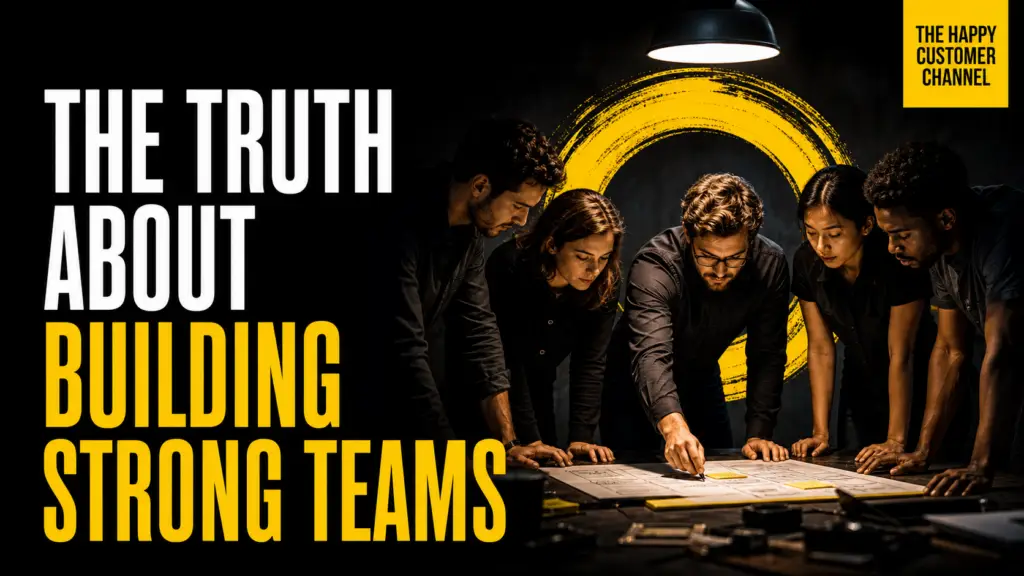
Most teams don’t break because people dislike each other.
They break because leaders confuse bonding with alignment. They plan the lunch. They book the offsite. They bring in the workshop. Then they wonder why the same issues show up on Monday morning. That is where most team building strategies go wrong.
The activity is not the problem. The expectation is. A team event can help people connect. It can lower tension. It can remind people they are human. But it cannot fix weak decision-making, unclear ownership, quiet resentment, poor follow-through, or leaders who avoid hard conversations.
What I’ve seen, over and over, is this: what gets labeled as a “team problem” is usually something deeper. It is a clarity problem. A trust problem. An accountability problem. And if you do not deal with that directly, no amount of bonding will save the team.
Stop Confusing Morale With Team Strength
A team can laugh together and still miss the mark. A team can enjoy each other and still avoid the truth. A team can have good energy in the room and still fall apart when pressure hits.
That is the trap. Leaders feel a good vibe and assume the team is strong. But morale is not the same as strength. Morale is how people feel. Strength is how people behave when the work gets hard.
Here’s what actually matters. Do people raise issues early, or do they wait until the damage is already done? Do they challenge weak thinking, or do they stay quiet because they do not want tension? Do they own outcomes, or do they explain why something was not their fault?
Those are the signals. Not how many people attended the happy hour. Not whether everyone liked the icebreaker. Not whether the room felt positive for two hours.
Strong teams are built in the daily moments. The missed deadline. The unclear handoff. The bad customer feedback. The meeting where someone needs to say, “That plan does not make sense.” If the team cannot handle those moments, it is not strong yet.
On The Happy Customer Channel, I talk a lot about customer experience. Here is the part leaders cannot ignore: customers feel internal confusion. They feel delays. They feel mixed messages. They feel when teams are not aligned. Your team culture always shows up outside the building.
Trust Is a Pattern, Not a Feeling
Trust is not built because someone says, “You can trust me.” Trust is built when people repeatedly do what they said they would do.
It is that simple. And that hard.
People trust teammates who follow through. They trust leaders who tell the truth. They trust managers who do not move the standard depending on the person in the room. They trust teams where issues get addressed instead of buried.
The reality is, trust gets damaged in small ways long before it explodes. A leader avoids a difficult conversation. A missed commitment gets ignored. A high performer is allowed to break the rules. A decision gets made in private after a meeting where everyone thought they had input.
Then leaders act surprised when people disengage.
What I’ve seen is that people rarely lose trust all at once. They lose it through patterns. They watch what gets tolerated. They watch who gets held accountable. They watch whether leadership says one thing and rewards another.
If you want a stronger team, stop trying to manufacture trust through forced connection. Start creating trust through consistent behavior. Say what matters. Define the standard. Keep the standard. Address the gap quickly.
That does not mean creating a harsh culture. It means creating a clear one. People do not need perfection from leaders. They need honesty. They need consistency. They need to know the rules of the game are real.
Build the System Before the Offsite
Before you plan another offsite, ask a harder question. Is the team unclear, or is the team disconnected? Because those are not the same problem.
If people do not know who owns what, an offsite will not fix it. If meetings create more confusion than decisions, an offsite will not fix it. If conflict is avoided until it becomes personal, an offsite will not fix it.
The best team building strategies live inside the operating rhythm of the business. How do decisions get made? Who has final call? What happens when someone misses a commitment? How do people challenge ideas without attacking each other? How does the team know when something is slipping?
Answer those questions first.
Real alignment needs structure. Not bureaucracy. Structure. There is a difference. Bureaucracy slows people down. Structure removes guessing. It gives people a clean way to move, decide, speak up, and execute.
Start with decision rights. Make it clear who recommends, who approves, and who owns execution. Then fix your meeting standards. Every meeting should have a purpose, an owner, and a decision or next step. If it does not, cancel it.
Then define conflict norms. Healthy conflict is not disrespect. It is responsibility. People should be able to challenge the work without turning it into a personality issue. That only happens when leaders model it first.
Finally, build accountability rhythms. Not once-a-year performance talk. Not vague “checking in.” Regular, direct conversations about priorities, progress, gaps, and commitments. That is where team strength gets built.
Events can still matter. I am not against them. But events amplify the culture you already have. They do not create it from scratch. If the daily system is broken, the offsite becomes theater.
Final Thoughts
If your team needs an event to feel aligned, alignment is already too fragile. Build the daily system first. Make ownership clear. Make truth safe. Make standards visible. Then the offsite actually means something.
Common Questions
Do team-building activities actually work, or are they mostly a waste of time?
Listen, they can work. But only if you understand what they are built to do. A team activity can create connection, break tension, and help people see each other differently. That has value. But if the real issue is unclear leadership, broken trust, or no accountability, the activity will not touch the root problem. At the end of the day, an event should support the culture, not substitute for it.
What should we fix first if our team feels disconnected?
Here’s the reality: start with clarity. Most disconnected teams are not just emotionally distant. They are operationally confused. People do not know what matters most, who owns what, or how decisions are being made. Fix that first. Once people understand the work and their role in it, connection becomes much easier to build.
How do you rebuild trust when the team has lost confidence in leadership?
What I’ve seen is that trust comes back through behavior, not speeches. Leaders need to acknowledge what happened without overexplaining it. Then they need to create a new pattern people can actually see. Keep commitments. Address issues faster. Stop tolerating double standards. People will not trust the promise right away, but they will start trusting the pattern if it stays consistent.
What are the best team building strategies for remote or hybrid teams?
Listen, remote teams do not need more forced fun. They need stronger operating habits. Make communication rules clear. Make ownership visible. Make meetings sharper. Make conflict easier to surface before it turns into silence. At the end of the day, distance does not destroy teams. Poor clarity does.