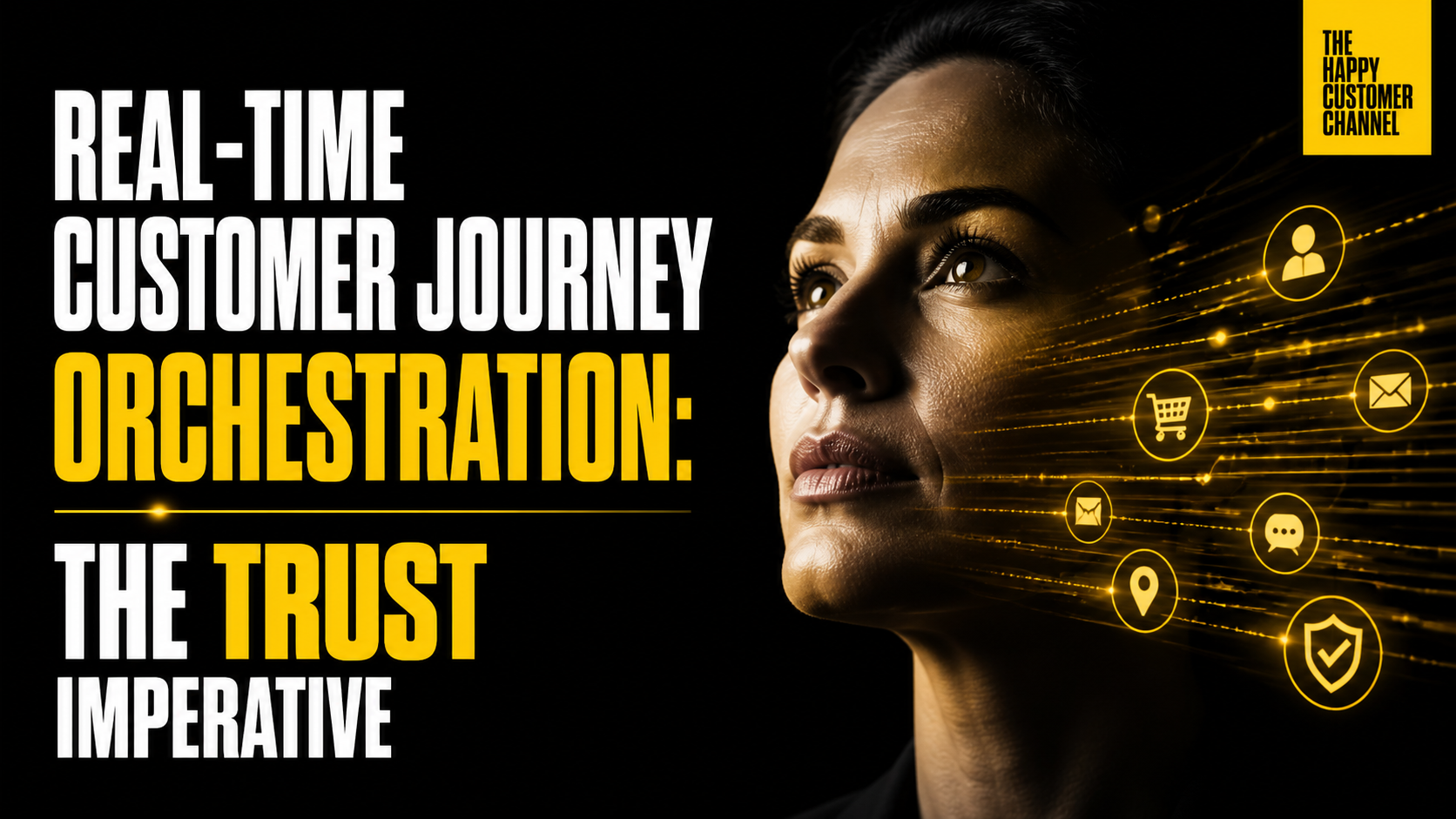
Are you orchestrating customer journeys or just reacting with your best guess? Don’t kid yourself. Your customers know the difference and, trust me, your bottom line does too. In today’s landscape, real-time customer journey orchestration isn’t just a shiny object—it’s supposed to be your competitive edge. But for most brands, it’s just noise. Let’s get real about what it takes to turn “real-time” into real trust, real retention, and real results.
Orchestration vs. Reaction—Why Real-Time Alone Isn’t Enough
Speed is seductive. There’s a cult around acting quickly—triggering emails, pushing notifications, firing off responses at the first sign of customer activity. But here’s the ugly truth: Moving fast doesn’t mean you’re customer-centric. It doesn’t mean you’re even orchestrating anything at all.
If your “real-time” system is just reacting to every data blip, you’re not orchestrating. You’re improvising. And your customers are out there, right now, feeling the inconsistency. Why did you reach out this time but not last time? What made this “moment” so different? If you can’t answer those questions with discipline, neither can your team—and your customer can sense the chaos.
I’ve spent years watching companies roll out expensive technology without any backbone. No wonder their customer retention numbers don’t budge. The difference between the teams who crush it and the teams who stagnate? Discipline, not dashboards. Great orchestration means every action—especially in real time—comes with intent, predictability, and a clear reason why. That’s what earns trust, and that’s what drives real business.
If you want examples of companies doing this well—and those failing at the basics—just browse The Happy Customer Channel for real stories of what works (and what blows up in your face).
A Trust-First Orchestration Framework
Let’s shift from theory to practice. I see two patterns: Leaders who systematize trust, and everyone else who chases alerts like headless chickens. Here’s the operator-level checklist every customer experience leader needs if you want to win with real-time customer journey orchestration:
- Signal Alignment: Pick the moments that matter. Don’t trigger interventions for every click—define the business-critical signals that actually justify a real-time response.
- Actionability Discipline: Set standards—cross-functionally. Every teammate should know exactly what happens when a key signal fires. No improvisation, no ambiguity.
- Leadership Accountability: Assign owners for each moment. Alerts mean nothing if no one’s responsible for the outcome. Who picks up the ball? Who gets measured?
- Customer-Facing Transparency: Tell your customers what you’re doing and why, especially when things go sideways. Trust grows exponentially when you share your playbook and stick to it, not when you hide behind automation.
This isn’t just my opinion—it’s what’s working for operators in the real world. I’ve seen these standards drive unbreakable consistency. If you don’t have a framework like this, odds are your “real-time” efforts just create confusion and erode trust. Want a deeper dive on why operating standards make or break your customer experience? I lay it out in black and white in Customer Experience Strategy Fails Without Operating Standards. If you haven’t read it, you’re a step behind.
This checklist is your north star. Get these basics right, and you build a trust engine. Cut corners, and watch your customer retention decay—fast.
Retention Is the Scorecard—Trust Is the Only Strategy
Your retention numbers are the scoreboard. Customer experience isn’t about vanity metrics or the glitziest dashboard. At the end of the day, retention proves whether trust is being delivered at scale.
You want to measure the impact of your real-time orchestration? Look at the trust you’re building with every touch. Are your actions consistent? Predictable? Do your customers know you’ll have their back without surprises?
The organizations winning this game are obsessed with trust. Every real-time moment is another brick in the wall—delivered with clarity and discipline. Customers reward you for this. They stay loyal, they tell friends, and yes—they complain less. There’s your business case for operational standards and trust-centric orchestration: It makes you money and keeps your brand out of reputational purgatory.
Don’t get distracted by the tech alone. Real-time customer journey orchestration is only as good as the operating principles behind it. If you want to make your numbers bulletproof, put trust—codified and actionable—at the core of every customer journey decision.
Final Thoughts
Customer trust isn’t a checkbox. It’s not an add-on feature. It’s the very core of what you’re delivering every single day. Real-time orchestration is your lever, but it demands serious discipline and strong leadership. Build your operating standards. Communicate with total transparency. Make every “real-time” action count, because trust compounds faster than discounts ever will. Shift your mindset, and the impact will follow—retention, advocacy, and revenue.
Want more operator-level playbooks and frameworks that actually work? Join the Happy Customer Channel newsletter here for practical, no-nonsense CX guidance every month.
Common Questions
How do I know if my organization is actually orchestrating journeys in real time or just reacting to data?
Listen—if your team gets customer data and just lobs an email or a promo without a real framework, you’re not orchestrating. You’re reacting. The test is simple: Can anyone on your team explain the exact process, the standards, and who’s accountable for every real-time customer touch? If not, you’re winging it. That’s not orchestration—it’s firefighting. At the end of the day, true orchestration means every action is deliberate, measured, and owned.
What’s the biggest trust killer in real-time customer journey orchestration?
Here’s the reality: It’s inconsistency and silence. When customers see you act differently in the same situation, or worse, you don’t communicate at all, trust tanks instantly. You can have the best tech stack in the world—doesn’t matter. If your responses are unpredictable, your customers will never feel secure. Want loyalty? Show up reliably, explain your choices, and never leave them guessing.
Which teams should be directly responsible for orchestrating and governing real-time CX interventions?
What I’ve seen is this—if you dump everything on marketing or support, you get chaos. Orchestration requires cross-functional ownership. Marketing, product, support—they all need to operate from one central playbook with tight standards. If teams aren’t synced, your customer sees the seams. You can’t fake alignment. Set clear rules of engagement, assign ownership, and check your egos at the door.
Can “real-time” ever replace the need for clear operating standards?
No chance. Speed exposes your weaknesses—it doesn’t hide them. I’ve watched brands burn tens of thousands trying to automate their chaos, only to realize they needed standards first. Building a racecar is useless if you don’t install brakes. Real-time should amplify discipline, not replace it. Codify your standards before you even think about scaling tech.