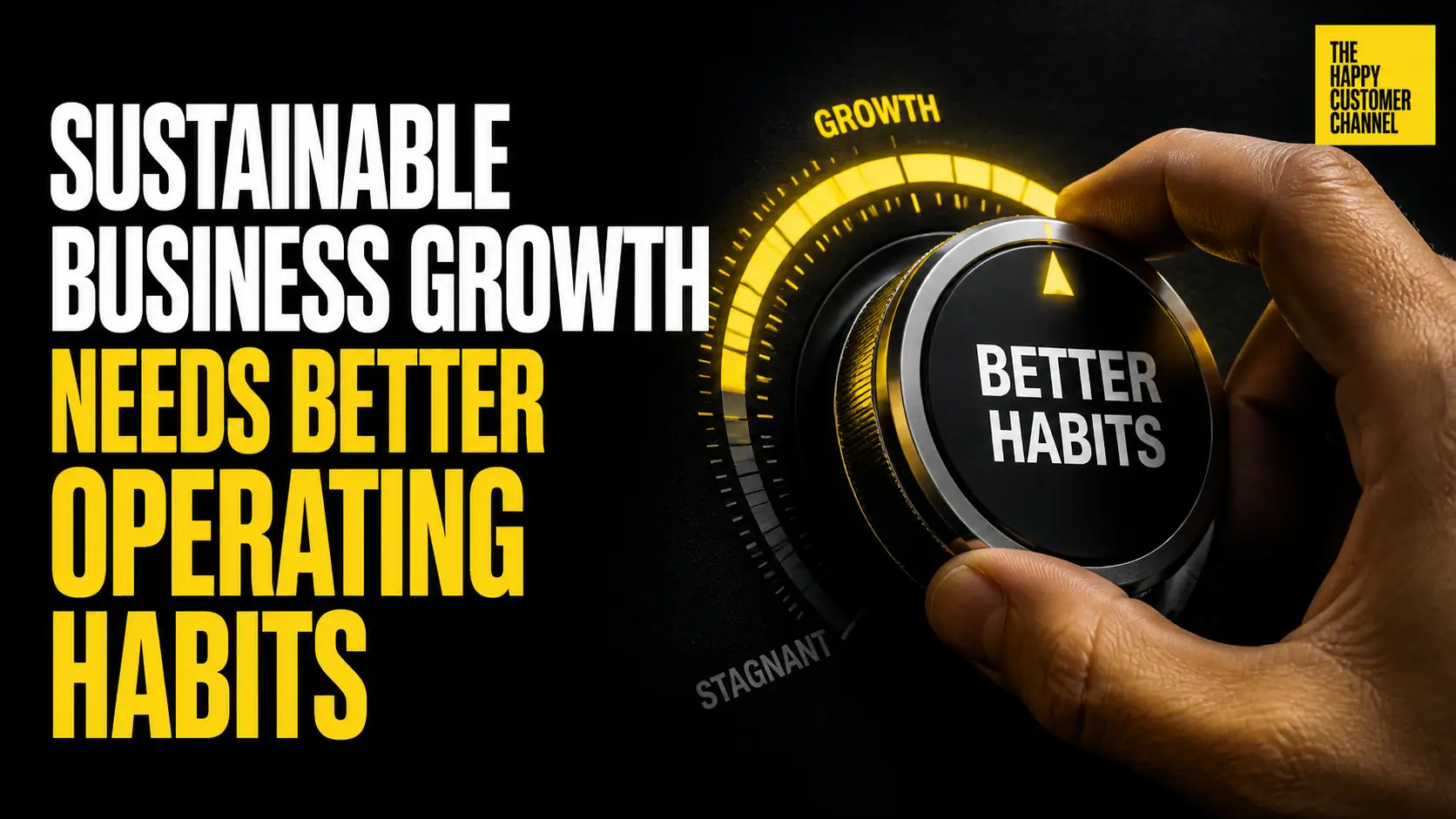
Want to know why so many “growth strategies” fall flat? Here’s some tough love: sustainable business growth isn’t magic—it’s the result of disciplined habits practiced by every operator in your organization. Good intentions aren’t enough. If you want lasting results, start with how your business operates from the ground up.
Dismantling the Myths of Business Growth
Let’s cut through the noise. There’s a deep obsession with the next big win—new markets, new products, another acquisition. I get it. Those stories make headlines. But here’s what most never admit: growth that lasts doesn’t come from a big moment. It comes from small, relentless executions done well, over and over.
Most leaders treat growth like a campaign. They gear up, create slogans, rally the team, and wonder why momentum stalls three months later. Reality check: real, sustainable business growth is a discipline. It’s not an idea on a PowerPoint. It’s the minimum standard for how your operators behave, every hour of every day.
So, what consistently separates the companies that keep growing from those forever stuck in a groundhog day of launch-fail-repeat? Operator habits. Wake up and smell the coffee. Big bets are only as good as your operating foundation. Without it, the latest strategy is just another expensive distraction. You want stability? Build a business that values execution over inspiration.
If you’re here for actionable, operator-level guidance—not theory—you’re in the right place. The Happy Customer Channel is built for this. Let’s get practical.
The Sustainable Growth Habit Loop – Your New Operating Framework
Flashy initiatives don’t create sustainable business growth. Habits do. Here’s the part most leaders miss: growth isn’t spontaneous. It’s engineered—through a brutal focus on small daily operational disciplines. If your team isn’t practicing these, you’re not ready for scale.
Here’s a framework—call it the “Sustainable Growth Habit Loop.” It’s blunt, because it needs to be. Check yourself against these four operator habits:
- Clarity of Metrics: Does every team member know what critical numbers to hit? Not just quarterly goals—the metrics that matter today, this week, every day. Make them visible. If your teams have to ask, you’ve already lost the signal.
- Real Customer Feedback Loops: Are you listening to your customers and acting on their feedback—immediately? Too many leaders pay lip service to surveys or NPS. The winners close the loop and fix issues before they become patterns. If the same issue pops up twice, your habit failed.
- Non-Negotiable Cadence of Review: Are your operational reviews scheduled, mandatory, and acted upon? And I mean every week, every month. No exceptions, no skipping. Companies that skate review sessions lose track, then lose growth. Make review cadence bulletproof.
- Leadership Modeling from the Front: Do leaders participate in the trenches, or do they disappear as soon as things get “operational”? The best companies have leadership visible in the process. If you aren’t showing up, no one else is going to treat habits as non-negotiable. Leadership discipline is the clearest signal of culture you send to your team.
I’ve seen businesses break through plateaus—double or triple revenue—simply by embedding these habits. And I’ve also watched teams spiral when a leader thought a single “innovation” would paper over a culture of operational laziness. If you want a simple checklist, it’s this: metrics, feedback, reviews, visible leadership. Post it on your wall. Because every growth bottleneck comes back to a missing habit in one of these four.
Don’t underestimate this. Skip the shiny objects. Get your house in order first. Want more frameworks like this? Sign up for the newsletter—you’ll get new decision tools in your inbox.
The Hard Connection—Operating Habits, Customer Trust, and Buying Decisions
Let’s draw the straight line. Customers trust what you do, not what you say. Predictable execution isn’t just a management cliche—it’s the only thing that builds customer loyalty. You can’t inspire your way to trust. You can only earn it through operational habits that don’t slip.
Ask yourself: Why do customers come back—or leave? Usually it’s not because of some huge event. It’s because of hundreds of small, predictable moments of delivery—or, sometimes, of operational drift. If you want sustainable business growth, build a company where customers don’t have to wonder if you’ll get it right. They just know you will.
I’ve watched acquisitions crumble because the operational core was inconsistent. I’ve watched referral engines explode because a team nailed the basics, week after week. You get what you model and what you measure. If your habits drive trust in customers and discipline in your team, you stack the odds for growth—and you make your business acquirable. This is what buyers look for: not potential, not just brand—but evidence of operational rigor that endures beyond the founder.
This isn’t theory. I’ve seen it play out over decades and across industries. Trust is a byproduct of discipline. Sustainable business growth is the result.
Final Thoughts
You don’t need another glossy playbook or a round of applause for bright ideas. The edge—your edge—comes from habits you enforce daily, no matter how boring. Sustainable business growth is built by teams who see operational excellence as the minimum standard, not an initiative. If you’re ready to own that reality, you’re already ahead of the pack.
If you want direct frameworks and no-nonsense operator guidance every week, join the newsletter. Make disciplined growth your habit.
Common Questions
What are the most important habits for driving sustainable business growth?
Listen—everyone will tell you something different, but here’s the reality. The non-negotiables are: clarity around crucial metrics, relentless customer feedback loops, a locked-in cadence of operational reviews, and leadership that models discipline. Forget one of those, and you’ll plateau. The companies I see survive and thrive never get bored of these basics. If you aren’t practicing these, don’t talk to me about “innovation” or “scaling.” Start with the base.
How do daily operator habits impact customer trust and long-term growth?
Here’s what I’ve seen: Customers trust what they experience. Slogans are useless if your operations wobble. When you nail every detail, every time, people notice—and they come back. That repeat trust is jet fuel for compound growth. If you want to snowball your results, show customers they never have to doubt you. That’s how great businesses win—habit by habit, not hype by hype.
What’s the first step to changing our operating habits as a leadership team?
At the end of the day, it starts at the top. Make your most critical metrics and customer feedback visible every single day. Don’t let operational reviews be optional—block the time, make it sacred. Show your team you’re invested, not just with words, but by being the first to act. Teams mirror leaders. Set the bar, then refuse to let it drop. That’s how you shift culture, not just process.
How do you sustain these habits during rapid growth or an acquisition?
Growth magnifies every crack in your foundation. I’ve watched teams get overwhelmed and drop what matters most—then lose momentum. The answer? Systematize feedback and reviews. Build habits into onboarding, meeting cadences, and leadership routines. Hold each other accountable—every week, every quarter. In fast-change environments, discipline is your only safety net. Don’t compromise on habits when the stakes go up. Double down. That’s when it matters most.