Customer Journey Mastery: Operator-Level Lessons for Experience & Retention

Are you truly in control of your customer journey, or are you just hoping the pieces fall into place? Hope is not a strategy. Operators who win know that customer experience is not a suggestion—it’s a mandate, and it’s enforced every single day. The best in the business have turned the customer journey into their secret weapon for retention. Everyone else is just playing catch-up.

Stop Pretending—Operationalize the Customer Journey

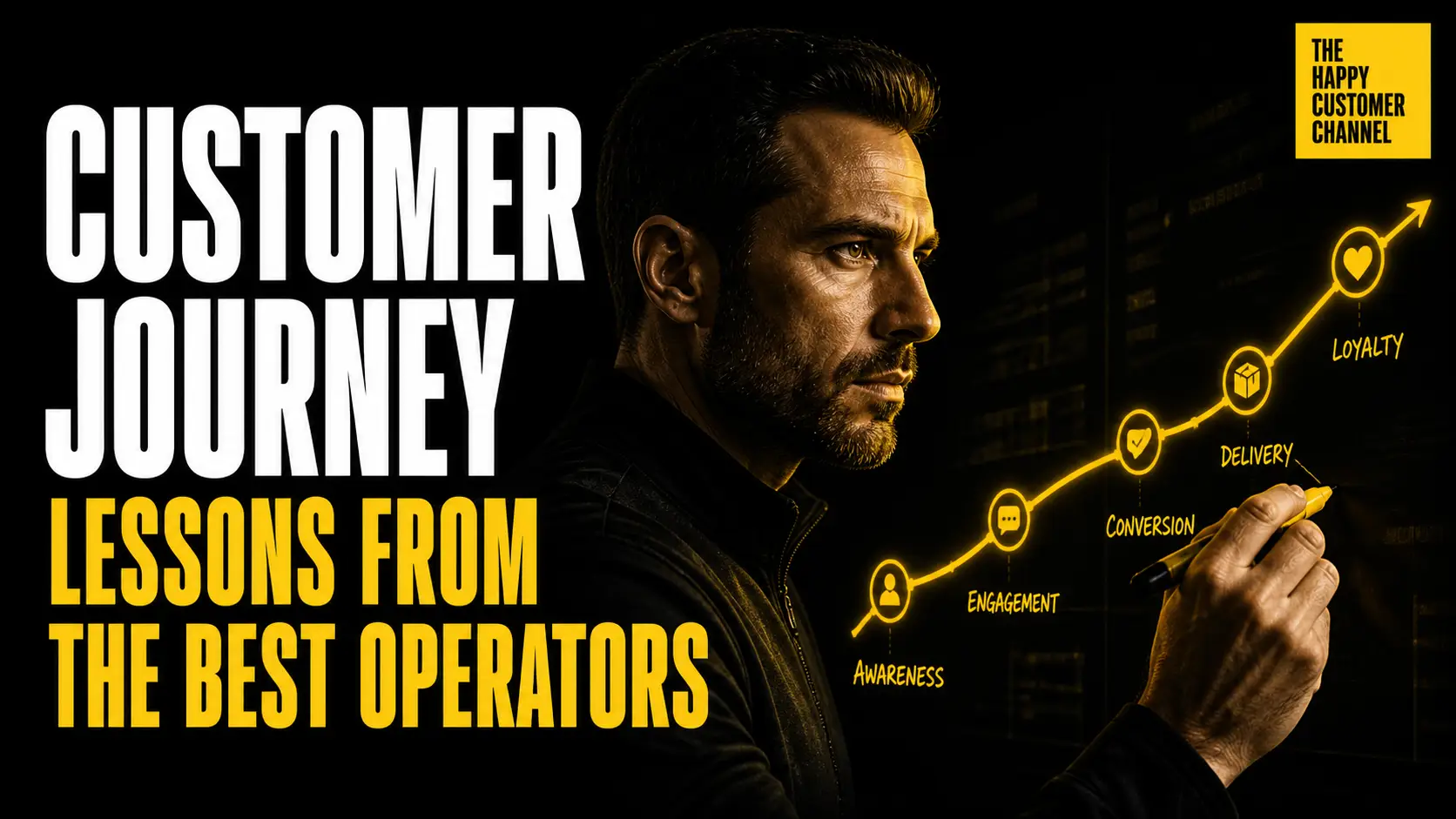
Let’s get something clear: map-making is not management. The customer journey isn’t a brainstormed diagram or a colorful flowchart on your wall. Those are starting points. The real work begins after the “customer journey workshop” ends. Most leaders build that journey once and move on. Then they wonder why NPS slides or why churn doesn’t budge. It’s simple. They never put the journey into action as an operating system—daily, measurable, enforced.

Here’s the truth most won’t admit: if you can’t measure it, you’re not really doing it. Operators who lead in retention already know this. They track transition points, test for real friction, and beat their competition because their maps lead somewhere. Their customer journey is the way things get done, not the way things look in a boardroom. At The Happy Customer Channel, we don’t settle for best-case scenarios. We deal in facts, data, and operational excellence.

Why does this matter? Because the market does not care about your intentions. Customers know when you’re winging it. They know when you improvise. And they remember every drop-off, every unfulfilled promise, every touchpoint that misses the mark. Hope is not a strategy—and your customers will always know the difference.

The Customer Trust Checklist—How Real Operators Win Retention

Retention isn’t built on first impressions. It’s earned at every single interaction. The best operators have a disciplined checklist to make sure the customer journey isn’t just theater. Grab this, put it on your wall, make it a living part of how you work:

  • Proactively fix friction: Are you finding pain points before your customers complain, or are you just apologizing after the fact?
  • Standards for every touchpoint: Is each handoff, email, invoice, and support reply clearly defined—or do you wing it?
  • Built-in accountability: Are mistakes buried, or is there operational discipline to fix breakdowns, not just outcomes?
  • Metrics that matter: Are you looking at what the customer sees and feels, or hiding behind vanity stats that make you look good and solve nothing?
  • Closing the loop: When something goes wrong—or right—does the customer feel heard and valued, or just processed?

Use this checklist. Run it monthly, if not weekly. If the answer is “no” to any of these, that’s your signal. Don’t delegate this. Lead it. Operators who win at retention do so because they earn trust in small, relentless, visible ways. Every single day. That’s not an accident. That’s leadership discipline—translated directly into customer loyalty and higher retention.

One thing I’ve seen: businesses that treat customer journey as a living process win the long game. Everyone else races for one-off wins and hopes for the best. There’s zero magic here—just process, focus, and standards.

Discipline or Drift—Why Strategy Dies Without Operating Standards

I see it everywhere—companies with “CX strategies” that are all sizzle, no steak. Failing journeys aren’t rare; they’re the default. Why? Because strategy in a vacuum dies fast. You can build a stunning journey map, hire great designers, pump up your mission statement—none of that matters if you don’t embed operational standards. If the customer journey isn’t enforced at every level, you’ve built a house on sand.

This is the hard reality: businesses that actually win at customer experience make standards the backbone of every review, role, and decision. They don’t just talk about customer obsession. They operationalize it. Every single touchpoint is accountable to a standard, not just an aspiration. If you don’t drill that into your culture, your competitors will beat you to it. Simple as that. This is why customer experience strategy fails without operating standards.

Let’s make it practical. Accountability doesn’t mean micromanagement. It means visible, actionable, measurable processes—ones that get reviewed, fixed, and upgraded on a regular cycle. Your journey should be a living thing. Change fast, adapt faster, and the customer feels it. Wait until the data is ugly, and you’ve already lost trust. I want every leader reading this to ask themselves: when was the last time you walked your customer journey—end to end—as a real customer? If you don’t know, your standards are just suggestions. And suggestions lose every single time.

Final Thoughts

You can’t fake a great customer journey. Customers are relentless. So are your competitors. Operators who treat the customer journey as a system—measured, disciplined, alive—earn trust and retention as a natural outcome. Doing this isn’t a “nice to have.” It’s table stakes. The difference is leadership discipline. Stop improvising. Build the journey you want your brand to be remembered for.

Want real-world, operator-level CX strategies in your inbox? Join our newsletter and get ahead—before your competitors do.

Common Questions

How do I spot the real friction points in my customer journey—not just what shows up on surveys?

Listen…surveys only tell you what customers are willing to say. What matters is where they actually act. Track their behavior. Where do they hesitate, drop out, or complain? Dig into the data—time between steps, repeated questions, abandoned carts. The best operators do root-cause analysis, not just apologies. At the end of the day, the breaking points are always in the transitions. Watch how the journey really unfolds, not just how you wish it did.

What metrics actually matter for measuring customer journey success?

Here’s the reality: vanity metrics don’t move the needle. You want leading indicators—time to value, repeat engagement, moments when customers go off-script and ask for help. Unplanned contacts are gold; they tell you where the journey isn’t working. Lagging metrics like NPS or CSAT are nice, but they’re after the fact. If you can spot trouble early, you save the relationship—and the revenue—before it’s too late.

How do you get frontline teams to actually follow customer journey standards?

Let’s be blunt: standards without accountability are just dreams. You need to train, coach, and measure—every day. Make the expected behaviors visible. Reward consistency. Call out gaps immediately. Great operators don’t “hope” people follow the journey—they build it into onboarding, reviews, and daily huddles. If your team sees it’s non-negotiable, they’ll deliver. If not, your standards will collect dust. Don’t wish for compliance; demand it.

Isn’t the customer journey always changing? How do we keep up?

Absolutely, the customer journey isn’t static. But the smartest operators don’t panic—they build feedback loops right into the process. Review journeys quarterly. Workshop them after big changes. Ask your customers directly, then validate with data. Adapt on purpose—don’t get dragged into haphazard change. Make your process living, not locked. If you treat change as routine, your journey will always be one step ahead.
Business Relationship Building Is Not Networking

Business relationship building is not networking.

Most people don’t build relationships. They build a contact list.

Then they wonder why nobody moves when they need help. The problem is not visibility. The problem is trust. Real relationships are built before the ask, before the deal, and before there is anything obvious to gain.

That is where most people get it wrong. They reach out when they need leverage. They call shallow follow-ups “nurture.” They confuse friendliness with credibility. The market sees through it.

The Ask Reveals the Relationship

If your first meaningful move is asking for an introduction, a referral, or a favor, you are already late.

That may sound harsh. It is also true. The ask does not create the relationship. The ask exposes the relationship. It shows whether there is real trust behind the connection or just a name sitting in your CRM.

Here’s what actually happens. Someone asks for an introduction. The person receiving the request is not just thinking, “Do I know someone?” They are thinking, “Can I put my name next to this person?” That is the real test.

Because introductions carry risk. Referrals carry risk. Partnerships carry risk. When someone opens a door for you, they are spending reputation. Not time. Reputation.

Access is not a relationship. A LinkedIn connection is not a relationship. A good conversation at an event is not a relationship. Those are entry points. Nothing more.

The relationship begins when people understand how you operate. Do you follow through? Do you protect context? Do you make people look smart for trusting you? Do you make their life easier or create cleanup work?

What I’ve seen across founders, sales leaders, consultants, and operators is simple. The strongest relationships are usually built in low-stakes moments. A quick insight. A clean introduction. A thoughtful reply. A promise kept when nobody was watching.

Trust Is a Track Record, Not a Vibe

Being likable helps. It does not carry the weight.

People do not trust you because you are friendly. They trust you because your behavior has become predictable in the right way. You do what you say. You do not overpromise. You handle pressure without making it everyone else’s problem.

This is where business relationship building gets real. It is not about charm. It is not about being everywhere. It is about becoming easy to trust and easy to vouch for.

There is a big difference.

Plenty of people are pleasant in a first meeting. Fewer people are dependable after the excitement fades. Fewer still can be trusted with sensitive context, client relationships, internal politics, or a high-value opportunity.

Trust is built in the follow-through. Did you send what you said you would send? Did you remember the detail that mattered? Did you respect the boundary? Did you tell the truth when the truth was inconvenient?

That is the track record.

In long-cycle deals, the decision is often shaped long before the proposal lands. Buyers listen before they buy. Partners watch before they commit. Referrers observe before they recommend. The market is collecting evidence.

And here is the part many people miss. Trust is not only built by success. It is built by how you handle friction. When something goes sideways, do you disappear? Do you blame? Do you get vague? Or do you communicate clearly and own the next move?

That is what people remember.

Relevance Beats Frequency

“Just checking in” is not a strategy.

It is usually a signal that you have nothing useful to say. And if you keep doing it, people start training themselves to ignore you.

Relationship building is not about touching base on a calendar. It is about being relevant when you show up. There is a difference between staying present and creating noise.

Relevance can be simple. A sharp observation about their market. A useful introduction with permission on both sides. A resource tied to a problem they actually mentioned. A note that says, “I saw this and thought of what you were working on.”

That lands differently.

Why? Because it proves you were paying attention. It proves the relationship is not just a funnel stage. It proves you see the person, not just the potential transaction.

The mistake is treating people like sequences. Automated persistence can get replies. It rarely builds respect. And respect is what drives referrals, partnerships, repeat business, and real advocacy.

You do not need to be in someone’s inbox every week. You need to be useful when you are there. Earn the follow-up. Make the message worth opening.

The best relationships have space in them. They do not require constant maintenance because the foundation is solid. When the value is real, the relationship does not disappear just because you went quiet for a while.

Final Thoughts

Your real network is not who knows you. It is who is willing to put their name next to yours.

That is the standard.

You do not build strong business relationships by being known. You build them by being dependable when there is no spotlight and valuable when there is no invoice. That is what separates contact collectors from trusted operators.

At the end of the day, people remember who made their life easier before they needed something back.

Common Questions

How do I build business relationships without sounding transactional?

Listen… if it sounds transactional, it usually is. People can feel when you are warming them up for an ask. The cleaner move is to lead with context and usefulness. Share why you are reaching out, make it easy to ignore, and do not disguise your agenda as friendship. If there is an ask, own it. If there is no ask, do not manufacture one.

How often should I follow up before it becomes annoying?

Here’s the reality… frequency is not the issue. Value is. You can follow up twice in a week if there is a real reason, and you can annoy someone once a quarter if all you say is “checking in.” Watch the pattern. Are you helping them think, decide, connect, or move? If not, pause. Silence is better than empty noise.

What’s the difference between networking and real business relationship building?

What I’ve seen is this: networking creates exposure, but real relationships create confidence. Networking gets you in the room. A relationship makes someone comfortable saying your name when you are not in the room. That is the difference. One is activity. The other is evidence. You need both at times, but do not confuse the handshake with the trust.

How do I keep business relationships warm when I don’t have an immediate reason to reach out?

At the end of the day, keeping a relationship warm is not about inventing a reason to talk. It is about paying attention. If you see a shift in their market, a person they should know, a problem they mentioned months ago, or a win worth acknowledging, reach out. Make it specific. Make it useful. Make it low pressure. That is how you stay present without becoming noise.

Leadership Impact on CX: What Leaders Tolerate

Customer experience does not break at the front line. It breaks in leadership decisions long before the customer ever complains. That is the real leadership impact on CX.

Most companies do not want to hear that. It is easier to blame the call center. Easier to blame the salesperson. Easier to blame the survey score, the ticketing system, or the training program.

But customers are not experiencing a department. They are experiencing the company leaders actually built. The policies. The handoffs. The priorities. The delays. The exceptions nobody wants to own.

The reality is simple: customers feel what leaders reward, ignore, fund, and tolerate.

CX Is a Mirror of Leadership Behavior

Customer experience is not a poster on the wall. It is not a slogan in a town hall. It is not the sentence that says, “We put customers first.” Customers do not care what leaders say the company believes. They feel how the company behaves when something goes wrong.

That behavior starts at the top. If leaders tolerate slow decisions, customers wait. If leaders tolerate internal finger-pointing, customers get bounced around. If leaders tolerate poor communication between teams, customers have to repeat themselves. Again and again.

What I’ve seen is this: many companies confuse intention with execution. Leaders genuinely want customers to have a better experience. They talk about it. They fund new tools. They review dashboards. They ask for better scores.

But then the real system kicks in.

Finance makes refunds hard. Operations cuts staffing too close. Sales promises things delivery cannot support. Product delays fixes because the loudest internal voice wins. Support gets measured on speed, not resolution. Suddenly, the customer experience is no longer about the customer. It is about navigating the company’s internal mess.

That is why CX is a mirror. It reflects leadership behavior with brutal honesty. Not leadership speeches. Not brand campaigns. Behavior.

If the customer is frustrated, there is usually a leadership pattern behind it. A decision avoided. A tradeoff accepted. A problem normalized. A standard lowered one small compromise at a time.

What Leaders Reward Becomes the Customer Experience

Here’s what actually happens inside many businesses. Leaders say they want quality, but they reward volume. They say they want loyalty, but they reward short-term sales. They say they want trust, but they ignore policies that make customers feel trapped.

People follow what gets measured. They protect what gets rewarded. They avoid what gets punished.

If a support team is measured only on call time, do not be surprised when customers feel rushed. If sales is rewarded only for closed deals, do not be surprised when bad-fit customers churn later. If managers are praised for cutting cost but never challenged on the customer impact, do not be surprised when the experience feels cheap.

This is where the leadership impact on CX becomes very visible. Not in theory. In the daily tradeoffs.

Do we approve the exception or hide behind policy? Do we fix the broken handoff or keep blaming another department? Do we staff for the customer reality or for the spreadsheet? Do we let the frontline solve the issue or force them to escalate three times just to do what everyone knows is right?

Customers feel those choices.

And employees feel them too. Frontline teams know when leadership is serious. They also know when leadership is performing concern. There is a big difference.

When leaders truly value CX, they remove friction. They simplify decisions. They listen to recurring complaints without getting defensive. They ask, “What are we making harder than it needs to be?” That question changes everything.

Because the problem is rarely one bad interaction. It is usually a system producing the same bad outcome over and over.

The Front Line Cannot Fix Leadership Gaps

Stop asking frontline teams to carry a broken system. They can apologize. They can empathize. They can work around bad process for a while. But they cannot overcome leadership gaps forever.

An agent cannot fix a policy built to protect the company at the customer’s expense. A sales rep cannot fix a product that overpromises and underdelivers. An account manager cannot save trust if billing keeps creating confusion. A service team cannot create speed if every decision requires approval from people far away from the customer.

Here’s what I’ve seen: strong employees will try. They will create workarounds. They will call in favors. They will stay late. They will take the emotional hit from customers because they care.

But eventually, they burn out.

Then leaders sit in meetings and ask why morale is low. They ask why customers are leaving. They ask why service scores are flat. The answer is often sitting right in front of them. The team is not failing the customer. The system is failing the team.

Leadership has to own that. Not with blame. With accountability.

That means looking at the actual customer journey and asking where the company creates unnecessary pain. Where do customers wait? Where do they repeat themselves? Where do they get surprised? Where do employees need approval to solve obvious problems? Where do teams protect their own metrics instead of protecting the customer relationship?

This is not soft work. This is operating discipline. Better CX requires leaders to make clearer decisions, break silos, align incentives, and stop tolerating internal behavior that damages external trust.

Customer experience improves when leaders make it easier for employees to do the right thing.

Final Thoughts

If leaders want better CX, they need to stop asking, “Why is the team not delivering?” Start asking, “What are we making it hard for them to deliver?”

That question exposes the truth. It moves the conversation away from slogans and into standards. The customer can tell when leadership is serious. So can the employee.

At the end of the day, the leadership impact on CX is not abstract. It shows up in every delay, every handoff, every policy, every unresolved issue, and every moment where the company chooses convenience over trust.

What leaders tolerate becomes the customer experience. Every time.

Common Questions

Why does leadership affect CX if customers mostly deal with frontline teams?

Listen, the frontline may be the face of the experience, but leadership builds the system behind that face. Policies, staffing, tools, escalation rules, and incentives all shape what the employee can actually do. If the system is slow, the customer feels slow. If the system is rigid, the customer feels trapped. The frontline can soften the impact, but they cannot redesign the company from the headset.

Isn’t customer experience owned by customer service or marketing?

Here’s the reality: customer service and marketing influence CX, but they do not own the full experience. The customer does not separate your company into departments. They just know whether it was easy, honest, and worth coming back. Sales, product, billing, operations, technology, and leadership all touch that experience. If only one team owns CX, the company is already thinking too small.

How can leaders tell if they are hurting the customer experience?

What I’ve seen is that the warning signs are usually already there. Repeat complaints. Slow escalations. Customers repeating the same information. Employees using workarounds just to get basic things done. Churn that gets explained away as price or competition. Leaders need to look at patterns, not isolated incidents, because patterns reveal the system.

What should leaders change first to improve CX?

Start with what you measure and reward. At the end of the day, people follow the scoreboard. If the scoreboard rewards speed while the customer needs resolution, you will create rushed experiences. If it rewards new sales while ignoring broken promises, you will create churn. Fix the incentives first, then remove the friction that keeps good employees from doing right by the customer.

Customer Retention Strategies That Actually Keep Customers Longer

Are your retention strategies just window dressing—or are they actually moving the needle? Too many businesses confuse activity for impact and wonder why customers disappear out the back door. Here’s the cold, hard truth: most customer retention strategies sound good on a slide, but don’t stand up to daily business reality. Let’s get honest about what really keeps customers longer—and what you must operationalize if you want results.

Stop Chasing Loyalty—Start Earning Retention

Everybody wants loyal customers. Loyalty is the dream. But most so-called customer retention strategies? Flashy offers, complicated loyalty apps, endless “thank you” emails. They aren’t why people stay. Customers don’t care about the “loyalty program” as much as they care about how you show up for them, every single time. Consistency earns trust. Trust creates retention. You can’t shortcut that with perks or points.

Retention isn’t a marketing campaign—it’s a business outcome earned in the trenches. Operational execution is the battlefield. If your team keeps the promises your brand makes, customers return. Period. You can’t spin this. You can only deliver it. That’s what separates the winners from the has-beens.

If you’re serious about real customer retention, you need discipline, not gimmicks. At The Happy Customer Channel, we see this over and over: the companies who own their operations win the long game. Everybody else leaks revenue and reputation, drip by drip, until it’s too late.

The Retention Reality Check: Proving Discipline Over Gimmicks

Let’s get real. Most customer retention strategies fail because they’re built on hope—not discipline. When leadership suggests “let’s send out a 20% off coupon blast to get people back”—it’s a signal that something foundational is missing.

Gimmicks do not fix broken operations. You can’t paper over unreliable service or inconsistent quality by dumping more points into a loyalty program. It’s lazy. Customers notice—and leave. What keeps people coming back? Process. Standards. Accountability. This is not optional. It’s non-negotiable. If your strategy isn’t built on operational bedrock, you’re simply hoping people forget what you just messed up.

Here’s a blunt truth: every successful retention program is tethered to operating discipline. Leaders who win on retention invest in standards—measured, taught, enforced. They close their service gaps faster than their competition. They don’t hope for loyalty—they make it a byproduct of their culture. If you need proof, revisit our take on why customer experience strategies fail without operating standards. It’s never the flash that keeps customers—only repeated, relentless delivery.

On a recent THCC episode, we dug deep into this exact problem: operational standards always separate the flash-in-the-pan brands from those that earn lifelong loyalty. No exceptions.

The Retention Framework: The Operator’s Checklist

Now we’re getting to the heart of it. You need a retention playbook that’s more than slogans. You need daily action. Here’s the practical checklist every operator should build into their customer retention strategies:

  • Know Your Churn Points. Map where and why you lose customers—don’t guess. Survey, measure, interview. Every exit is a symptom.
  • Set and Enforce Service Standards. If you don’t own standards on speed, accuracy, and problem resolution, your team will set their own. And it won’t be good enough. Train relentlessly. Measure constantly. Reward consistency.
  • Close the Feedback Loop—Fast. How fast do you respond when a customer is upset? If it takes more than a day, forget about retention. Hourly is the new expectation.
  • Track the Key Metrics. Churn rate. Repeat purchase rate. Referral ratios. Stop relying on anecdotes. You only improve what you measure; everything else is noise.
  • Build Renewal Into Every Interaction. Don’t wait until it’s time to “renew” or win them back. Every interaction is a chance to lock in commitment. Do you treat every transaction like the next one is riding on it? Because it is.

This isn’t just theory. I’ve helped turn around operations in more verticals than I can count. The same truths always apply: customers follow consistency, not campaigns. Your job is to make retention so unremarkable it’s just “how we do business.” That’s how market leaders remain untouchable.

If you want more frameworks and retention playbooks you can actually use—not just read about— subscribe to our newsletter. We break down operator-level moves weekly. No sugarcoating. Just what works.

Final Thoughts

If you remember nothing else, remember this: retention is earned in the grind, not the brainstorm. Discipline beats creativity here, every time. You want customers to stay? Prove you deserve their trust. Get your house in order. Build your process, your standards, and your accountability muscles, then flex them in every single transaction. This is not glamorous work. But it’s the work that separates the legacy builders from the market casualties.

Ready to go deeper? Join our newsletter for field-tested strategies that leaders don’t share in public. Don’t let retention be your company’s blind spot.

Common Questions

How do I know if my customer retention strategy is working?

Listen… data doesn’t lie. If your repeat business isn’t climbing and your churn isn’t dropping, your so-called strategy isn’t a strategy. Measure leading numbers—how many customers come back, how often they refer. Then check the bottom line: real retention. If the numbers don’t move, tear up your playbook and get serious about standards. Don’t wait for a spreadsheet to show you a problem—that lag will kill you.

What’s the most common mistake companies make with customer retention strategies?

Here’s the reality: they chase perks, not processes. Gimmicks. Coupons. Predictable offers. The market ignores them. If you don’t bake retention into operations—how fast you reply, how often you check back, how reliably you deliver—you’ve already lost the game. It might take months for the pain to show up, but it’s inevitable.

How often should I review and update my customer retention strategies?

Quarterly. At the latest. Some leaders review monthly—they get ahead. Treat retention like your financials: review, question, adapt. The market changes faster than you want it to. If you’re coasting, you’re declining. Build the discipline, set the calendar, and get honest about what works and what’s just noise.

What’s the first step to building a real retention playbook?

Map your journey and face the ugly truths. Find every leak in your customer bucket—where people bail, complain, or just get bored. Fix those with real, operational solutions. Not slogans, not emails. Not promises. Start building airtight processes for those pain points and don’t let up until the numbers prove it. Everything else is just window dressing.

Customer Retention Strategies That Actually Keep Customers Longer

If your customers keep slipping through the cracks, is it bad luck – or a lack of disciplined strategy? Longevity with customers is never an accident. It’s a leadership choice. Yet every week, I meet executives who think customer retention just “happens” if you nail the basics. Let’s get clear: great customer retention strategies are built with operational muscle, not wishful thinking. If you want to keep customers longer, skip the theory and start implementing what actually works. There’s no shortcut. Only discipline, trust, and standards – or churn. You choose.

Retention Isn’t a Happy Accident—It’s an Operational Decision

Here’s a hard truth: hope is not a strategy. Most businesses act as if retention just tags along with a good product. “If they love it, they’ll stay.” It’s lazy thinking. The real world doesn’t reward lazy. When your only plan is hoping the product or “brand love” works overtime, you’re stacking the odds against yourself.

Retention is the product of daily choices. Operator-level choices. Sales, onboarding, support, recovery—each with clear standards and real follow-through. If you can’t point to your customer retention strategies in black and white, you don’t have them. Put it on paper. Get brutally clear on the moments of truth along your customer’s journey. Who owns follow-up? How do you handle renewal? Is feedback asked for, heard, and actioned every single time?

I’ve seen this with my own teams. The companies that systematize retention behaviors don’t just keep more customers—they create passionate advocates. It never comes from a magic tool or software. It comes from operational discipline, measured daily. For more real-world customer experience leadership, visit The Happy Customer Channel.

The Simple Truth—Customer Trust is the Hardest KPI to Earn and the Easiest to Lose

Customers rarely leave after one screw-up. They leave because you break trust. And trust gets broken when leadership checks out—when standards fade, feedback gets ignored, or service feels transactional instead of invested. If you’re relying on random acts of delight, you’re playing retention roulette.

Let me break it down into something you can use: the “Three R’s” framework. This keeps every team on track and every customer close. It works at scale. Use it as a daily checklist:

  • Reliability: Do you do what you said, every time, no excuses?
  • Recovery: When things go wrong, do you drop everything to make it right fast?
  • Reassurance: Are you proactively checking in, closing the loop, and making customers feel you’ve got their back—even when they’re not complaining?

If you want to see loyalty grow, obsess over these three. Don’t confuse activity with relationship. The goal isn’t just to avoid churn; it’s to become the brand your customer would miss if you disappeared. And that only happens when trust compounds—when leadership is relentless, standards show up every day, and customers feel the difference. Ask yourself: Can you point to concrete evidence that every team member delivers on all three R’s? Don’t move on until you can.

From Talk to Discipline—How Operating Standards Create Loyal Customers

You’ve heard “customer-centricity” so many times it’s lost all meaning. Talk is cheap. Customers see through it in seconds. Loyalty doesn’t come from slogans. It comes from the hard, boring work of operationalizing standards, and enforcing them openly. That’s the long game.

I’m direct about this: if you think a good NPS or the occasional birthday email is customer retention, you’re missing the point. You need visible, measurable standards at every step of the journey. Your onboarding process is either a system or chaos. Your follow-up is either automated or forgotten. Your recovery playbook is either rehearsed or improvised. Which is it for you?

Read Why Your CX Strategy Fails Without Operating Standards if you want proof. Leadership must inspect what they expect. And every frontline employee needs to know the difference between “That’s our job” and “That’s how we keep customers.” If you can’t define what “retention behavior” looks like in the wild, you can’t expect it to happen.

It’s not about micromanaging. It’s about alignment. The best-run companies treat standards as their secret weapon. Document them, teach them, enforce them, and—most importantly—measure them. That’s how customer retention strategies move from the whiteboard to the scoreboard.

Final Thoughts

Customer retention doesn’t happen because you hope hard enough, discount deep enough, or charm customers with the occasional “Wow” moment. It happens when leadership takes full ownership. When standards rule the day. When every customer knows—every time—that your business does exactly what it promises. You want long-term growth? Enforce standards, build trust, and watch churn dry up. That’s how you become unbreakable in your market. No shortcuts. Only discipline, execution, and proof.

Want operator-level retention playbooks and tactics in your inbox? Join the newsletter here.

Common Questions

What are the most effective customer retention strategies for a service business?

Listen, there’s no silver bullet. The most effective customer retention strategies for service businesses focus on operational discipline—clear standards for follow-up, recovery, and ongoing check-ins. Stop thinking “loyalty program” and start thinking, “Does my team make customers feel safe to stay, or just stuck with us?” Double down on reliability, flawless recovery when things go sideways, and visible signs of care. Nail the basics, prove dependability, and your customers will feel it—every single time. That’s what wins.

How do I know if my retention strategy is actually working—instead of just hoping customers will stay?

Here’s the reality: hope isn’t data. You know your retention strategy works when you can measure it, track it, and tie it to specific behaviors inside your business. Are your renewal rates improving? Do customers refer you or stick through bumps in the road? If you’re not auditing your touchpoints and getting real feedback, you’re driving blind. Don’t wait for churn to spike. Build a process, inspect it, and act. Otherwise, you’re guessing—your customers can tell.

Is it possible to “repair” trust after a service failure, or is that customer always gone?

Absolutely, but not by accident. Rebuilding trust takes more than an apology email or coupon code. It demands swift, personal recovery and a visible commitment to make things right. Most companies move too slow or stay silent. You need to show up, own the mistake, fix it fast, and check back in afterward. Invite honest feedback. Make it clear: you value the relationship more than your pride. Customers will give you another chance—if you act like you deserve it.

How can frontline staff be held accountable for customer retention without micromanagement?

At the end of the day, accountability doesn’t mean micromanagement. It means clarity. Give your frontline clear standards, real training, and authority to solve problems. Measure the right behaviors: follow-ups done on time, proactive check-ins, recovery handled same-day. Review results openly, coach improvement, celebrate wins. The goal isn’t to hover—it’s to make retention the team’s job, not just leadership’s wish. That’s how you drive performance and pride, not just process.

Customer Loyalty Programs Don’t Create Loyalty

Customers don’t stay because you gave them points. They stay because leaving feels like a downgrade.

That is the truth most brands miss when they launch customer loyalty programs. They think rewards create commitment. They think discounts create love. They think a tier system can replace trust. It cannot.

Here’s what actually happens. A customer buys again, and the company calls it loyalty. But the customer may only be staying because the coupon was good, switching feels annoying, or the competitor has not shown up yet. That is not loyalty. That is borrowed time.

Real loyalty is built before the reward ever shows up. It is built in the first purchase. The first support ticket. The first delay. The first time something goes wrong and the customer watches how you respond.

Loyalty Is Not a Points System

A points system can reward behavior. It cannot create belief.

That distinction matters. Too many companies treat loyalty like a math problem. Spend this much. Earn this many points. Unlock this level. Get this perk. Fine. That may increase activity. It may even increase repeat purchases for a while. But if the experience underneath is weak, the program becomes a bribe.

Customer loyalty programs are tools. They are not the foundation. If your product disappoints, if your service feels careless, if your onboarding is confusing, if your communication is inconsistent, the program will not save you. It will only make the gap more obvious.

Think about it from the customer’s side. They do not wake up saying, “I can’t wait to earn 47 more points today.” They want the order to arrive when promised. They want the app to work. They want support to answer like a human being. They want the company to remember who they are without making them repeat the same story five times.

This is where many brands get it backwards. They invest in the reward layer before fixing the experience layer. They add points before removing friction. They create tiers before cleaning up bad handoffs. They launch perks before training their teams to communicate clearly.

That is why the customer leaves as soon as someone else offers a better deal. There was no relationship. There was only a transaction with decorations.

Loyalty is earned before the program starts. If customers do not trust you, your rewards will feel like noise. If they do trust you, the program becomes a useful way to deepen the relationship.

Customers Stay When the Experience Reduces Risk

People return to companies that make life easier.

Simple as that.

They stay with the business that lowers uncertainty. They stay with the brand that delivers what it promised. They stay with the team that makes problems smaller, not bigger. In real life, loyalty is often less emotional than marketers want to admit. A customer stays because you are dependable.

Dependability is underrated. It is not flashy. It does not always make a great campaign headline. But it is what customers remember when they are deciding whether to renew, reorder, upgrade, or walk away.

What I’ve seen is this: customers measure you hardest when there is pressure. Not when everything goes well. Anyone can look good when the order is smooth and the customer has no questions. The real test comes when shipping is delayed, billing is wrong, a feature fails, or a service promise is missed.

That moment tells the customer what kind of company you are.

Do you hide behind policy? Do you make them chase updates? Do you pass them from one department to another? Do you act like their problem is an interruption? Or do you take ownership, communicate clearly, and make the next step easy?

This is where retention is won. Not in the clever campaign. Not in the glossy email. Not in the birthday coupon. Retention comes from trust under pressure.

For ecommerce brands, that may mean proactive order updates and fast resolution when something goes wrong. For subscription companies, it may mean clear billing, honest renewal reminders, and no games when someone wants to change plans. For service businesses, it may mean setting expectations early and following through without the customer having to manage you.

Consistency beats clever incentives. Every time.

Customers stay when the experience feels safe. They know what to expect. They know how you operate. They know you will not make them regret choosing you. That kind of trust is hard to win and easy to lose.

Recognition Is Stronger Than Rewards

Rewards are useful. Recognition is stronger.

There is a difference. A reward says, “You spent money.” Recognition says, “We know you.” One is transactional. The other is relational.

The best loyalty efforts do not just track purchases. They pay attention to behavior. They notice patterns. They understand timing. They use customer data to make the relationship feel smarter, not creepier. That means better recommendations, faster support, more relevant offers, and fewer pointless messages.

Here’s the reality. Customers do not want to be managed. They want to be understood.

If someone has bought from you for three years, do not treat them like a stranger. If they always reorder the same item, make that easier. If they had a bad support experience last month, do not send them a cheerful upsell like nothing happened. If they are close to renewal, do not surprise them. Guide them.

This is where many companies miss the mark. They collect data but do not use it to improve the experience. They know the customer’s purchase history, support history, preferences, and engagement patterns, but the customer still gets generic messages. That creates frustration. It tells the customer, “We have your information, but we are not paying attention.”

Recognition does not have to be complicated. It can be as simple as remembering past issues, offering the right option at the right time, giving loyal customers early access, or making support faster for people who have already invested in your brand.

The point is not to impress customers with technology. The point is to remove effort.

When customers feel seen, they give you more trust. When they feel like a number, they start shopping. That is the pattern. I have seen it again and again.

A strong loyalty strategy does not ask, “How do we get customers to spend more?” It asks, “How do we make staying feel obvious?” That question changes everything. It forces the business to look at value, communication, service, product quality, and timing. It makes the program support the relationship instead of pretending to be the relationship.

Final Thoughts

A loyalty program should not be the reason customers stay. It should be proof that you understand why they already do. If customers only stay because of points, they will leave for better points. If they stay because you make their life easier, safer, and more predictable, now you have something real.

That is the work. Build trust first. Deliver consistently. Recognize the customer like the relationship matters. Then the program has power.

Common Questions

Do customer loyalty programs actually work?

Listen, they work when the business underneath them works. If the product is strong, the service is consistent, and the customer already sees value, a program can increase engagement. It can give people another reason to come back. But it cannot repair a broken experience. If customers are frustrated, points will not calm them down for long. At the end of the day, rewards amplify what is already there.

What makes customers stay loyal beyond discounts?

Here’s the reality. Customers stay when they trust you. They stay when the result is consistent, the communication is clear, and the experience does not create extra work. Discounts may bring someone back once. Trust brings them back repeatedly. What I’ve seen is that customers are willing to pay more when they believe the company will not waste their time. That is where real loyalty lives.

Why do some loyalty programs fail?

They fail because the company confuses activity with loyalty. A customer using a coupon is not the same as a customer believing in your brand. If the program is only about points, tiers, and promotions, you train people to respond to incentives instead of value. Then a competitor shows up with a better offer, and the customer leaves. Why? Because there was no deeper reason to stay. The business bought attention but never earned commitment.

How should a business improve customer loyalty first?

Start by finding the friction. Where do customers get confused? Where do they wait too long? Where do they repeat themselves? Where do promises break? Listen, before you build another campaign, fix those moments. The fastest way to improve loyalty is to make the experience easier to trust.

Why Your Customer Experience Strategy Fails Without Operating Standards

Big strategies don’t save you when a customer is angry at 9:30 p.m. and your team misfires. Thought-provoking customer experience strategy slides look impressive in boardrooms, but customers never get to see those decks. They only see what your team actually does. Here’s the gut punch: most customer experience strategies collapse the moment your company scales—because nobody wrote down what “great” looks like daily. Why do so many ambitious CX plans fall apart when growth happens?

The False Security of Big Ideas

Every founder and CX operator talks about customer experience strategy. It’s everywhere—memos, values posters, kickoff meetings. But tell me, what does “put customers first” actually look like on a Tuesday at 3:45 p.m. when your busiest customer calls with a weird request? If you rely on passion and good intentions, good luck scaling past your first dozen people. Here’s the hard truth: brilliant ideas are just noise without real operating standards. You’re not building consistency—you’re inviting chaos. Fuzzy slogans don’t help your team earn five-star reviews or handle tricky service moments. Without explicit, lived protocols, “CX” is just corporate theater. And it usually unravels exactly when the stakes get highest—when you’re growing fast.

Execution Lives and Dies on Operating Standards

You want a customer experience strategy that actually sticks? Stop making it poetic. Make it operational. Real standards look like this: documented ways to greet, serve, recover, and learn from customers. Checklists. Playbooks. Who owns what, when, and how. Rituals for feedback. Standard operating procedures for escalation. This is the DNA of any durable CX system.

Let’s be blunt. Ownership does not trickle down after a summit meeting. You need to hand it out every week—with onboarding, with daily standups, with consistent reviews of what works and what fails. Companies that create strong trust and loyalty are not led by dreamers alone. They are led by operators obsessed with elimination of guesswork. The difference-makers have repeatable ways to deliver—every time, no matter who’s wearing the apron or answering the chat.

Here’s a practical standard-setting checklist for any operator who actually wants a working customer experience strategy:

  • Document the non-negotiables for every key customer interaction.
  • Assign clear ownership of each stage (don’t spread accountability thin).
  • Embed routines—daily, weekly, monthly—to review and reinforce.
  • Give your people escalation code words and real authority to fix what breaks.
  • Close the loop after every service incident: what happened, why, and what changed?

If any step is missing, you’re tempting fate. No amount of vision will save a company with weak standards at scale.

Recovery and Feedback Loops—Your Only Shock Absorbers

Every CX operator learns this lesson the hard way: your brand is not how you perform on your best days. It’s how you fix things when you screw up. That’s where operating standards really prove their worth. Is every customer-facing team member trained and empowered to recover from mistakes—fast, without passing blame? If not, you haven’t built a real system—you’ve built hopes and prayers.

Feedback loops aren’t sexy, but they separate the amateurs from the pros. Winners don’t just say “We’ll do better next time.” They dig into failures. They collect, share, and act on feedback. Not by accident—by process. After every service issue, who’s debriefing? Where’s the improvement logged? Who owns the follow-up?

The best operate with muscle memory. Recovery and feedback are baked into the culture, not wishful thinking. That turns scattered good intentions into unbreakable, customer-winning habits.

Final Thoughts

Your customer experience strategy is only as strong as your weakest operating standard. If you haven’t turned your best CX ideas into routines and rituals—if you can’t point to a playbook, a process, a documented line of accountability—then you aren’t building loyalty, you’re gambling with every new hire and every new customer. Build systems, not slogans. Consistency, not charisma. That’s what wins trust at scale.

Want more practical frameworks and operator-tested playbooks for building CX that actually works? Join The Happy Customer Channel newsletter and upgrade your CX operating system every week.

Common Questions

What’s the difference between a customer experience strategy and operating standards?

Listen, a customer experience strategy is just your destination—the big vision, the promise you want to keep. But operating standards? That’s your step-by-step route. That’s what your people actually do with customers, every time, every channel, no matter what. Companies die on this hill all the time. At the end of the day, it’s the standards, not the slogans, that make your vision real. No clear standards? No repeatable results. Period.

Why do customer experience strategies fall apart when a company grows?

Here’s the reality: what works as a small team—energy, founder passion, tribal knowledge—it breaks fast. Growth multiplies hand-offs, adds complexity, and introduces new ways for things to go sideways. If you haven’t nailed every crucial behavior into a repeatable process, inconsistency creeps in. That’s when CX goes south. Scale exposes every shortcut and every assumption you made when you were small. You can’t wing it past 20 people—and certainly not at 100 or 1,000.

How can I ensure my team takes real ownership of CX outcomes?

Ownership isn’t a pep talk. It’s clarity in action. What I’ve seen is, the teams that win have built-in routines: every person knows exactly what they own, how to execute, how to escalate, and what success looks like. You want ownership? Assign measurable routines. Make outcomes visible. Review often. Don’t just tell people to “own it”—engineer the job so they can’t hide from results. When there’s nowhere to hide, accountability happens naturally.

How do feedback loops actually improve customer experience?

If you’re not reviewing feedback religiously, you’re leaving money and loyalty on the table. Feedback loops are your built-in correction engine. Every slip, every service miss—that’s free consulting. The best operators collect it, distill it, act on it, cycle it back into training and process. Amateurs handle complaints reactively. Pros treat feedback as prized assets. That’s how you get better, faster—no matter how big you are.

Process Improvement Strategies That Actually Work

Process Improvement Strategies That Actually Work

Most businesses don’t have a people problem. They have a process problem disguised as urgency.

People are moving fast. Calendars are full. Messages are flying. Customers are waiting. Everyone looks busy, so leaders assume the answer is more effort, more meetings, or more headcount.

That is the trap.

The reality is that scattered effort does not become execution just because the team cares. It becomes execution when the work has a clear path. That is why process improvement strategies matter. Not as paperwork. Not as corporate theater. As a way to remove confusion, protect speed, and make quality repeatable.

What I’ve seen is simple. Growing businesses often add people, tools, and meetings before fixing how the work actually moves. Then they wonder why everything feels heavier.

Growth Exposes Weak Processes

What worked with five people breaks at fifty.

In a small team, everyone knows everything. The founder knows the customer. The sales lead knows the exception. The operations person remembers the workaround. The team can survive on memory, side conversations, and quick fixes.

But that does not scale.

As the business grows, informal systems turn into bottlenecks. “Just ask Sarah” becomes a dependency. “Check with me first” becomes an approval delay. “We usually do it this way” becomes a quality risk.

Here’s what actually happens. The business grows, but the process stays stuck in the early-stage version of the company. More customers come in. More orders move through. More team members touch the work. But the rules are still floating around in people’s heads.

That creates drag.

Not because the team is lazy. Not because people do not care. Because the business is relying on memory where it needs structure.

A better process defines the basics. What starts the work? Who owns it? What steps matter? Where do decisions happen? What does “done” look like?

That sounds simple because it is. But simple does not mean easy. Most companies avoid this work because it forces clarity. And clarity exposes where the business has been depending on heroic effort instead of a reliable system.

Busy Teams Are Not Always Productive Teams

Busy is not the goal. Productive is the goal.

I’ve seen teams work hard all week and still lose ground. Why? Because they are doing the same work twice. They are waiting on approvals. They are chasing missing information. They are fixing errors that should never have reached the customer.

That is not a motivation issue. That is a design issue.

The best process improvement strategies start by finding friction. Where does work slow down? Where do handoffs break? Where do customers get frustrated? Where do employees ask the same question over and over again?

That is where the truth lives.

Do not start by building a giant process map nobody will use. Start with the pain. Look at late deliveries. Look at refunds. Look at complaints. Look at internal rework. Look at the moments where everyone says, “This always happens.”

That phrase is a signal.

When something “always happens,” the business has accepted a broken process as normal. That is dangerous. Normalized friction becomes culture. People stop questioning it. They build their day around it. They create workarounds instead of fixes.

And then leadership gets confused. They ask, “Why is this taking so long?” The team already knows the answer. They have known for months.

The job of process improvement is not to make people follow more rules. The job is to make the right way easier than the wrong way.

That means fewer unclear handoffs. Fewer random approvals. Fewer hidden steps. Fewer decisions trapped with one person. A strong process removes guesswork. It gives the team a clean lane to execute.

Better Processes Create Better Decisions

When the process is clear, leadership gets out of the weeds.

That matters more than people think.

In many businesses, leaders become the process. Nothing moves unless they approve it, explain it, rescue it, or remind someone about it. At first, that feels useful. It feels hands-on. It feels like leadership.

But over time, it becomes a ceiling.

If every decision needs a leader, the business can only move as fast as that leader’s availability. That is not scalable. It is not healthy. And it is not fair to the team.

Good process gives people room to make better decisions without guessing. It defines when to act, when to escalate, and what outcome matters. It also protects the customer because the experience no longer depends on who happens to be working that day.

This is where customer experience and operations connect.

Customers feel your process. They feel it when your team is aligned. They feel it when the handoff is smooth. They feel it when the answer is consistent. They also feel it when your internal chaos becomes their problem.

A late update is a process issue. A missed promise is a process issue. A customer repeating the same information three times is a process issue.

Better decisions come from better visibility. If the work is visible, leaders can spot patterns. If ownership is clear, accountability becomes real. If outcomes are measured, improvement stops being a slogan and becomes a discipline.

That is the shift.

You stop managing noise. You start improving the system.

Final Thoughts

A business does not scale because people care more. Caring matters, but caring cannot carry a broken system forever.

At some point, the business needs the right work happening the right way without constant rescue from leadership. That is not bureaucracy. That is maturity.

Better processes turn effort into execution. They protect the customer. They protect the team. And they give the business a real foundation to grow without creating more chaos with every new win.

Common Questions

How do I know if my business has a process problem?

Listen, if the same problems keep showing up, you have a process problem. Missed deadlines. Repeated questions. Customer complaints. Work getting stuck with the same person every time. Here’s the reality: patterns are not accidents. If the team keeps needing clarification, the process is not clear enough.

What is the first process I should improve?

Start where the pain is loudest. What I’ve seen is that leaders often want to fix everything at once, and that becomes another form of chaos. Pick the process that is costing time, money, trust, or customer satisfaction right now. Maybe it is onboarding. Maybe it is fulfillment. Maybe it is billing. Fix the leak that is already flooding the floor.

How do we improve processes without slowing everyone down?

Here’s the reality: a good process should speed people up, not slow them down. If your process adds five approvals and three forms, you did not improve anything. You added weight. Keep it practical. Define the owner, the trigger, the steps, the handoffs, and the expected outcome. That is enough to remove confusion without turning the team into paperwork managers.

Are better processes only important for larger companies?

No. At the end of the day, small businesses feel broken processes faster. One missed handoff can hurt cash flow. One unclear responsibility can damage a customer relationship. One person holding all the knowledge can become a serious risk. Bigger companies may have more complexity, but smaller companies have less room for waste. That makes process discipline even more important.

Service Quality Improvement: Good Isn’t Great

Good service keeps the customer from leaving angry. Great service gives them a reason to come back.

That difference matters. A lot. Because most businesses are not losing customers because their people are rude. They are losing customers because the experience feels heavy, confusing, slow, or disconnected. That is where service quality improvement either becomes real work or just another phrase in a meeting.

Here’s the tension. A company can hit its response-time targets and still frustrate people. It can close tickets quickly and still make customers feel ignored. It can train employees to be polite and still fail to create trust.

Good service solves the issue. Great service owns the outcome.

Good Service Follows the Process

Good service is not bad. Let’s be clear about that. Good service matters. It means your team answers the phone, responds to emails, follows policy, gives accurate information, and resolves the stated problem.

That is competence. And competence is necessary.

But competence is not greatness. It is the floor.

What I’ve seen over and over is that companies mistake “we did what we were supposed to do” for “we gave the customer a strong experience.” Those are not the same thing. A customer can get the correct answer and still feel like dealing with you was a chore.

Here’s what actually happens. The customer calls in. They explain the issue. The employee checks the system. The employee follows the script. The employee gives the right answer. The ticket gets closed.

Looks clean on the dashboard.

But what did the customer experience?

Maybe they had to repeat themselves twice. Maybe they were transferred without context. Maybe nobody explained what would happen next. Maybe the policy made sense internally but felt ridiculous externally. Maybe the employee sounded polite but powerless.

That is the gap. And that gap is expensive.

Good service usually protects the company’s process. Great service protects the customer’s confidence.

There is a difference.

Great Service Takes Ownership

Great service does not make the customer manage your business for you.

That is the line.

If a customer has to chase updates, repeat the story, connect your departments, decode your process, or remind your team what was promised, you are not delivering great service. You are creating work for the customer.

And customers remember that.

They may not remember every detail. They may not remember the name of the system that was down or the exact reason for the delay. But they remember how it felt. Easy or exhausting. Clear or confusing. Human or mechanical.

Great service removes burden. It anticipates the next question. It explains the next step. It tells the customer what is happening before the customer has to ask. It gives people a sense that someone is actually in control.

This is where ownership shows up.

Ownership sounds like this: “I’m going to stay with this until it’s resolved.” It sounds like: “You don’t need to call another department. I’ll coordinate that.” It sounds like: “Here is what will happen next, and here is when you’ll hear from us.”

Simple. Direct. Powerful.

Great service is not always dramatic. It is not always a big recovery moment. Most of the time, it is a series of small signals that tell the customer, “We’ve got you.”

That matters because customers do not want perfection as much as businesses think they do. They want confidence. When something goes wrong, they want to know the company will not disappear, deflect, or make them fight for basic help.

That is the difference between a transaction and a relationship.

The Gap Is Where Improvement Lives

If you want real service quality improvement, stop looking only at the averages.

Average response time. Average handle time. Average satisfaction score. Those numbers have value. But they also hide the truth. Averages can make leadership feel safe while customers are still dealing with friction every day.

The better question is: where do customers lose confidence?

Look at the handoffs. Look at the repeat contacts. Look at the moments where employees say, “That’s our policy.” Look at the issues that technically get resolved but still leave the customer annoyed. Look at the places where your frontline team knows the process is broken but has learned to work around it.

That is where the truth lives.

Service improvement is not just a training problem. Sometimes it is an authority problem. Sometimes employees know the right thing to do, but the system will not let them do it. Sometimes they are told to deliver great service while being measured on speed alone.

You cannot ask people to build trust and then punish them for taking the time to do it.

Scripts have their place. Standards matter. Consistency matters. But judgment matters too. A script can guide the conversation. It cannot replace ownership. It cannot read the room. It cannot sense when a customer is confused, upset, or losing patience.

The best service teams do both. They have standards, and they train judgment. They know what must be consistent, and they know where a human being needs room to act.

That is where good becomes great.

Final Thoughts

Customers do not care how complicated your internal process is. They care whether dealing with you feels worth it.

That is the standard. Not how many tickets you closed. Not how fast the queue moved. Not how polite the script sounded. The real measure is whether the customer felt understood, protected, and moved forward.

At the end of the day, service quality improvement is not about looking better on paper. It is about becoming easier to trust in real life.

Common Questions

How do we know if our service is good but not great?

Listen… if customers are satisfied but not loyal, you may be delivering good service, not great service. They got what they needed, but they did not feel anything strong enough to bring them back. What I’ve seen is that good service produces acceptance. Great service produces confidence. Look for signs like repeat complaints, customers chasing updates, and people saying, “Everything was fine,” but never returning. “Fine” is not the goal.

Is great service just about faster response times?

No. Speed matters, but speed is not the whole game. Here’s the reality: a fast answer that does not solve the real issue just creates faster frustration. Customers want progress, not motion. If your team replies quickly but the customer still has to explain everything again, follow up three times, or wait for another department, that is not great service. That is a fast handoff.

How can we improve service quality without hiring more people?

Start by removing unnecessary customer effort. Listen, many service problems are not staffing problems first. They are friction problems. Fix the repeat questions. Clarify the handoffs. Give customers proactive updates. Empower frontline employees to solve common issues without waiting for five approvals. You may still need more people later, but first stop wasting the capacity you already have.

How do we keep service consistent while still letting people use judgment?

Here’s what actually works: define the non-negotiables, then train people on real situations. Consistency should protect the customer experience, not turn your team into robots. Give employees clear standards for accuracy, tone, follow-up, and ownership. Then teach them how to think when the situation does not fit the script. At the end of the day, customers can feel the difference between someone following a line and someone taking responsibility.

Customer Communication Strategy Builds Loyalty

Customers can forgive mistakes. They do not forgive being left to guess.

That is where loyalty is won or lost. Not in the perfect campaign. Not in the polished sales deck. In the moment when something changes, something breaks, something is delayed, or something becomes unclear.

A strong customer communication strategy builds loyalty because it removes uncertainty before uncertainty turns into doubt. And doubt is expensive. Doubt makes customers question the decision they made. Doubt makes them compare you to someone else. Doubt makes them stop trusting your team before they ever say a word.

Here’s the reality. Most companies do not lose customers because they failed once. They lose customers because they stayed quiet when the customer needed clarity.

Loyalty Starts Where Confusion Ends

Customers judge your business in the moments that feel risky to them. After they buy. When onboarding starts. When delivery slips. When a support issue takes longer than expected. When pricing changes. When the person they trusted leaves the account.

Those moments matter because the customer is paying attention. They are asking one simple question: “Do these people have this under control?”

If your communication is clear, direct, and timely, the answer feels like yes. If your communication is vague, late, or missing, the answer starts to feel like no.

What I’ve seen over and over is this: companies assume customers need perfection. They don’t. They need honesty. They need updates. They need context. They need to know what happened, what is happening now, and what happens next.

That does not mean dumping every internal detail on the customer. Nobody wants your operational diary. But they do want to feel respected. They want to know you are not hiding. They want to know someone owns the issue.

That is loyalty-building communication. It is not fancy. It is not complicated. It is disciplined.

When customers are confused, they do not usually ask one more question. They often make one more assumption. And that assumption is rarely generous. They assume you forgot. They assume you do not care. They assume their business is not important enough.

Clarity kills those assumptions. Fast.

Silence Is a Retention Leak

Silence looks harmless from inside the company. Everyone is busy. The team is working on the issue. Someone is waiting on an answer. Nobody wants to send a half-update.

But from the customer’s side, silence feels different. It feels like neglect.

Here’s what actually happens. A small problem begins as a service issue. Then nobody communicates. Now the customer has to follow up. Now they feel like they are managing you. Now the issue is no longer just about the product, delivery, or answer. It is about trust.

That shift is dangerous.

A missed update can turn a patient customer into a frustrated one. A vague reply can make a simple delay feel suspicious. A handoff with no explanation can make a customer feel like they have been passed around instead of helped.

This is why communication is not just a customer service activity. It is a retention activity.

I have seen businesses with strong products lose renewals because their communication was reactive. The customer always had to chase. The customer always had to ask. The customer always had to wonder.

That wears people down.

And when customers get tired of wondering, they start looking.

This is the part many teams miss. Customers do not always leave angry. Sometimes they leave quietly. They stop engaging. They stop giving feedback. They stop believing the next promise. By the time they cancel, the relationship has already been dead for months.

A better customer communication strategy prevents that by treating silence like a risk, not a neutral space. If there is no update, say that. If the timeline changed, say that. If you need more time, say that and give the next check-in point.

Customers can handle “not yet.” They struggle with “we don’t know because nobody is telling us anything.”

Build Communication Into the Operating System

Good communication cannot depend on who happened to remember. That is not a system. That is luck.

If you want loyalty, communication needs ownership. Who sends the update? When do they send it? What triggers it? What does the customer need to know? How do you close the loop?

Those questions matter because loyalty is built through consistency. One great update does not fix a broken experience. One strong account manager cannot cover for a company that has no rhythm. Customers should not get a great communication experience only when they happen to work with your best person.

The standard has to be built into the way the business runs.

Start with the high-stakes moments. New customer onboarding. Project delays. Support escalations. Service outages. Billing issues. Renewal windows. Leadership changes. Anything that can create confusion needs a communication plan before confusion shows up.

Then make the language simple. No hiding behind corporate phrases. No “we apologize for any inconvenience” when the customer needs a real answer. Say what happened. Say what you are doing. Say when they will hear from you again.

Short. Clear. Human.

That is what customers remember.

The best teams I have seen do not wait until the customer asks, “Any update?” They beat the customer to the question. That one habit changes the relationship. It tells the customer, “You do not have to chase us. We are on it.”

That builds confidence.

And confidence builds loyalty.

There is also an internal benefit. When communication is owned and tracked, teams stop improvising under pressure. Sales knows what support has said. Account managers know what operations is doing. Leadership can see where customers are exposed. The business becomes cleaner because communication is no longer scattered across inboxes, side chats, and assumptions.

This is where many companies grow up. They stop treating communication as a personality trait and start treating it as an operating standard.

Final Thoughts

If customers only hear from you when you need payment, feedback, or renewal, you have not built loyalty. You have built a transaction with an expiration date.

Loyalty comes from showing up before the customer has to chase you. It comes from clarity in uncomfortable moments. It comes from telling the truth early, not explaining the damage later.

At the end of the day, your customer communication strategy is not about sending more messages. It is about reducing doubt. And the companies that reduce doubt are the companies customers keep choosing.

Common Questions

How often should we communicate with customers without overwhelming them?

Listen, the answer is not “more.” The answer is “when it matters.” Customers do not want noise. They want useful communication at the moments where uncertainty can creep in. If there is a delay, a change, a decision point, or a risk, communicate. If you are just sending something to look active, stop. The best rhythm is predictable, relevant, and tied to what the customer actually cares about.

What should we say when there’s a delay and we don’t have a final answer yet?

Here’s the reality. You do not need the final answer to communicate well. You need to acknowledge the delay, explain what you know, state what you are doing, and give the next update time. Say, “We are still working on it” if that is the truth. But do not leave it there. Give the customer a clear next step. Silence makes you look careless. Honest progress makes you look accountable.

Who should own customer communication: sales, support, marketing, or account management?

What I’ve seen is that ownership depends on the moment, but accountability cannot be vague. Sales should not be owning support updates. Support should not be guessing what the account manager promised. Marketing should not be the only voice customers hear from after the sale. Someone needs to own the relationship, and the team needs clear rules for handoffs. When everyone owns communication, nobody owns it. That is where customers get lost.

How do we know if better communication is actually improving customer loyalty?

At the end of the day, you measure it by watching behavior. Are customers chasing you less? Are escalations going down? Are renewals getting easier? Are customers responding with more trust and less frustration? You can also track response times, update consistency, repeat complaints, retention, and customer feedback. But do not hide behind dashboards. If customers stop saying, “I didn’t know what was happening,” you are moving in the right direction.