
Restaurant Customer Experience: Connect the Brand to the Service

THCC Insights

Restaurant Customer Experience: Connect the Brand to the Service

The Happy Customer Channel ·
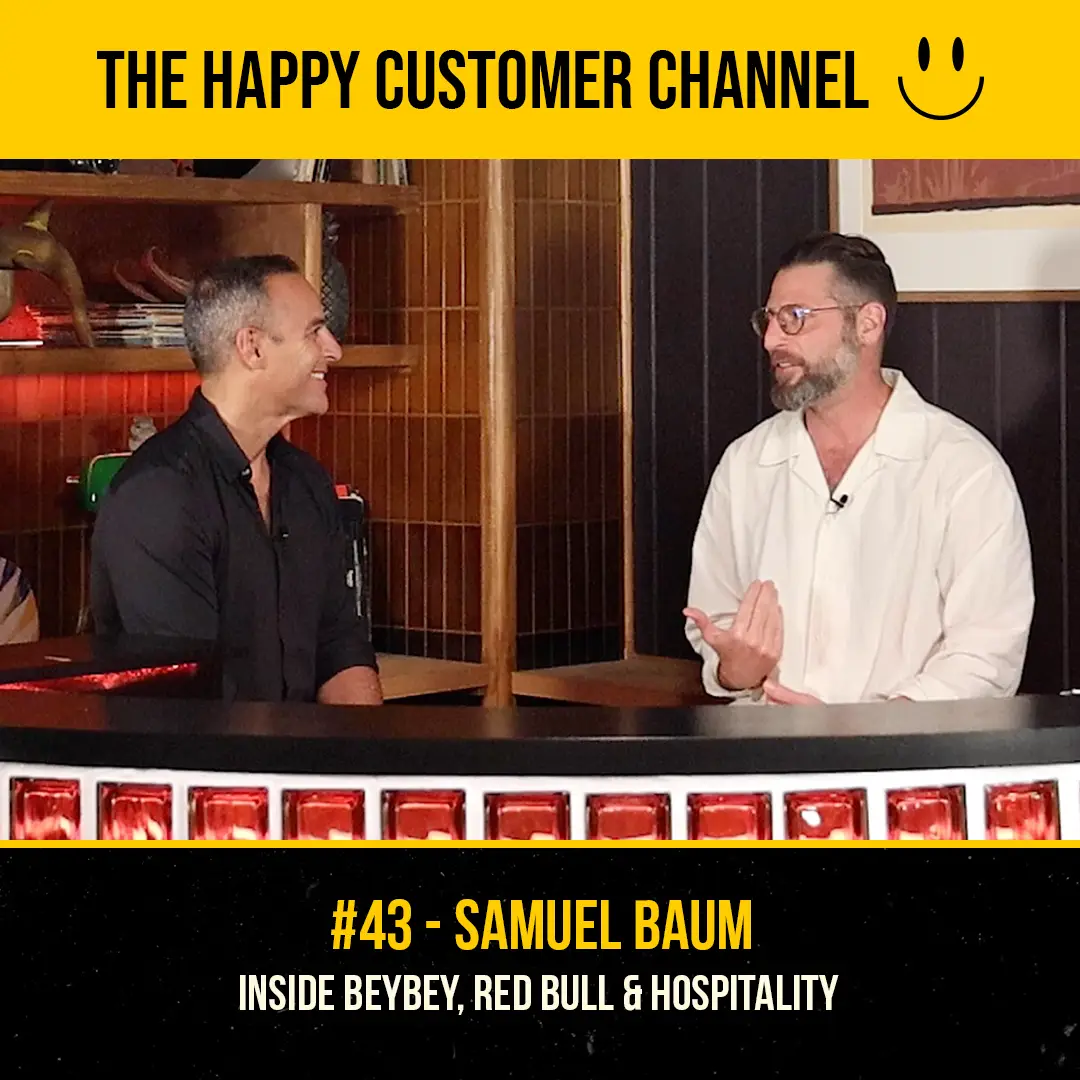
The Happy Customer Channel Episode 43 with Samuel Baum

Restaurant customer experience depends on the connection between what a venue promises and what its team delivers. Design, music, and marketing can establish an identity. A guest then experiences that identity through the people who greet them, answer a question, and respond when something needs attention.

In his 2024 conversation with Dan Arriola, Samuel Baum discusses BeyBey Miami as a restaurant, lounge and event space. He describes an ambition to make the venue welcoming and familiar, with a strong sense of place. His account shows how decisions about the space can guide the people delivering service.

Give the service team a clear explanation of the promise

Baum describes spending time with people on the service side to discuss the music, artwork, furniture, and intended feeling of the space. Those conversations connected creative choices to the experience the team was trying to deliver.

The practical question for another operator is whether the team can explain what the venue is trying to make a guest feel. A phrase such as “welcoming” becomes more useful when people can connect it to a greeting, a recommendation, or the way they handle uncertainty.

Connect marketing decisions to operating decisions

In the interview, Baum gives credit to the operations team and describes working to reduce separation between the creative and service sides. A brand idea can become difficult to deliver when the people setting expectations and the people serving guests rarely compare notes.

THCC’s article on operating standards in customer experience develops the same operating question: how will the promise show up in the work? For a restaurant, the answer might involve the way a team explains a space, recognizes a guest’s needs, or hands a concern to the person who can resolve it.

Recognize that guests can arrive with different intentions

Baum describes differences between guests focused on a dining experience and later guests who also want the energy of a night out. He discusses people with culinary and nightlife experience learning from one another as the team develops.

Consistency does not require treating every visit as identical. A useful standard can preserve the venue’s purpose while allowing the team to understand why a particular guest is there. The challenge is to adapt thoughtfully while keeping the underlying promise clear.

Use a short brand-to-service review

This review is THCC’s editorial application of the interview. It can help a team turn a broad identity into specific conversations about service.

  • Promise: what should a guest understand about the experience before arriving?
  • Touchpoint: where will a person on the team make that promise tangible?
  • Context: how might an early dinner, a later visit, or an event change the guest’s needs?
  • Handoff: who takes the next action when a request crosses roles?
  • Feedback: what should the team discuss after a difficult or successful service?

For an illustrative team review, choose one advertised event. Ask the marketing team what a guest is likely to expect, then ask the service team what it needs to deliver that experience. Agree on the person who handles a request that crosses roles and review any gap before guests arrive. This exercise is THCC’s application of the interview; it is not a reported BeyBey procedure.

Let programming support a coherent experience

Baum also talks about regular programming and programming around larger cultural moments. His emphasis in the conversation is on developing the concept in an authentic way with people who fit what it is trying to do.

For an operator, this suggests a useful test: can you explain how an event belongs to the venue and how it will affect the service experience? An appealing promotion still needs a plan for the expectations it creates. Use THCC’s customer experience resources and customer service conversations to explore that connection further.

Questions hospitality teams ask

What connects a restaurant’s branding to customer experience?

The connection becomes visible in the decisions and interactions that guests experience. A team that understands the intended identity can make more informed choices about communication, service, and follow-through.

Does a consistent experience require the same service in every situation?

A consistent purpose can support different responses to different needs. Baum’s discussion of dining and nightlife teams illustrates why staff need shared understanding alongside their specialist experience.

Watch Samuel Baum’s conversation

The published chapters at 16:19 and 21:15 cover the concept and service consistency. Watch Samuel Baum’s full Episode 43 interview for the original context.


From Coaching to Sales: How to Rebuild Structure After a Career Pivot

THCC Insights

From Coaching to Sales: How to Rebuild Structure After a Career Pivot

The Happy Customer Channel ·

The Happy Customer Channel Episode 118: The Pivot

A career pivot can remove the structure that made your previous role manageable. You may still know how to work hard, prepare, and perform under pressure. The harder question is what to do first when someone else is no longer setting the plan.

In Episode 118, The Pivot, Marc Nudelberg describes leaving football coaching for sales. His coaching role came with a detailed plan and a 365-day calendar covering recruiting, practices, games and travel. In his new work, he had to define the priorities, allocate time and choose the behaviors himself.

Identify the structure you used to receive

Before copying habits from your old role, list the decisions it made for you. A team schedule may have set the time for preparation. A practice plan may have defined the task. A game or a meeting may have supplied the deadline and the feedback.

Nudelberg’s story makes that change tangible. The ability to execute a clear plan did not automatically supply the new plan. Recognizing the missing structure gave him something specific to rebuild, rather than treating the entire career change as an undefined problem.

Define priorities in terms of visible work

A goal such as “be successful in sales” gives you little guidance for the next hour. A more useful priority describes work you can prepare for and review. That might be learning a customer’s needs, improving a conversation, or completing a clear follow-up.

For each priority, write the behavior it requires and the situation in which you need to perform it. Nudelberg describes learning to allocate time to priorities and define behaviors for specific scenarios. This connects an abstract ambition to the work of an ordinary day.

Build a first-week structure

The following exercise is THCC’s application of that lesson. Adjust it to the expectations of your role and the guidance of your manager or mentor.

  • Name the responsibility: what must you become reliable at doing?
  • Define the behavior: what action would demonstrate progress?
  • Reserve the time: when will you prepare, practice, and follow through?
  • Choose feedback: who can observe the work and help you improve?
  • Review the week: what happened, and what needs to change next?

For a first week in a customer-facing role, the routine could be specific: prepare questions before a conversation, record the customer’s concerns and promised next step afterward, and review one difficult moment with an experienced colleague. This is a THCC exercise, not Nudelberg’s reported calendar. Judge it by the quality of the preparation and follow-through, then adjust it to the role.

Use experience without assuming every habit transfers

Experience in one field can provide useful skills. It can also hide assumptions about how the new role works. Preparation may still matter, while the way customers make decisions may be unfamiliar. Keep the transferable skill and stay curious about the new setting.

Nudelberg also describes receiving support from his father as he developed his new structure. The broader lesson is to seek informed feedback. A mentor can help you notice what you have not yet learned; the working plan still needs to fit your responsibilities.

Rob Finkelstein’s Alumni Direct conversation explores a related question: how athletes can prepare for life beyond sport through education, structure and relationships.

Make the structure useful to other people

A personal routine should help you deliver on commitments. If your work involves a customer or a team, make the next action clear and follow through. A calendar full of activity is less useful when people are waiting for an answer they were promised.

Read THCC’s guide to leadership development for growing teams for a related discussion of turning development into behavior. Explore entrepreneurship conversations when a pivot also involves taking responsibility for a business.

Questions about career pivots

What if I know my goal but cannot organize the work?

Identify the smallest responsibility you need to perform reliably, then connect it to time, practice, and feedback. Ask someone who understands the role to help you test whether that responsibility is the right starting point.

Does changing careers mean starting from zero?

You may bring relevant habits and experience, while still needing to learn a different environment. Nudelberg’s account illustrates how a capable person can need a new structure when the context changes.

Watch Marc Nudelberg’s story

Nudelberg’s segment begins at the published 02:15 chapter. Watch the complete Episode 118 conversation for the other guests’ accounts of changing direction in life and business.

Buying a Micro SaaS Business: Questions About the Handoff

THCC Insights

Buying a Micro SaaS Business: Questions About the Handoff

The Happy Customer Channel ·

Stuart Faught on The Happy Customer Channel, Episode 117

Before a micro SaaS acquisition, map the operating work you will take over: the product, customer commitments, business accounts, and seller support. A platform with no customers creates a different first-day job from a service people already rely on. Clarify that starting point before drawing up a growth plan.

In Episode 117 of The Happy Customer Channel, Stuart Faught describes several ways buyers have approached his software businesses. Some want a brand and platform they can grow. Others want help reaching a particular stage. He also describes using asset purchases in his own transactions. These are his experiences, not a standard deal structure for every buyer.

Clarify which starting point is on offer

Begin by describing the actual business you are evaluating. Does it have active customers? Are those customers paying, testing, or inactive? Does it have a documented product and a brand but no existing accounts? The answers should shape the questions that follow.

Faught notes that some buyers prefer an opportunity without customers because they want to do the selling themselves. That is a different proposition from taking responsibility for a service people already use. A label such as “ready to scale” needs a specific description of what is ready and what remains to be built.

Ask for an operating map

Use the following THCC handoff questions to map the work. List the product, the systems that support it, and the people who understand those systems. Then ask the seller to walk through an ordinary customer request and a problem that needs technical attention.

  • Product: can the seller demonstrate the normal customer workflow and explain its known limitations?
  • Access: which business-owned domains, hosting, code, billing and support accounts are involved, and what transfer permissions do their providers require?
  • Customers: where are support promises, open requests and recurring responsibilities recorded?
  • Knowledge: where are deployment, maintenance, recovery and support procedures documented?
  • Ownership: who takes each handoff action, and what observable result shows it is complete?

Acquire.com’s technical due diligence guide provides further context on examining a software business. Confirm the relevant rights, permissions and provider transfer requirements instead of assuming every account or agreement can move unchanged.

Make seller support specific

Faught describes situations in which his team stays involved after the initial transaction. For an operator, the useful questions concern the work: who answers a product question, who handles an incident, which training is included, and when that involvement ends.

For each support commitment, identify the person, the task and the point when the task is complete. A product walkthrough, incident response and training session are different commitments. Record the unanswered questions and keep the operating plan aligned with the actual agreement and specialist review.

Look at the experience customers will have

A change in ownership can reach customers through a billing question, a support reply, or an unexpected product issue. Map those interactions before assuming the business can run without the seller’s knowledge. Identify the person who takes responsibility when a customer’s issue crosses systems or teams.

THCC’s article on customer journey accountability offers a useful way to think about these handoffs. Knowing who owns the next action is part of delivering the experience customers were promised.

Keep the handoff and the growth plan separate

An orderly transfer gives the next operator a clearer starting point. Growth still requires its own plan. Ask how customers have been reached, which activities the seller personally handled, and what the buyer can realistically continue. Treat that as a set of questions to investigate rather than a forecast.

Questions buyers ask

Is a product with no customers the same as an operating SaaS business?

It represents a different starting point. A buyer may need to validate the offer, reach customers, and build support practices. An existing customer base brings evidence to examine and ongoing responsibilities to understand.

What should a first handoff conversation accomplish?

It should identify what exists, what is being discussed for transfer, who understands the operating work, and which questions remain unanswered. It does not replace technical, financial, or legal diligence.

Watch the source episode

Watch the full Stuart Faught interview for his explanation of buyer preferences and seller involvement. Browse THCC’s entrepreneurship episodes for more ownership conversations.

SaaS Distribution Strategy: Start With a Buyer You Can Reach

THCC Insights

SaaS Distribution Strategy: Start With a Buyer You Can Reach

The Happy Customer Channel ·

Stuart Faught on The Happy Customer Channel, Episode 117

A SaaS distribution strategy needs three decisions: a specific buyer, a way to reach that buyer, and a clear next step. Start with a route you can test and measure what happens after the first conversation. That gives product decisions a customer context.

In Episode 117, Stuart Faught talks with Dan Arriola about building and selling small software businesses. Faught describes himself as a nontechnical founder who enjoys growth and sales. His point is that easier software creation makes the ability to reach customers especially important. The planning exercise below applies that idea; it is THCC’s editorial framework, rather than a checklist Faught delivered word for word.

Define the buyer before choosing the channel

A market such as local businesses is too broad to guide a first sales conversation. A more useful starting point names a type of operator, the task they are trying to complete, and the moment when that task becomes frustrating. This makes it easier to decide where a conversation belongs.

Faught explains that his early work with dental practices helped him recognize a need for a simpler way to collect patient reviews. The lesson is the sequence: contact with a particular kind of customer gave him a problem to work on. It did not start with a long list of software capabilities.

Write a one-sentence hypothesis: “We help [specific operator] complete [specific task] when [specific situation occurs].” Treat it as a starting assumption. If prospective customers describe a different problem, change the sentence before expanding the product.

Choose a route you can test

Faught also discusses growing through distribution partners. For a small team, the practical question is which route it can actually operate. Direct outreach, a specialist community, useful search content, and a partner who already serves the buyer are different routes with different demands.

Choose one initial route and state what access it gives you. An introduction from a trusted partner and a visit from a search result are different starting points. Each needs a clear next step that fits the buyer’s reason for being there.

Create a short distribution plan

  • Buyer: name the role and type of business you want to reach.
  • Problem: describe one task in the customer’s own language.
  • Route: identify a specific community, partner type, or outreach list.
  • Next step: offer a useful conversation, demonstration, or trial with a clear purpose.
  • Learning: record the questions, objections, and actions that follow.

In a hypothetical first-week test, a founder serving independent dental practices could ask practice managers to walk through how they request patient reviews. The next step could be a demonstration of one review-request workflow. Record who agrees to try it and what stops them. This is THCC’s illustrative application of the interview, not a reported campaign or promised result.

Measure progress beyond attention

A response or a visit gives you something to investigate. Keep the stages separate: someone saw the offer, agreed to talk, tried the workflow, and returned to use it. Record where people stop and what they say at that point. A channel that produces relevant trials creates a different decision from one that produces views alone.

A small number of relevant conversations can reveal that the message is unclear or the task is not urgent. Use those findings to revise the offer and the next test. Avoid treating a new channel or an AI tool as a substitute for that learning.

Connect the promise to the customer experience

The distribution message creates an expectation that the product and support must meet. THCC’s guide to customer experience strategy and operating standards explains why a promise needs a repeatable way to deliver it. Once a customer responds, define who handles the next step and how a problem gets resolved.

Questions founders ask

Can a nontechnical founder develop a distribution strategy?

Yes. Customer research, positioning, sales conversations, and partner relationships are work a nontechnical founder can lead. Technical implementation still needs appropriate expertise. Faught’s experience illustrates one possible division of responsibilities.

Should a small SaaS business use every marketing channel?

Start with a route you can operate and evaluate. Expanding later is easier when you understand who responds, why they respond, and what happens after the first interaction. There is no channel mix that guarantees growth.

Watch the full conversation

Watch Stuart Faught’s complete conversation with Dan Arriola for the context around distribution, ownership, and building focused software businesses. Explore more entrepreneurship conversations on THCC.